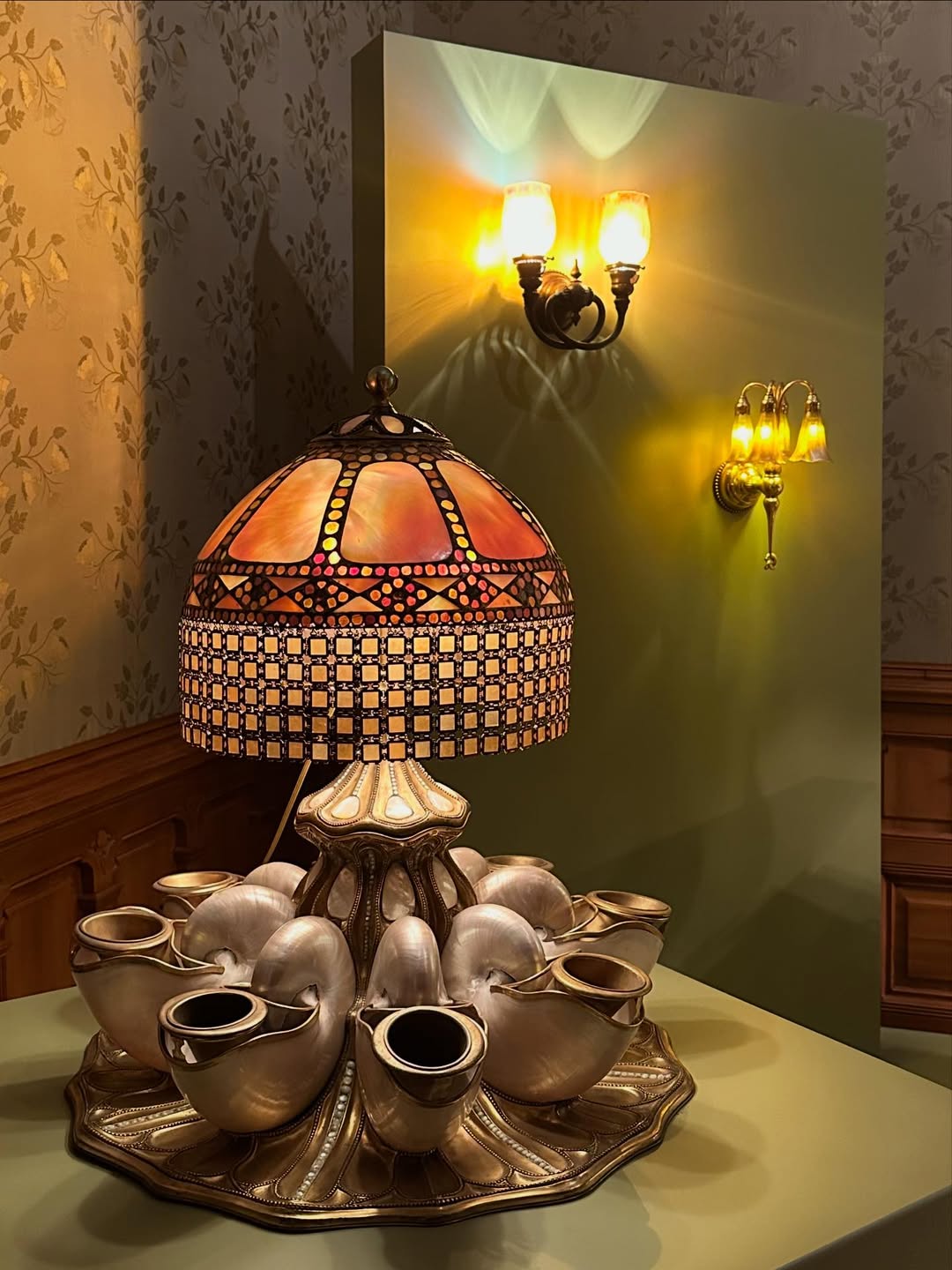

There’s something undeniably magical about a stained glass lamp. The way colored light filters through meticulously crafted glass panels, casting jewel-toned shadows across walls and ceilings, transforms any room into something extraordinary. Whether you’re drawn to the intricate florals of Tiffany Studios, the bold geometry of Art Deco designs, or the organic forms of Arts and Crafts movement pieces, a stained glass lamp is more than illumination. It’s wearable history, functional sculpture, and investment-grade art all rolled into one glowing package. These luminous treasures have been captivating collectors and design enthusiasts for over a century, and their appeal shows no signs of dimming.
What makes stained glass lamps particularly compelling in today’s design landscape is their remarkable versatility. A vintage Tiffany dragonfly lamp feels equally at home in a maximalist Victorian parlor or a sleek contemporary loft. An Art Deco geometric piece bridges mid-century modern and traditional aesthetics with ease. These aren’t fleeting trends or disposable decor; they’re heirloom-quality objects that appreciate in value while bringing daily joy. Whether you’re a serious collector hunting for authenticated Tiffany Studios pieces or simply someone who appreciates beautiful lighting, the world of stained glass lamps offers options across every budget, style preference, and collecting ambition. From museum-quality rarities to charming vintage finds, let’s explore the luminous world of collectible lighting.
The Glowing Legacy: Understanding Stained Glass Lamps
The golden age of stained glass lamps began in the late 19th century when Louis Comfort Tiffany revolutionized decorative arts with his innovative copper foil technique. Before Tiffany, stained glass was primarily architectural—think church windows and grand public buildings. Tiffany had the genius idea to miniaturize this art form, creating intimate domestic objects that brought the beauty of stained glass into everyday homes. His patented copper foil method, developed in the 1890s, allowed for more intricate designs than traditional lead-came techniques, enabling the delicate floral motifs and naturalistic patterns that became Tiffany’s signature.
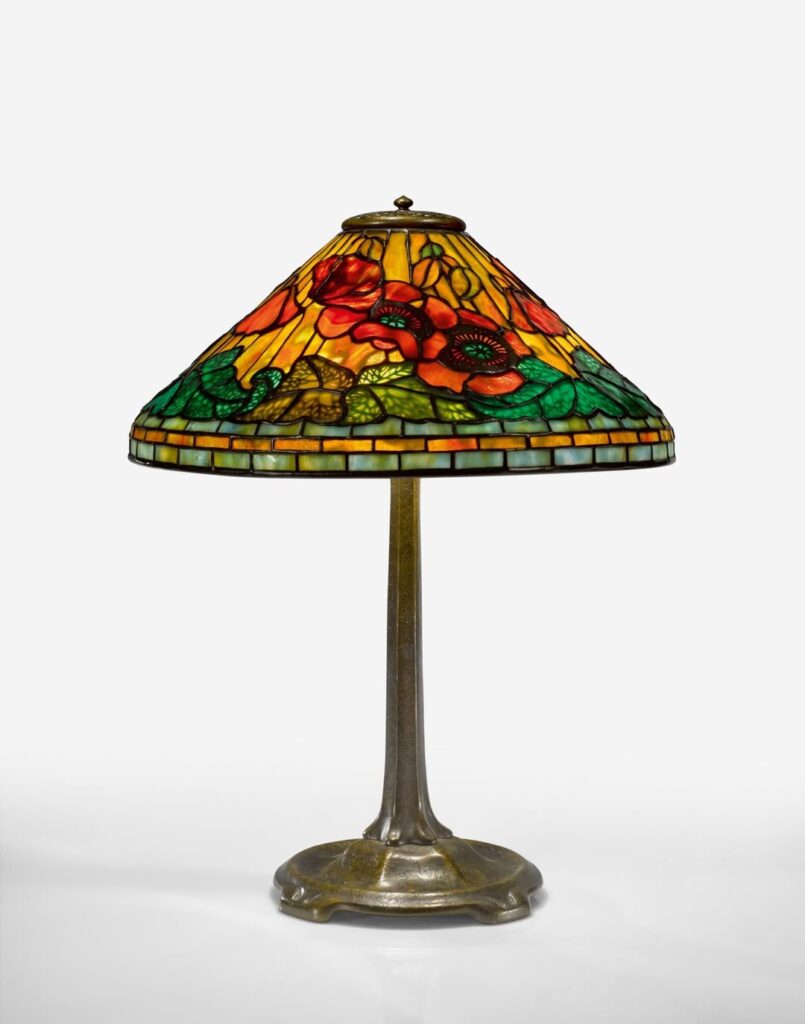
When Tiffany’s patent expired in 1903, the floodgates opened. Suddenly, numerous manufacturers could legally employ his revolutionary technique, creating an explosion of competition. Companies like Unique Art Glass & Metal Company, Duffner & Kimberly, Handel, and Quezal emerged, each developing their own aesthetic interpretations while building on Tiffany’s technical foundation. This period, roughly 1903-1920, represents the apex of American stained glass lamp production, with workshops across the country producing extraordinary works that rival Tiffany Studios in quality and artistry.
The iconography of stained glass lamp shades during this era drew heavily from nature—dragonflies with dichroic wings, wisteria blossoms in full bloom, peonies, dogwood, daffodils, and geometric patterns inspired by peacock feathers or spider webs. The Art Nouveau movement’s emphasis on organic forms and flowing lines found perfect expression in these luminous creations. Skilled artisans would spend weeks selecting and cutting individual glass pieces, wrapping each in copper foil, and soldering them into cohesive designs. The glass itself was often specially formulated. Tiffany’s famous Favrile glass featured iridescent finishes and layered colors that created depth and luminosity impossible to achieve with standard glass.
Why Do Collectors Clamor for These Lamps Centuries Later?
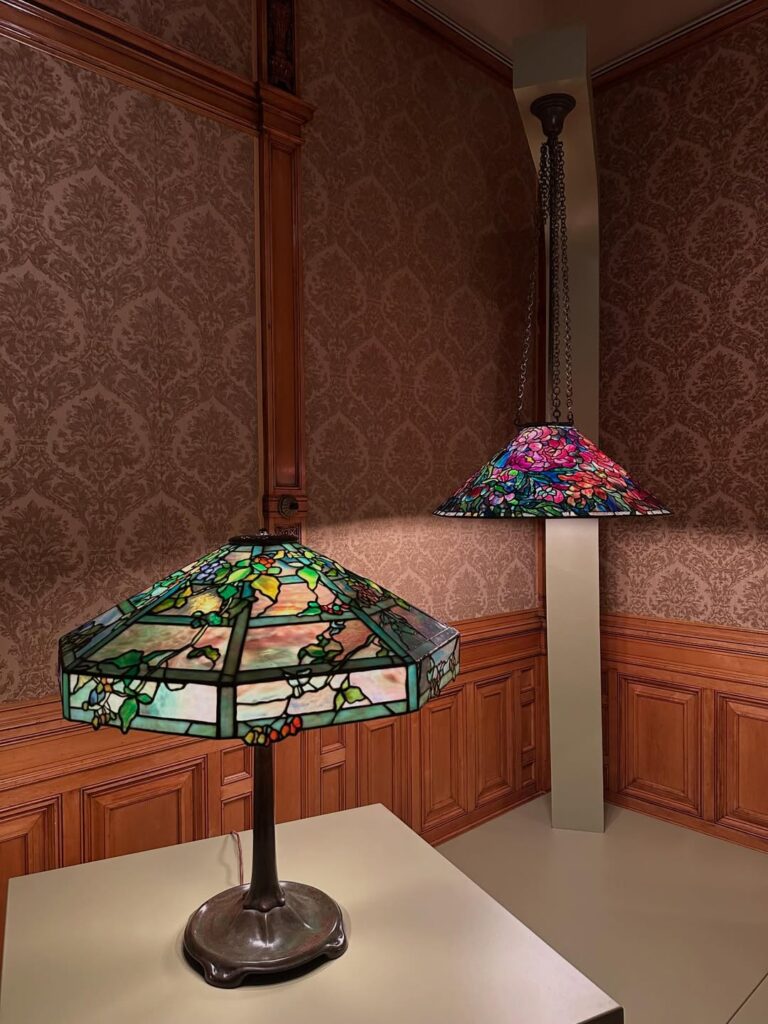
First, there’s the craftsmanship factor. These pieces represent a level of handwork and artistic skill that’s increasingly rare in our mass-produced world. Each lamp required hundreds of hours of skilled labor from multiple artisans—glass cutters, foil wrappers, solderers, patina artists, and bronze workers who created the bases. Owning a genuine period piece means possessing something that can never be exactly replicated, no matter how skilled modern reproductions might be.
Second, there’s investment potential. Authenticated Tiffany Studios lamps regularly fetch six and seven figures at auction. Even lesser-known manufacturers from the same period command serious prices, with values steadily appreciating as collectors recognize quality regardless of signature. The market has matured to appreciate exceptional unsigned pieces that demonstrate superior craftsmanship and rare glass selections.
Third, there’s pure aesthetic pleasure. A stained glass floor lamp or table lamp creates an atmosphere that no other lighting can match. The warm, diffused glow feels organic and inviting, while the colored glass transforms ordinary lamplight into chromatic magic. These lamps improve their surroundings in ways that transcend mere function.
The mid-20th century saw renewed interest in Tiffany-style aesthetics, with European manufacturers like Honsel in Germany and Mexican artists like Felipe Derflingher creating their own interpretations. The 1960s-70s witnessed a surge in stained glass appreciation as part of the broader Arts and Crafts revival, with both reproductions and original designs flooding the market. While these later pieces lack the collectibility of early originals, the best examples demonstrate impressive artistry in their own right and offer more accessible entry points for new collectors.
Stained Glass Lamps to Illuminate Your Collection
Unique Art Glass & Metal Company Peony Table Lamp (circa 1915)
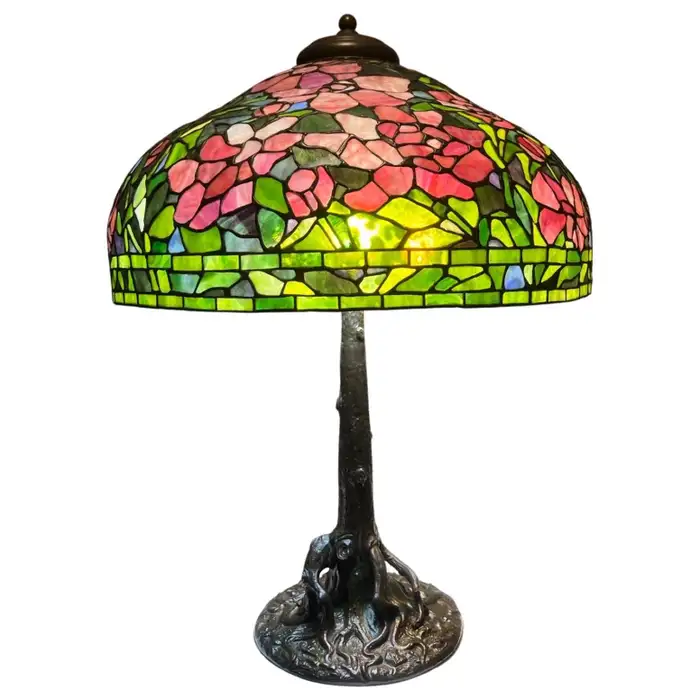
This magnificent lamp represents the fierce competition that emerged after Tiffany’s patent expired. The massive 24-inch peony shade showcases why Unique Art Glass & Metal Company posed serious rivalry to Tiffany Studios—the craftsmanship is extraordinary. What makes this piece particularly special is the bronze tree trunk base with exposed and open roots, creating a naturalistic support that feels like a sculpture independent of the shade. The combination of botanical shade and organic base creates cohesive artistry that demonstrates why early 20th-century lighting transcended mere function. The traditional bronze spacer detaches for transport, and while it features a replaced modern threader for stability, the overall integrity remains museum-worthy. This is the kind of stained glass lamp that commands a room, serving as both illumination and investment.
Honsel Tiffany Style Chandelier (1970s)
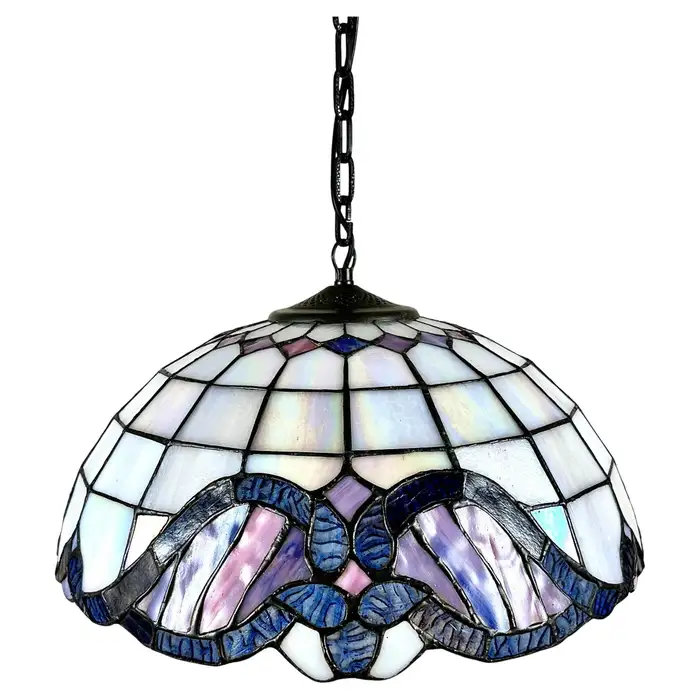
German craftsmanship meets Tiffany aesthetics in this remarkably well-preserved chandelier featuring vibrant stained glass panels. Honsel brought European precision to the Tiffany style revival of the 1970s, and this piece exemplifies why their work remains collectible. The classic Tiffany aesthetic diffuses light beautifully, creating ambiance that flat modern fixtures simply cannot match. Whether hung in dining rooms, living areas, or grand entryways, this chandelier provides captivating presence.
Arts & Crafts Leaded Stained Glass Table Lamp (20th Century)
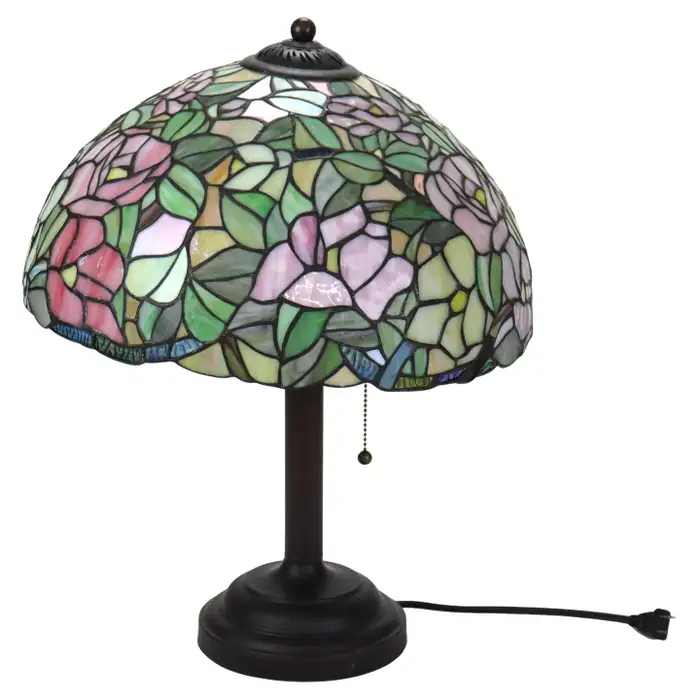
This dome-shaped shade features intricate floral patterns in pink, green, and white that exemplify Arts and Crafts movement principles. The emphasis on handmade quality and natural motifs defined this design philosophy, which rejected industrial mass production in favor of artisan craftsmanship. The floral patterns aren’t merely decorative. They represent a belief that everyday objects should bring beauty into domestic life. This stained glass lamp shade demonstrates how the Arts and Crafts aesthetic valued organic forms and honest construction, creating pieces that feel both artistic and approachable.
French Stained Glass Wall Lamps (Early 20th Century)
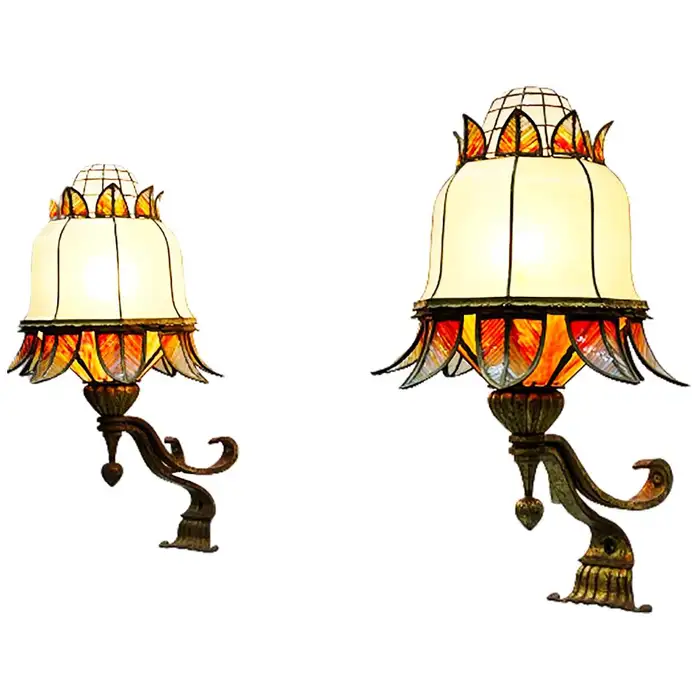
These imposing wall lamps stand 95 centimeters high, making a dramatic statement impossible to ignore. The floral model with wrought iron gilded wall brackets represents French decorative arts at their finest. What makes these particularly special is the curved glass construction, a technique requiring significant skill to execute properly. Originally created in early 20th-century France and later converted to electric, these lamps bridge gas-age aesthetics with modern functionality. The pin hinges allowing shade adjustment demonstrate thoughtful engineering alongside artistic ambition. For those seeking stained glass lamps that provide both illumination and architectural presence, these French beauties deliver.
Colorful Tiffany Stained Glass Table Lamp (1970s)
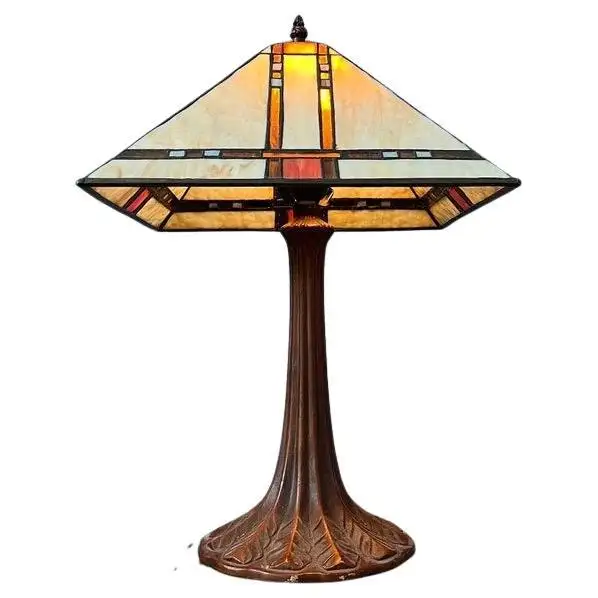
This substantial 1970s interpretation brings Art Deco geometry to Tiffany-style construction. The metal base supports a removable acrylic shade that can be positioned any way desired, a practical consideration that enhances versatility. The colorful stained glass creates beautiful light effects that transform depending on the time of day and surrounding décor. In very good condition with only minor user wear, this represents the quality end of 1970s production, when manufacturers still prioritized craftsmanship over cost-cutting.
Edgar Brandt Style Bronze Snake Floor Lamp (1980s)
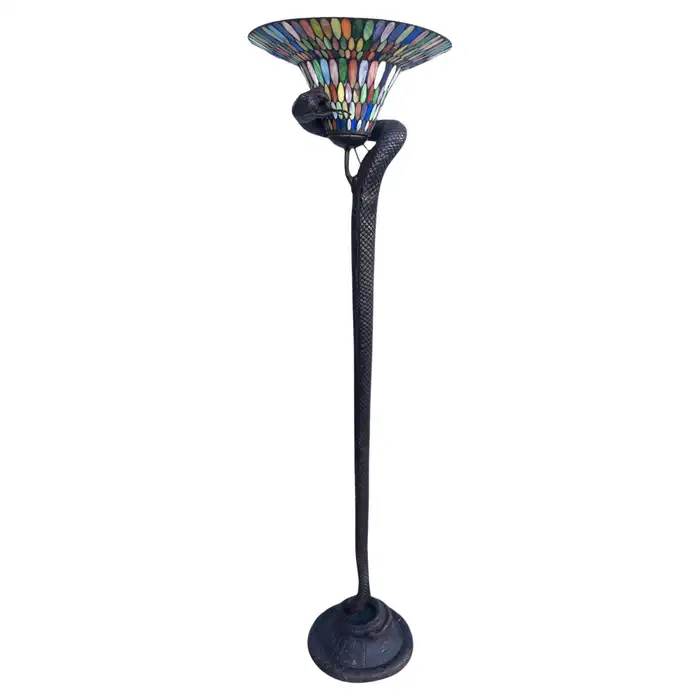
Absolutely extraordinary. This custom piece stylized after Edgar Brandt’s original sculptural concepts depicts a highly detailed snake coiled around a stained glass shade, with an open mouth exposing fangs and a forked tongue, arising from a woven basket lid. Cast in pure bronze using the lost wax method and finished in golden bronze patina, this is a sculpture that happens to provide light. Brandt, the legendary French Art Deco metalworker, would approve of this interpretation. For collectors seeking stained glass floor lamp options that blur boundaries between functional object and fine art, this snake lamp delivers drama and craftsmanship in equal measure.
Brutalist Stained Glass Pendant Lamp by Felipe Derflingher (1960s)
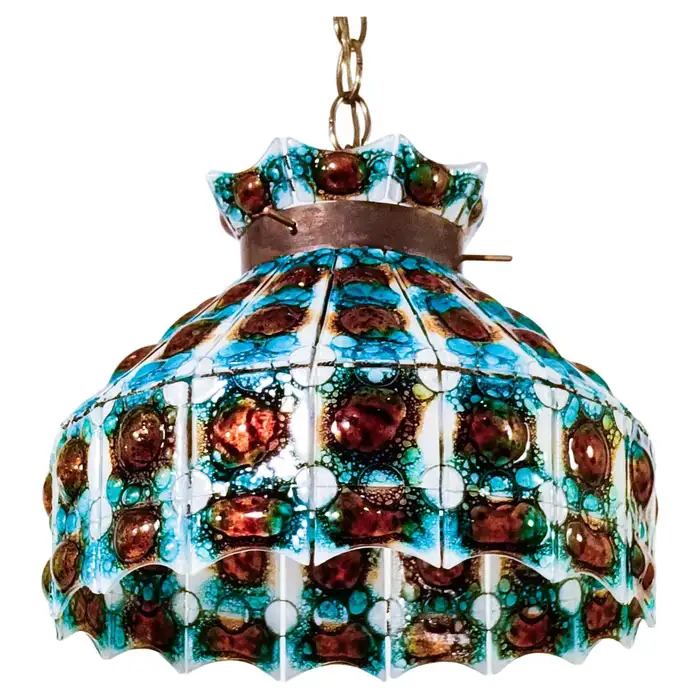
Mexican artist Felipe Derflingher created this pendant for Feders in the 1960s, combining custom stained glass in blue, orange, caramel, and white with a brass structure. The Brutalist aesthetic embraced raw materials and bold forms, and this piece exemplifies that philosophy while maintaining Mid-Century Modern sensibilities. The fascinating play of light casts a warm, inviting glow that functions as both illumination and inspiration. This isn’t just seen as a light source; it’s appreciated as fine art, representing how Mexican designers contributed unique voices to global mid-century design conversations.
Stained Green Art Glass Frog Table Lamp
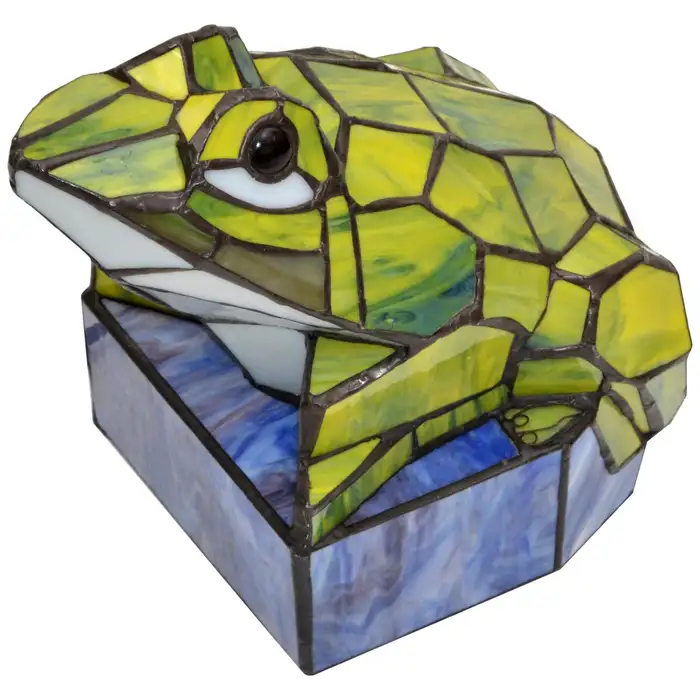
Pure whimsy. This stained green and blue art glass frog brings joy to children’s rooms while demonstrating how stained glass techniques can create playful rather than purely decorative objects. The sculptural form shows glass artistry’s versatility—not every piece needs dragonflies and flowers to justify the medium. Sometimes a cheerful amphibian is exactly what a room needs.
Tiffany Studios Dogwood Floral Stained Glass Table Lamp
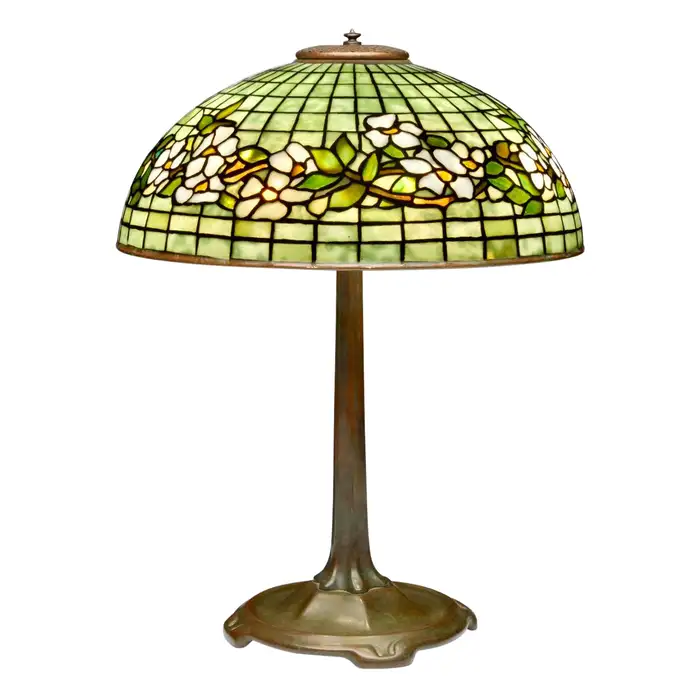
Now we enter serious territory. This authenticated Tiffany Studios piece features the Library Standard base and bears proper impressed marks: “TIFFANY STUDIOS NEW YORK 1554” on the shade and “TIFFANY STUDIOS NEW YORK 533” on the base. From a private New York collection, it’s in very good condition with only 2-3 possible heat cracks dispersed in the shade, normal aging for century-old pieces. The leaded glass and patinated bronze construction showcases Tiffany Studios at their finest. The dogwood motif represents American flora rendered with Japanese-influenced compositional sensibility. This is museum-quality work, the kind of stained glass lamp that represents both artistic achievement and sound investment.
Antique Tiffany-Style Pink Floral Leaded Slag Table Lamp (Early-Mid 20th Century)
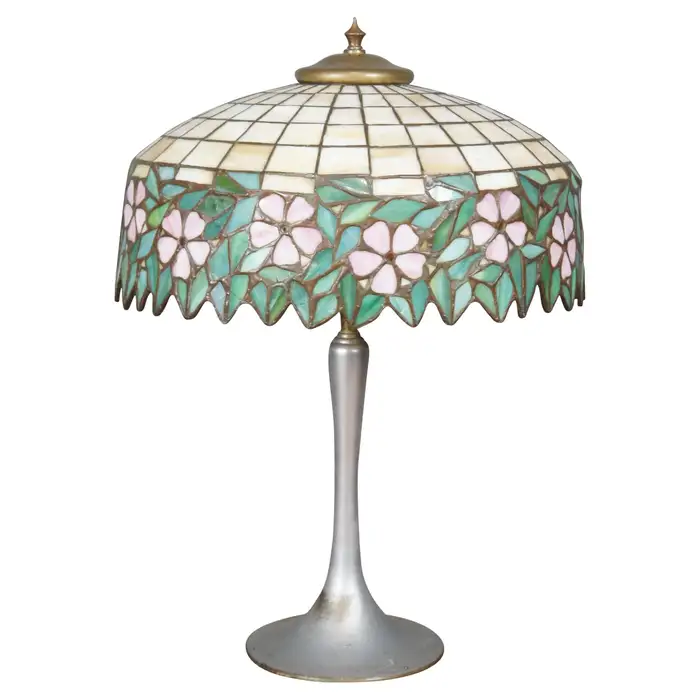
This two-light aluminum-based lamp features unique off-white lattice grid trimmed with drooping leaves and pink flowers. The slag glass construction, a technique using waste glass from iron smelting, creates distinctive mottled effects. While not bearing Tiffany Studios marks, this piece demonstrates how period competitors produced quality work worthy of collection. The aluminum base provides lighter weight than bronze, making this practical for smaller tables while maintaining substantial visual presence.
Art Deco Style Stained Glass Table Lamp (20th Century)
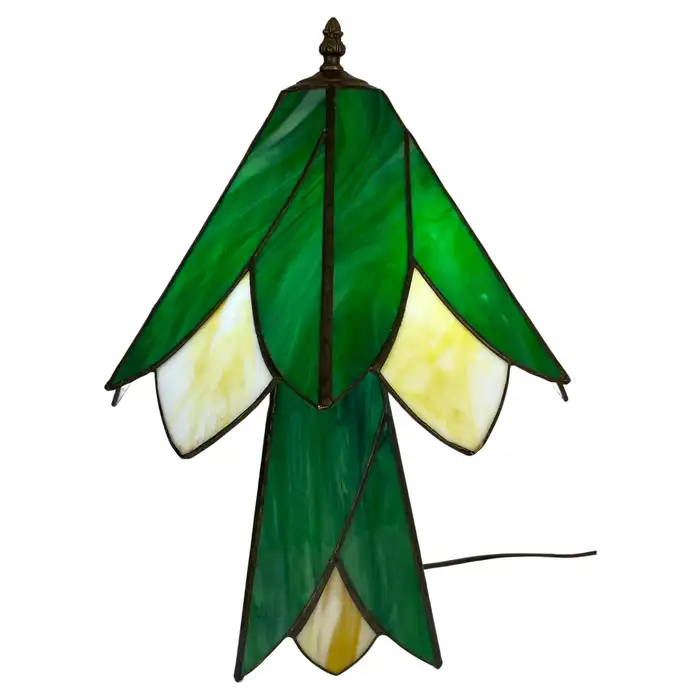
Mystery enhances this captivating Art Deco-style piece with unknown origins but unmistakable elegance. Striking stained glass panels and unique base design create vintage sophistication. In very good condition with no cracks or chips, it casts a warm, inviting glow perfect for adding conversation-piece presence to any room. At 18¾ inches high and 13 inches in diameter, it provides substantial illumination without overwhelming. Sometimes the best finds are those whose stories remain partially untold, allowing new owners to create their own narratives.
Stained Glass Lightbox (20th Century)
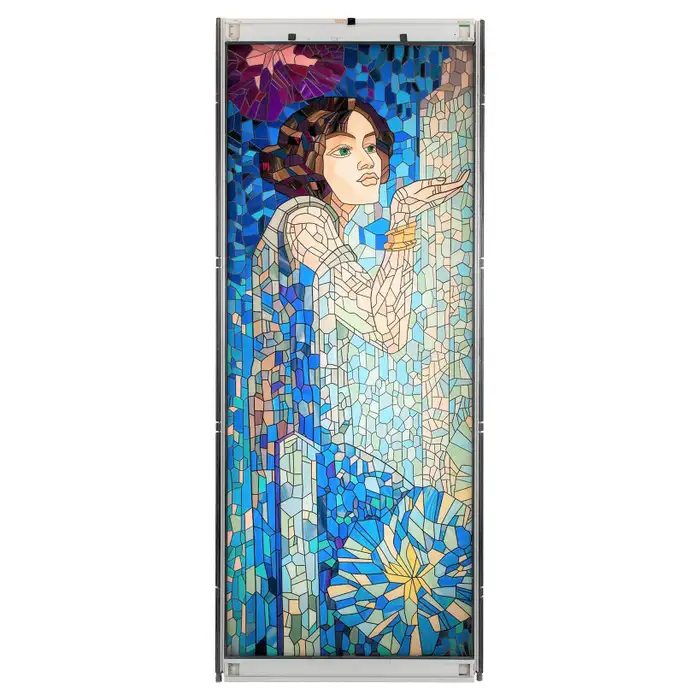
Completely captivating. This floor-standing designer lightbox features a gorgeous stained glass image of a woman blowing a kiss. A true one-off piece perfect for interior design projects, it’s a real showstopper that defies traditional lamp categories. British 20th-century design often embraced eccentricity and wit, and this piece exemplifies that sensibility. For those seeking stained glass lamps that challenge conventional definitions, this lightbox offers something genuinely unique.
Tiffany-Style Dragonfly Leaded Glass Table Lamp with Jewels (20th Century)
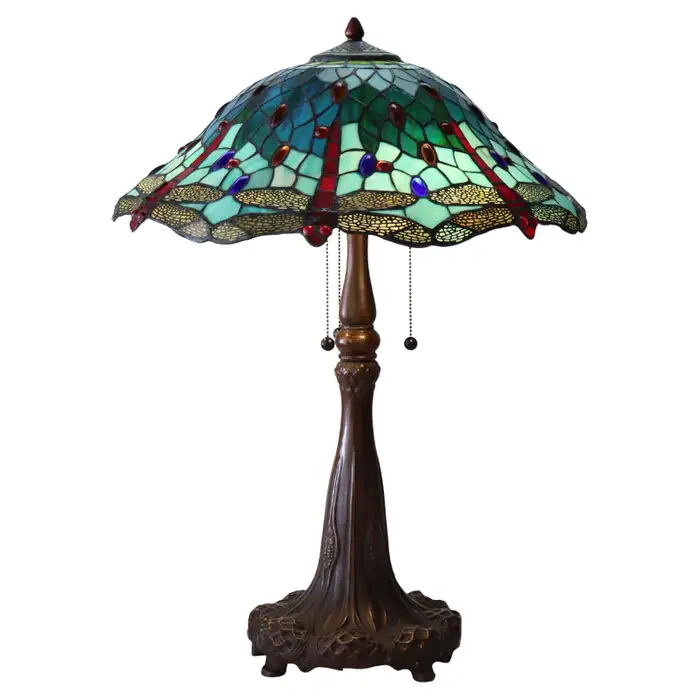
The dome-shaped shade composed of numerous stained and leaded glass pieces showcases intricate dragonfly motifs characteristic of Art Nouveau. The leaded glass technique creates rich mosaic effects, while jewel accents add dimensional sparkle. This represents quality 20th-century production that honors original Tiffany aesthetics while remaining accessible to collectors working with modest budgets.
Tiffany Studios Dragonfly Diachronic Confetti Table Lamp (circa 1915)
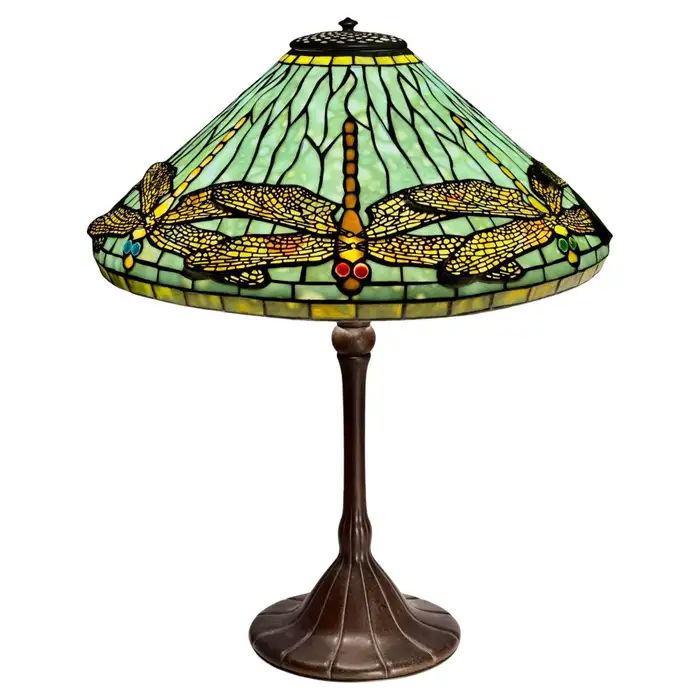
Museum-quality perfection. This Tiffany Studios piece features dichroic light blue to green dragonfly wings in confetti glass, a technique creating speckled, jewel-like effects. From the collection of Jeep and Carla Harned, sold through Sotheby’s in 2020 and acquired by the current important West Coast collector, this lamp has impeccable provenance. The shade is in excellent condition with only one tight hairline crack that’s almost impossible to find. The base retains original sockets. This is the kind of stained glass lamp that museums covet, collectors dream about, and auction houses feature prominently. It represents Louis Comfort Tiffany’s genius at its most refined, taking natural forms and translating them into luminous art that’s transcended generations.
Featured image: @goingonce.goingtwice/Instagram

Amanda Akalonu is dedicated to weaving together the worlds of jewelry, watches, and objects through a lens of literary storytelling.