
Few objects in the decorative arts carry the same visual power and cultural weight as Tiffany lamps. With their jewel-toned glass, intricate leaded designs, and luminous glow, these iconic creations have captivated collectors, interior designers, and art lovers for well over a century. Whether you are an experienced collector or simply curious about a lamp that you have inherited or spotted at auction, this guide covers everything you need to know, from the origins of Tiffany Studios to how to spot a fake, assess value, and begin collecting with confidence.
What Is a Tiffany Lamp?
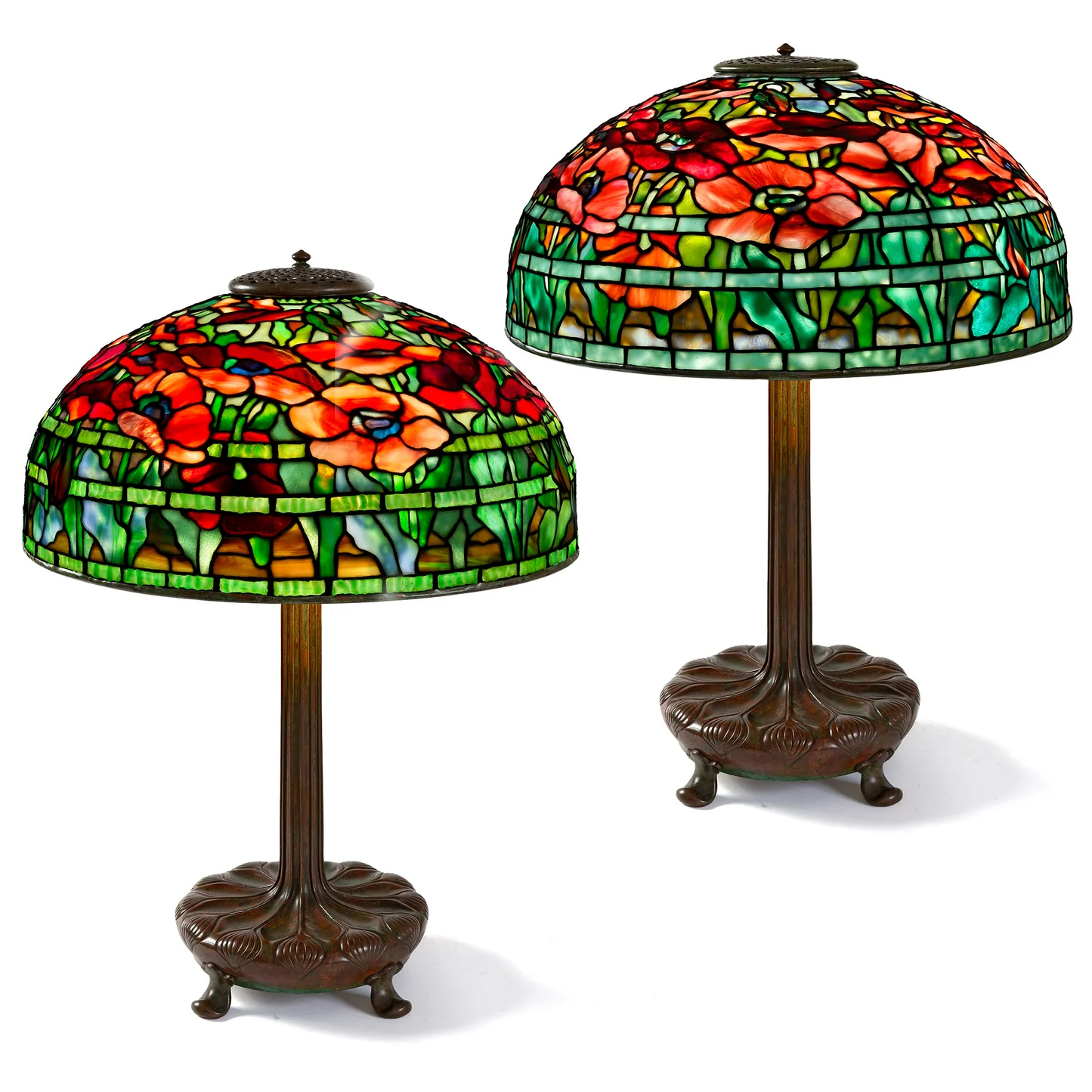
A Tiffany lamp is a leaded glass lamp produced by Tiffany Studios, the New York-based workshop founded by Louis Comfort Tiffany, between roughly 1893 and 1933. Each lamp features a shade constructed from hundreds (sometimes thousands) of hand-cut glass pieces joined by copper foil and solder, mounted on a cast bronze base. The glass used was almost always Tiffany’s own patented favrile glass, a specially formulated material known for its rich, iridescent color and depth that no ordinary glass could replicate.
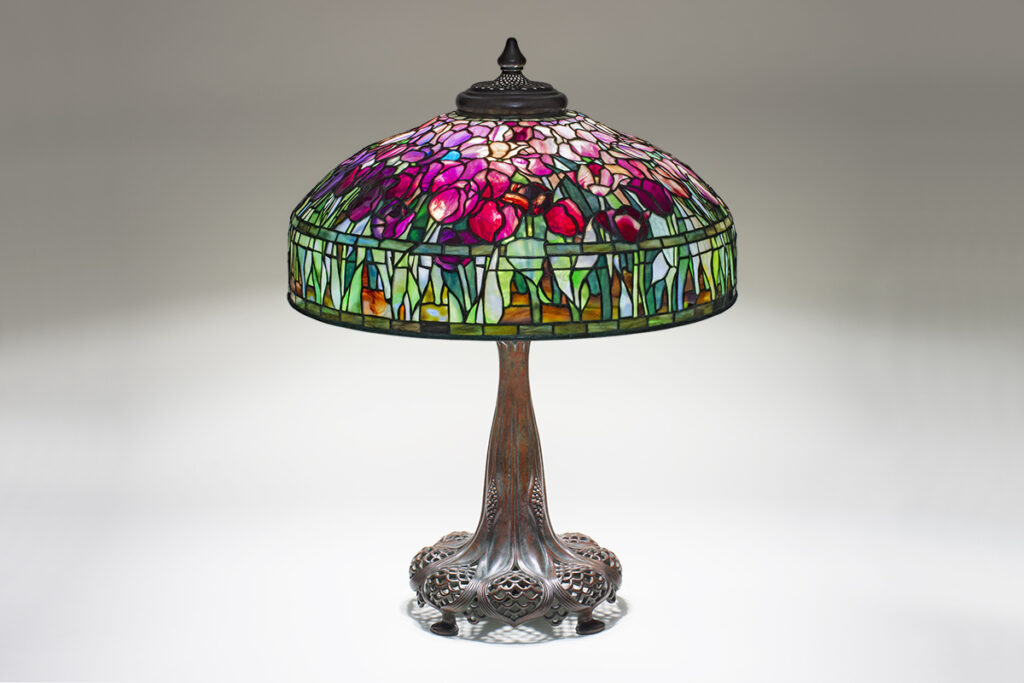
It is critical to understand the distinction between an authentic Tiffany lamp and a Tiffany-style lamp. The term “Tiffany-style” refers to the millions of mass-produced lamps, made in factories in China and elsewhere, that imitate the look of the originals but share none of their craftsmanship, artistry, or value. A genuine Tiffany Studios lamp is a handmade work of art. A Tiffany-style lamp is a decorative reproduction. The two are separated by decades of history, extraordinary skill, and, in many cases, several hundred thousand dollars.
The History of Tiffany Lamps
Louis Comfort Tiffany was born in 1848, the son of Charles Lewis Tiffany, founder of the celebrated Tiffany & Co. jewelry house. Rather than join the family business, Louis pursued painting and decorative arts, eventually turning his attention to glass. He was transfixed by the colors he observed in medieval stained glass windows, colors that painters could not achieve with pigment but that glass achieved through light itself.
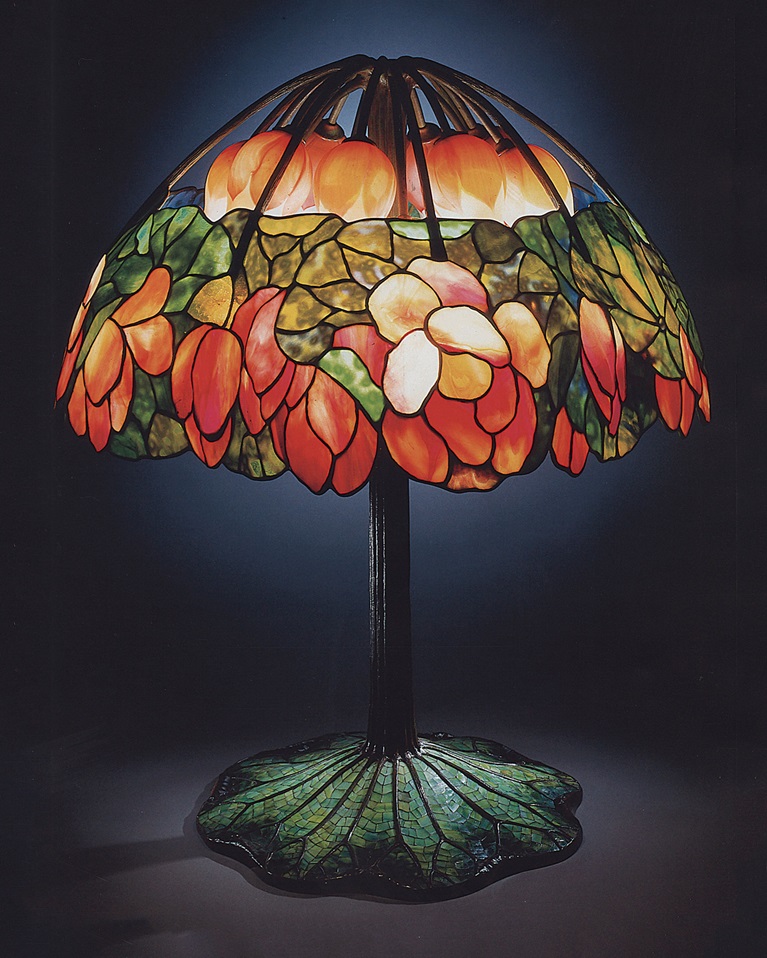
Tiffany Studios was formally established in New York in the early 1890s and quickly became the leading studio of the American Art Nouveau movement. The electric lamp shades that would define the studio’s legacy emerged around 1893. Initially, the designs were largely overseen by Clara Driscoll, a lead designer whose contribution to the most beloved motifs, including the Dragonfly and the Wisteria, was not publicly acknowledged for over a century.
The studio flourished through the early decades of the twentieth century, producing thousands of lamp designs. However, shifting tastes, particularly the rise of Art Deco and modernist design, eroded demand, and Tiffany Studios filed for bankruptcy in 1933. Interest revived dramatically in the 1950s and 1960s when museum curators and collectors began reappraising Louis Comfort Tiffany’s contribution to American design. Today, original Tiffany lamps are among the most actively traded objects in the decorative arts market.
How Tiffany Lamps Are Made
The production of each Tiffany lamp began with a paper pattern laid over a wooden mould in the shape of the finished shade. Craftspeople, most of them women employed in the studio’s “Painting Room,” selected individual pieces of favrile glass, cut them by hand to match each template section, and wrapped the edges in thin copper foil. The foiled pieces were then assembled on the mould and soldered together using lead solder. The result was a self-supporting glass mosaic of remarkable structural integrity.
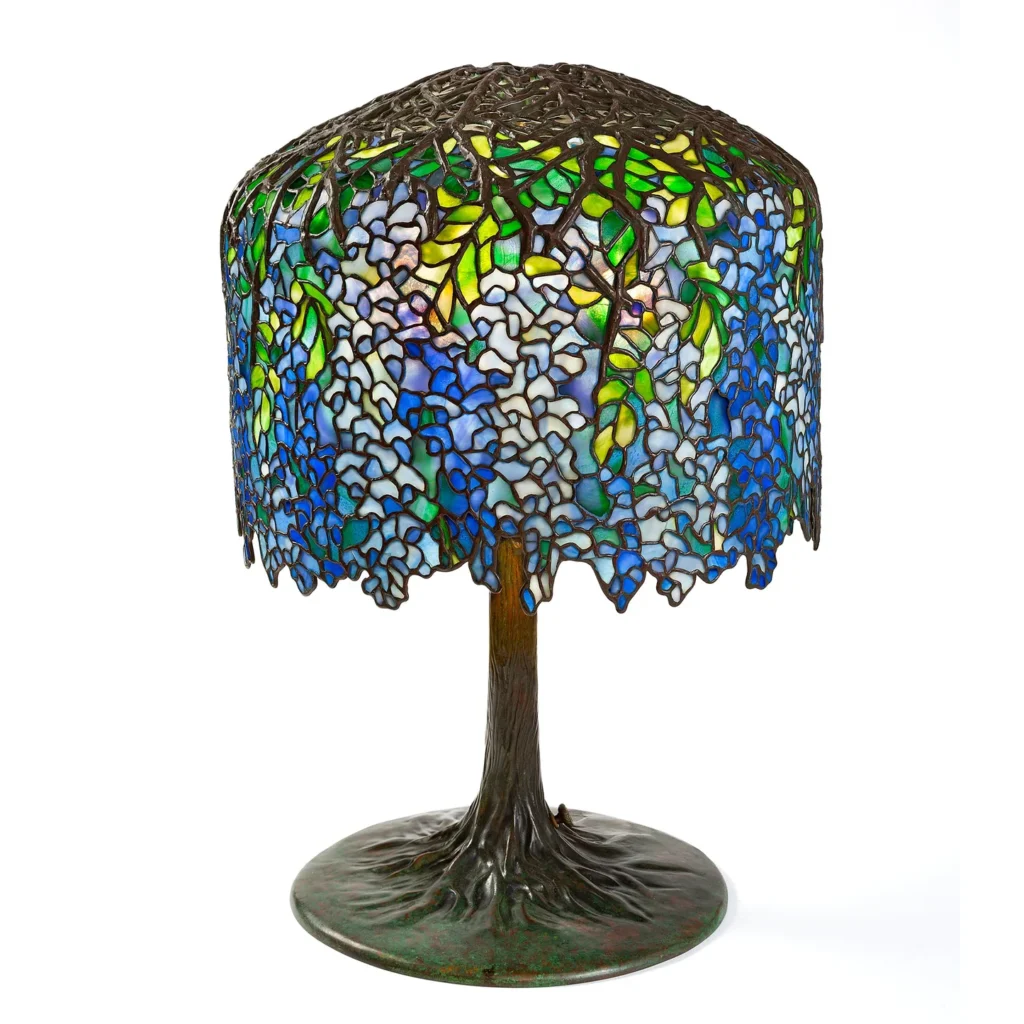
The glass itself was the secret weapon. Favrile glass was produced at Tiffany’s own furnaces in Corona, Queens, and could be made to contain swirling color, texture, opacity, and iridescence within a single piece. A single petal on a Wisteria shade might transition from deep violet at its base to pale lavender at its tip, not through painting but through the inherent character of the glass. This quality makes each original Tiffany lamp genuinely unique—no two shades are identical, even within the same model.
Tiffany’s work is one of the best-known expressions of stained-glass lighting, but it is far from the only one. Our guide to stained-glass lamps explores other approaches to colored light, from Art Nouveau florals to Arts and Crafts designs.
Types of Tiffany Lamps Collectors Should Know
Tiffany Studios produced hundreds of distinct designs, but a handful of motifs dominate both collector demand and auction records.
Dragonfly Lamps
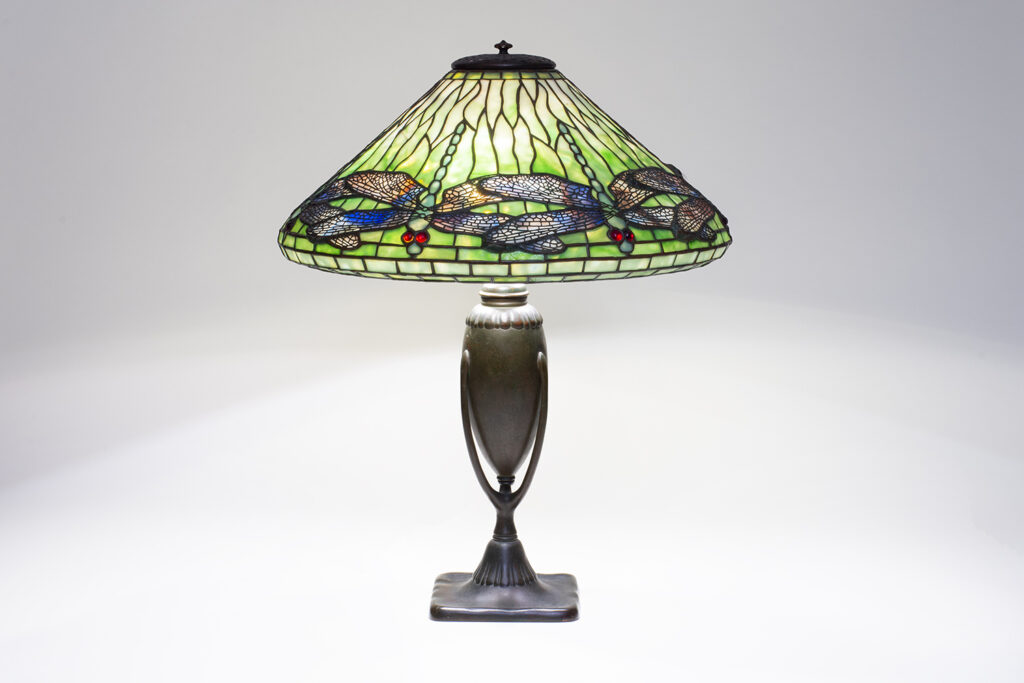
The Tiffany dragonfly lamp, attributed largely to Clara Driscoll, is one of the studio’s most recognisable designs. Dragonflies with outstretched wings in vivid blues, greens, and ambers are arranged around the shade, their bodies formed from iridescent favrile glass that seems to catch and hold light. Strong collector demand keeps dragonfly examples consistently active at auction.
Wisteria Lamps
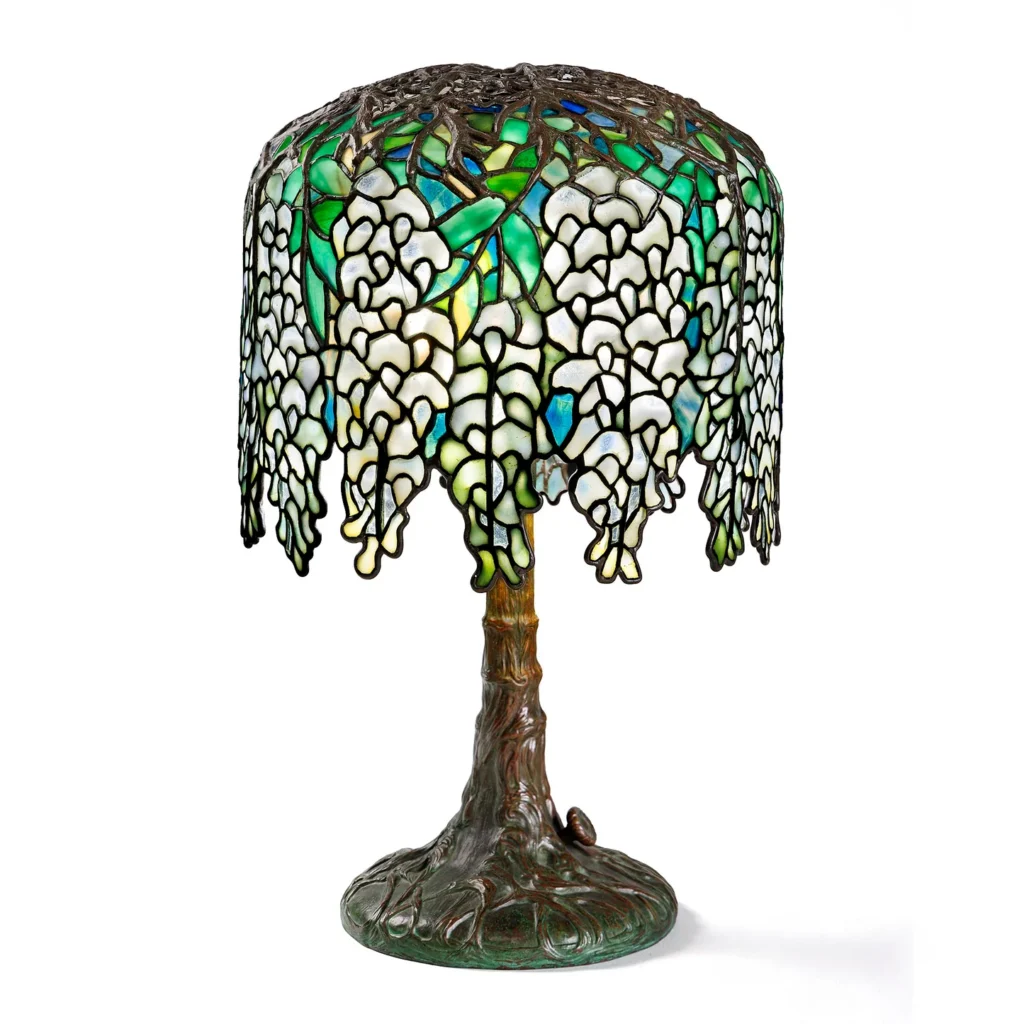
The Wisteria lamp is arguably the most technically complex and visually spectacular design produced by the studio. Cascading clusters of violet and blue blossoms hang from a naturalistic bronzed branch border, requiring thousands of individual glass pieces per shade. Wisteria Tiffany lamps regularly achieve the highest prices at auction, with exceptional examples selling for several million dollars.
Peony and Floral Lamps
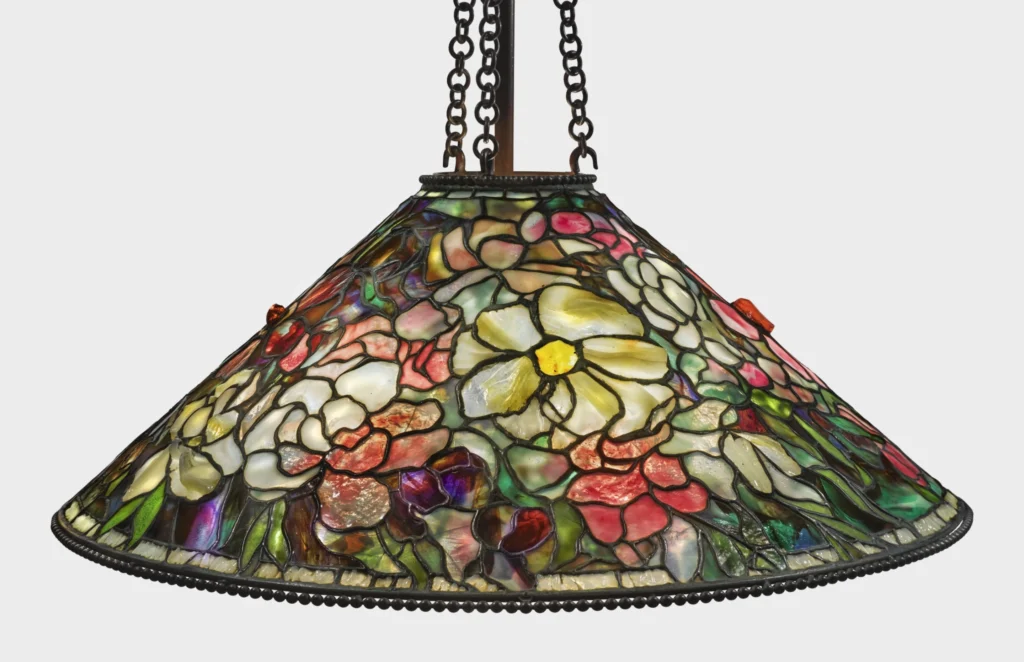
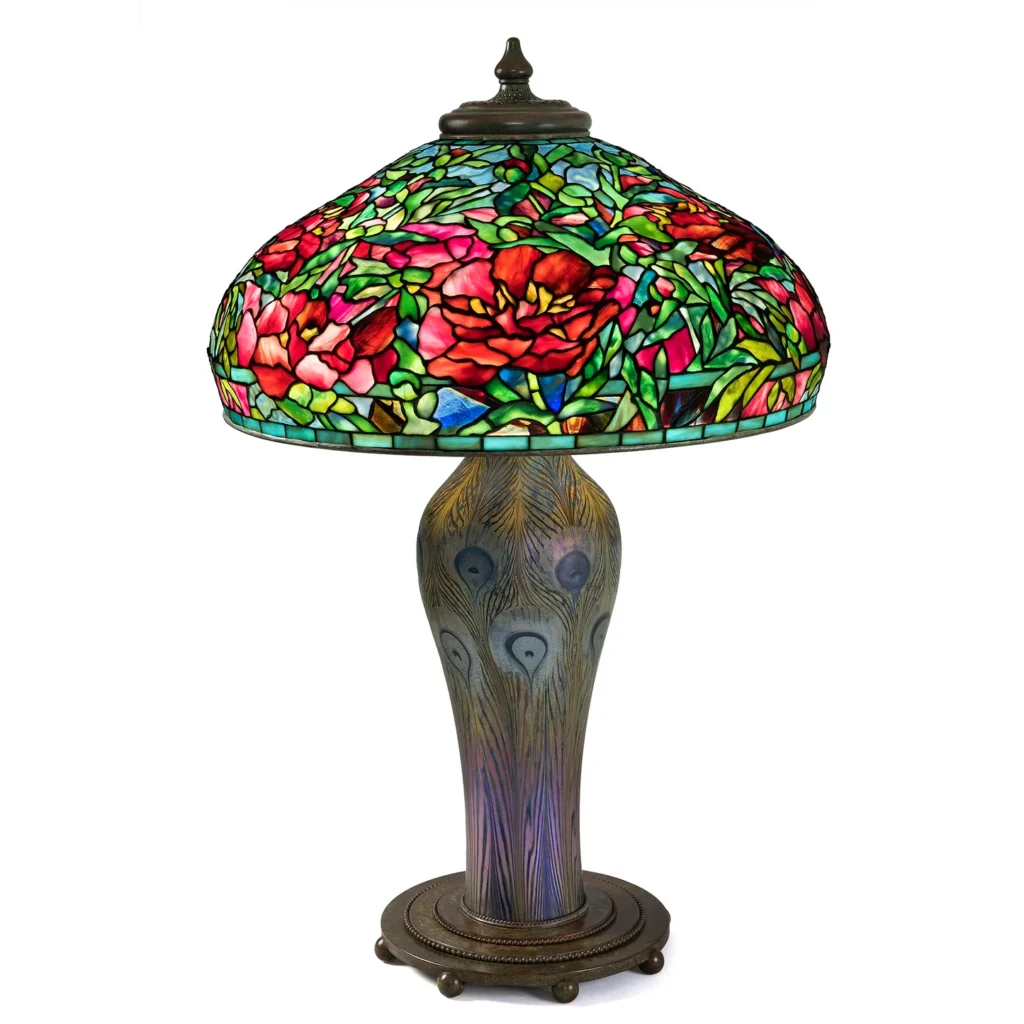
Botanical motifs, such as peonies, roses, tulips, and magnolias, form a rich category within the Tiffany catalogue. These floral Tiffany lamps deploy the studio’s greatest strength: the ability of favrile glass to render naturalistic color gradations that give each petal and leaf a living quality when illuminated.
Geometric Lamps
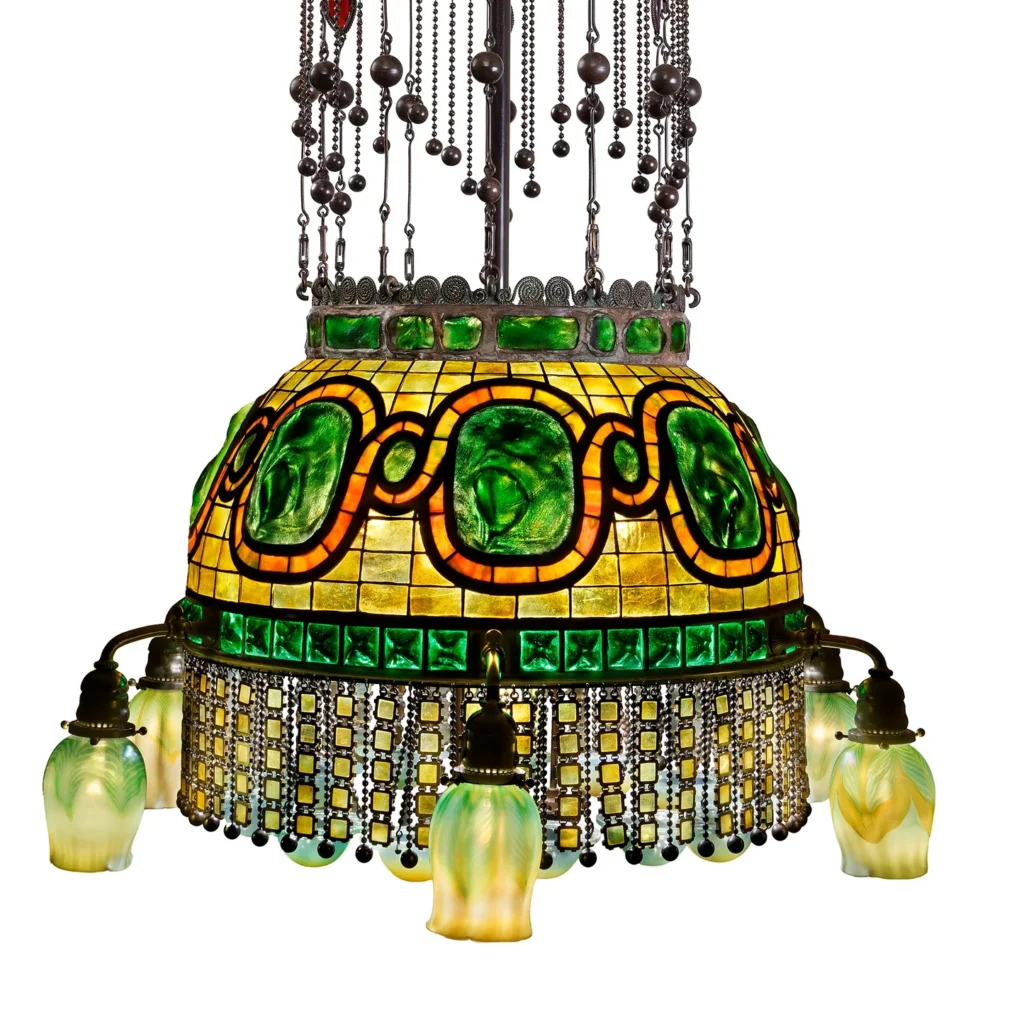
Geometric designs, like Greek Key, Acorn, Turtleback, and various banded patterns, represent some of the studio’s earlier work and tend to appeal to collectors who appreciate formal elegance over organic naturalism. These Tiffany geometric lamps are often more accessible price-wise than the floral masterpieces, making them a sensible entry point for new collectors.
Favrile Glass Shade Lamps
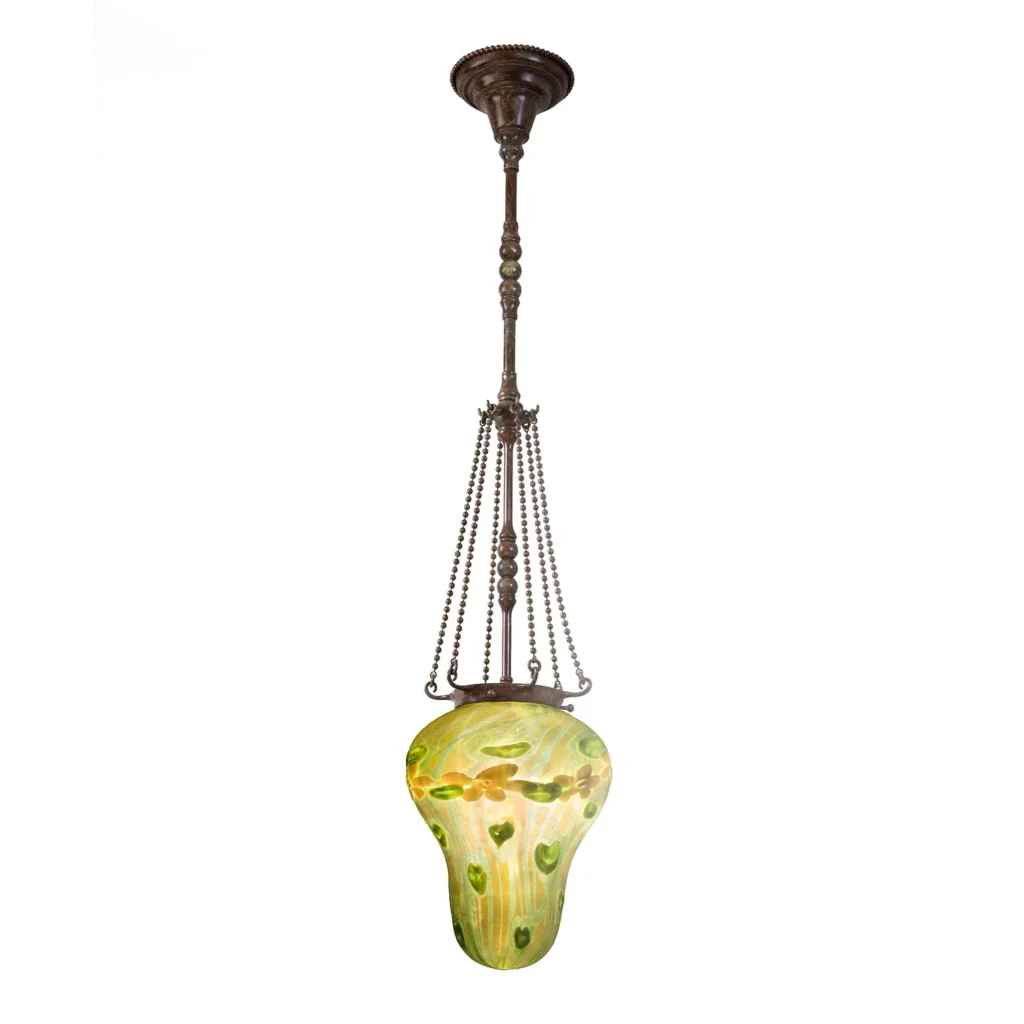
Some of the studio’s most understated, and to certain collectors, most beautiful, lamps feature shades made entirely from blown or moulded favrile glass with minimal leaded structure. These pieces foreground the extraordinary quality of the glass itself: subtle color transitions, a golden-amber iridescence, and a surface depth that no modern reproduction can credibly imitate.
How to Identify an Authentic Tiffany Lamp
Learning how to identify a real Tiffany lamp is the single most important skill a prospective buyer can develop. The market contains enormous numbers of fakes, reproductions, and misattributed pieces.
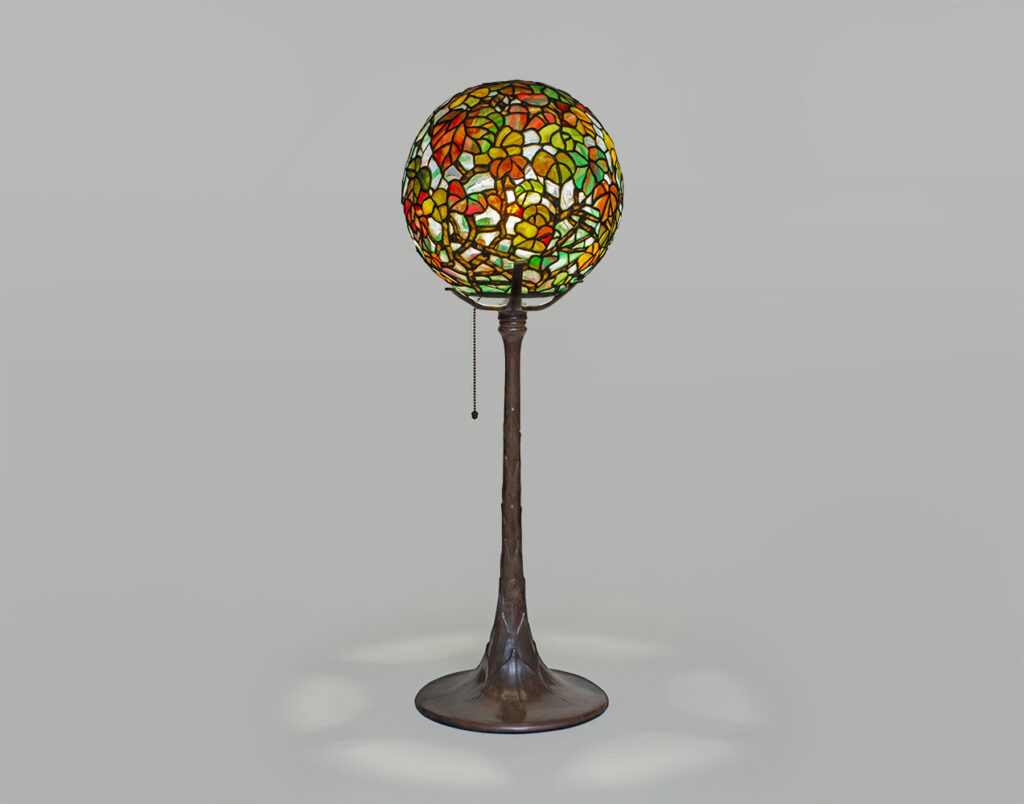
- Signatures and Marks: Most authentic Tiffany Studios shades are stamped or engraved with the mark “TIFFANY STUDIOS NEW YORK” along with a model number. Bases are similarly stamped. However, marks can be forged, so signatures alone are not sufficient proof of authenticity.
- Glass Quality: Genuine favrile glass has a quality of color and depth visible from both sides that is immediately different from modern machine-made glass. Hold a suspected original next to a known reproduction, and the difference is usually apparent.
- Soldering: Authentic solder lines are hand-applied and slightly irregular, a consistent rhythm of imperfection. Perfectly uniform solder lines are a red flag for machine production.
- Weight and Base Construction: Original bronze bases are heavy, with a fine patina that develops over decades and cannot be convincingly replicated quickly. Lightweight or plastic-feeling bases are disqualifying.
- Provenance and Documentation: A documented ownership history, exhibition records, or early auction records greatly strengthen any attribution. No serious purchase of a high-value Tiffany lamp should proceed without independent expert verification.
What Makes a Tiffany Lamp Valuable?
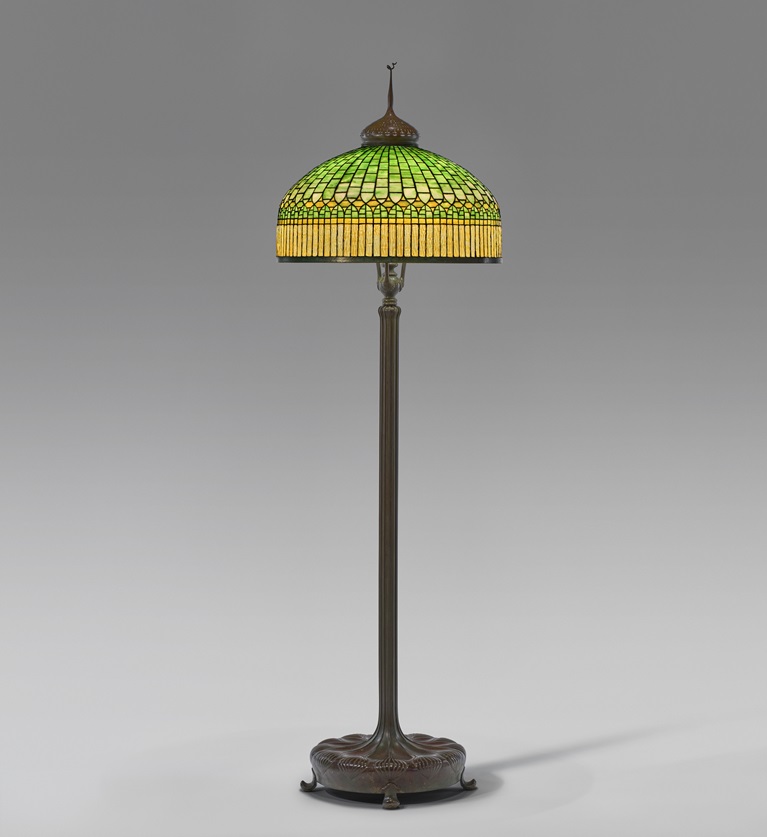
Tiffany lamp value is determined by a combination of factors. Design rarity sits at the top: a Wisteria shade on a tree-trunk base will always attract greater interest than a banded geometric. Condition is paramount—cracked glass, replaced panels, or damaged bases substantially reduce value. The presence of the original base, paired with the correct shade, is essential; mismatched combinations lose significant premium. Glass quality and the richness of color also differentiate high-value examples within any given design. Finally, documented provenance, the ability to trace a lamp’s history through credible ownership records, can meaningfully increase both price and buyer confidence.
Tiffany Lamps at Auction: Record Prices and Market Trends
The auction market for Tiffany lamps is active, global, and capable of producing extraordinary results. Major houses, including Christie’s and Sotheby’s, regularly feature important examples in their decorative arts sales. The most expensive Tiffany lamp ever sold at auction is the Wisteria model, with exceptional examples achieving prices in excess of $1 million and in some cases considerably more.
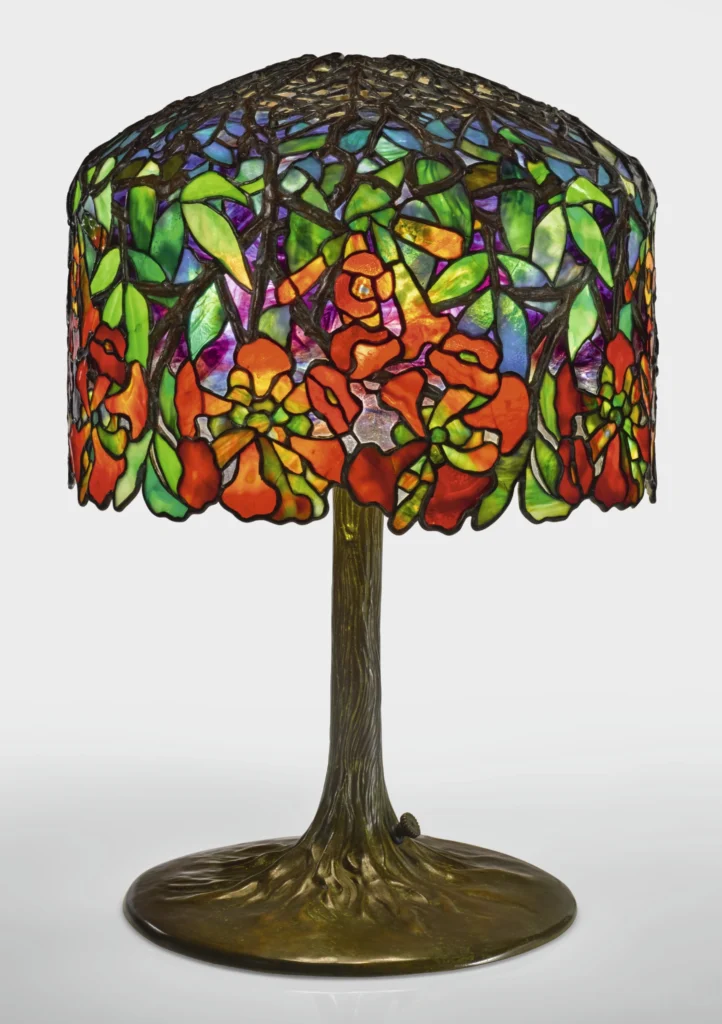
The current market is characterised by intense competition for the finest examples, particularly Wisteria, Peony, and Dragonfly designs in excellent original condition, while more common geometric patterns trade at more accessible levels. Collectors should monitor auction results closely to develop a reliable sense of current pricing.
How to Start Collecting Tiffany Lamps
Collecting Tiffany lamps rewards patience, education, and expert guidance. Before making any purchase, invest time in studying the field—visit museum collections, read specialist literature, and examine both authentic pieces and known reproductions. Entry-level collectors often begin with geometric designs or smaller floral examples, where the price of admission is lower, but the objects are still genuinely made by Tiffany Studios. For museum-quality pieces, budgets well into six figures or beyond are the reality.
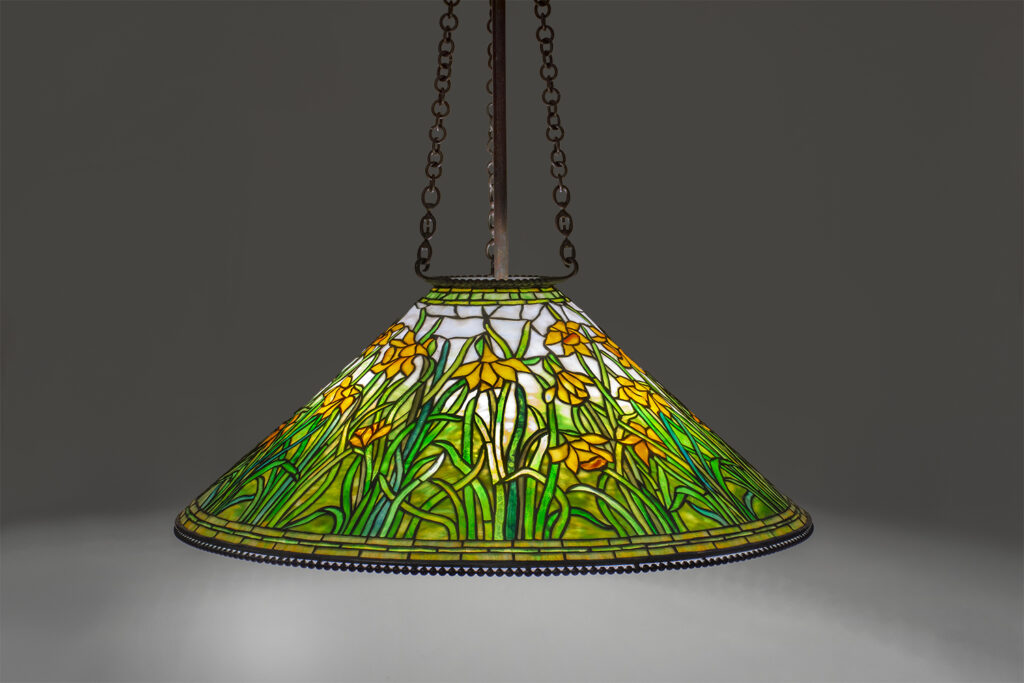
Reliable sources for buying antique Tiffany lamps include established auction houses, specialist dealers with verifiable reputations, and reputable galleries that offer condition reports and provenance documentation. Avoid purchasing high-value pieces online without physical inspection and independent authentication. The cost of expert verification is trivial compared to the risk of buying a forgery.
Caring for and Preserving Tiffany Lamps
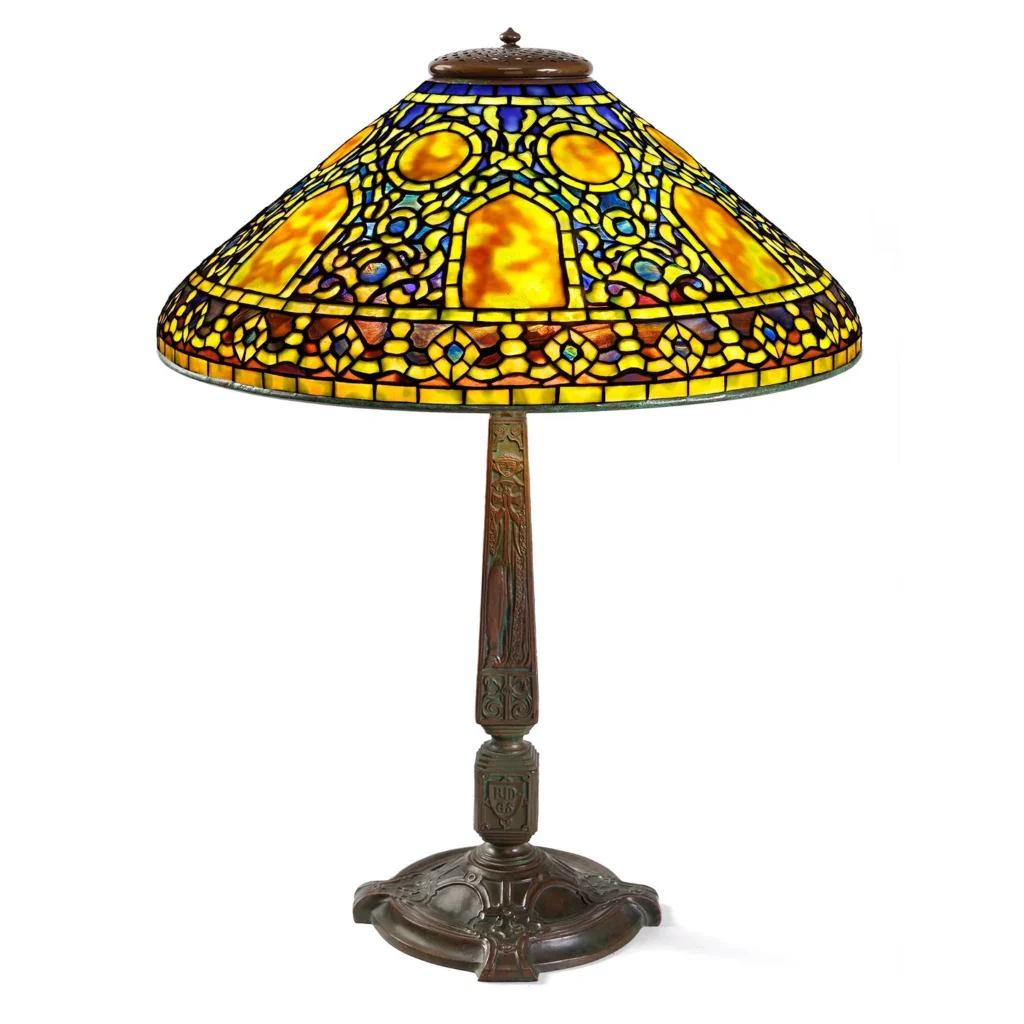
Cleaning Tiffany glass lamp shades requires a light touch. Use a soft, barely damp cloth to gently remove dust from the glass surface. Never apply cleaning sprays directly to the shade, as solvents can attack the solder and patina. Bronze bases should be dusted regularly and kept away from moisture; avoid applying commercial metal polishes, which will strip the original patina. When moving or repositioning a lamp, always hold the base rather than the shade, as the lead solder—while robust—can be stressed by lateral force. Restoration work, including replacing cracked glass or repairing solder, should only be undertaken by specialists with documented experience in period stained glass.
Tiffany Lamps in Interior Design Today
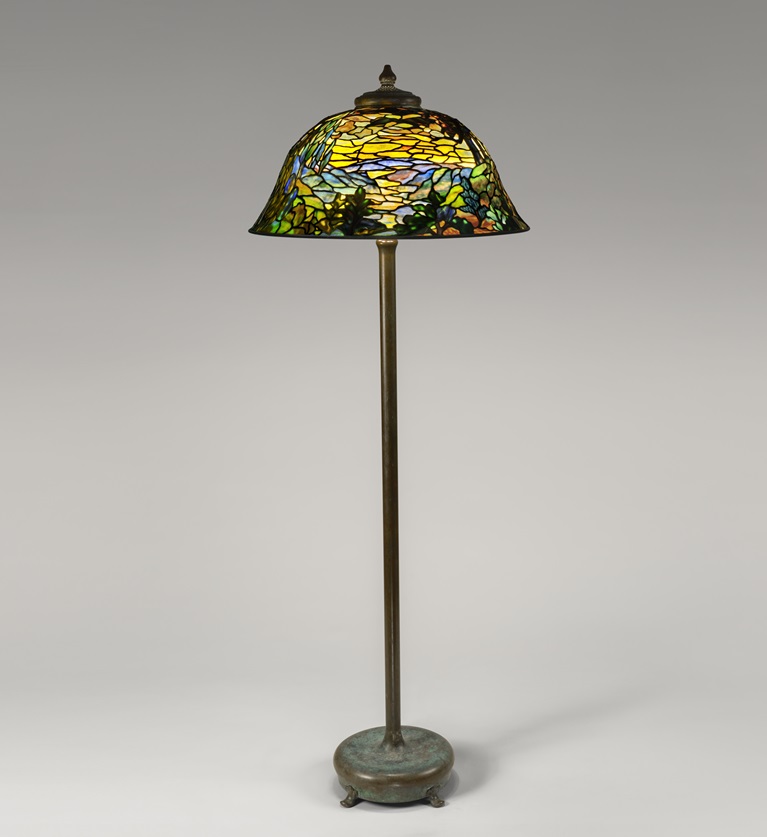
One of the most remarkable qualities of Tiffany lamps is their adaptability. Despite being over a century old, they integrate naturally into contemporary interiors, partly because their jeweled color and organic form have a timelessness that transcends period style. A Wisteria lamp in a modern apartment is not a period pastiche; it is a statement of the enduring power of exceptional craft. Used as a primary light source in a reading corner, as a statement piece on a console table, or as a counterweight to a minimalist interior, these lamps continue to justify their status as functional art.
Frequently Asked Questions
Are Tiffany lamps worth anything?
Authentic Tiffany Studios lamps are worth a great deal. Prices range from the low tens of thousands for modest geometric examples to well over one million dollars for rare floral masterpieces. Mass-produced Tiffany-style lamps carry only decorative value.
How can you tell if a Tiffany lamp is real?
Check for the “TIFFANY STUDIOS NEW YORK” stamp, examine the glass quality and hand-soldering, assess the weight and patina of the bronze base, and obtain professional expert authentication before any significant purchase.
Why are Tiffany lamps so expensive?
Authentic examples are rare, handmade objects produced in limited quantities over forty years. Each required exceptional skill to produce, uses patented materials unavailable elsewhere, and carries a century of cultural and artistic significance. Supply is finite and diminishing as serious collector demand continues to grow.
What is the most valuable Tiffany lamp?
The Wisteria lamp consistently ranks among the most valuable, with top examples achieving prices in excess of one million dollars at major auction houses. Other highly valuable designs include the Peony, the Magnolia, and exceptional Dragonfly examples in original condition.
Conclusion: Tiffany Lamps as Functional Art
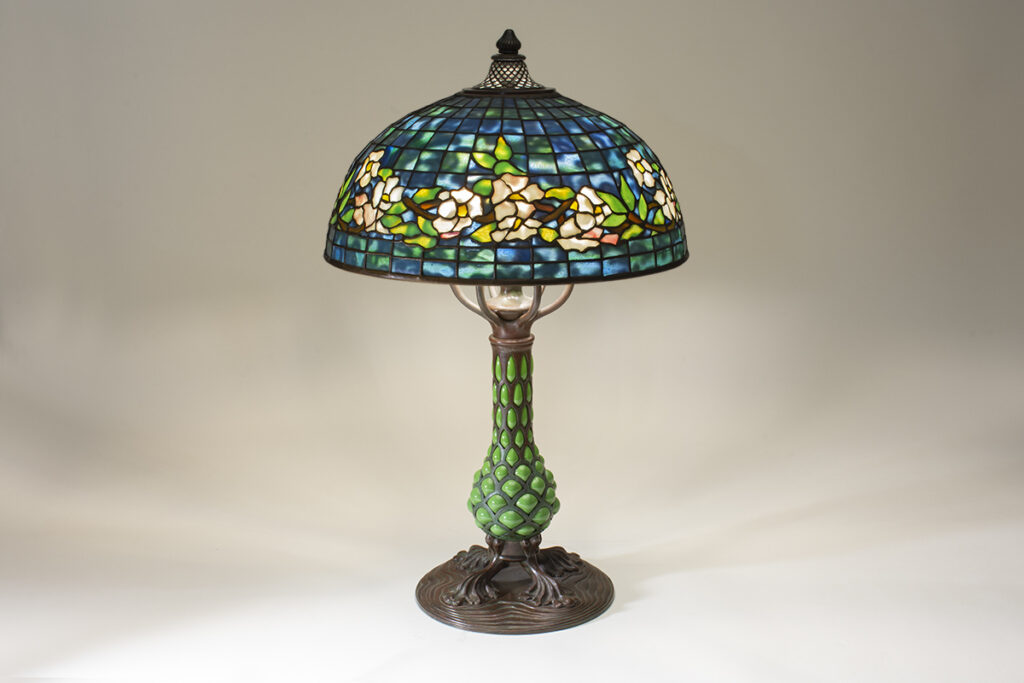
Tiffany lamps occupy a singular position in the history of decorative art, objects of extraordinary beauty and technical mastery that also happen to illuminate a room. They were made at a specific moment in history, by a group of exceptionally skilled craftspeople working under one of the most gifted designers of the American Art Nouveau movement, using materials and techniques that cannot be meaningfully replicated today. For collectors, that combination of rarity, artistry, and functional purpose is the definition of an enduring investment. For everyone else, it is simply a very good reason to find the best light in the room.
Featured image: Courtesy of Macklowe Gallery

Sewelo is a world where jewelry, watches, and objects come alive in a shimmering dance of fantasy. Through a literary lens, we celebrate the beauty and elegance that make these treasures more than just possessions.