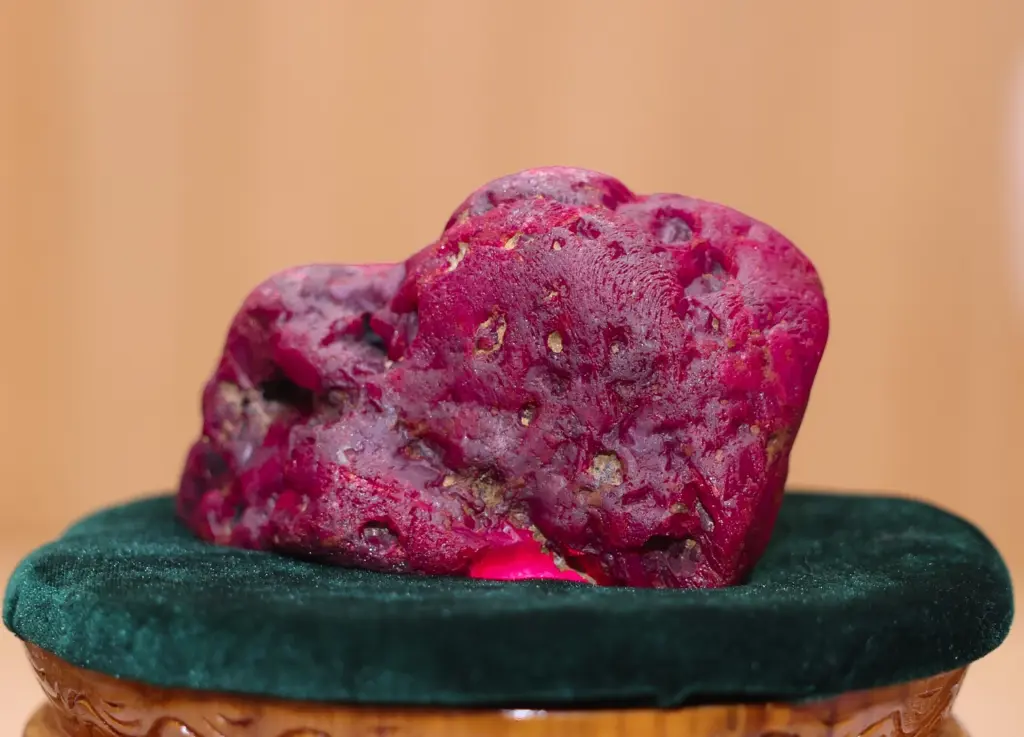

Gemologists and gem traders around the world are struggling to find words adequate enough to describe what has emerged from the storied mines of northern Myanmar. An 11,000-carat ruby found in Myanmar, a stone so vast in size and so vivid in color that seasoned experts are calling it a once-in-a-century discovery, has sent tremors of excitement across the global jewelry industry, auction houses, and scientific communities alike. No ruby of this magnitude has ever been confirmed in recorded history, and the find is already drawing comparisons to the most celebrated gemstone discoveries of all time.
Preliminary assessments conducted by an independent team of gemologists suggest the stone is not only extraordinary in size but also exceptional in quality. The 11,000-carat ruby found in Myanmar appears to exhibit the prized “pigeon’s blood” coloration—a deep, vivid red with a faint blue undertone that commands the highest premiums in the ruby market—and shows minimal natural inclusions for a stone of its considerable weight. If the stone’s quality is confirmed under full laboratory grading, it could comfortably eclipse every ruby auction record ever set and reshape international understanding of what the earth is capable of producing.
Discovery: Deep in the Heart of Mogok
The stone was unearthed in the Mogok Valley, a remote and mountainous region in the Mandalay Region of Myanmar, long celebrated as the world’s foremost source of high-quality rubies. Known locally as the “Valley of Rubies,” Mogok has produced some of the most coveted gemstones in human history, stones that have adorned royal families, passed between empires, and commanded record sums at the world’s premier auction houses.
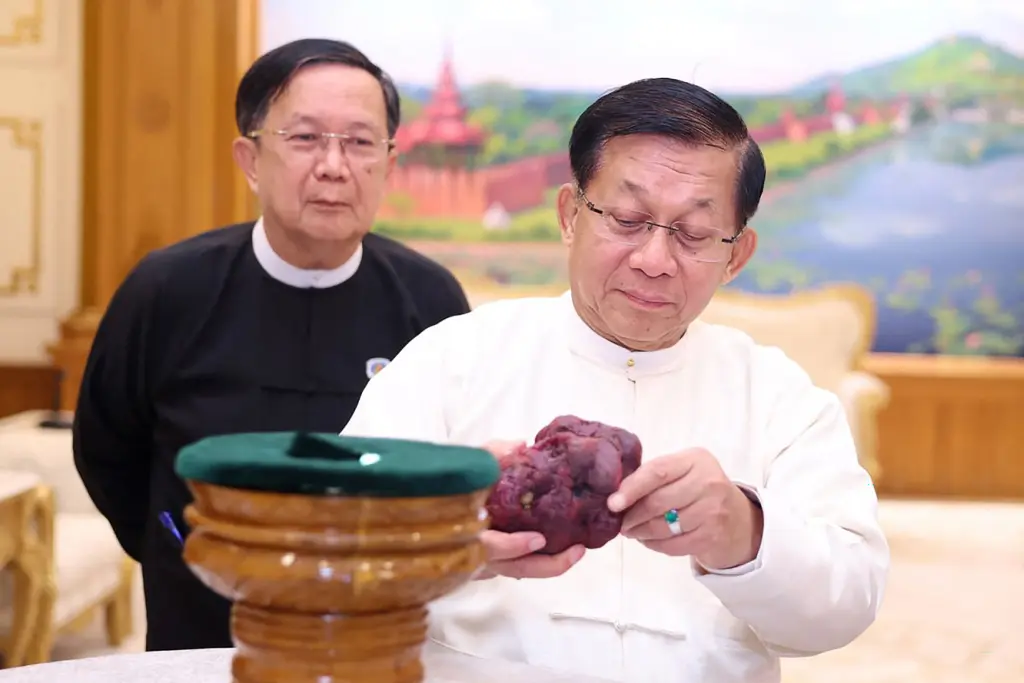
According to initial reports from local mining officials, the stone was discovered approximately forty metres below the surface during routine excavation operations at a licensed mining site. Workers noticed an unusually large pinkish-red mass embedded in the marble host rock during a routine shift. Operations were immediately halted, and the stone was carefully extracted over the following twenty-four hours. It was then transferred under armed escort to the nearby city of Mandalay for preliminary assessment.
Scientific Assessment: What the Numbers Mean
To fully appreciate the significance of this discovery, some context is necessary. Most commercially traded rubies weigh between one and five carats. Museum-quality rubies rarely exceed one hundred carats. The world record for the largest ruby found in Myanmar belongs to a 21,450-carat stone found in 1996, though that stone is considered largely ornamental rather than gem-quality. In the category of high-quality gem rubies, nothing approaching 11,000 carats has ever been documented.
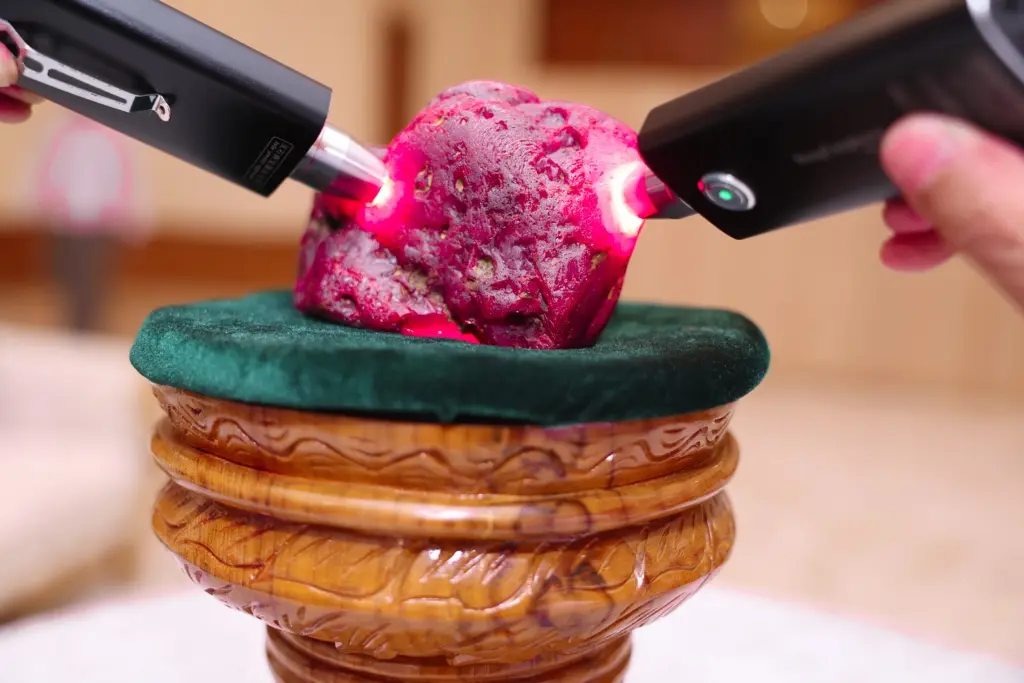
The stone has been transferred to an independent gemological laboratory in Bangkok, Thailand, where a full assessment is currently underway. Experts will examine its color grade, clarity, cut potential, origin, and treatment history, factors that collectively determine its final valuation. Initial spectroscopic analysis reportedly confirms the stone’s corundum composition and Myanmar origin, consistent with the geological signature of the Mogok region.
Dr. Priya Mehta, a senior researcher at the Bangkok Gemological Institute who is part of the assessment team, described the discovery as “extraordinary by every scientific and commercial measure.” She noted that if the stone is confirmed as untreated and of the colour saturation suggested by early photographs, the valuation exercise alone would be unprecedented. “There is genuinely no comparable reference point,” she said. “We are in uncharted territory.”
Market Impact: An Industry Holding Its Breath
News of the 11,000-carat ruby found in Myanmar has reverberated across every corner of the gemstone world, from the gem dealers of Yangon and Bangkok to the boardrooms of Christie’s and Sotheby’s in Geneva and New York. Auction specialists are already beginning the complex process of considering how such a stone might be brought to market, and at what price.
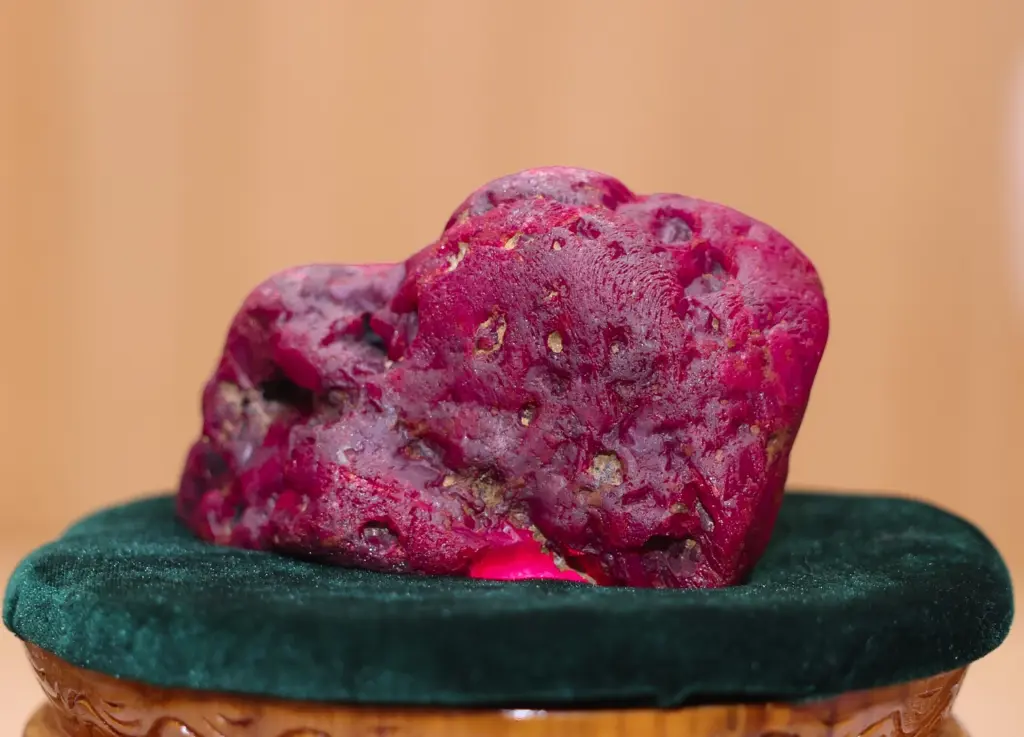
For context, the current world record price for a ruby at auction is held by the Estrela de Fura, a 55.22-carat Mozambique ruby that sold for $34.8 million at a Sotheby’s auction in June 2023. If the newly discovered stone is of comparable quality, even at a fraction of that per-carat price, given the challenges of cutting and marketing a stone of such size, estimates could reach into the hundreds of millions of dollars.
Industry analysts caution, however, that the path from raw discovery to auction room is rarely straightforward for exceptional stones. Questions remain about the appropriate cutting strategy, whether the stone should be kept whole as an extraordinary specimen or divided into multiple high-quality gems, as well as the legal framework governing its ownership, export, and sale.
A Discovery for the Ages
Whatever its ultimate commercial fate, the 11,000-carat ruby found in Myanmar has already secured its place in the history of mineralogy. Scientists say the stone’s formation likely required hundreds of millions of years of geological pressure and heat, a reminder of the extraordinary timescales at work beneath the earth’s surface.
As laboratory testing continues and the world waits for official confirmation of the stone’s full specifications, the 11,000-carat ruby found in Myanmar stands as a reminder that the natural world still has the power to astonish, and that, somewhere beneath the ancient mountains of Southeast Asia, history is still being written, one extraordinary stone at a time.

Sewelo is a world where jewelry, watches, and objects come alive in a shimmering dance of fantasy. Through a literary lens, we celebrate the beauty and elegance that make these treasures more than just possessions.