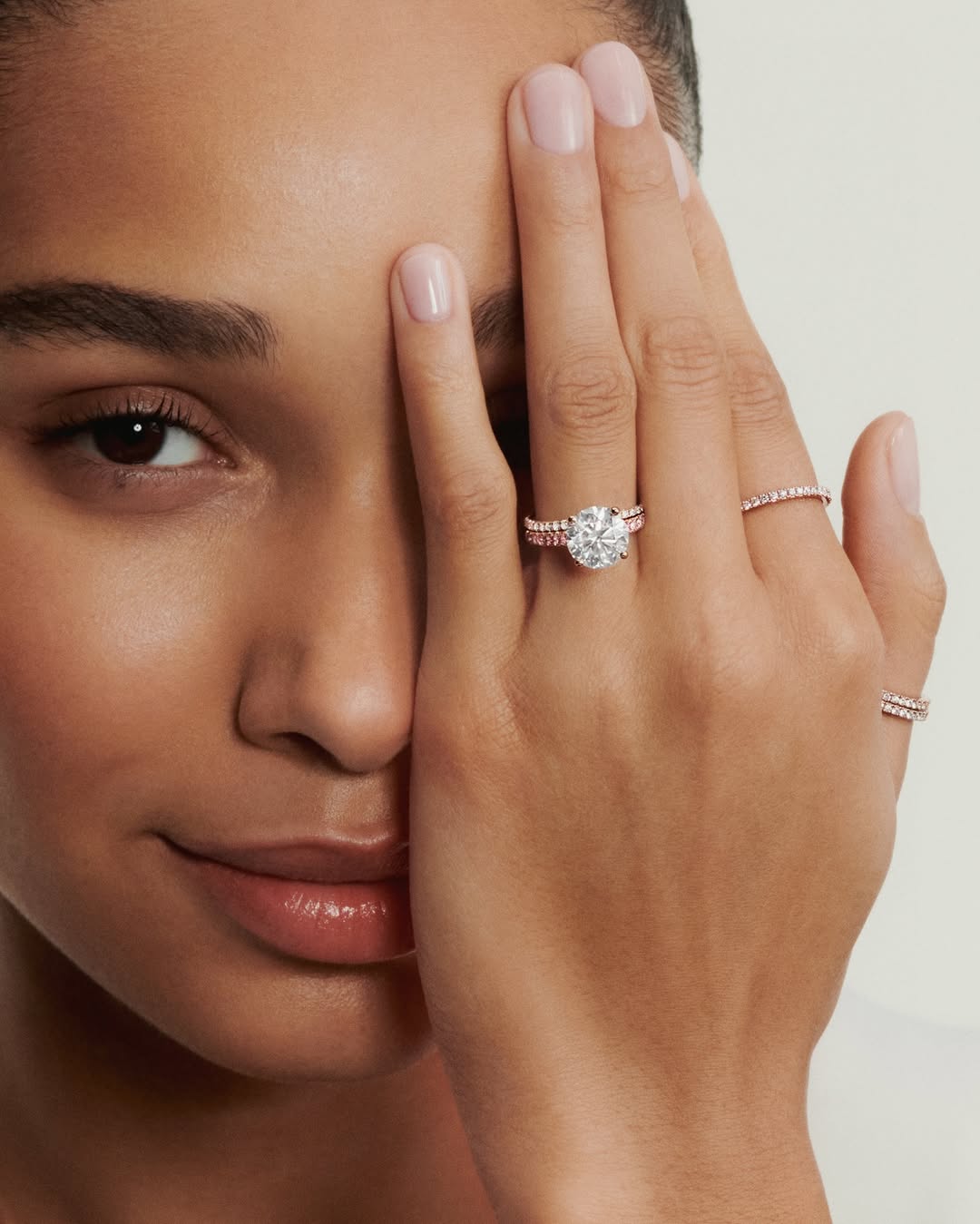

There’s a disturbing ritual that plays out thousands of times daily across social media. A woman, glowing with happiness, announces her engagement. She posts a photo—maybe of the proposal moment, maybe just her hand extended to show the ring. And then comes the flood of comments. But before you see “Congratulations!” or “I’m so happy for you,” you see something else entirely: “Is that real or lab-grown?” “How many carats?” “Girl, that’s it?” “He could’ve done better.”
We’ve reached a point where the size, cost, and origin of an engagement ring receives more attention than the actual love story it’s supposed to represent. The engagement ring culture we’ve created doesn’t celebrate commitment. It measures it. It quantifies it. It reduces love to dollars per carat, and we’ve all become complicit in this grotesque transaction.
But here’s the thing: this didn’t happen naturally. We didn’t wake up one day collectively deciding that a man’s love should be measured by how much he can spend on compressed carbon. This was engineered, methodically and brilliantly, by one company with one goal: to sell more diamonds. And even as that company now crumbles under the weight of changing consumer values, the toxic engagement ring culture they created continues to thrive.
How De Beers Weaponized Love
Let me take you back to the 1930s. At that time, only about 10% of engagement rings featured diamonds. The tradition wasn’t universal, wasn’t expected, and certainly wasn’t tied to any arbitrary salary calculations. Diamond engagement rings were one option among many, not the default, not the standard, and definitely not the measuring stick for a man’s devotion.
Then came De Beers.

In 1938, facing declining diamond sales during the Great Depression, De Beers hired the N.W. Ayer advertising agency to do something unprecedented: create demand for a product people didn’t know they needed. The campaign was masterful. By 1947, they’d coined “A Diamond is Forever“—a slogan that would later be voted the greatest advertising slogan of the 20th century. But the genius wasn’t just in making diamonds desirable; it was in making them mandatory.
The De Beers marketing campaign didn’t just sell diamonds. It sold a measuring system for love itself. They started with the suggestion that a man should spend one month’s salary on an engagement ring. By the 1980s, that figure had quietly doubled to two months. In some markets, they pushed for three months. The messaging was insidious: “How can you make two months’ salary last forever?”
Think about what that question implies. It suggests that financial sacrifice equals emotional commitment. That the depth of your love can be calculated by the depth of your bank account. That a woman’s worth—and a man’s devotion—can be determined by a price tag.

And it worked. Spectacularly. By 1990, approximately 80% of engagement rings contained diamonds. De Beers’ sales exploded from $23 million in 1939 to $2.1 billion by 1979. They had successfully convinced multiple generations that diamond engagement rings weren’t just traditional; they were essential. They’d transformed a luxury item into a moral obligation.
The two-month salary rule became gospel, repeated so often it felt like natural law rather than corporate marketing. And at the core of this entire operation was a fundamental lie: that a man’s financial sacrifice is the truest measure of his love.
The Woman Became Secondary to the Object
Here’s what disturbs me most about modern engagement ring culture: overnight, everything that actually matters in a relationship became irrelevant compared to carat weight.
Does he listen to her when she’s struggling? Doesn’t matter—how big is the diamond?
Does he support her ambitions and celebrate her victories? Irrelevant—is it natural or lab-grown?
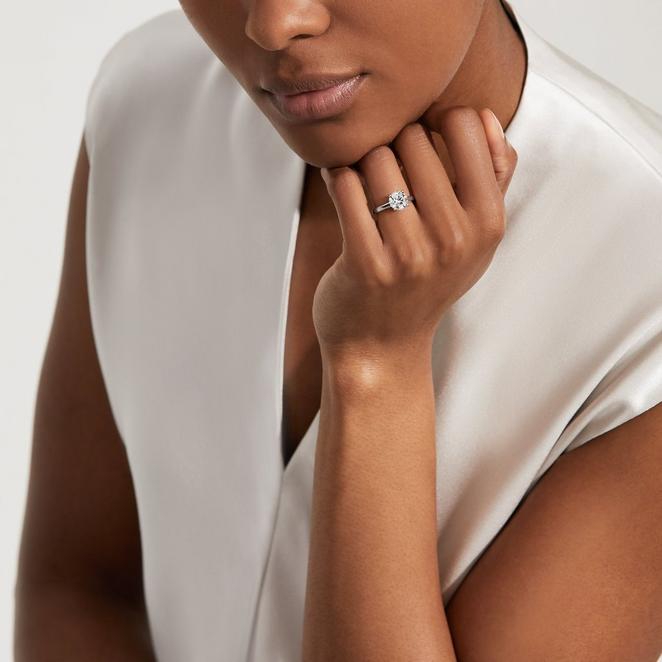
Does he make her laugh, does he hold her when she cries, does he show up consistently and treat her with respect? None of that matters if the ring doesn’t meet some arbitrary standard invented by a marketing department in the 1930s.
We’ve reduced the complexity and beauty of human relationships to a single, quantifiable metric. And in doing so, we’ve made the woman herself secondary to the object she wears. She becomes a prop in a transaction between the man and De Beers. Her value isn’t in who she is but in what she can display. His value isn’t in his character but in his credit limit.
The natural vs lab-grown diamonds debate makes this even clearer. These stones are chemically, physically, and optically identical. The only difference is origin—one formed over billions of years in the earth, the other created in weeks in a laboratory. But engagement ring culture has decided that natural diamonds are “better” because they’re more expensive. Not because they’re more beautiful. Not because they’re more meaningful. Simply because they cost more, and therefore “prove” he loves her more. This is what happens when you let a corporation define love. Even the science of the stone matters more than the people wearing it.
Social Media: The Modern Colosseum for Ring Shaming
Social media didn’t create engagement ring culture, but it gave it a megaphone and an audience. It transformed private celebrations into public performances subject to mass judgment. I’ve watched this play out countless times. A woman posts her engagement announcement, radiant and happy. And within minutes, the comment section becomes a courtroom. People who’ve never met the couple analyze the ring like appraisers, offering unsolicited opinions on size, cut, clarity, and cost. They estimate what he spent, debate whether it’s natural or synthetic, compare it to other rings they’ve seen.

“That’s not even a full carat.”
“Is that a lab diamond? I can tell.”
“My husband did better, and he makes less.”
“Girl, you said yes to THAT?”
These comments often outnumber the congratulations. The well-wishes get buried under an avalanche of material assessment. And the message is clear: before we celebrate your love, we need to evaluate whether it meets our standards.
This creates a vicious cycle. Women feel pressure to display their rings prominently, to prove their partners’ devotion met the test. Men feel pressure to spend beyond their means, to avoid the shame of being judged inadequate by strangers on the internet. The actual relationship—the day-to-day reality of building a life together—becomes almost irrelevant compared to the performative moment of ring reveal.
We’ve turned engagement announcements into a grotesque pageant where love is judged not by its depth but by its price tag. And we’ve all participated. Every time we comment on a ring’s size before offering congratulations, every time we privately judge whether someone’s partner “could have done better,” we’re perpetuating exactly what De Beers wanted: a culture where diamonds matter more than devotion.
De Beers Is Failing—But Their Lie Lives On
Here’s the irony: the company that created this toxic engagement ring culture is struggling. De Beers’ sales have collapsed. In the first quarter of 2025 alone, their rough diamond sales plummeted 44% to just $520 million. For the first half of 2025, they reported a staggering $189 million loss. They’re currently sitting on approximately $2 billion in unsold inventory—the largest stockpile since the 2008 financial crisis.
The diamond giant is crumbling. Lab-grown diamonds, which cost 80-90% less than natural stones and are chemically identical, have disrupted their monopoly. Younger consumers are questioning the value proposition, rejecting the artificial scarcity that De Beers spent a century maintaining. The company that convinced the world that diamonds were essential is now desperately trying to convince the world to keep buying them.
But here’s what kills me: even as De Beers fails, the culture they created thrives. We’re keeping their toxic legacy alive for free. We’ve internalized their marketing so deeply that we don’t even recognize it as marketing anymore. We think these standards are natural, traditional, meaningful—when they’re actually just advertising copy from the 1930s that we’ve mistaken for values. De Beers wanted us to judge love by carat weight so they could sell more diamonds. They’re not selling diamonds anymore. So why are we still judging?
What Real Love Actually Looks Like
Let me tell you what real love looks like, because I’m tired of pretending a ring can show it. Real love is in how he treats her when no one’s watching. It’s in how he speaks to her when he’s frustrated, how he supports her when she’s struggling, how he celebrates her when she succeeds. Real love is showing up consistently, day after ordinary day, choosing her again and again when the initial excitement fades and life gets hard.
Real love is in the tenderness of his kiss, not the size of the ring. It’s in how he makes her feel safe, respected, and cherished. It’s in whether he’s her partner or her accessory, whether he sees her as an equal or a trophy.

The celebrity world has given us more than enough evidence that massive rings don’t equal healthy marriages. We’ve watched women receive egg-sized diamonds only to spend years crying, hurting, enduring toxic relationships that ended in messy, public divorces. We’ve seen the pattern play out so many times it should be undeniable: money doesn’t equal love, and expensive rings don’t guarantee fulfilling marriages.
Meanwhile, some of the strongest, most beautiful marriages I’ve witnessed feature modest rings. Some feature no rings at all. Because the people in those relationships understand something fundamental: a ring is a symbol, but what it symbolizes should be the relationship itself. Not a salary, not a sacrifice, not proof of love for public consumption.
If you want to know whether a man truly loves a woman, don’t look at her ring. Look at how he treats her when she’s at her worst. Look at whether he encourages her growth or tries to control it. Look at how he speaks about her to others, how he handles conflict, whether he takes responsibility or deflects blame. Look at whether she feels more herself with him or less. Look at whether the relationship adds to her life or drains from it.
These are the measures that matter. These are what determine whether a marriage will thrive or crumble. And none of them can be purchased at a jewelry store.
Conclusion
This toxic engagement ring culture has had its time. It’s damaged relationships, created unnecessary financial stress, reduced complex human connections to simple material metrics, and made us all complicit in valuing objects over people.
It’s time to reclaim what actually matters. Love isn’t measured in carats. It’s measured in moments, in consistency, in character, in the thousand small choices that build a life together.
The ring doesn’t make the marriage. The people do. And the sooner we remember that, the sooner we can celebrate engagements for what they should be: two people choosing each other, not one person proving he spent enough money to deserve the other.
De Beers sold us a lie. Let’s stop buying it.
Featured images: De Beers

Amanda Akalonu is dedicated to weaving together the worlds of jewelry, watches, and objects through a lens of literary storytelling.