
There are some objects that seem to hum with life even in stillness—artworks that appear to breathe, to glow, to remember the hand that shaped them. Daum’s Grand Lotus Vase is one of those rare creations. It stands not merely as a vessel, but as a moment of suspended light, a bloom forever caught between the worlds of glass and spirit.
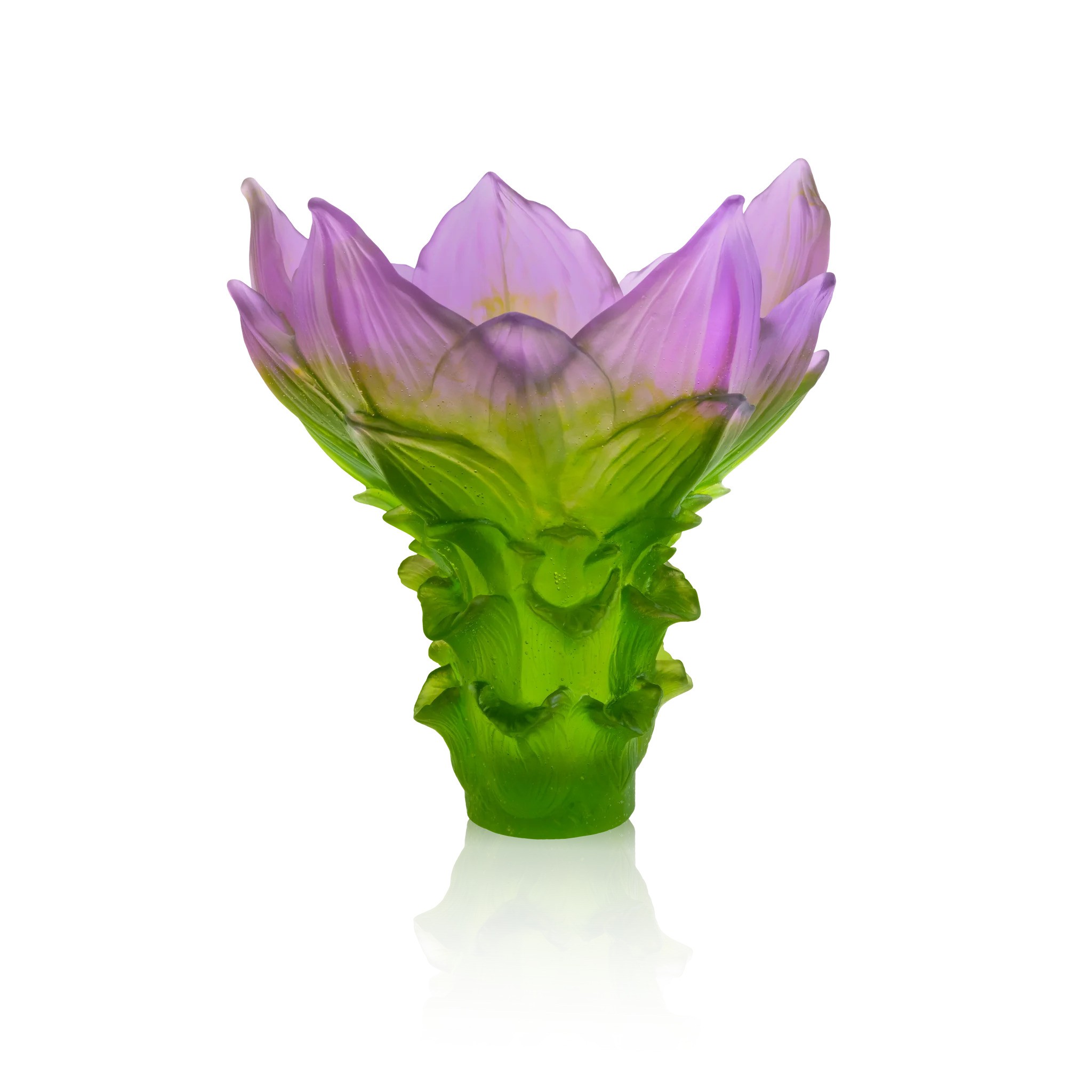
At first glance, it’s the color that pulls you in. A soft, fluid transition from pale green to lilac, echoing the delicate hues of a lotus pond at dawn. It feels alive, as though morning mist might rise from its crystalline petals. The vase seems to capture that elusive point where nature meets art, and where Daum’s century-old mastery of pâte de verre (glass paste) transforms molten sand into poetry.
The Lotus: A Symbol Beyond Borders
Few flowers carry as much meaning as the lotus. Rising pristine from murky waters, it has come to represent purity, renewal, and enlightenment across civilizations. In Egypt, it symbolized creation and rebirth; in Asia, spiritual awakening and harmony. The lotus is both delicate and resilient, and it is this paradox that Daum translates beautifully into crystal.
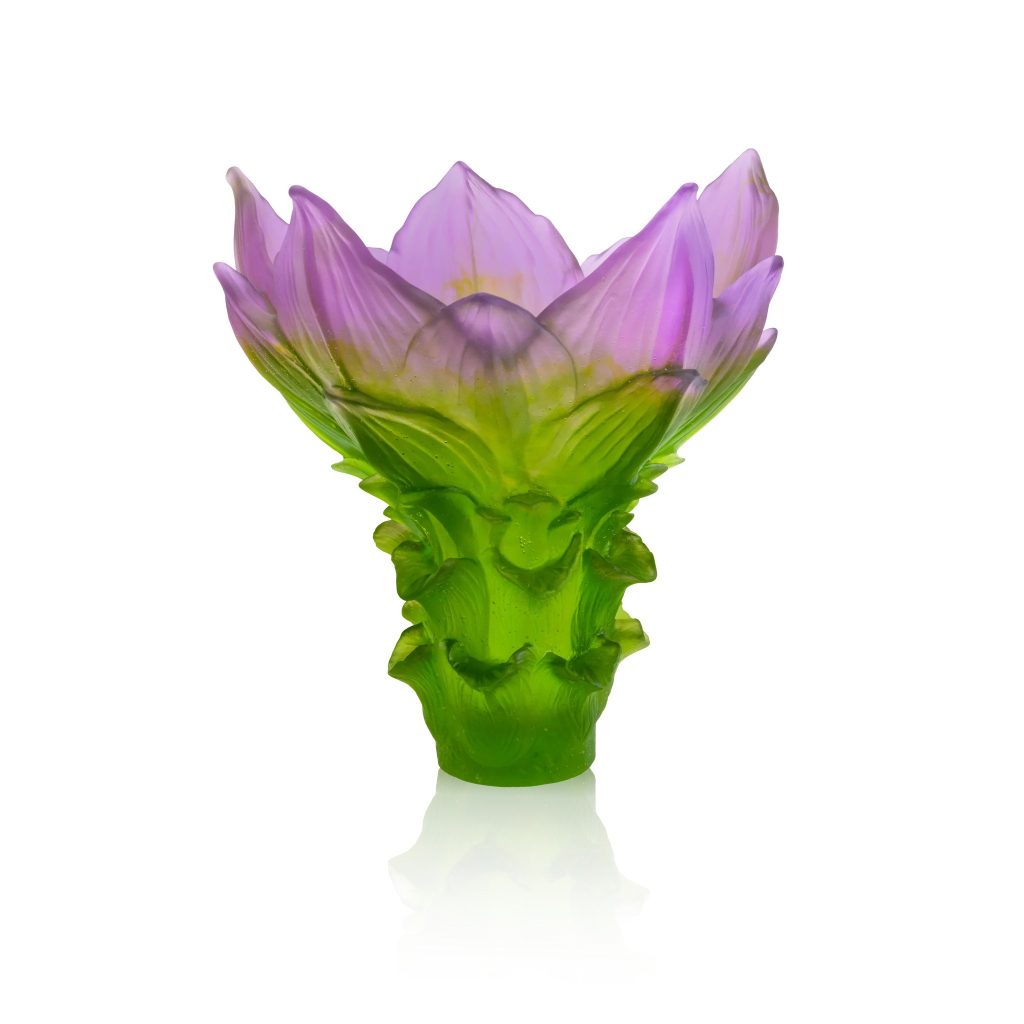
In the Grand Lotus Vase, the maison distills that essence into form. The petals aren’t arranged in neat symmetry — they curve and unfold naturally, as though the flower is mid-bloom. There’s movement, tension, and quiet grace. Each contour seems to hold a story, a suggestion of growth. In its translucent body, the vase becomes less an object and more a meditation. It serves as a reminder that beauty, like the lotus, often emerges from depth and stillness.
Sculpted Light, Sculpted Time
Crafting such a piece demands more than skill. It requires reverence. The Grand Lotus Vase is made using the painstaking pâte de verre technique, a process that dates back to ancient Egypt but was revived and perfected by Daum in the late 19th century.
Each creation begins with finely ground crystal mixed with metallic oxides to achieve color. This mixture is placed into a refractory mold and fired at a low temperature. What emerges isn’t just glass. It’s a sculpture of light, every gradient and bubble intentionally preserved.
For the Grand Lotus Vase, artisans devoted nearly 280 hours to its realization. From carving the wax model to layering color by hand, each stage carries an intimacy, a dialogue between the artist and the material. No two pieces are ever identical; each bears its own signature of variation, like a fingerprint of light.
This is the paradox of Daum: an art form that depends on precision yet thrives on unpredictability. The glass can never be entirely controlled—it flows, settles, and fuses in its own way, giving each vase a soul uniquely its own.
The Play of Color and Reflection
Daum’s mastery lies not only in form but also in hue. The Grand Lotus Vase radiates a delicate symphony of colors: green fading into violet, lilac melting into clear transparency. These gradients are not painted or applied afterward; they are born from within the glass itself.
As daylight moves across the surface, the vase shifts character. In morning light, it feels dewy and fresh; by evening, it glows like candlelight seen through silk. It’s as if the vase absorbs light and then returns it, softened and contemplative.
For collectors, this quality is part of Daum’s enduring magic—the way its creations seem alive, changing mood and tone with their environment. Displayed in a quiet room, the Grand Lotus Vase becomes a living presence, an interplay between form and atmosphere.
A Legacy of French Artistry
Founded in 1878 in Nancy, France, Daum has long stood at the intersection of fine art and decorative craft. The maison’s early collaborations with artists of the Art Nouveau movement, names like Majorelle and Gallé, helped define a new era of design where nature’s fluid lines became central to artistic expression.
Through the decades, Daum has remained faithful to that philosophy. The Grand Lotus Vase embodies everything the brand stands for: reverence for nature, innovation in technique, and the courage to blur the boundary between sculpture and ornament.
While many of today’s luxury houses chase modernity, Daum continues to look inward to the language of material, to the poetry of glass. The result is timelessness. The Grand Lotus Vase feels contemporary, yet it could easily belong to another century. It’s a continuity of beauty that refuses to age.
A Collector’s Treasure
Limited to 125 numbered editions, the Grand Lotus Vase holds a place of honor in Daum’s Jardin de Lotus collection — a series that celebrates the lotus in all its serenity and splendor. At around $13,000, it’s a luxury object, yes, but one that transcends price. It’s part of a tradition where rarity is not just about numbers, but about the irreplicable nature of handcraft.
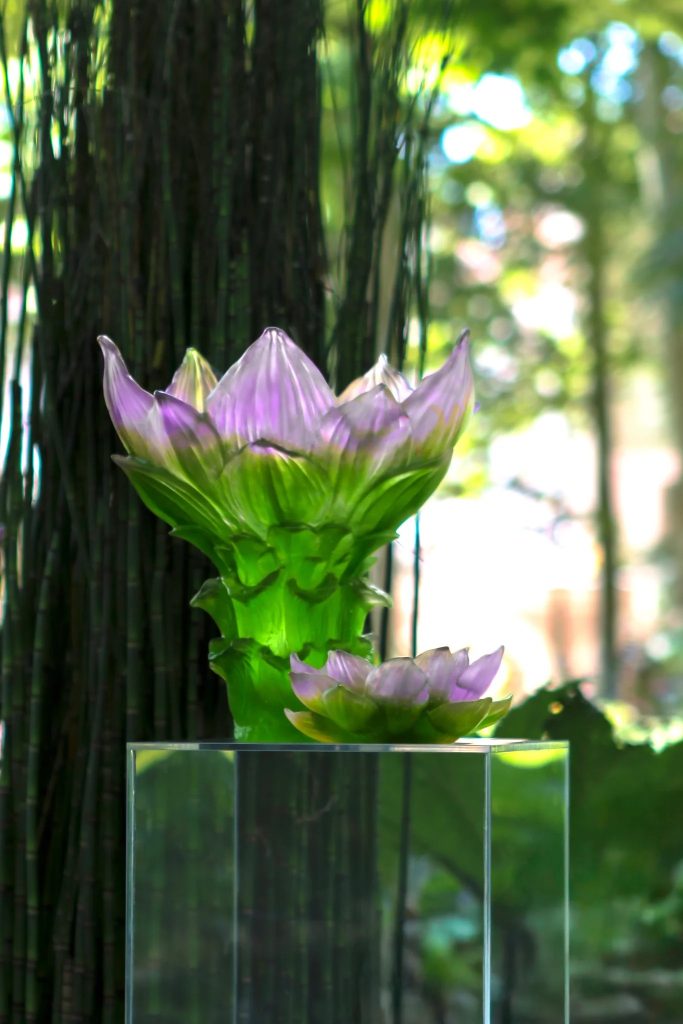
Collectors of Daum understand this: you’re not buying a decorative object; you’re preserving a human gesture. You’re owning a piece that was touched, shaped, and willed into existence by artisans who see glass not as fragile, but as eternal.
The vase’s substantial weight (over 10 kilograms) grounds its ethereal beauty in physical presence. It’s both sculpture and vessel, inviting you to imagine it holding nothing at all, or perhaps a single stem — a lotus, naturally — its reflection shimmering through crystal like light through water.
The Spirit Within the Glass
What makes the Grand Lotus Vase so captivating isn’t just its form or color, but its quiet spirituality. The lotus motif invites reflection on rebirth and serenity. The vase feels like a vessel not only for water or flowers, but for emotion—for peace, gratitude, and beauty distilled.
In a world that moves at dizzying speed, Daum’s work reminds us of the value of slowness. It reminds us to allow time to refine, rather than rush. Every petal on the vase speaks of patience. Every gradient tells a story of transformation.
Beyond Ornament
Art, at its best, evokes feeling. The Grand Lotus Vase does exactly that. It doesn’t scream for attention; it murmurs. It stands as an emblem of quiet luxury—a kind of beauty that doesn’t fade with fashion or require explanation.
Perhaps that’s why Daum endures. In its crystal gardens, its poppies, orchids, peonies, and now lotus, there is always a reverence for life’s fragility and resilience. The Grand Lotus Vase isn’t just an object to be admired. It’s an invitation to slow down, to notice light, and to rediscover the miracle of stillness.
Final Reflections
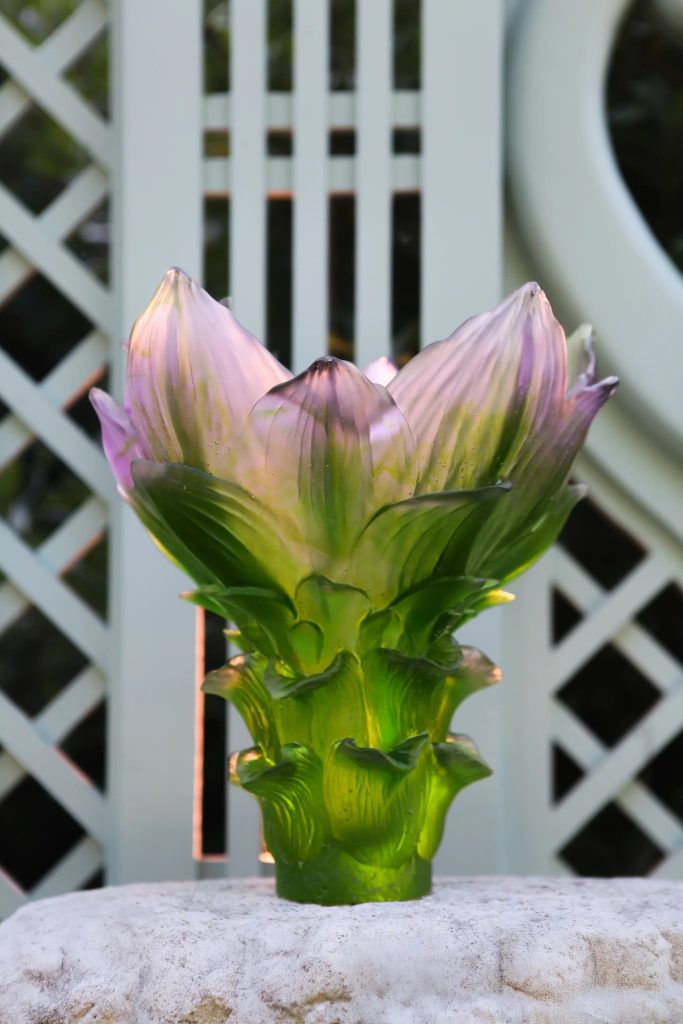
The lotus is said to bloom even in the darkest waters. This is a metaphor for hope and renewal. In Daum’s hands, that story becomes tangible. The Grand Lotus Vase captures not just a flower, but a philosophy: that true beauty is born from transformation, that fragility can be strength, and that art, when shaped with devotion, can touch the eternal.
To stand before this vase is to see what happens when fire, earth, and human spirit align. It’s not just crystal. It’s consciousness, frozen in bloom.
Images: Courtesy of Daum

Sewelo is a world where jewelry, watches, and objects come alive in a shimmering dance of fantasy. Through a literary lens, we celebrate the beauty and elegance that make these treasures more than just possessions.