
There are luxury brands, and then there is Baccarat crystal. Founded in 1764, Baccarat has spent two and a half centuries making the kind of objects that end up in royal collections, museum permanent collections, and the most discerning private homes on earth. It is a house that has survived wars, political upheaval, and the full sweep of changing taste by doing one thing with absolute consistency: making crystal of extraordinary quality. That genius, in the most admirable sense, is exactly what collectors love about it.
Baccarat crystal glass appears in everything from state dinner tables at the Élysée Palace to the bars of the world’s finest hotels, from chandelier installations in the grandest ballrooms to jewelry worn at Paris Fashion Week. The house’s range is genuinely extraordinary—stemware, vases, lighting, sculptures, perfume bottles, decorative objects, and fine jewelry, all united by the same standard of clarity, precision, and craft. This guide covers everything you need to know about Baccarat crystal, including its history, manufacture, iconic collections, how to identify authentic pieces, how to assess value, and how to build a collection worth having.
What Is Baccarat Crystal?
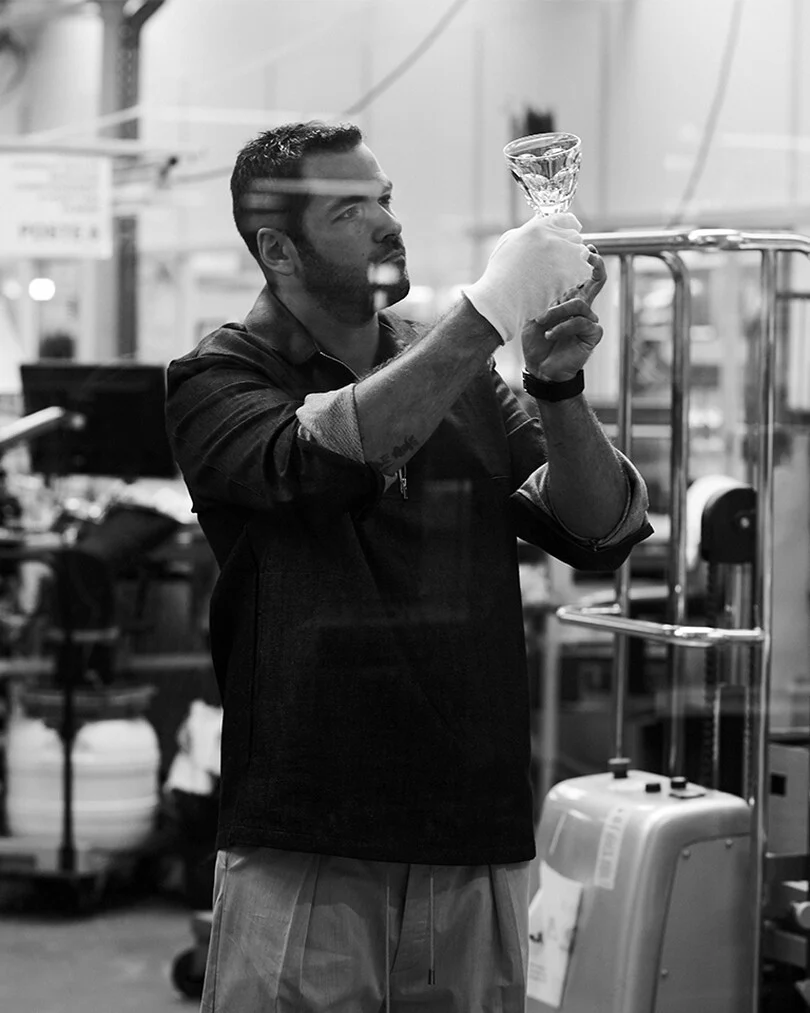
The distinction between crystal and ordinary glass matters more than most buyers realize, and it matters especially when assessing what makes Baccarat crystal worth its price. Ordinary glass is primarily silica. Crystal adds lead oxide—or, in modern formulations, barium oxide or zinc oxide—which dramatically increases the refractive index of the material, producing the brilliance, weight, and resonance that distinguishes fine crystal from glass you can buy anywhere.
Baccarat crystal is distinguished from other crystal manufacturers by four primary characteristics. The first is exceptional clarity. It boasts a colorlessness so pure that it is described as “white,” achieved through extraordinarily refined raw materials and meticulous production controls. The second is brilliance. The material has a special ability to refract light into spectral color, producing the prismatic effect visible in a cut Harcourt glass held against a window. The third is weight. Baccarat crystal has a density and solidity that communicates quality the moment you pick it up. The fourth is resonance. If you strike a Baccarat crystal glass gently, the note it produces has a clarity and sustain that lesser crystal simply cannot match. Together, these qualities explain why Baccarat France has been the benchmark for fine crystal for over two and a half centuries.
The History of Baccarat Crystal
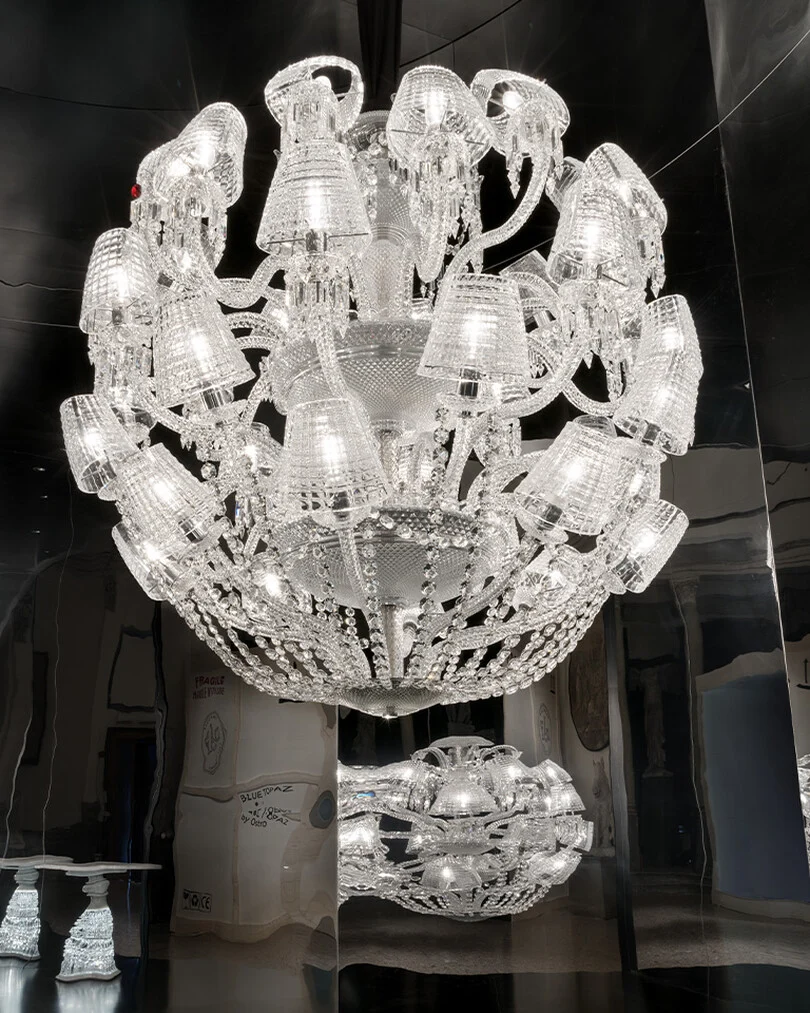
Baccarat was founded in 1764 in the town of Baccarat in the Lorraine region of northeastern France, established by royal decree from King Louis XV. The region had an abundant supply of wood for furnaces and high-quality silica sand (the two essential raw materials for glassmaking). Within decades, the workshop had established a reputation for quality that reached beyond France’s borders.
The nineteenth century was Baccarat’s golden age. The house gained its first royal patron in 1823, when King Louis XVIII placed the first official royal order for a complete service of crystal table glassware. From that point, the list of royal and imperial clients grew steadily—Napoleon III, Tsar Nicholas II, the Shah of Persia, and the Sultan of the Ottoman Empire all ordered from Baccarat France. The house’s appearances at the great World’s Fairs brought international recognition and a series of medals that confirmed its position at the summit of the luxury crystal world.
The twentieth century brought new challenges and new directions. Two World Wars interrupted production and tested the house’s resilience. But Baccarat responded to each disruption with renewed creative ambition, collaborating with contemporary artists and designers, including Salvador Dalí, Philippe Starck, Andrée Putman, and more recently Marc Newson, to produce limited editions that placed the house in dialogue with the broader world of contemporary art. Today, Baccarat crystal remains in production in Lorraine, where the same craft traditions established in the eighteenth century continue alongside more contemporary design commissions.
How Baccarat Crystal Is Made
The process of making Baccarat crystal glass is extraordinary in its labor intensity, and understanding it makes the price of authentic pieces immediately comprehensible. A single object, whether a vase, a chandelier pendant, or a wine glass, may pass through the hands of dozens of artisans before it leaves the Baccarat workshops.
It begins with the crystal formulation itself. Raw materials are melted at temperatures exceeding 1,400 degrees Celsius in furnaces that never cool. The molten crystal is then either blown by mouth or mouth-blown into a mold by a maître verrier (a master glassblower) who shapes the material in a window of seconds while it remains workable. This stage alone requires years of training. The temperature at which crystal can be worked is narrow, and the physical demands on the blower are considerable.
Once the form is established, the piece moves to cutting. Baccarat’s signature geometric cuts—the deep facets of the Harcourt, the hexagonal stars of the Mille Nuits, the bold geometric patterns of the Louxor—are made by hand using diamond-tipped cutting wheels, each pass guided by the artisan’s eye and muscle memory. The piece is then polished, using acid or mechanical polishing to restore the clarity of cut surfaces. Engraving, gilding, and the application of the acid-etched Baccarat mark follow. Then a final quality inspection that rejects any piece showing the slightest imperfection concludes the journey. The reject rate at Baccarat is significant, which is part of why authentic Baccarat crystal costs what it does.
The Most Famous Baccarat Crystal Collections
Harcourt
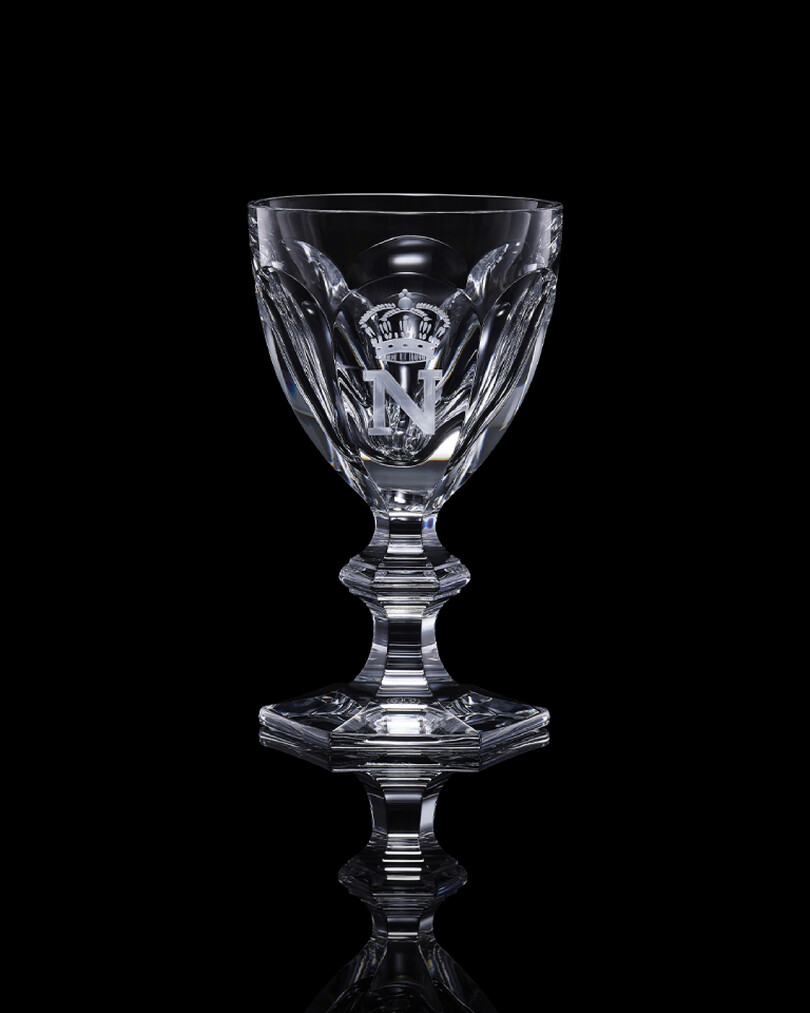
If Baccarat crystal has a single defining design, it is the Harcourt. Created in 1841, the Harcourt glass has appeared on the tables of every French head of state since Louis-Philippe and is included in the permanent collections of the Musée d’Orsay and the Louvre. It boasts a heavy hexagonal base, tapered bowl, and deep geometric facets that catch light from every angle. The Hacourt has been reinterpreted in color, in new forms, and in collaboration with contemporary designers, but the original remains in production essentially unchanged. That one-hundred-and-eighty-five-year-plus record of continuous production without modification is, in design terms, about as close to perfection as anything gets.
Shop editor’s finds
Mille Nuits
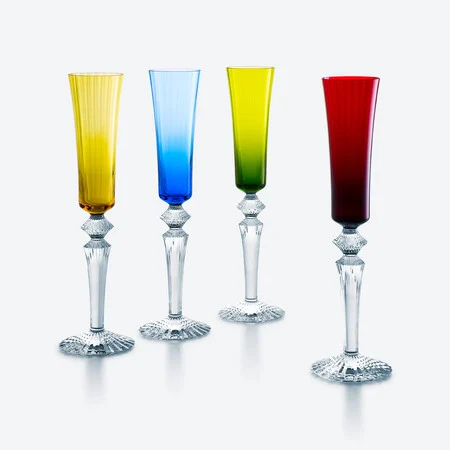
The Mille Nuits collection, its name drawn from One Thousand and One Nights, is Baccarat’s most romantic and maximalist range, featuring thousands of hexagonal star-shaped cells across each piece that create a mosaic effect of extraordinary visual complexity. In a candlelit room, a Mille Nuits vase or centerpiece appears to contain its own light source. The collection spans stemware, barware, vases, lighting, and decorative objects.
Shop editor’s edit
Masséna
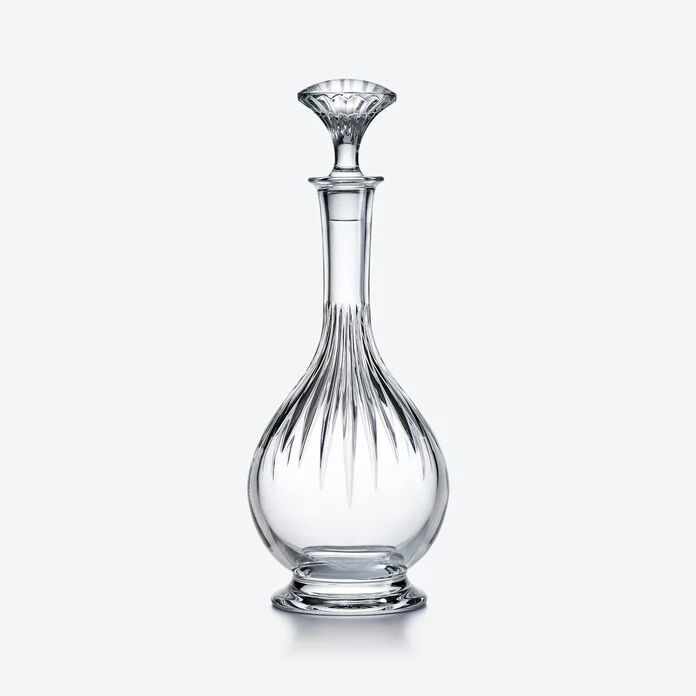
Named after the Avenue Masséna in Nice, the Masséna collection deploys bold oval and circular facets in a pattern that creates a strong prismatic effect. It is one of the more architecturally imposing Baccarat collections, and it appeals strongly to collectors who want Baccarat crystal’s optical qualities expressed in a more contemporary visual language.
Shop editor’s selection
Louxor
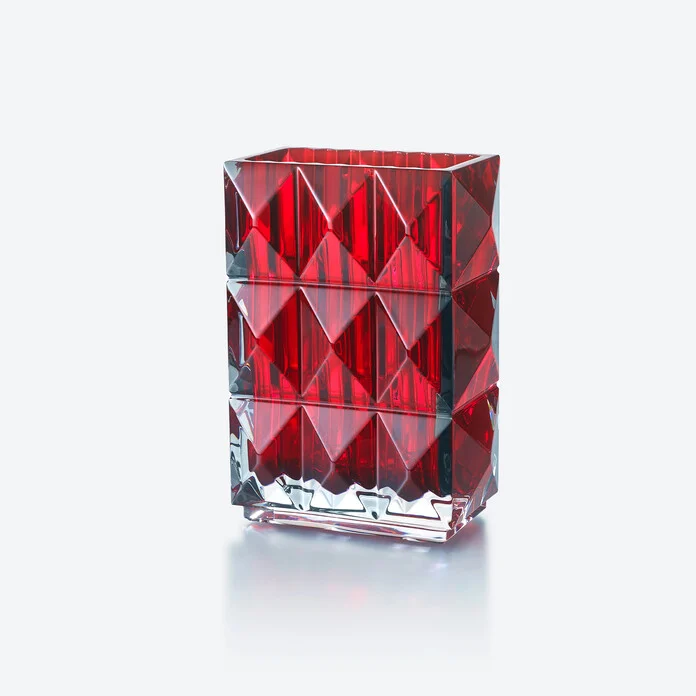
Inspired by ancient Egyptian architecture, the Louxor collection features deep geometric cuts that echo the monumental forms of Egyptian temples. It is among the most dramatically cut Baccarat crystal collections, with a boldness that works particularly well in large-format vases and decorative objects. This is highly sought-after by collectors who want statement pieces.
Shop editor’s selection
Eye Collection
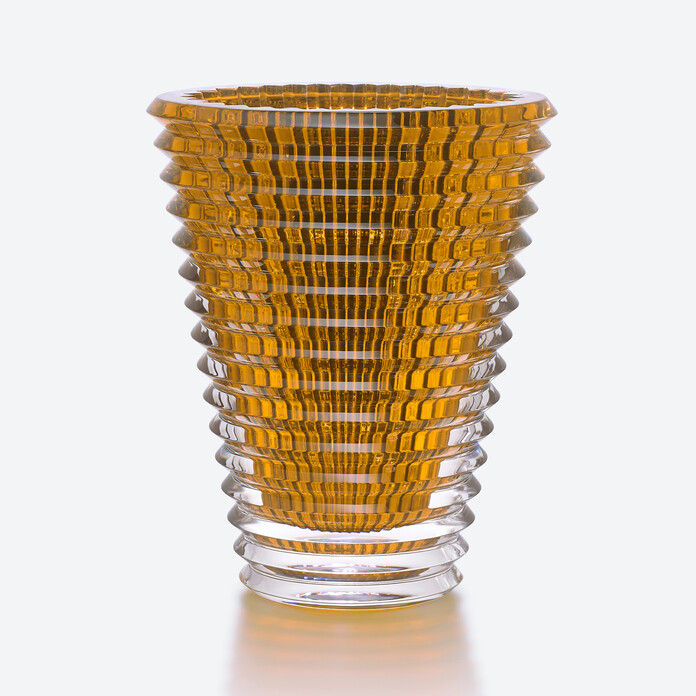
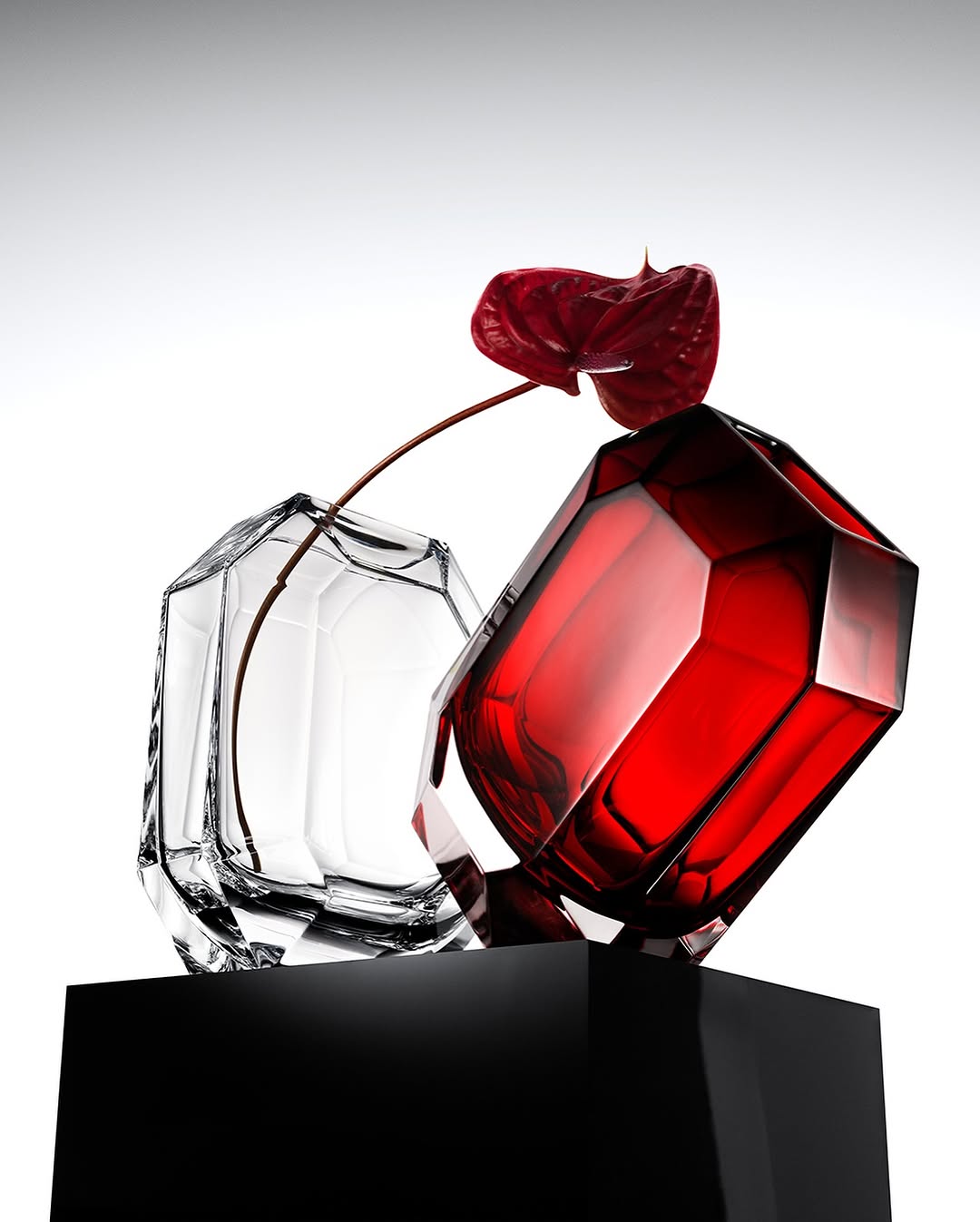
The Eye collection is Baccarat crystal at its most conceptually playful, a series of pieces featuring bevel cuts that result in an optical illusion created by the distinctive cuts. The effect, particularly in colored crystal, is startling and genuinely art-object quality. The Eye vase has become one of the house’s most recognized contemporary designs.
Shop editor’s curation
Zenith Chandeliers
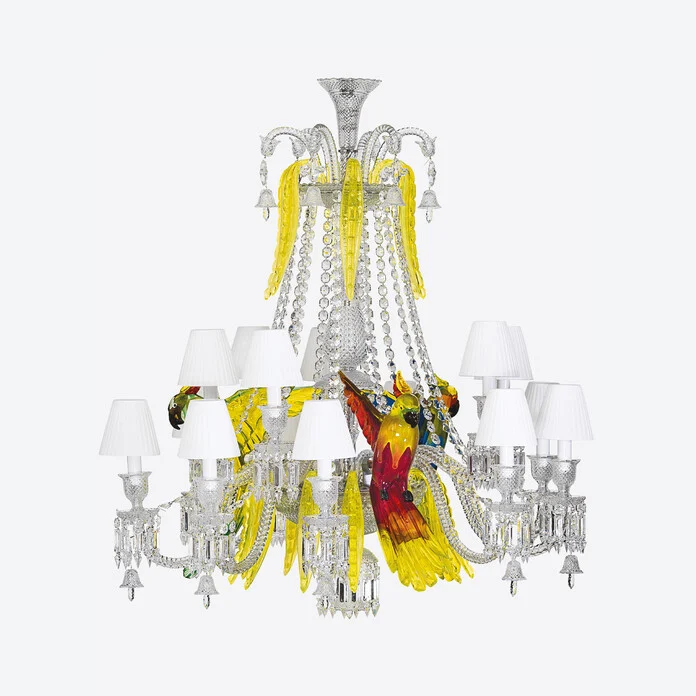
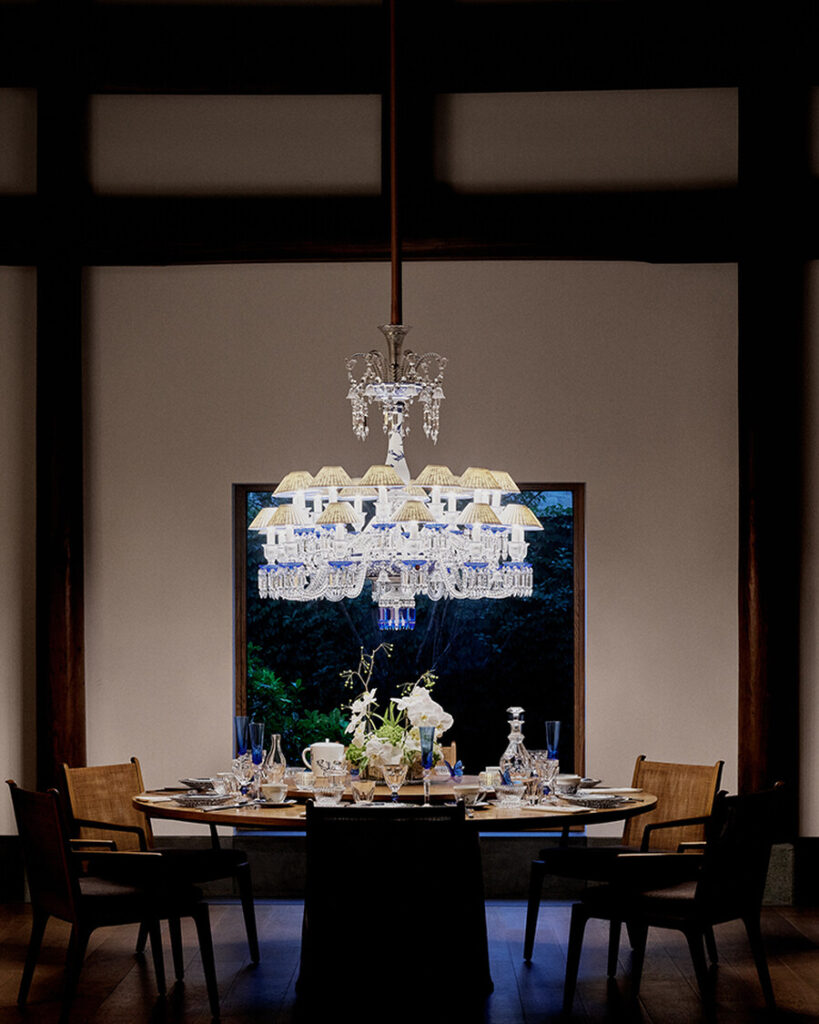
Baccarat chandeliers are in a category of their own. The Zenith, the house’s most iconic chandelier design, features thousands of hand-cut crystal drops suspended from a bronze armature, producing a waterfall of light that has made it the chandelier of choice for grand hotels, opera houses, and palatial private residences worldwide. The largest Zenith installations contain tens of thousands of individual crystal elements, each hand-cut and hand-hung.
Shop editor’s finds
Animal Sculptures and Decorative Objects
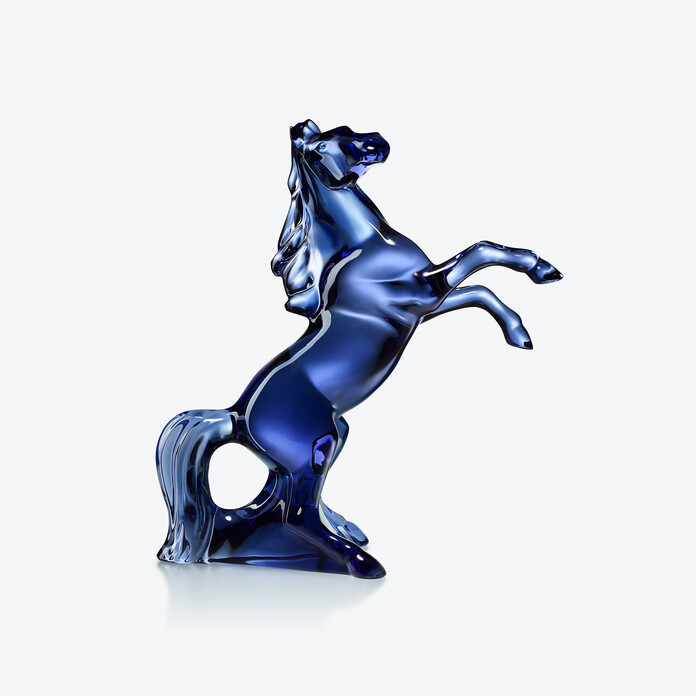
Baccarat’s crystal animal sculptures, from fish to elephants, horses, and owls, are among the most accessible and actively collected objects in the house’s range. They represent a point of entry into authentic Baccarat crystal collecting that does not require the investment of a full stemware service. Vintage examples from the mid-twentieth century appear regularly at auction with strong price appreciation, making them highly sought after.
Shop editor’s selection
Baccarat Crystal vs Other Luxury Crystal Brands
The comparison most frequently made is Baccarat vs Lalique, and it is a genuinely instructive one. Both are French, both are over a century old, and both produce objects of extraordinary quality. But the design philosophies diverge significantly.
Baccarat crystal is defined by precision cutting, mathematical geometry, and the pursuit of pure optical clarity—it is crystalline in the truest sense, all light and refraction. Lalique is defined by surface texture, frosted effects, naturalistic motifs, and an Art Nouveau sensibility that elevates the sculptural quality of glass over its optical performance. They are not rivals so much as different answers to the question of what glass can do.
Against Waterford, the distinction is simpler: Waterford produces excellent crystal at a more accessible price point, with a design vocabulary that skews more traditional and domestic. Baccarat crystal glass operates at a higher level of both ambition and exclusivity. Saint-Louis, also produced in Lorraine, is Baccarat’s closest comparable. It’s another eighteenth-century French crystal house with royal heritage, but Baccarat has achieved a broader international profile and a more active contemporary design program. Daum, also from Lorraine, has evolved into a studio glass house emphasizing colored pâte de verre art objects, which places it in a different market from Baccarat’s cut crystal tradition entirely.
How to Identify Authentic Baccarat Crystal
Authentic Baccarat crystal can be identified through several means, and any serious collector should be comfortable with all of them. The primary authentication mark is the acid-etched signature—”Baccarat France”—which has been applied to pieces since the mid-twentieth century. Earlier pieces may carry a paper label rather than an acid-etched mark, which makes label survival an important factor in vintage Baccarat authentication.
Beyond marks, the material itself speaks. Authentic Baccarat crystal has a weight and a ring. Strike it gently with a fingernail and the note produced is clear, sustained, and unmistakably different from glass. The cuts on genuine Baccarat pieces are sharp-edged and precisely defined. Cheap imitations show rounded or slightly blurred cut edges that reveal inferior cutting technique. The clarity of authentic pieces is absolute, with no tinting, no milky quality, and no bubbles visible to the naked eye.
Common counterfeit indicators include light weight, indistinct cuts, the absence of any mark, and a slightly grayish or greenish tint to the crystal. When in doubt, buy from authorized dealers or established auction houses that guarantee authenticity.
How Much Is Baccarat Crystal Worth?
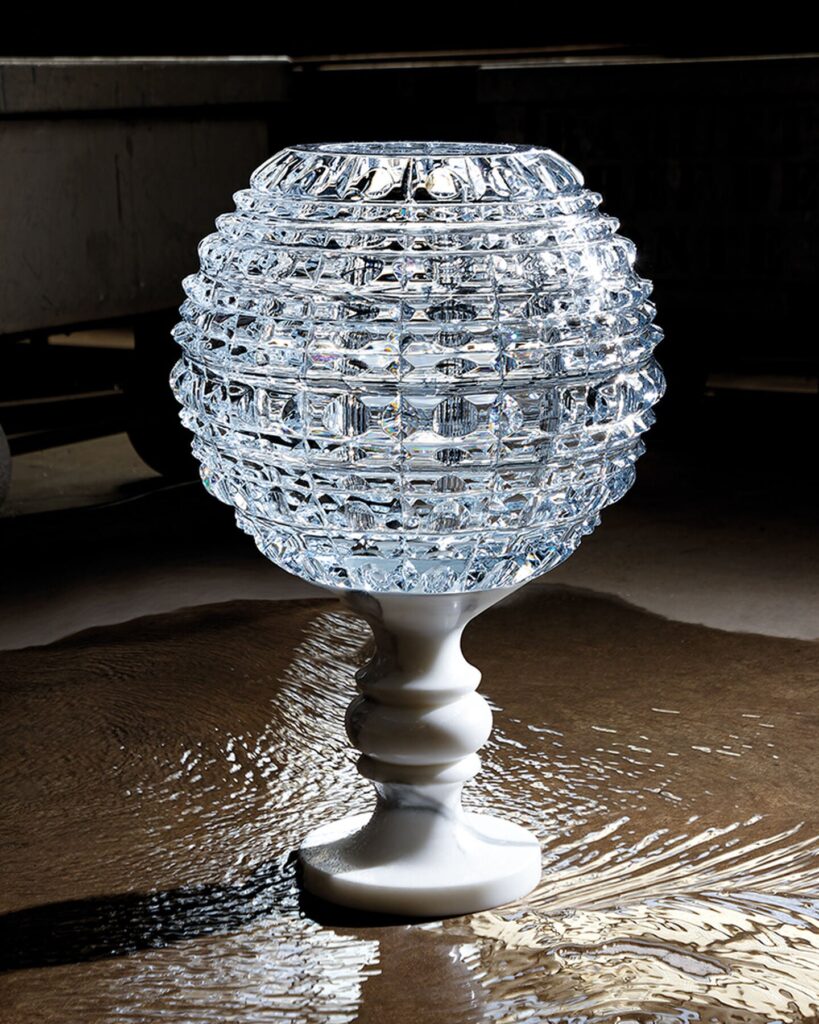
Baccarat crystal value depends on several intersecting factors. Age and rarity sit at the top of the hierarchy. Nineteenth-century pieces from the house’s golden age, particularly those with documented royal or aristocratic provenance, command the highest prices. Collection matters significantly, too. Harcourt and Mille Nuits pieces carry the strongest collector demand, while more obscure lines trade at lower levels. Condition is paramount. Crystal is unforgiving of damage, and chips, cracks, or professional repairs substantially reduce value.
Discontinued pieces often appreciate more aggressively than current production, simply because supply is fixed. The Baccarat Rouge perfume bottle, the limited-edition collaborations with Starck and Newson, and vintage animal sculptures in unusual sizes or colors have all shown strong auction appreciation in recent years. At auction, major houses including Christie’s, Sotheby’s, and Bonhams regularly feature Baccarat crystal in their decorative arts sales, with museum-quality nineteenth-century pieces achieving five-figure and occasionally six-figure results.
How to Start Collecting Baccarat Crystal
The best entry points into collecting Baccarat crystal glass are the decorative animal sculptures, individual Harcourt glasses, and small decorative vases, pieces available in the $200–$1,000 range that offer authentic Baccarat quality without the investment of a full service. From there, collectors typically specialize. Some focus on a single collection (Harcourt, Mille Nuits, Louxor), some on a single object type (vases, stemware, lighting), and some on a specific era (nineteenth-century antique Baccarat, mid-century decorative objects, contemporary limited editions).
Investment-grade collecting prioritizes documented provenance, original condition without restoration, discontinued models, and limited-edition collaborations. Avoid pieces with chips or repairs at anything other than very low prices. Restoration is possible but expensive, and repaired Baccarat crystal will always trade at a discount to pristine examples.
Caring for Baccarat Crystal
Baccarat crystal is not dishwasher safe. The thermal stress and abrasive detergents will damage the surface over time and dull the cuts that produce its characteristic brilliance. Hand washing in warm water with mild detergent, using a soft cloth rather than a brush, is the correct approach. Dry immediately after washing to prevent water spotting, using a lint-free cloth. Store pieces individually, with adequate padding between them to prevent contact chips; even a gentle knock between two crystal pieces can cause damage that is immediately and permanently visible. Transport with the same care: wrap individually in acid-free tissue and pack with significant cushioning.
Frequently Asked Questions
Is Baccarat crystal worth collecting? Emphatically yes. Authenticated vintage and antique Baccarat pieces have shown consistent price appreciation, and even contemporary production retains value at a level that most decorative objects do not.
Why is Baccarat crystal so expensive? The combination of exceptional raw materials, labor-intensive handcraft, extremely low production tolerances, and two and a half centuries of brand heritage. A single Harcourt glass may pass through the hands of a dozen artisans before it is complete.
How can you tell if Baccarat crystal is real? Look for the acid-etched “Baccarat France” mark, assess the weight and resonance of the piece, examine the sharpness of the cuts, and verify the absolute clarity of the crystal. Buy from authorized dealers or reputable auction houses for significant purchases.
Does Baccarat crystal contain lead? Traditional Baccarat crystal was lead crystal. Contemporary production uses non-lead formulations (where exemptions apply) that meet current European regulations while maintaining the optical and acoustic qualities that define the brand.
Where is Baccarat crystal made? In the town of Baccarat in the Lorraine region of northeastern France, where the house has been based since its founding in 1764.
Is vintage Baccarat more valuable? Generally yes, particularly nineteenth-century pieces with provenance, and mid-twentieth-century pieces in discontinued patterns or unusual configurations.
Can Baccarat crystal be repaired? Chips can be polished out by specialist restorers, and cracks can be stabilized, but repairs are visible under examination and always reduce value relative to pristine examples.
Is Baccarat crystal dishwasher safe? No. Hand wash only, with warm water and mild detergent, dried immediately with a lint-free cloth.
Conclusion: Why Baccarat Remains One of the World’s Greatest Luxury Crystal Houses
Baccarat crystal endures for the same reason that all great luxury endures: because it is genuinely, measurably better than the alternatives, and because the craft knowledge required to produce it has been refined over generations to a level that cannot be replicated by a competitor starting from scratch. The Harcourt glass looks the same in 2026 as it did in 1841, not because Baccarat lacks the imagination to change it, but because the design is correct and the crystal it is made from is as good as crystal gets. For collectors, that combination of historical depth, material excellence, and enduring beauty makes Baccarat crystal not merely a decorative purchase but an act of cultural stewardship, acquiring and preserving objects that represent the absolute summit of a craft tradition two and a half centuries in the making.
Featured image: Courtesy of Baccarat

Lydia Oladejo is a creative writer with over seven years of experience writing intriguing stories and engaging content. As a Staff Writer at Sewelo, she explores the artistry and history of high jewelry, blending her expertise in storytelling with a passion for luxury design.