
There’s something almost mythical about the Fabergé Imperial Easter Eggs—these impossibly intricate jeweled treasures that once graced the palaces of Russia’s last emperors. And on December 2, 2025, one of the most breathtaking examples, The Winter Egg, will return to the auction block at Christie’s London, where it’s expected to make history yet again.
The Imperial Winter Egg, with its estimate exceeding £20 million (approximately $27 million), isn’t just another luxury item crossing the auction stage. This is a piece that has already broken world records twice before, and it carries within its glittering surface a story of artistic genius, revolution, lost empires, and the enduring power of beauty to transcend the darkest chapters of history.
The Birth of a Tradition
To understand the Winter Egg, we must first journey back to 1885, when Tsar Alexander III commissioned the very first Fabergé Imperial Easter Egg as a surprise for his wife, Empress Maria Feodorovna. Easter was the most important occasion of the year in the Russian Orthodox Church, equivalent to Christmas in the West, and a centuries-old tradition of bringing hand-colored eggs to Church had evolved among the highest echelons of St. Petersburg society into the custom of presenting valuable, bejeweled Easter gifts.
That first egg—known simply as the Hen Egg—was deceptively plain on the outside: a white enameled shell about two and a half inches tall. But inside lay treasures upon treasures: a golden yolk containing a golden hen sitting on golden straw, which in turn concealed a miniature diamond replica of the Imperial crown holding a tiny ruby pendant (these parts are now missing). The Empress was so delighted that Alexander appointed Fabergé “goldsmith by special appointment to the Imperial Crown,” and thus began an annual tradition that would span 32 years.
From 1887, Fabergé was given complete freedom in the design and execution, with the only prerequisite being that there had to be a surprise within each creation. When Alexander III died in 1894, his son Nicholas II continued the tradition with even greater fervor, commissioning two eggs annually—one for his mother, the Dowager Empress Maria Feodorovna, and one for his wife, Tsarina Alexandra Feodorovna. Between 1885 and 1916, the House of Fabergé created 50 Imperial Easter Eggs, each one more elaborate and imaginative than the last.
A Woman’s Vision Frozen in Time
The Winter Egg holds a particularly special place in this legendary collection, not just for its extraordinary beauty, but for who created it. It was designed by Alma Theresia Pihl, one of the exceedingly few women to grace the jewelry workshops of St. Petersburg in the early 1900s.
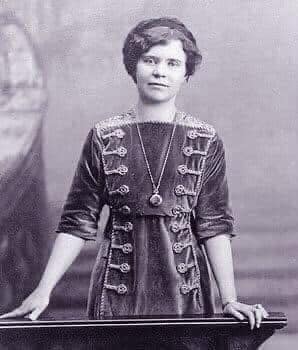
Born in 1888 into a Finnish family of master craftsmen, Alma was practically destined for the jewelry trade. Her mother, Fanny Holmström, was the daughter of Fabergé’s workmaster, August Holmström, and her father, Oscar Pihl, led Fabergé’s jewelry workshop in Moscow. At just 20 years old, Alma began working for her Uncle Albert Holmström, creating life-sized watercolor sketches that served as archival records of the workshop’s creations.
But in her spare time, she sketched her own designs. Her uncle recognized her talent and ordered some of her pieces to be produced, marking the beginning of what would become a remarkable if tragically brief career.
The inspiration for the Winter Egg came in a moment of serendipity. When Alma was seeking inspiration, she gazed out of her frost-covered workshop window and saw ice crystals forming “like a garden of exquisite frozen flowers”. That ethereal vision would become one of the most celebrated designs in the entire Fabergé canon.
The Winter Egg was commissioned by Emperor Nicholas II as an Easter gift for his mother, Dowager Empress Maria Feodorovna, in 1913—a year that marked the 300th anniversary of the Romanov dynasty. The timing was significant, though none could have known that this glittering celebration of an empire would come just four years before that empire’s violent collapse.
The Artistry of Ice and Diamond
Standing just four inches tall, the Winter Egg is a study in delicate contradictions—simultaneously fragile and eternal, cold and warm, simple and impossibly complex.
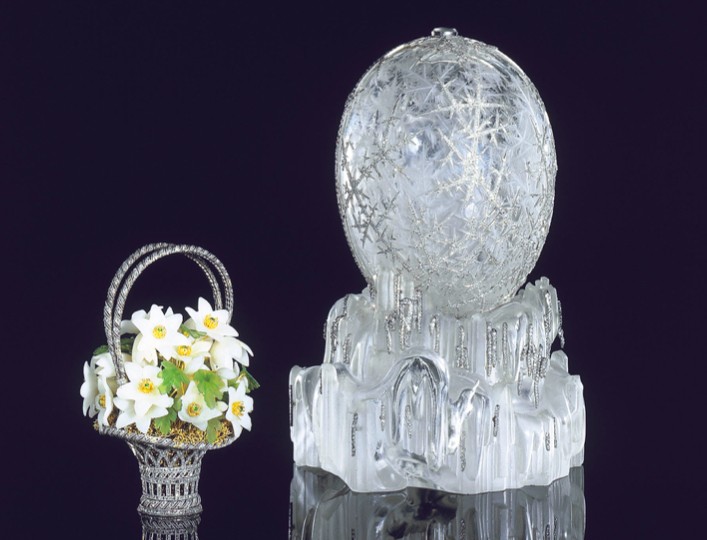
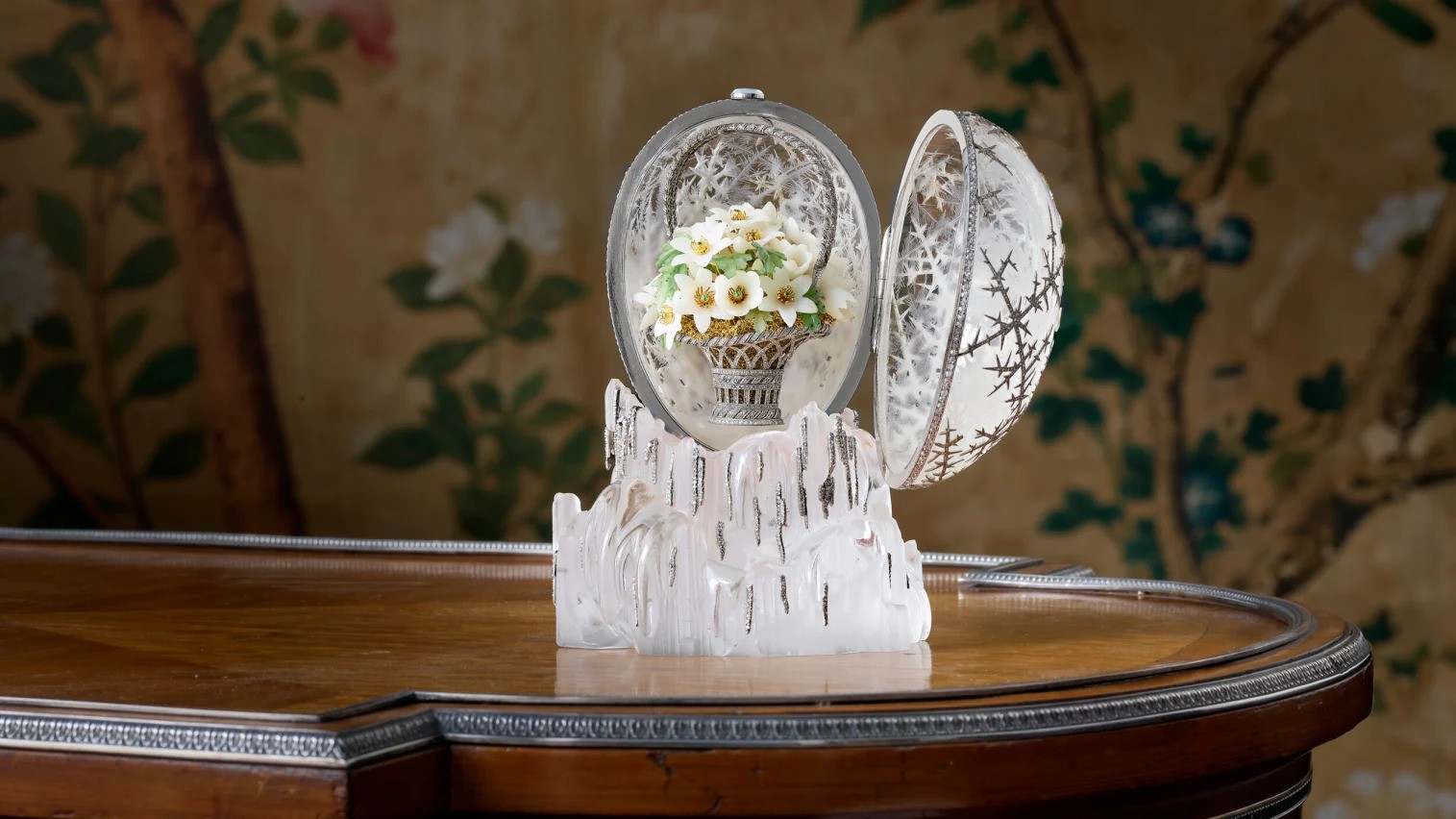
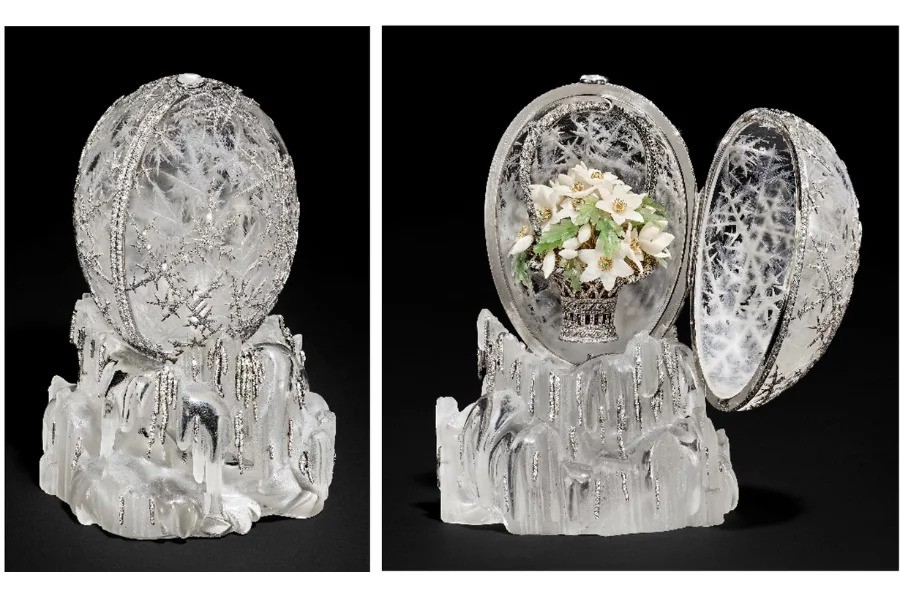
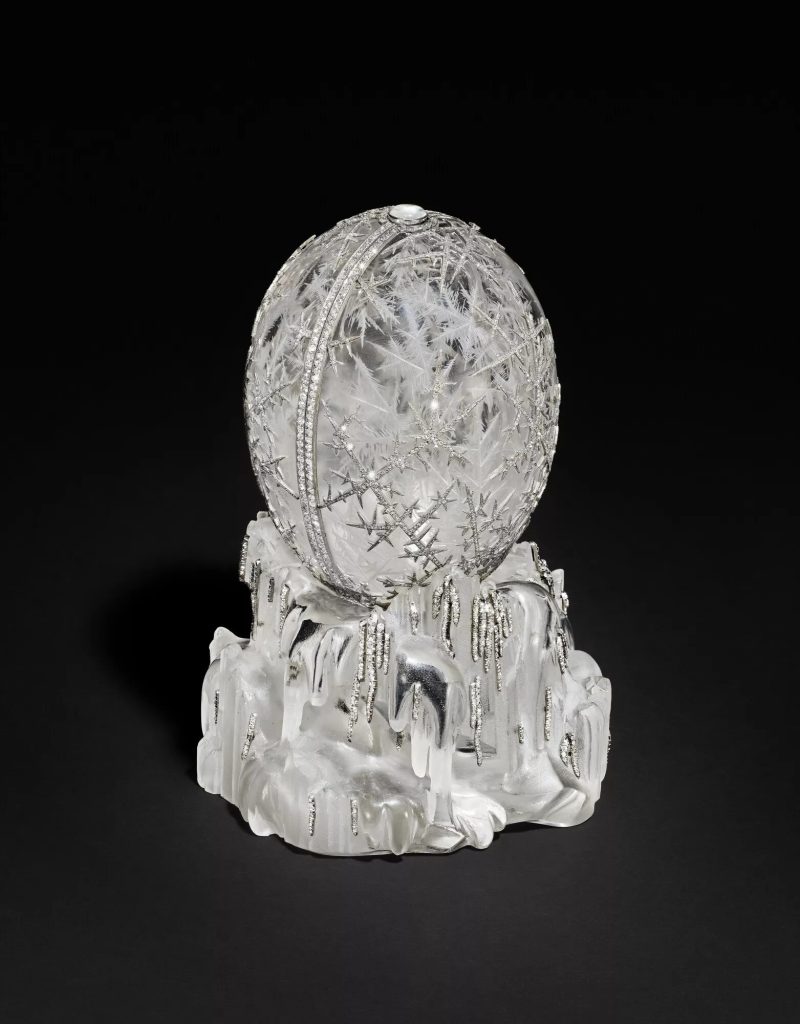
The egg is crafted from rock crystal as thin as glass, embellished with engraving along with platinum and diamonds to resemble frost. The hinged, rock-crystal egg is held vertically by a pin, with rose-diamond set platinum borders graduated around the hinge and enclosing in the top a cabochon moonstone painted on the reverse with the date 1913. The transparent body of the egg is finely engraved on the interior to simulate ice crystals, while the outside is further engraved and applied with carved platinum motifs set with rose-cut diamonds.
The egg rests on a rock crystal base designed and carved to resemble a block of melting ice, with the first streams of water breaking free in flashes of platinum and diamond. It’s a frozen moment captured in precious materials—winter on the cusp of yielding to spring.
The true magic reveals itself when the egg opens. Inside is a platinum double-handled trelliswork basket, set with diamonds and full of wood anemones, suspended from a platinum hook. Each flower is realistically carved from a single piece of white quartz with gold wire stem and stamens, the center set with a demantoid garnet, some carved half open or in a bud, the leaves delicately carved in nephrite, emerging from a bed of gold moss. At the base of the basket, an engraving reads simply: “Fabergé 1913.”
The way these gentle flowers made out of precious stones spring out of the frosty egg symbolizes the beautiful harshness of winter, which gives way to spring. It also stands for resurrection and hope—themes perfectly suited to an Easter gift, but ones that would take on haunting resonance in the years to come.
According to Fabergé’s records, the bill details the composition of the egg: the body set with 1,300 rose-cut diamonds, the borders with 360 brilliants, and the small basket with 1,378 rose-cut diamonds. In total, the piece contains over 3,000 diamonds, making it one of the most lavishly jeweled of all the Imperial eggs. The cost? An extraordinary 24,600 roubles. For context, the average Russian factory worker in 1913 earned 22 roubles a month. It was, and remains, the most expensive Imperial Easter Egg ever created.
From Palace to Revolution to Mystery
The Winter Egg enjoyed only four years in the Dowager Empress’s possession before the world as she knew it came crashing down. In February 1917, the Russian Revolution erupted, and by March, Nicholas II had abdicated the throne. The following year, he and his entire family were executed by the Bolsheviks.
The Imperial eggs, along with countless other treasures, were confiscated by the revolutionary government and carefully packed away in the Kremlin in Moscow. At that time, “the ‘bourgeois’ commodities valued by the old regime had been branded ideologically worthless and immoral,” and the Fabergé eggs were “almost certainly the most reprehensible symbols of the past”.
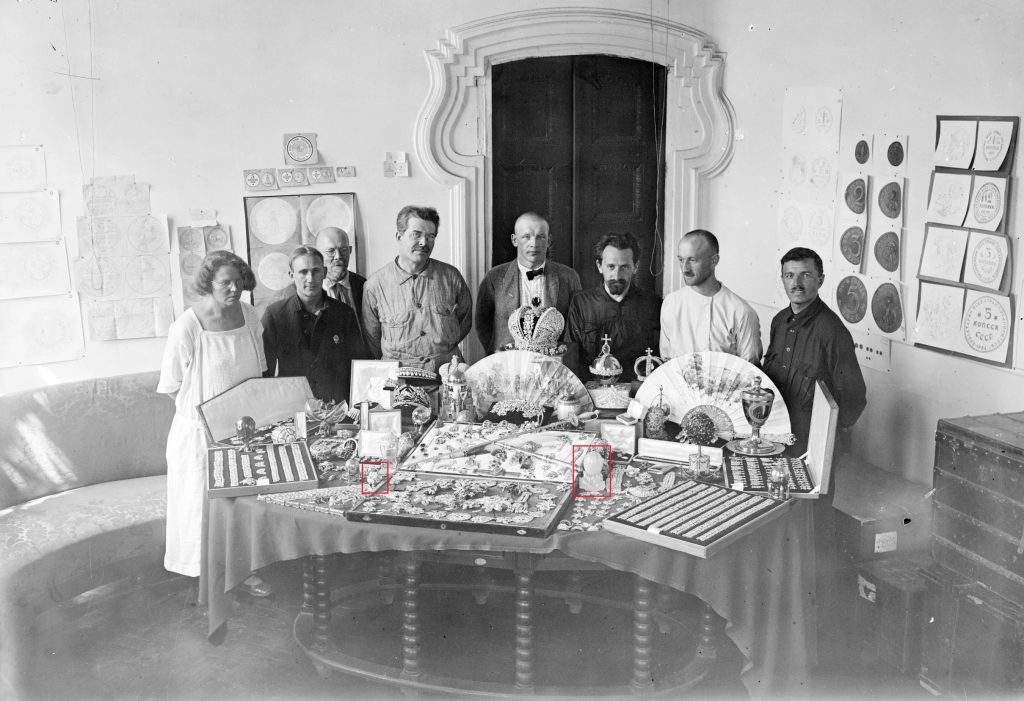
Yet even revolutionaries needed cash. As the Soviet government struggled to rebuild the economy in the 1920s, many of the eggs were sold off. A jeweler in London purchased the Winter Egg for just £450 in the late 1920s or early 1930s—a fraction of its creation cost, let alone its true value.
The egg subsequently passed through the hands of several English collectors before vanishing from public view for nearly two decades. Its whereabouts during this period remain shrouded in mystery, adding to the romance and intrigue that surrounds all the Imperial eggs.
A Record-Breaking Return
The Winter Egg first reappeared at auction in 1994, when Christie’s Geneva offered it for sale. It sold for 7,263,500 Swiss francs (approximately $5.6 million at the time), setting a world record for a Fabergé item sold at auction.
Eight years later, in 2002, the egg returned to Christie’s—this time in New York—and shattered its own record, selling for $9,579,500. It was reported that the buyer was Hamad bin Khalifa Al Thani, the Emir of Qatar, though this was never officially confirmed.
Now, 23 years later, the Winter Egg is returning to Christie’s once more, this time as part of a sale titled “The Winter Egg and Important Works by Fabergé from a Princely Collection.” The auction, scheduled for December 2, 2025, during London’s Classic Week, will feature nearly 50 additional Fabergé lots, including semiprecious stone figures, animals, objets de virtu, and furniture, with estimates ranging from £2,000 to £2 million.
But it’s the Winter Egg that commands the spotlight, with its estimate in excess of £20 million. If it meets expectations, it could potentially break the current Fabergé auction record of £8.9 million, set by the Rothschild Egg in 2007. (The Third Imperial Easter Egg sold privately for $33 million in 2014, but private sales don’t count toward official auction records.)
“This is an extraordinary chance for collectors to acquire what is arguably one of Fabergé’s finest creations, both technically and artistically,” said Margo Oganesian, Christie’s head of Fabergé and Russian art. The piece “would undoubtedly enhance the most distinguished collection.”
The Tragedy of Alma Pihl
While the Winter Egg’s journey through the 20th century was one of exile, rediscovery, and renewed appreciation, its creator’s story took a darker turn.
Alma’s career at Fabergé ended with the Russian Revolution. After years of hardship, she and her husband finally obtained permission to leave Petrograd (as St. Petersburg had become) for Finland in 1921.
A petite lady with very sharp eyes, always friendly, she taught art in a provincial secondary school from 1928 to 1951. Her pupils remembered her as an inspiring teacher with an almost magical ability to transform their drawings with a few deft strokes of her pencil. But they knew nothing about her remarkable background. She spent the last years of her life in relative obscurity, trying to hide her affiliation with the House of Fabergé—a connection that could have been dangerous in the political climate of the time.
Alma Pihl died in 1976, largely forgotten by history. While working as a designer at Fabergé, she created her two most famous designs—”Snowflake” and “Mosaic”—which were embodied in two of the most extraordinary Imperial Easter eggs: the Winter Egg of 1913 and the Mosaic Egg of 1914, which is now in the Royal Collection in England.
It’s a bittersweet irony that while her greatest creation continues to break records and captivate collectors more than a century after its creation, Alma herself remained in the shadows of the larger-than-life figure of Peter Carl Fabergé. But perhaps this upcoming auction offers an opportunity to correct that historical oversight, to celebrate not just the egg but the extraordinary young woman who designed it.
The Rarity That Drives Desire
Part of what makes the Winter Egg so valuable is its extraordinary rarity. Of the 50 Imperial Easter Eggs made at the turn of the century, 43 have survived. Most of them reside in museums around the world, including the Metropolitan Museum of Art in New York, the Hillwood Estate in Washington, D.C., the Walters Art Museum in Baltimore, the Virginia Museum of Fine Arts in Richmond, and the Fabergé Museum in St. Petersburg.
Only seven are in private collections, including the soon-to-be-auctioned Winter Egg. This means that if you’re a collector with the means and desire to own an Imperial Easter Egg, your opportunities are vanishingly rare. These pieces simply don’t come to market often. The Winter Egg’s upcoming sale marks the first time an Imperial egg has been offered at public auction in 23 years.
More Than Just a Trinket
Standing before the Winter Egg today, which is currently on exhibition at Christie’s ahead of the December auction, it’s impossible not to feel the weight of everything it represents. This isn’t just a collection of diamonds and platinum, rock crystal and gold. It’s a time capsule from a vanished world, a testament to human artistry at its finest, and a monument to the women who, like Alma Pihl, worked in the shadows to create objects of transcendent beauty.
Pihl’s egg evokes the harsh beauty of winter while also showing that at its coldest core lie the buds of spring and renewal. In that sense, the egg’s journey mirrors the tumultuous century it has survived: confiscated by revolutionaries who saw it as a symbol of oppression, sold for a pittance, lost to history, rediscovered, celebrated anew, and now poised to set yet another record.
The Winter Egg endures not because of the precious materials from which it’s made (though those are undeniably spectacular), but because of the story it tells and the human emotions it evokes. In a world increasingly dominated by mass production and digital experiences, there’s something profoundly moving about an object that took a year to create, that required the collaboration of dozens of master craftsmen, and that was designed with such intimate knowledge of the recipient that it could bring her joy more than a century ago and still captivate us today.
When the gavel falls on December 2nd, whoever acquires the Winter Egg won’t just be buying a piece of jewelry or even a work of art. They’ll be acquiring a fragment of lost history, a token of an empire that vanished in blood and revolution, and the legacy of a young Finnish woman who looked out a frost-covered window one winter day and imagined something so beautiful that it would outlive her by nearly 50 years and counting.
As I think about Alma Pihl wielding her pencil like a magic wand in that provincial Finnish school, transforming her students’ drawings with a dash here and a line there, I like to imagine she knew—somewhere deep down—that her greatest work would endure. That the Winter Egg would continue to tell its story of resurrection and renewal long after she was gone.
In the end, that’s what the great works of art do: they outlive their creators, their original owners, and even the empires that commissioned them. They become, in the truest sense, timeless. And on December 2nd, the Winter Egg will begin the next chapter of its remarkable journey, carrying with it the dreams of a lost world and the genius of a woman history nearly forgot.
Featured image: Christie’s

Amanda Akalonu is dedicated to weaving together the worlds of jewelry, watches, and objects through a lens of literary storytelling.