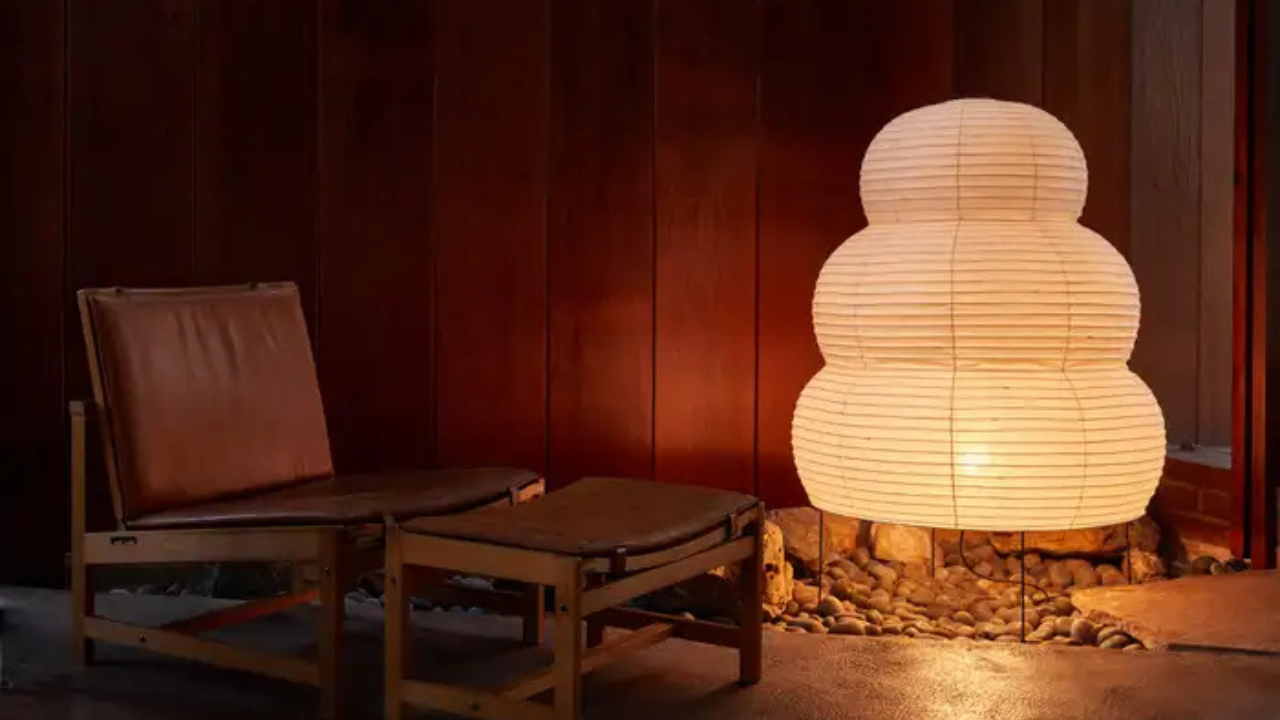

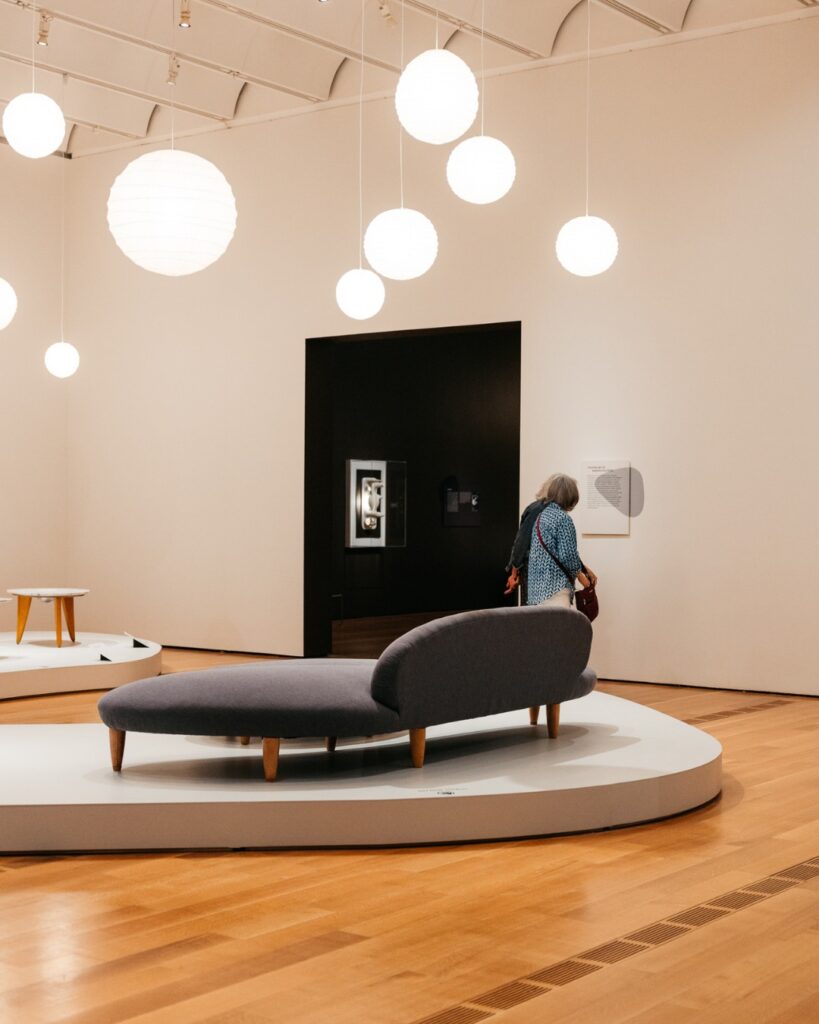
There are a few objects in the history of modern design that manage to be simultaneously a lamp, a sculpture, and a philosophy. But Isamu Noguchi lamps do all three without trying particularly hard. First conceived in 1951 during a visit to Gifu, Japan, the Akari series has been in continuous production for over seventy years, and in that time, it has done something almost no other design object has managed. It has become more relevant, not less. You will find Noguchi Akari lamps in the pages of architecture magazines, in museum permanent collections, in the apartments of committed modernists, and in the bedrooms of people who simply know that a glowing washi paper sphere makes everything feel better. That is the Noguchi effect.
What makes Isamu Noguchi lamps so enduringly compelling is a question worth exploring properly because the answer is more interesting than it first appears. These are not simply nice lights. They are, as Noguchi himself insisted, light sculptures. Think of them as objects that reshape the quality of illumination in a room, that cast shadow and warmth in equal measure, and that carry the weight of a singular artistic vision expressed through some of the most humble materials in the craft world. This guide covers everything a collector or first-time buyer needs to know, including thirteen specific pieces currently available, ranging from beginner-friendly table lamps to genuinely rare vintage examples.
Who Is Isamu Noguchi, and What Makes His Lamps Special?

Isamu Noguchi (1904–1988) was one of the twentieth century’s most versatile creative minds. He was a Japanese-American sculptor, landscape architect, furniture designer, and stage set creator whose influence ranges from the UNESCO garden in Paris to the Noguchi Coffee Table still in production today. Born in Los Angeles to an American mother and a Japanese poet father, Noguchi’s oeuvre moved across fine arts and industrial design in ways that were genuinely unusual for his era, and his relationship to both American modernism and Japanese craft tradition gave his work a cross-cultural depth that few contemporaries could match.
The Akari series began in spring 1951, when Noguchi stopped in Gifu at the invitation of the city’s mayor. Gifu had been a center of chochin lantern manufacture for centuries. The postwar economy had damaged the industry severely, and the mayor wanted modern design help to revive the craft. Noguchi began sketching on the spot, replacing the traditional folded accordion silhouette with rounded organic profiles consistent with the abstract sculpture he had been making for two decades.
He coined the name Akari himself. In Japanese, it means “light as illumination” but also suggests lightness as opposed to weight—the ideograph combines those of the sun and the moon. As Noguchi described it: “The quality is poetic, ephemeral, and tentative.” The lamp, he argued, was not a fixture but a presence, something that changed the character of a room not through brightness but through the quality of the light it produced. “The light of Akari is like the light of the sun filtered through the paper of shoji,” he said in 1981.
Every authentic Akari is handcrafted, beginning with washi paper made from the inner bark of the mulberry tree. Bamboo ribbing is stretched across sculptural molded wood forms, and the washi paper is cut into strips and glued onto both sides of the framework. This integrated system gave Ozeki & Co. (the manufacturer) an unusual ability to translate complex forms into stable, lightweight structures. Artisans could adjust rib spacing, vary paper weights, or rework frame geometry on site, responding directly to Noguchi’s experiments. The result is a lamp that looks effortless but represents a considerable depth of traditional craft knowledge in every piece.
What Are Akari Light Sculptures?
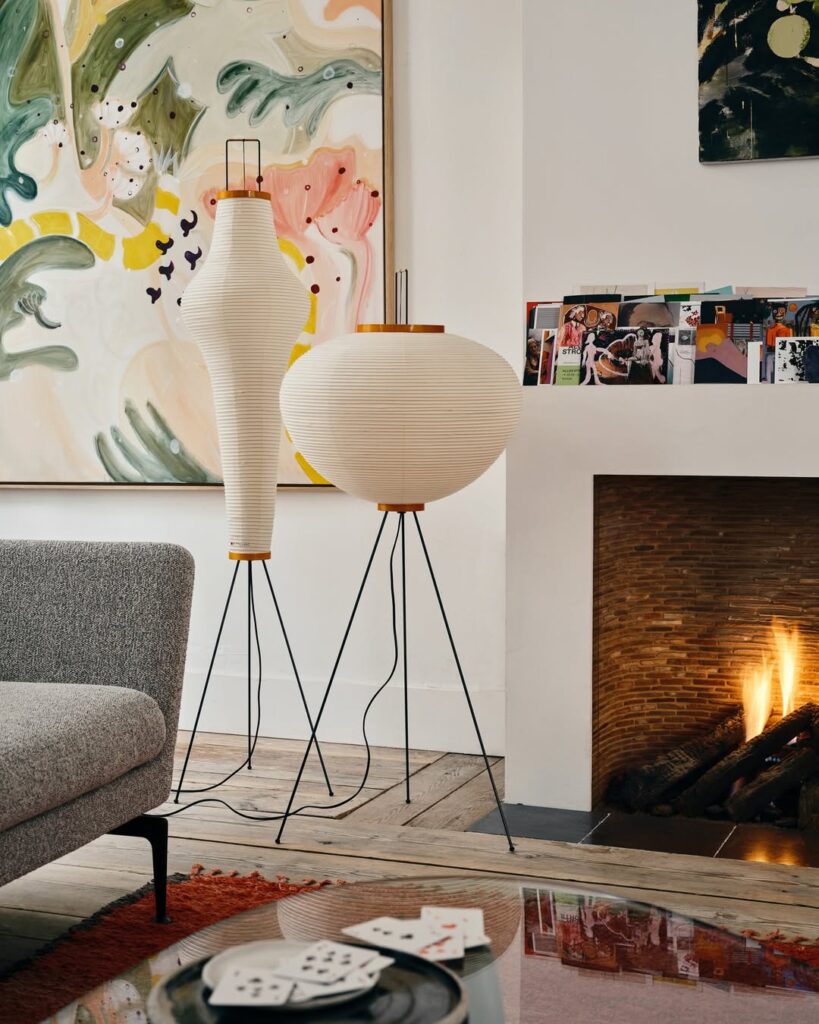
The term “Akari light sculpture” is not marketing language. It is how Noguchi categorized these objects from the very beginning, and it distinguishes them meaningfully from ordinary paper lanterns. A paper lantern is a functional object designed to contain light. An Akari light sculpture is a sculptural form that uses light as its primary medium. There are over 200 Akari iterations in different shapes, sizes, and configurations, from small table models to monumental floor lamps and hanging pendants. Each was designed with the same sculptural intention that informed Noguchi’s stone and metal work.
The materials are consistent across the entire series. Bamboo rods are stretched across original wooden forms designed by Noguchi to make the framework, and washi paper derived from the bark of the mulberry tree is cut in strips, fitted to the size and shape of the lamp, then glued to the bamboo. The internal mold is then removed, allowing the shade to collapse flat for shipping, a piece of practical ingenuity that makes Noguchi paper lamps among the most elegantly packaged design objects in history.
What distinguishes the best Noguchi lamps from imitations is not merely the materials but the precision with which the ribbing is tensioned and the paper applied. These are details that only the Ozeki workshop has mastered over seventy-plus years.
Why Collectors Love Isamu Noguchi Lamps
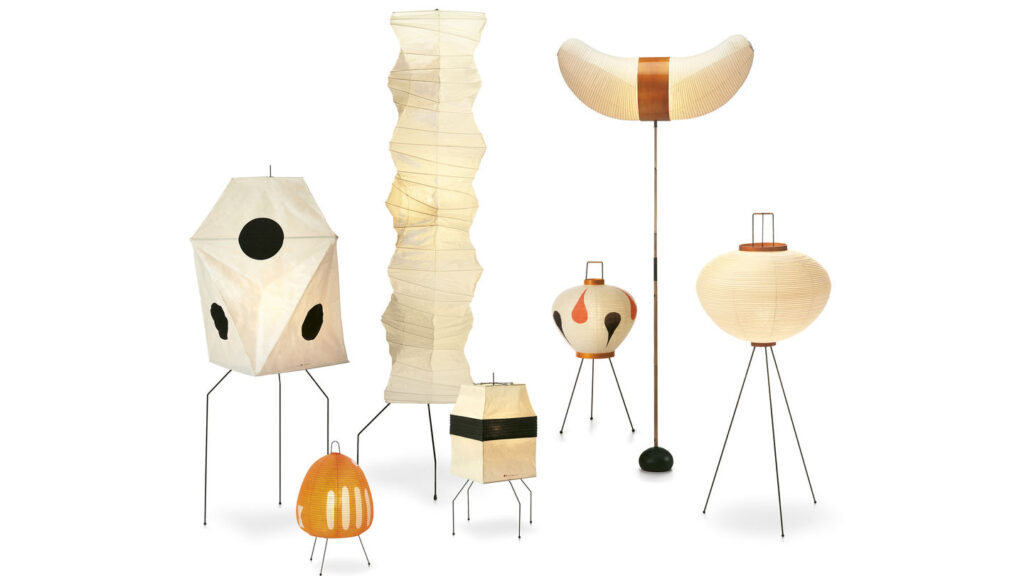
The collector appeal of Isamu Noguchi lamps is built on several converging qualities that are rare in any single object. First, there is the sculptural quality. The lamps are genuinely beautiful forms in unlit daylight, not just functional objects that look good when switched on. Second, there is the historical weight. The Akari series is among the longest-running design objects of the modern era, with unbroken production since 1951. Third, there is museum recognition. The lamps appear in the permanent collections of The Museum of Modern Art (MoMA), the Vitra Design Museum, and the Noguchi Museum in Long Island City, conferring institutional legitimacy that few design objects carry. And finally, there is the market for vintage examples, particularly early Ozeki production runs and Gemini G.E.L. editions from the 1980s, which command significant premiums and continue to appreciate.
Here Are 13 Isamu Noguchi Lamps to Shop
Isamu Noguchi Pendant Lamp Model 33X
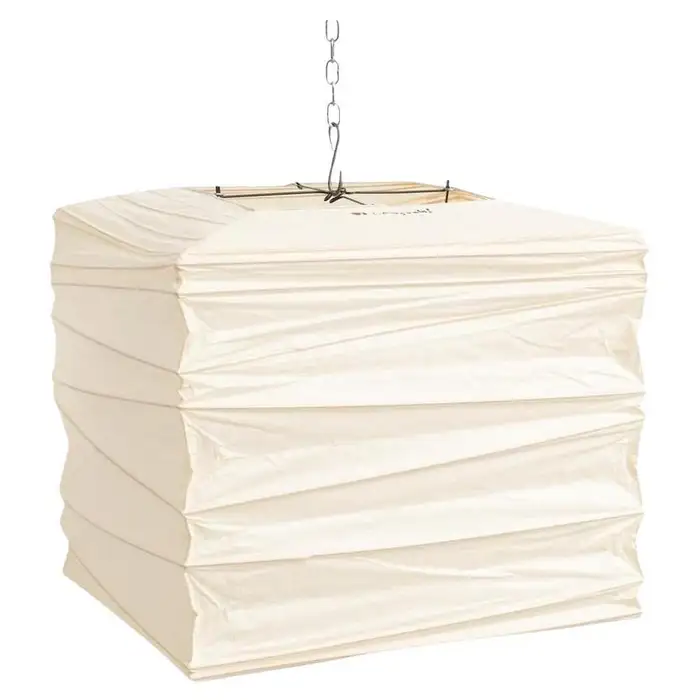
Why It Stands Out: The 33X is one of the most visually dramatic pieces in the pendant range—a large, horizontally wide shade with the characteristic bamboo ribbing and washi paper construction that makes every Akari light sculpture immediately recognizable. Its generous spread allows it to dominate a dining room or entrance hall with effortless authority. This particular available example is in original condition with the natural patina that develops over time in authentic washi paper, along with a stamped manufacturer’s mark confirming its provenance.
Best For: Statement pendant installation in a dining room, hallway, or open-plan living space. Particularly well-suited to spaces with mid-century modern or Japandi interiors.
Collector Notes: The presence of the original manufacturer’s stamp elevates this piece for authentication purposes. Vintage patina on authentic washi paper is a desirable quality, not a flaw.
Isamu Noguchi Akari Floor Lamp ST2-33N
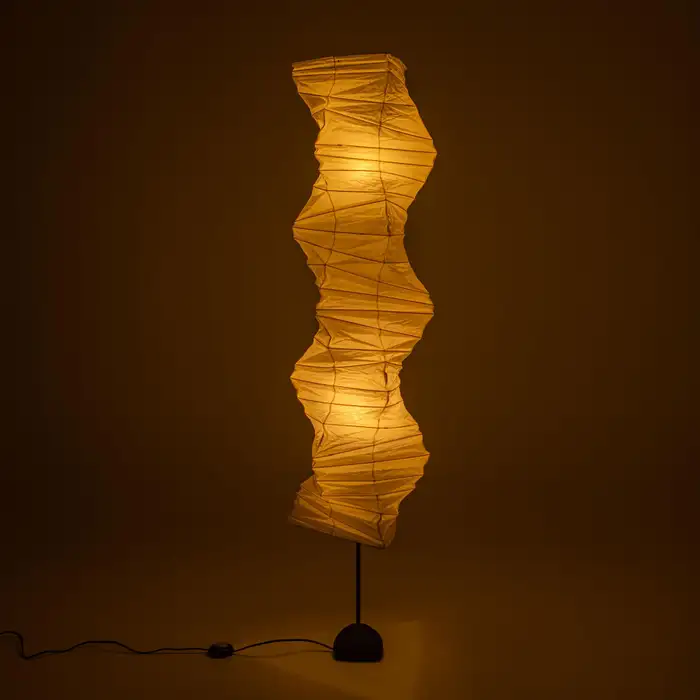
Why It Stands Out: The ST2 series represents some of the most refined floor lamp engineering in the Akari catalogue. The 33N shade sits atop the steel base with a balance that feels both deliberate and natural. This example is in pristine, unplayed condition, retaining original packaging and Noguchi’s stamp on both base and shade, a rarity that significantly strengthens its collector value.
Best For: Living rooms, reading corners, and bedroom settings where tall ambient light is desired without visual clutter. Works especially well beside low-slung mid-century furniture.
Collector Notes: An unplayed example in original packaging represents exceptional collector value. The dual stamping on both base and shade is the strongest possible authentication signal for this model.
Isamu Noguchi Akari Floor Lamp ST2-36N
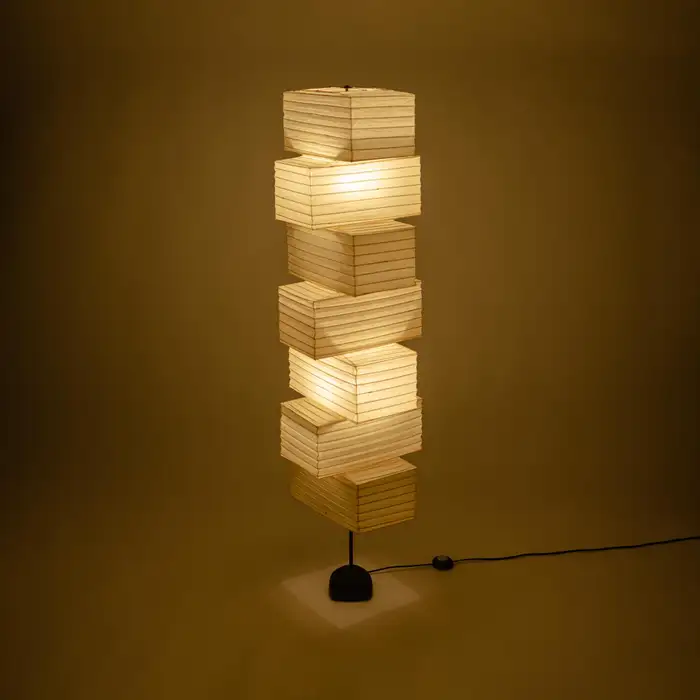
Why It Stands Out: Closely related to the 33N but with a different shade profile, the 36N offers a slightly more elongated and upright silhouette that casts light with a different character. Listed as new old stock in original packaging, meaning this is an unused example that has never been displayed, it is one of the rarer configurations a collector will encounter in this condition.
Best For: Minimalist interiors, spaces with high ceilings, and collectors specifically seeking new old stock examples for their pristine condition and investment potential.
Collector Notes: New old stock Akari floor lamps in original packaging are increasingly uncommon. The rarity of the 36N configuration relative to the more widely circulated 33N adds a further premium.
Isamu Noguchi Table Lamp
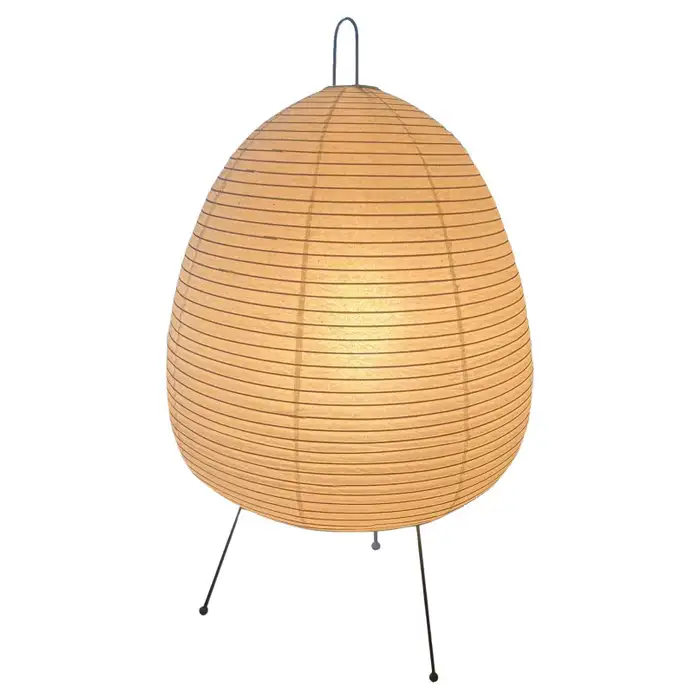
Why It Stands Out: Sometimes the most compelling piece is the most straightforward one. This classic Noguchi table lamp, in perfect working condition, offers the essential Akari experience: soft washi paper diffusion, bamboo structure, and the quality of light that Noguchi described as resembling sunlight through shoji screens. For first-time buyers, a classic table lamp is the ideal entry point into the Akari world.
Best For: Bedside tables, desks, sideboards, and any surface where a small, beautifully proportioned light source is needed. Beginner-friendly and fully functional.
Collector Notes: A good condition classic table lamp is the most accessible starting point for new collectors and the most versatile piece for everyday use.
Isamu Noguchi Model 14A Akari Light Sculpture
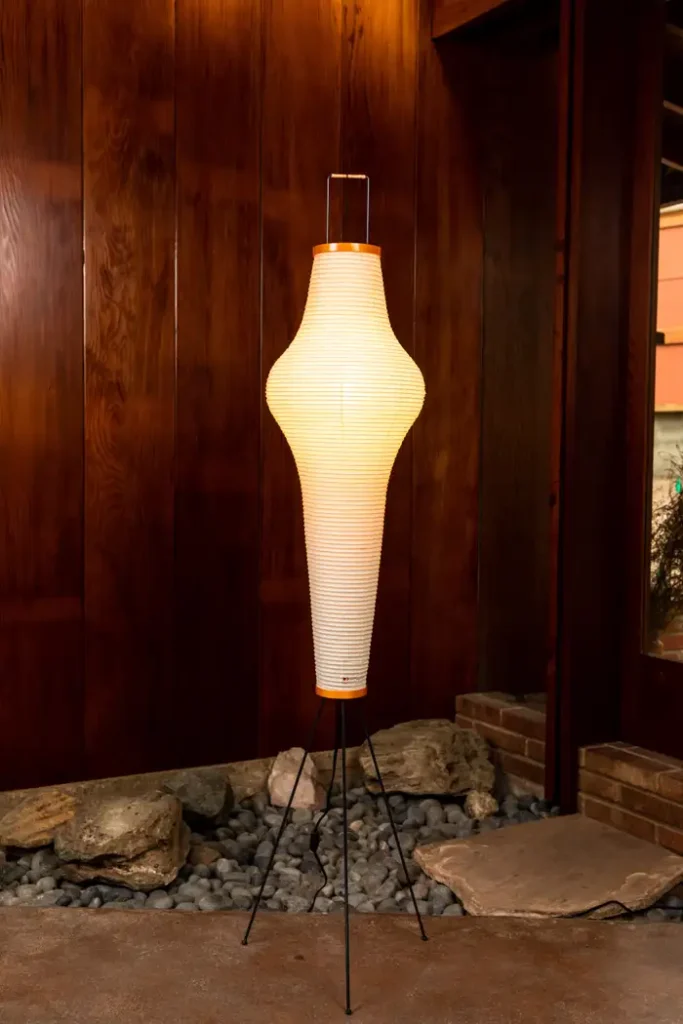
Why It Stands Out: The 14A is a substantial floor lamp with a commanding, globe-adjacent silhouette that stands among the most widely admired forms in the entire Akari catalogue. This example retains its original manufacturer’s packaging and authentic red Noguchi stamp, and dates from a 2000s production run still largely handmade by Ozeki. The 14A is the piece most frequently encountered in design publications and museum installations, a shorthand for everything the Noguchi paper lamp represents.
Best For: Statement floor lamp placement in living rooms and studio spaces. Pairs beautifully with both minimalist and richly layered interiors.
Collector Notes: The 14A is consistently one of the most sought-after models at auction. The red stamp and original packaging make this a collector-grade example.
Monumental Isamu Noguchi Akari 25N Floor Lamp
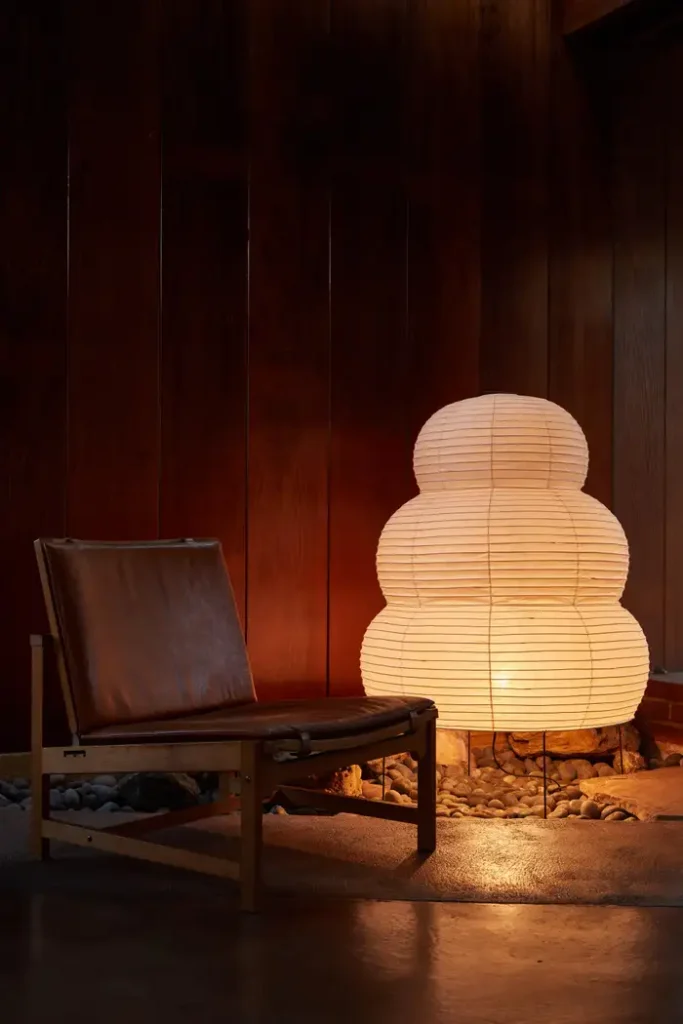
Why It Stands Out: Scale matters in the Akari world, and the 25N makes a decisive case for it. This monumental three-layer shade, a characteristic feature of the N-series floor lamps, produces a generous, layered shadow effect as light passes through multiple levels of washi paper. The result is a sculptural depth that smaller models simply cannot achieve. This is a later Ozeki production run from the 2000s, retaining the manufacturer’s stamp.
Best For: Large living rooms, loft spaces, and double-height rooms where a standard lamp would look undersized. The 25N is the piece you buy when you want the lamp to define the room rather than merely light it.
Collector Notes: The N-series floor lamps, particularly at the larger sizes, are among the most collectable in the Akari range. The three-layer construction is a distinguishing feature worth noting.
Isamu Noguchi Model 10A Akari Light Sculpture
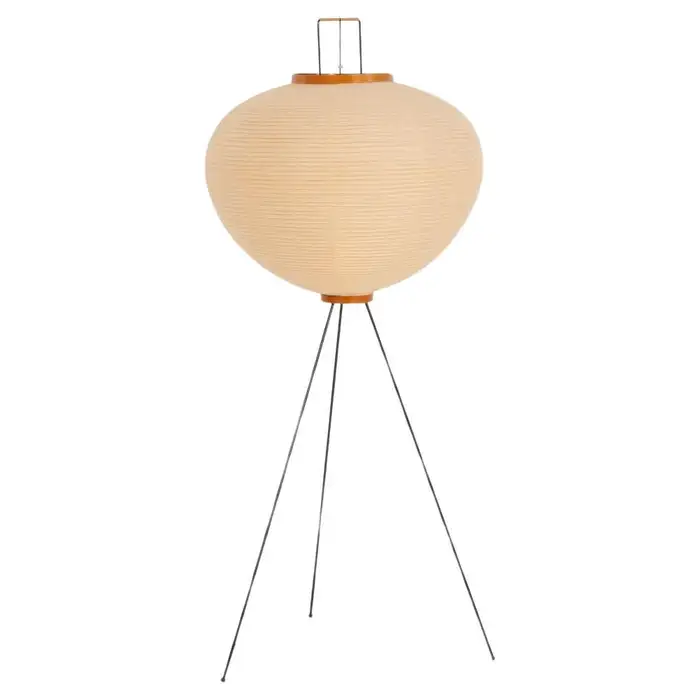
Why It Stands Out: Designed in 1952, the 10A is one of the earliest models in the Akari series. At nearly fifty inches tall and twenty-one inches in diameter, it is an imposing presence. Indeed, a large, gently tapered cylindrical floor lamp that casts an even, enveloping warmth across a room. This example bears both the sun-and-moon ideogram stamp on the shade and the Akari-Gemini base sticker, with documented private collection provenance. Washi paper, enameled steel, bamboo, cane, and thread combine in a piece of considerable historical significance.
Best For: Serious collectors and anyone seeking a large-format floor lamp with verifiable provenance and early model credentials.
Collector Notes: The Gemini base sticker and sun-and-moon stamp together represent exceptional authentication. The documented provenance adds further collector value.
Akari Model 1N Light Sculpture
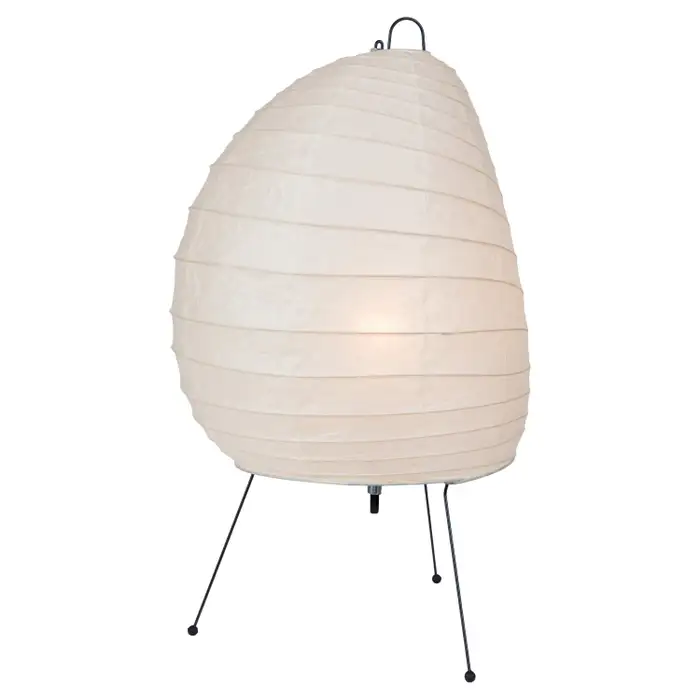
Why It Stands Out: The 1N is one of the more compact and intimate floor lamp models. It’s an upright, elongated form that delivers Akari’s characteristic soft glow at a scale suited to smaller spaces. This 2010s Ozeki example retains its original packaging and red manufacturer’s stamp, making it an authenticated piece at an accessible size.
Best For: Apartments, small living rooms, studies, and collectors seeking an entry-level floor lamp with full authentication credentials.
Collector Notes: Original packaging and manufacturer’s stamp confirm authenticity. The 1N is a reliable starting point for collectors building an Akari collection.
Akari Model 1AS Light Sculpture
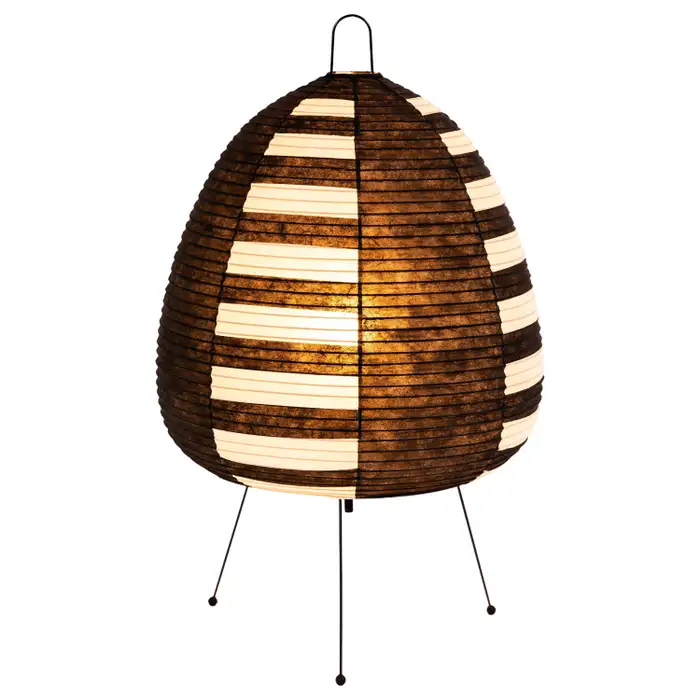
Why It Stands Out: The 1AS is one of the more visually distinctive table lamp models, featuring a two-tone shade in white and natural brown washi paper with ink detailing, a departure from the uniformly white shades of most Akari models. The tonal contrast gives this piece a warmer, more layered visual character, and the soft diffuse glow it produces is particularly well suited to intimate, low-lit spaces. The lamp measures seventeen inches from base to top of wire structure, with the shade spanning ten inches at its widest point.
Best For: Bedside tables, reading nooks, and collectors seeking a visually distinctive table lamp that departs from the standard white Akari silhouette.
Collector Notes: The two-tone washi and ink detailing make the 1AS one of the more unusual and visually interesting table models, a collector piece as much as a functional lamp.
Rare Akari Series Model H — First Edition, 1951
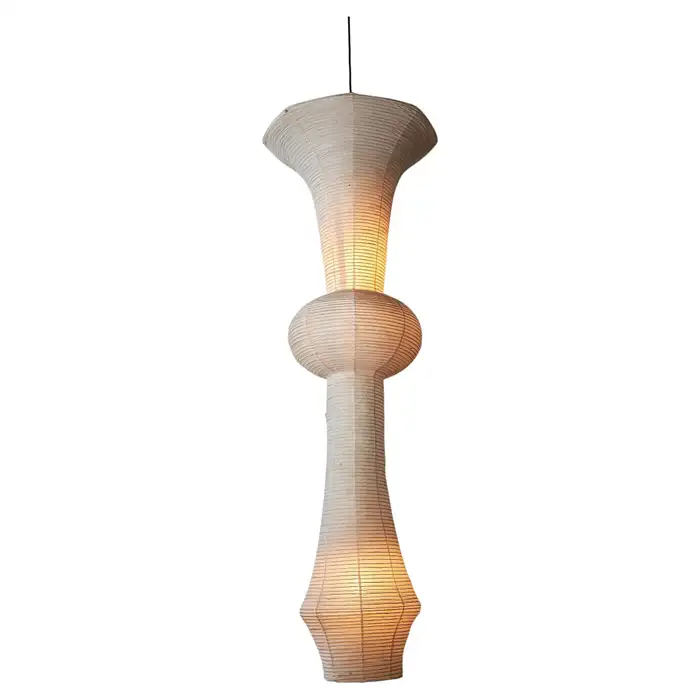
Why It Stands Out: This is the piece for the serious collector. The Model H is a suspension pendant from the first Ozeki edition of 1951, placing it at the very origin of the Akari series, bearing the distinctive red sun-and-moon ideogram that Noguchi created as the series’ authenticating mark. He created this distinctive red sun-and-moon symbol for the series as a stylized interpretation of the traditional character combining sun and moon. A first-edition pendant from 1951 is, by any measure, an archival object of the highest collector significance.
Best For: Serious collectors, institutions, and anyone seeking a historically significant first-edition example from the year the Akari series was born.
Collector Notes: First-edition 1951 Ozeki production examples are among the rarest and most valuable objects in the Akari market. The sun-and-moon ideogram is the critical authentication mark.
Isamu Noguchi Akari Light Sculpture Model UF3-Q — Gemini G.E.L. Edition, c. 1984
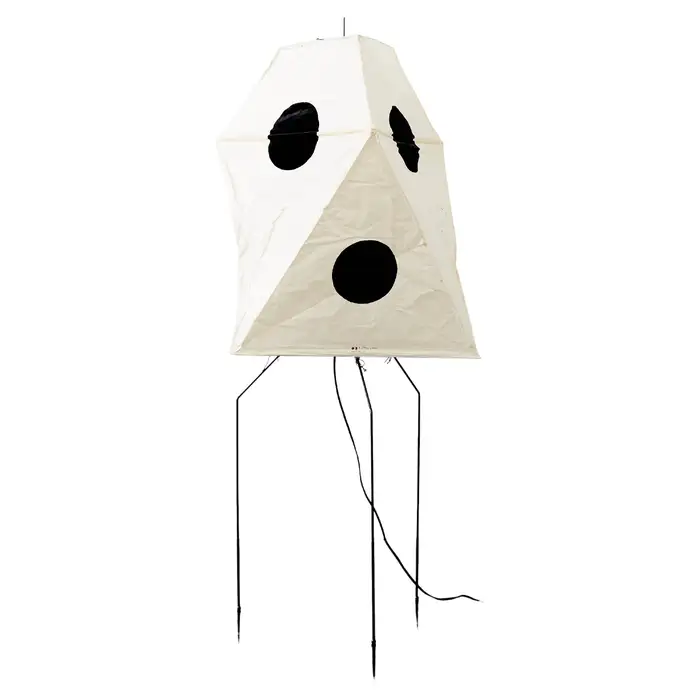
Why It Stands Out: The Gemini G.E.L. editions occupy a unique position in the Akari story. Gemini G.E.L. was one of the last distributors authorized to sell Akari light sculptures before The Noguchi Museum assumed full rights, and the pieces produced during this period carry a Gemini sticker alongside the standard Noguchi signature and sun-and-moon ideogram. The UF3-Q is a large-format floor sculpture at fifty-eight inches tall with a twenty-four-inch footprint, one of the more architecturally imposing forms in the entire series.
Best For: Collectors specifically seeking Gemini G.E.L. provenance, large-format spaces, and anyone interested in the historical distribution of Akari as an art form.
Collector Notes: Gemini G.E.L. editions from the 1980s are a distinct and collectable sub-category within the Akari market. The combination of the Noguchi signature, sun-and-moon ideogram, and Gemini sticker represents the full authentication triad for this period of production.
Akari Model 2A Light Sculpture
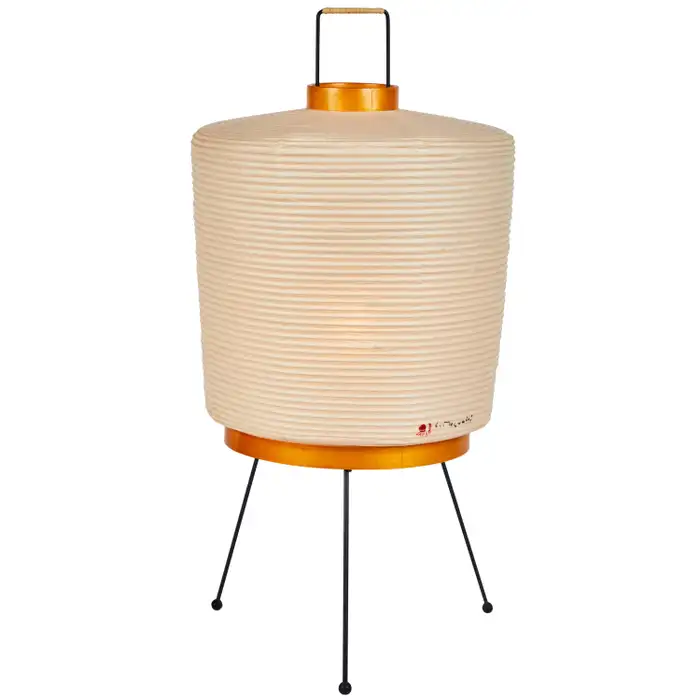
Why It Stands Out: The 2A is a compact, upright floor lamp with a slightly flattened oval silhouette that produces a beautifully diffused ambient light suited to most domestic interiors. Made from washi paper, wood, and bamboo ribs with the authentic manufacturer’s stamp, it represents an excellent mid-range Akari floor lamp for collectors who want an authenticated piece without the premium of the larger or rarer models.
Best For: Living rooms, bedrooms, and first-time collectors seeking an authenticated floor lamp at a manageable scale.
Collector Notes: The 2A is a solid and reliable model that appears consistently in the secondary market, which makes authentication knowledge all the more important when buying.
Akari Model 7AD Light Sculpture
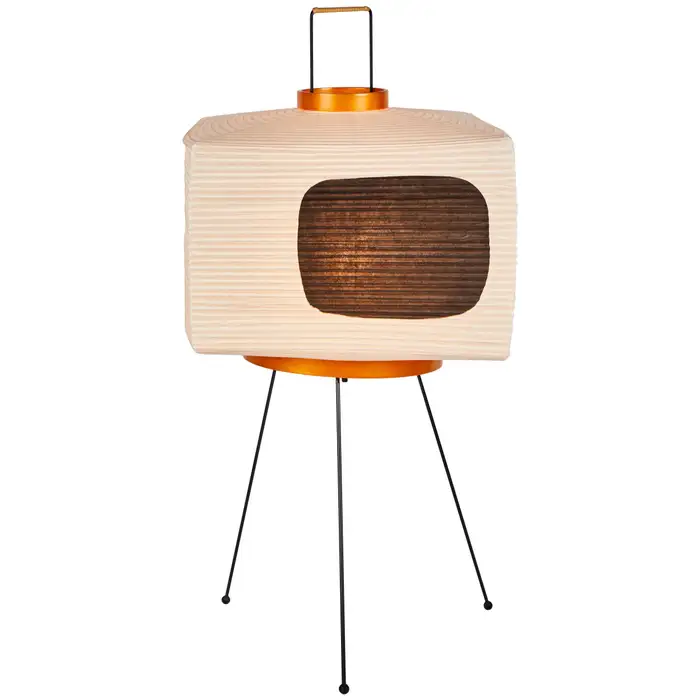
Why It Stands Out: The 7AD is a double-shade floor lamp—the “D” suffix denoting a double configuration—that creates a particularly generous, layered light output. With washi paper, wood, and bamboo ribs, and the authentic Akari stamp confirming its Ozeki provenance, this is a piece with real visual presence. The double shade configuration creates a rhythm of light and shadow that simpler single-shade models cannot replicate.
Best For: Reading corners, living room anchor lighting, and collectors interested in the double-shade configurations as a distinct subset of the Akari floor lamp range.
Collector Notes: Double-configuration models like the 7AD are less commonly encountered than single-shade versions, giving them a modest additional premium in the collector market.
Authentic Isamu Noguchi Lamps vs Imitations
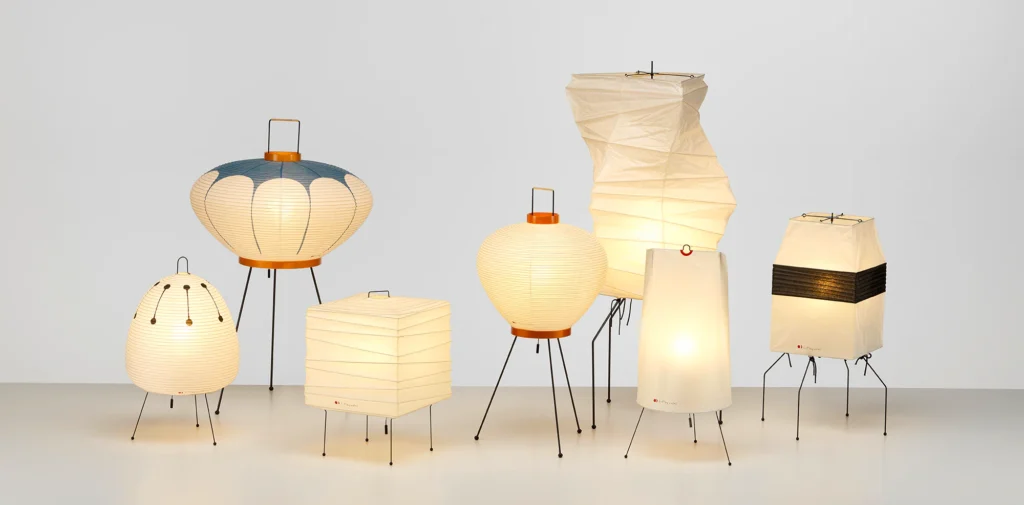
The market for Akari imitations is substantial, and the differences matter both financially and aesthetically. Noguchi created a distinctive red sun-and-moon symbol for the series, a stylized interpretation of the traditional character combining sun and moon, and this stamp remains the primary authentication mark for all genuine Ozeki production. Alongside the stamp, authentic lamps carry Ozeki manufacturer details and are constructed from Mino washi of a specific weight and texture that has no convincing mass-produced equivalent. Counterfeit versions typically use machine-made paper that lacks the translucency and warmth of genuine Mino washi, produce solder lines rather than bamboo ribbing visible through the shade, and feel noticeably lighter and less structurally coherent when handled.
Frequently Asked Questions
Are Noguchi lamps handmade?
Yes. Every Akari is handcrafted beginning with the making of washi paper from the inner bark of the mulberry tree, with bamboo ribbing stretched across sculpted wooden forms, and paper cut into strips and glued to both sides of the framework.
Why are Akari lamps expensive?
The material cost, the time spent on handcraft, and the authenticity of production at the Ozeki workshop ( the only authorized manufacturer since 1951) all contribute to the price of genuine Isamu Noguchi lamps. Vintage and early examples carry additional premiums for rarity and provenance.
Are Noguchi lamps collectible?
Emphatically yes. Vintage examples, first-edition models, and Gemini G.E.L. editions regularly appear at major auction houses and design galleries, with values continuing to rise as the series approaches its centenary.
What paper is used in Akari lamps?
Mino washi, produced from the inner bark of the mulberry tree in the traditional manner of the Gifu region, the same paper used since the series began.
How do you clean a Noguchi lamp?
Use a soft, dry brush or very low-suction vacuum attachment to remove dust from the shade surface. Never use water or cleaning products on washi paper, and avoid direct sunlight, which will bleach and weaken the material over time.
Conclusion: Why Akari Lamps Continue to Define Timeless Design
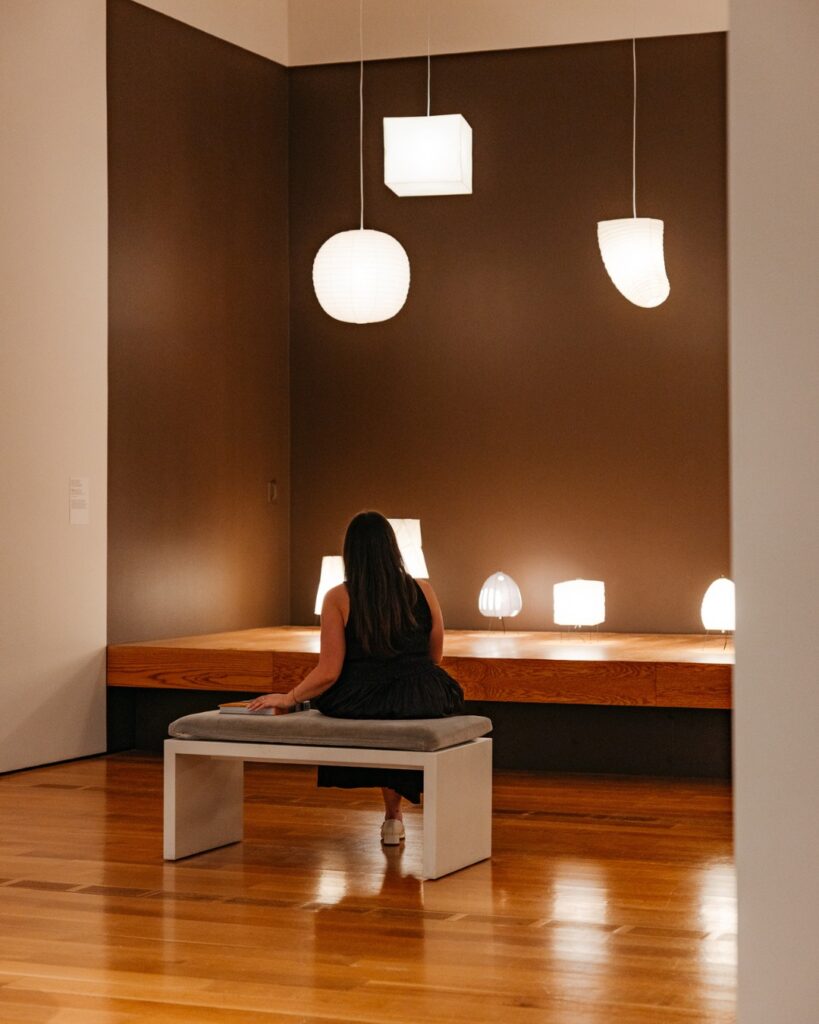
Isamu Noguchi lamps endure because they solve the problem that most lighting design never adequately addresses: not how to produce light, but what kind of light to produce. Noguchi wanted the lamps to have a warm, natural quality and tried to avoid what he called the “harshness” of electrical light, and in washi paper and bamboo, he found a material system perfectly suited to that ambition. Seventy-five years on, the Akari light sculptures remain the most compelling answer the design world has produced to the question of how a lamp should feel. For collectors, that is not merely an aesthetic judgement. It is the foundation of a collection worth building.
Featured image: 1stDibs

Amanda Akalonu is dedicated to weaving together the worlds of jewelry, watches, and objects through a lens of literary storytelling.