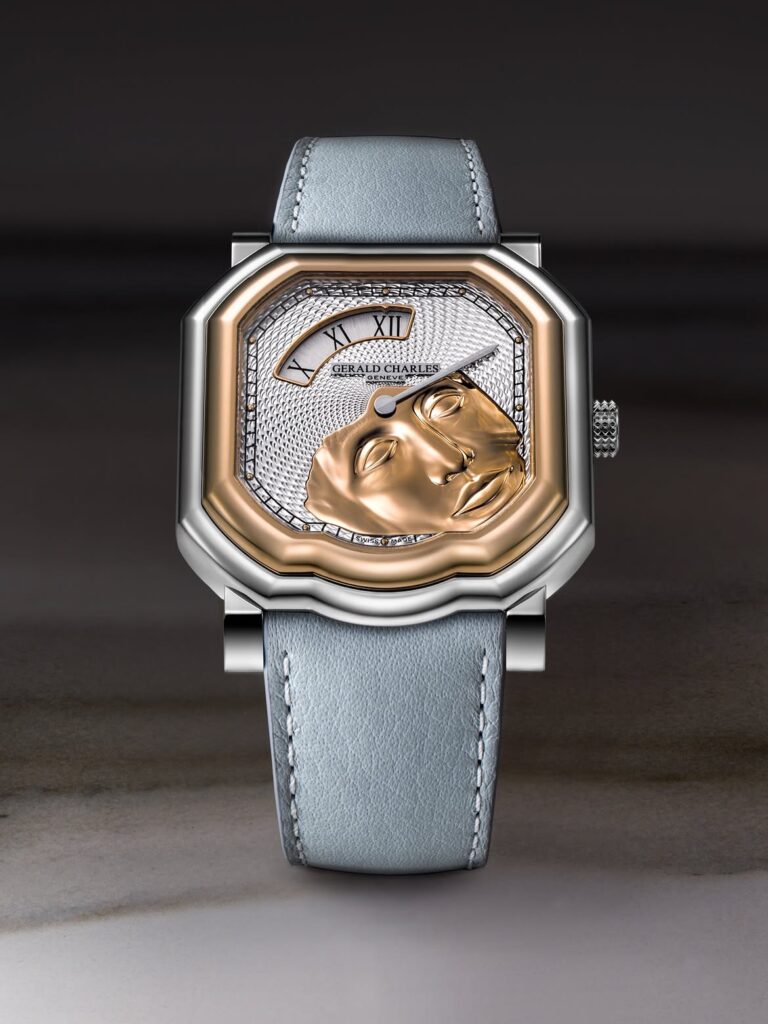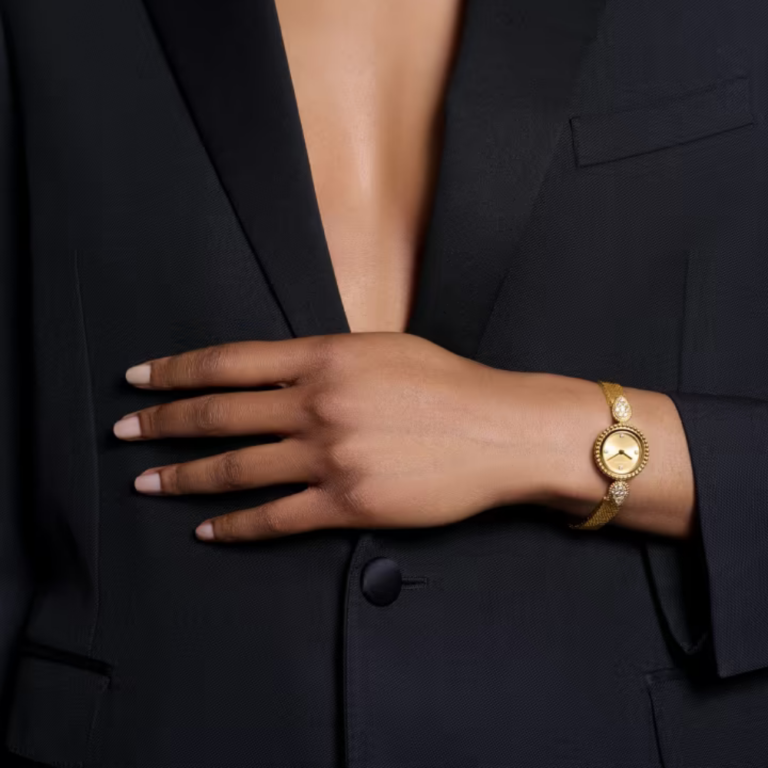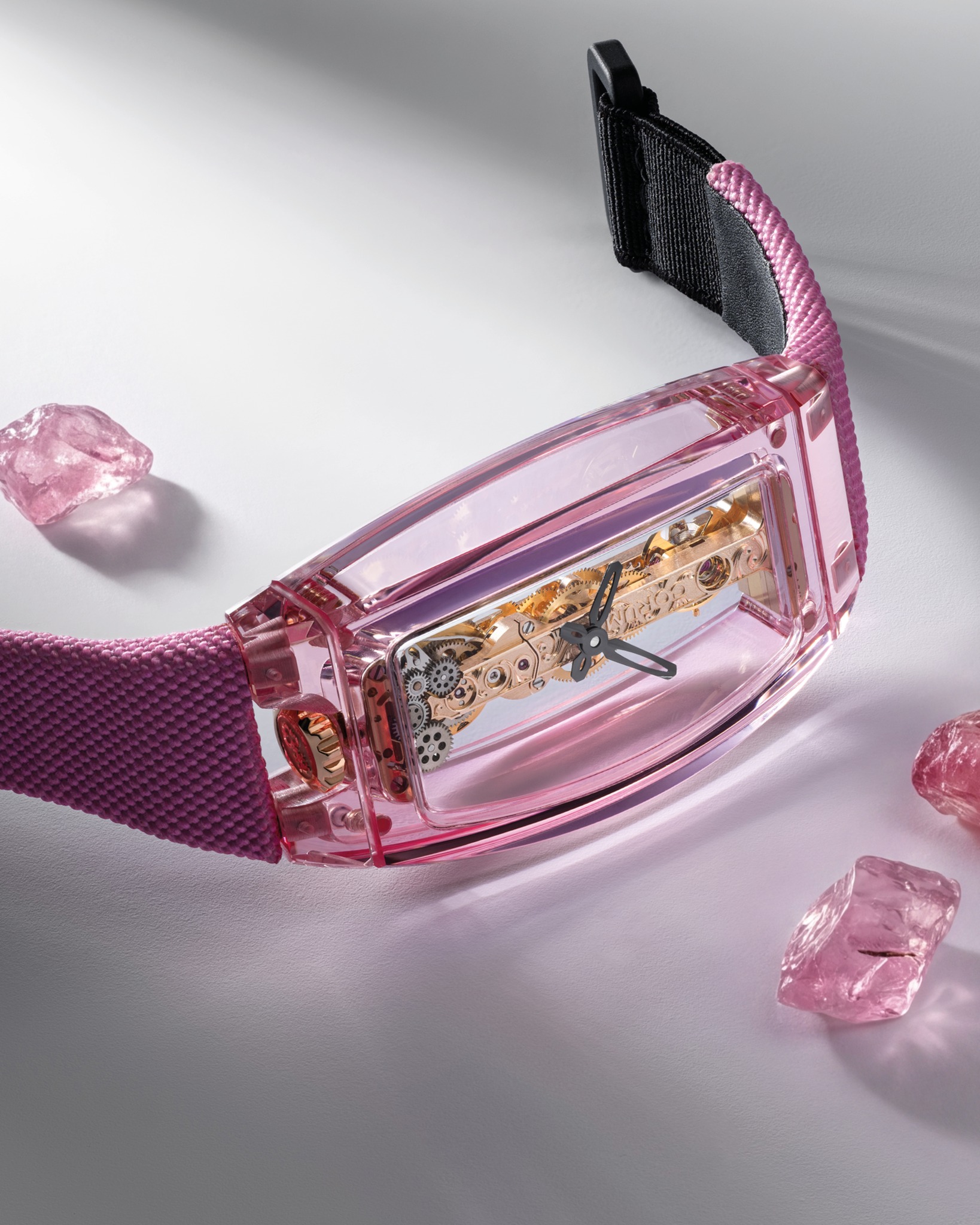

A watch is a mechanical instrument, a design object and, on occasion, a piece of fine jewelry. None of those things has a gender. Yet for much of the last century the industry has sorted its output into two catalogs, and the sorting follows a familiar shorthand. On one side are small cases, slender bracelets, diamonds, and decorative dials. On the other are larger cases, sporting silhouettes, and the prestige of the movement. Together they have defined what most people mean by women’s watches, and what they assume everything else must be.
These are tendencies, not laws. They are habits of design and merchandising that hardened into expectation, and expectations have a way of passing themselves off as nature. So the question worth asking is a simple one. When a brand calls a watch a women’s watch, is it describing the object, or making an assumption about the person who will wear it?
The distinction is getting harder to sustain. Women wear a far wider range of watches than the categories suggest, and men have increasingly taken up pieces once pitched mainly at women. In this article, I will try to trace how the categories formed, what they obscured, what they still contribute, and whether they remain useful.
A History More Complicated Than “Pretty Watches for Women”
The usual story goes like this: women wore pretty things on their wrists, men invented serious watchmaking, and the two traditions have stayed politely apart ever since. It is a tidy story, and wrong in most of its details.
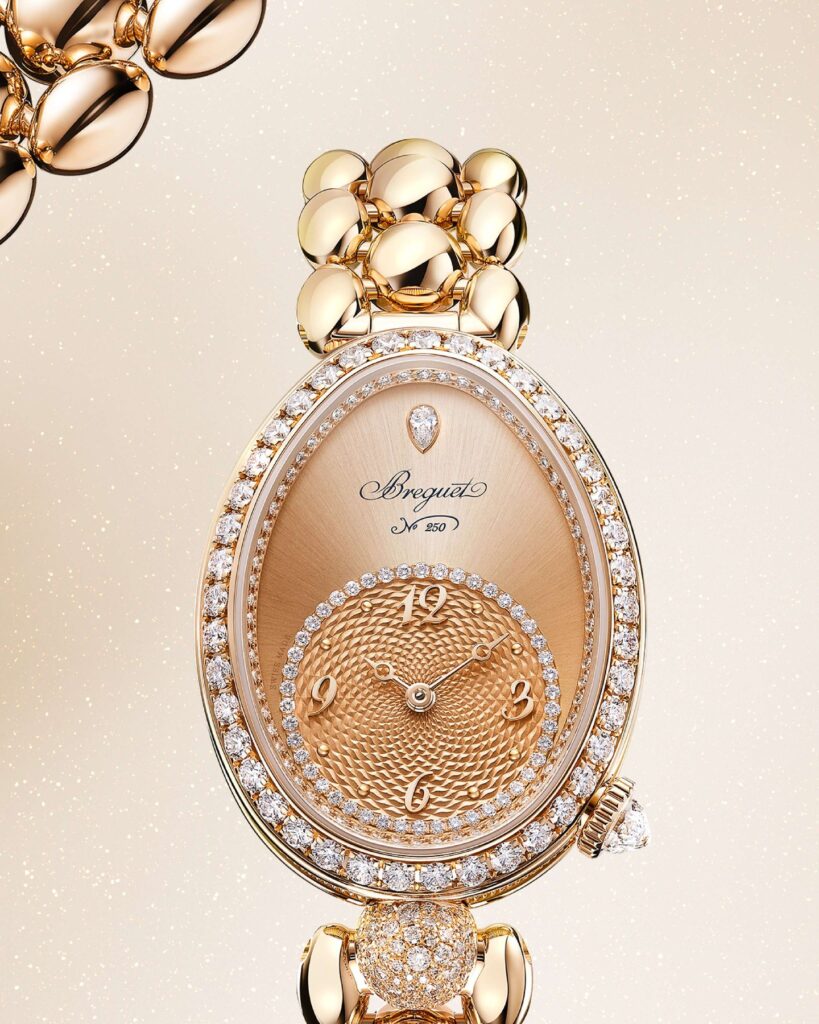
Start before the wristwatch as we know it. Women wore timepieces as jewelry long before the wrist became the standard place for them. They wore them as pendants, brooches, and even bracelets with a dial set into the clasp. The most cited episode is a commission recorded in Breguet’s ledgers in 1810, when Caroline Murat, Queen of Naples and Napoleon’s sister, ordered a repeating watch designed to be worn on the wrist. It’s a lovely piece of history, and what it shows is very interesting: the earliest wrist-worn watches we can document were made for women, and nobody at the time considered that a lesser ambition. Patek Philippe’s much-cited 1868 bracelet watch for Countess Koscowicz of Hungary points the same way.
The meaning shifted later. Into the early twentieth century, many men still regarded the wristwatch as a woman’s accessory, and it took the practical demands of military service to make it respectable on a man’s arm. Once it was, the wristwatch became a serious object, and “serious” came increasingly to mean what men wore. What remained for women was the vocabulary of ornament.
That shorthand has been convenient and stubborn. It allowed technical accomplishment to be coded as masculine and decoration as feminine, even though jewelry watches have always demanded real engineering. They often demand tiny movements, cases built as sculpture, and settings that must survive a day on the wrist. Decorative ambition is not the absence of horological ambition.
So the modern category of women’s watches rests on two foundations that are easily confused. One is a genuine design tradition, rich in craft. The other is a set of assumptions about what women are supposed to value. The first deserves celebrating and the second deserves questioning. Treating them as one thing is how the category became so narrow.
Is a Smaller Watch Necessarily a More Feminine Watch?
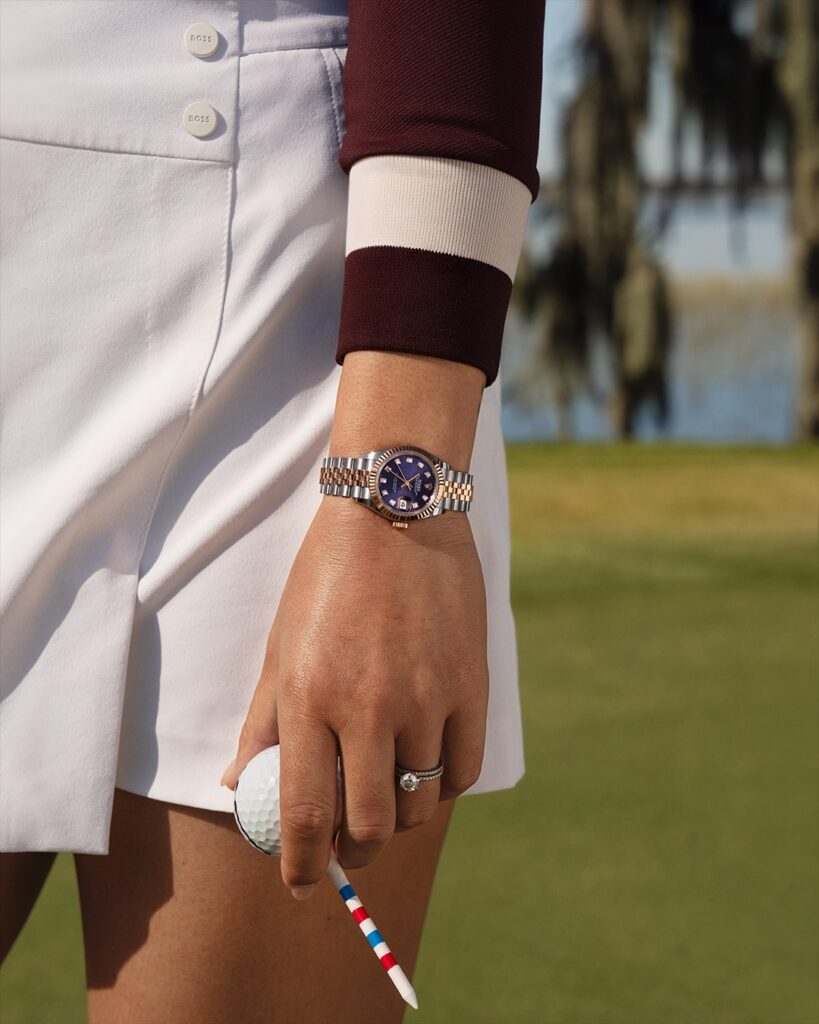
Ask most people what makes a watch feminine and the first answer is size. Diameter has become the industry’s quickest signal, a single number doing the work of a judgment. Below a certain figure, a watch belongs among women’s watches. Above it, it doesn’t.
It is convenient, and misleading. Diameter says little about how a watch wears. Thickness, lug-to-lug length, the taper of a bracelet, the way a case sits against the wrist bone, and the legibility of the dial decide whether a watch feels right, and no single figure captures them. A 36mm watch with long lugs can overwhelm a narrow wrist, while a 40mm watch with short lugs and a slim profile can nearly vanish. The conversation about women’s watch sizes is worth having, but only if it is about fit (wrist circumference, wardrobe, how the watch is meant to be read) and not about what a number says of its wearer.
The label serves retailers for obvious reasons. A size category makes a range easy to merchandise, photograph and explain on a shop floor. It also teaches customers to read a measurement as an identity. A smaller watch may suit a person’s wrist, taste, or clothes. A larger one may offer presence or legibility. Neither preference tells us anything about femininity or masculinity.
Collectors often see this more clearly than marketers do. Vintage dress watches, the miniature cases of the 1920s and 1930s, and the compact designs being revived today are prized for proportion and finish, not for the gender on an old catalogue page. The compact watch is having a moment of its own, a subject we take up in Why Small Watches Are Having a Big Moment.
None of this is an argument for oversized cases. A woman is not obliged to wear a large watch to prove her independence, and a small watch is not a relic. Swapping one prescription for another is not progress. What matters is whether a watch is thoughtfully proportioned, comfortable, and does what its designer intended.
Why Is Jewelry Treated as the Opposite of Serious Watchmaking?
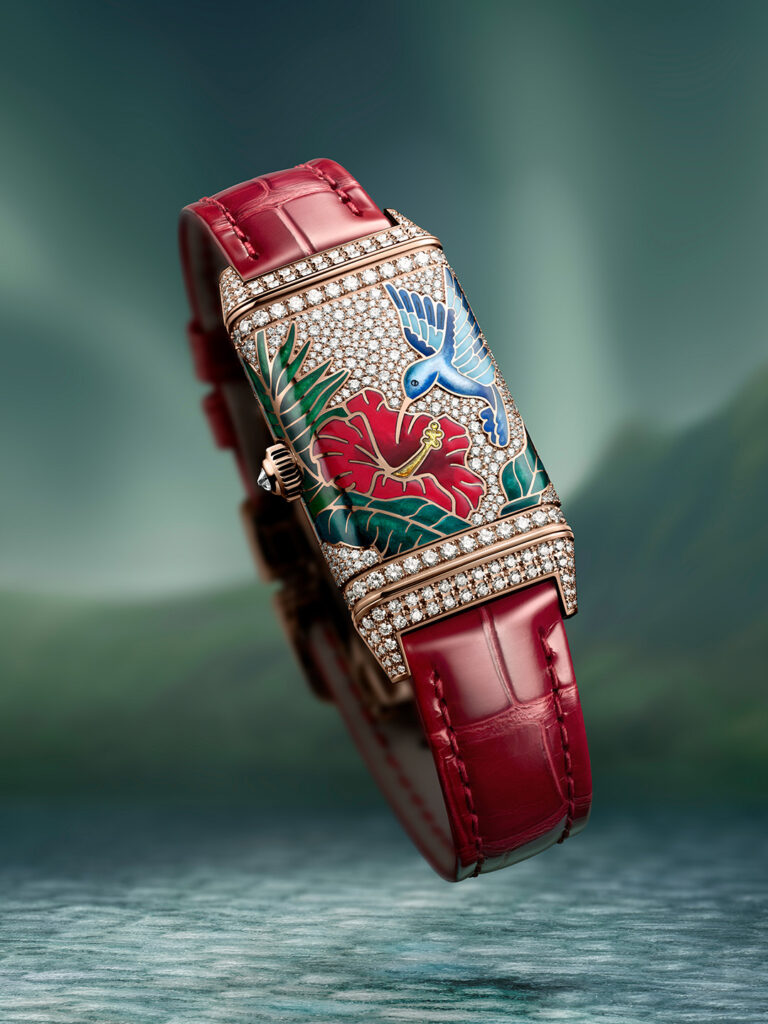
Most of us absorb a hierarchy without noticing it. Complications and movement specifications sit at the top, signalling seriousness. Diamonds, colored stones, braided bracelets and ornamental dials sit below, filed under indulgence. You can hear the ranking in the language: a watch is “merely” jewelry, or it has a “proper” movement.
The hierarchy rests on a false choice. A watch can be technically formidable and visually extravagant. It can also be restrained to the point of austerity and mechanically unremarkable. Design and engineering are separate axes of value. Conflating them, and then assigning one to each gender, is the real error.
Consider what jewelry watchmaking involves. Movements must be shrunk to fit cases that are slender or irregular in shape. Gem-setting demands exacting precision, with stones aligned across dial, bezel and bracelet so that light behaves as intended. Enamel, engraving and marquetry are crafts with their own masters. Houses such as Van Cleef & Arpels, Cartier, Chanel, and Piaget have long made watches in which the object is sculpture first and timekeeper second, and Patek Philippe’s Ladies First line has included both a minute repeater and a perpetual calendar. The idea that ornament and mechanics can’t share a case doesn’t survive contact with the objects.
The objection, then, is not to decorative watches made for women. They are a legitimate art form, and the craft in them deserves the same scrutiny we give a tourbillon. The objection is to how decoration has sometimes been used to narrow the industry’s picture of what women are interested in, as though the person wearing a gem-set bezel couldn’t also care about the calibre behind it. The shelf of women’s watches has too often been treated as the place where the technical conversation stops.
The reverse error is just as tempting. Defending jewelry watches by disparaging mechanical ones repeats the same logic with the labels swapped. Both traditions should be judged on their own terms. If a watch’s most visible achievement is artistic, why should its technical value count for less?
The Women Wearing Watches That Complicate the Old Rules
Categories describe what brands imagine. Wearers show what actually happens. A handful of them test the old assumptions well.
Rihanna has been photographed in a pink-gold Audemars Piguet Royal Oak with a matching pink dial. The Royal Oak, drawn by Gérald Genta in 1972, is an integrated-bracelet sports watch with an unmistakably assertive architecture. On her wrist, it reads as neither diminished nor apologetic. She doesn’t speak for all women, and one styling choice is not a collecting philosophy. But the image undoes the assumption that a woman’s watch must be quiet. The color is playful. The case is not.
Diana, Princess of Wales, is the quieter counterexample. She was often seen in a Cartier Tank, a rectangular design dating to 1917 that has never needed a gendered label to find its wearers. Her choice suggests that a watch’s character can carry a person without being marketed to them, and that a classic can belong to everyone who wears it well.
Brynn Wallner, founder of Dimepiece, matters for a different reason. She has helped bring a wider audience into watch collecting and its culture, and her importance lies in the shift she represents. Thanks to her work, women are addressed less as consumers and more as participants, interpreting, debating, and judging taste for themselves.
Zoë Abelson, a collector and entrepreneur in the watch market, is among the women Sotheby’s has identified as shaping contemporary collecting. Her example moves the discussion past celebrity styling toward collecting as a serious pursuit, shaped by market knowledge and conviction.
Then there are the women inside the workshop. Carole Forestier-Kasapi, a movement designer best known for her work on complicated in-house calibres at Cartier, is a reminder that women aren’t only on the wrist but also behind the bench and at the drawing table. A category that treats women as an audience for technical watchmaking rather than a source of it has missed part of its own story.
Taken together, they show that women are not a single market segment. They are wearers, collectors, enthusiasts, designers and style-makers, and the women who buy women’s watches are often the same women who buy everything else on the dial wall.
If Watches Have No Gender, Why Do Brands Still Make Women’s Watches?
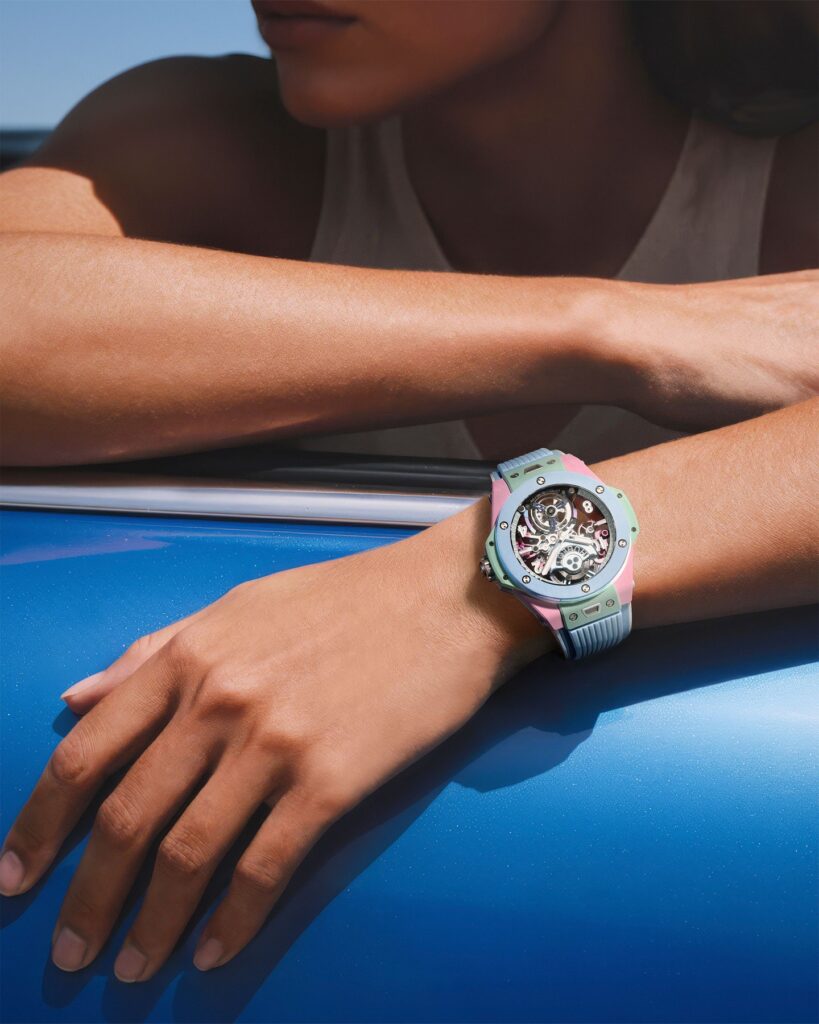
The industry has been debating this itself, and the Fondation Haute Horlogerie has documented the discussion. A growing number of brands now describe collections by size, style, and intended use rather than by gender, and the logic is appealing. It lets customers discover watches outside the section where a brand first placed them, and it pushes brands to explain a design’s qualities more precisely instead of leaning on a label.
But removing a label doesn’t automatically create inclusive design. It doesn’t erase entrenched marketing assumptions, and it doesn’t guarantee that every case size and bracelet will suit every wrist. “Unisex” can also become a polite way of saying “designed for men, and available in a smaller size”, which is its own kind of oversight.
There is a counterargument that deserves respect. Some buyers genuinely like dedicated women’s collections, because those collections offer the proportions, styling, and jewelry techniques they are looking for. A thoughtful position acknowledges that, rather than assuming all gendered marketing is unwelcome. Brands should remain free to design women’s watches with particular proportions, aesthetics, or practical needs in mind. Such design becomes restrictive only when the intended audience is mistaken for the only audience.
That is the difference between access and erasure. A watch designed for women need not be exclusively for women. Equally, a gender-neutral label should not erase the history of the women who helped shape watchmaking. The goal isn’t to dissolve every category but to stop treating categories as rules about who may wear what.
The Question the Industry Should Be Asking Instead
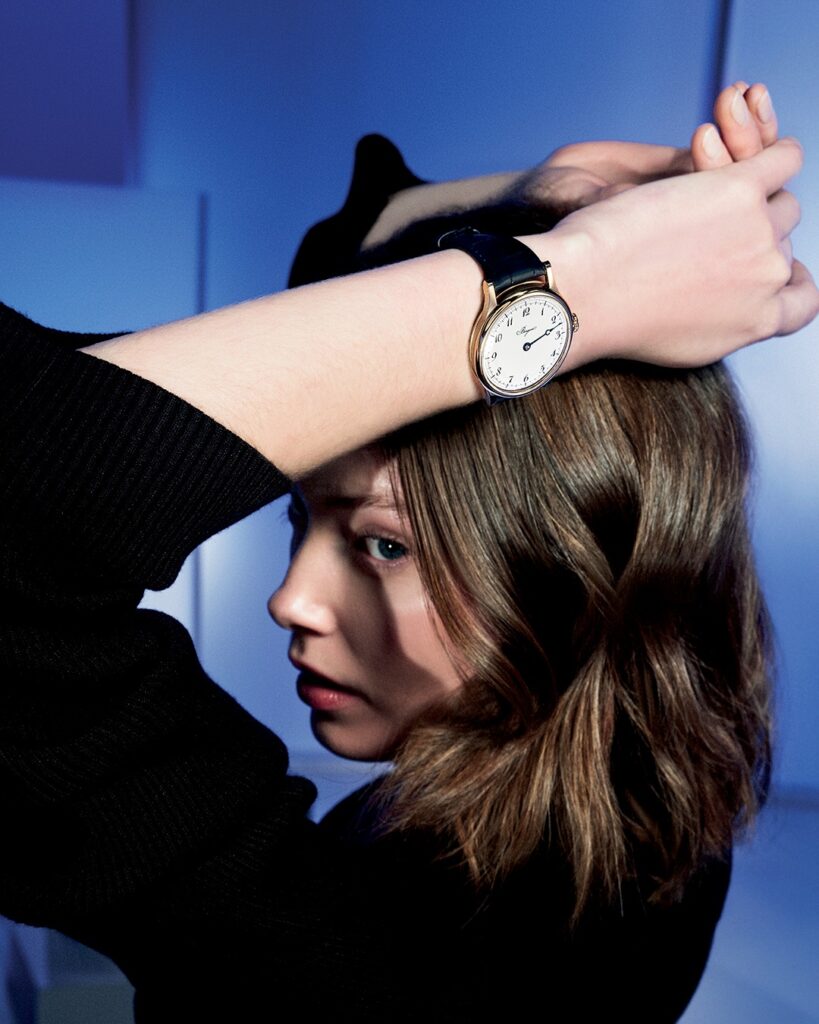
If gender can’t tell us what makes a watch right for someone, what can? Four ideas offer a more useful vocabulary.
- Proportion. Does the case, its thickness, the bracelet, and the overall design work for the wearer’s wrist and the look they want?
- Craftsmanship. What has gone into the movement, the case, the dial, the finishing, and the setting?
- Character. Is the watch architectural, understated, sporty, ornamental, playful, historically significant, or several of these at once?
- Personal meaning. Does it express a preference, mark an occasion, reflect a collecting interest, or become something the wearer wants to live with for years?
This is not a checklist every buyer must follow. It is a way for the industry to describe watches more intelligently, explaining design, fit, and craft, and then leaving the wearer to decide what appeals. Applied honestly, it would change how women’s watches are presented as much as how they are made. With this, the language is less “for her,” more “here is what this is, and here is why it was made this way.”
A Watch Doesn’t Have to Prove Its Wearer’s Femininity
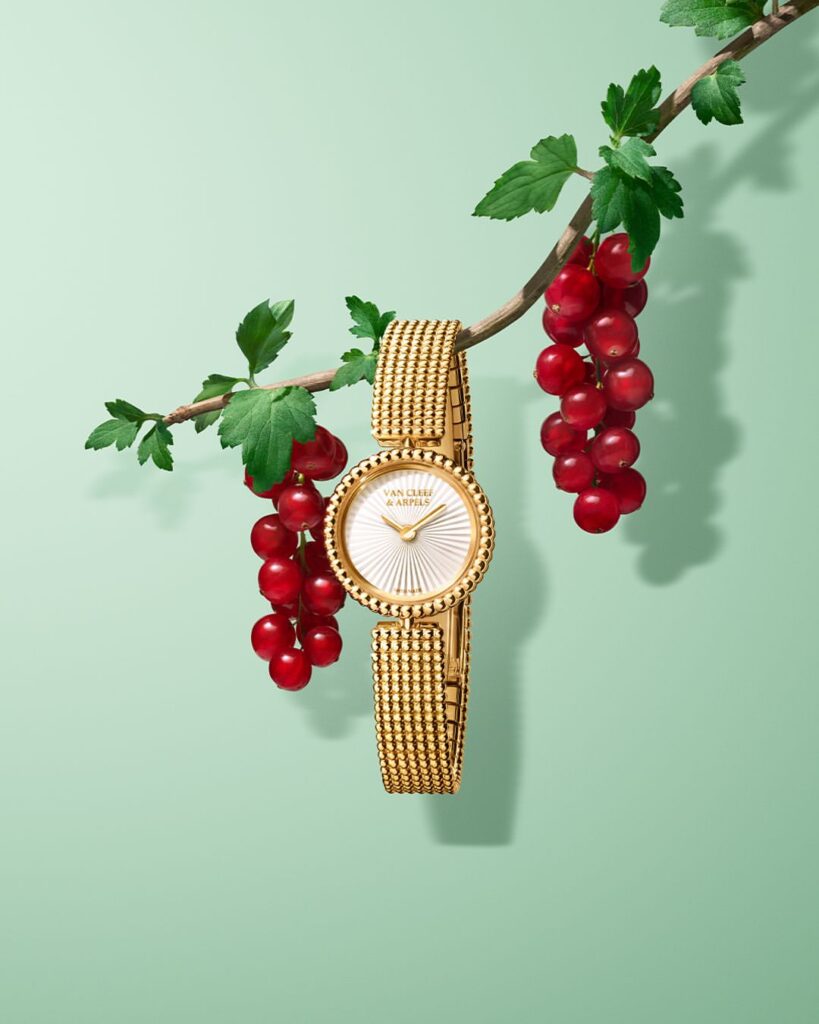
A watch can be feminine without being delicate, technically accomplished without looking masculine, and designed with women in mind without being reserved for them. That is the tension this article set out to hold.
“Anyone can wear anything” is true, but it is too easy an answer. A better one is that the category still has a history and a commercial purpose, and that its meaning is changing. The most interesting future for women’s watchmaking may not be the disappearance of watches designed for women. It may be the freedom to appreciate those designs without assuming they mark the limits of women’s taste.
The measure of a watch is not whether it conforms to an idea of femininity. It is what the design achieves, what the craftsmanship reveals, and what the wearer sees in it.
Featured image: Courtesy of Corum

Amanda Akalonu is dedicated to weaving together the worlds of jewelry, watches, and objects through a lens of literary storytelling.