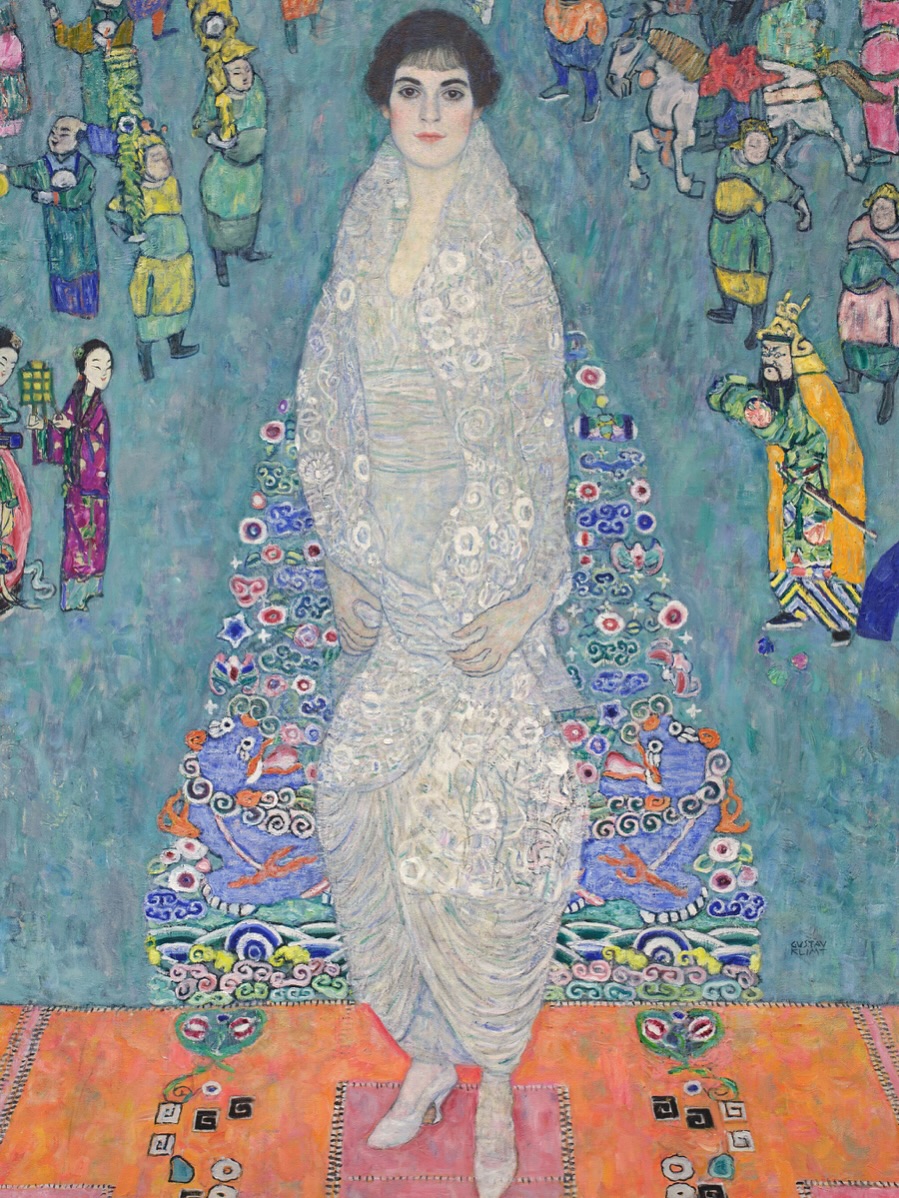

I’ve witnessed many extraordinary moments in the collecting world over the years, but nothing quite prepared me for what unfolded at Sotheby’s on November 18, 2025. Gustav Klimt’s “Bildnis Elisabeth Lederer” shattered expectations, selling for a staggering $236.4 million and cementing its place in auction history as the second most expensive artwork ever sold. As someone who has followed the auction market for a while, I can confidently say this sale represents far more than just impressive numbers. It’s a testament to the enduring power of artistic genius and the remarkable journey of a painting that survived against all odds.
The History-Making Moment
From the get-go, everyone knew that this was no ordinary sale. And when the hammer finally came down at $205 million, with the final price reaching $236.4 million after fees, a collective gasp swept through the crowd. Klimt’s “Bildnis Elisabeth Lederer” had just become the most expensive work of modern art ever sold at auction and the most valuable piece ever sold by Sotheby’s. Only Leonardo da Vinci’s controversial “Salvator Mundi,” which fetched $450 million in 2017, stands above it in the all-time auction records.
What strikes me most profoundly about this achievement is how it more than doubled Klimt’s previous auction record. The Austrian master, already revered as one of the titans of early twentieth-century art, has now reached an entirely new stratosphere of market recognition. This wasn’t just a good day for Klimt enthusiasts. It was a watershed moment that will reshape how we value and understand the importance of Viennese modernism.
A Portrait of Elegance and Power
While I’ve never had the privilege of seeing Klimt’s “Bildnis Elisabeth Lederer” in person, I believe the reproductions simply don’t do it justice. Painted between 1914 and 1916, during the final years of Klimt’s life, the portrait captures Elisabeth Lederer with a mesmerizing combination of realism and decorative splendor that defined Klimt’s mature style. The young woman gazes out from the canvas with an enigmatic expression, surrounded by the artist’s signature ornamental patterns and rich, jewel-like colors.

Elisabeth was the daughter of August Lederer, one of Klimt’s most devoted patrons and an industrialist whose family assembled what became one of the most significant private collections of Klimt’s work in Vienna. The relationship between artist and patron was more than transactional. It was a genuine meeting of minds, with the Lederer family providing Klimt not just financial support but also intellectual companionship during a transformative period in Viennese cultural life.
A Survivor’s Tale
Perhaps what makes the sale of “Bildnis Elisabeth Lederer” even more remarkable is the painting’s incredible survival story. Like so many treasures from Vienna’s golden age, it faced existential threats during the dark years of World War II. After the Nazi annexation of Austria in 1938, the Lederer family’s extensive art collection was confiscated.

Multiple Klimt works from the family’s holdings were lost or destroyed during the war. For years, many scholars believed that “Bildnis Elisabeth Lederer” had been among those casualties, reportedly burned when retreating SS forces set fire to Schloss Immendorf in May 1945.
But here’s where the story takes an extraordinary turn: the portrait survived. It emerged from the war unscathed, a near-miraculous preservation given how close it came to destruction. In 1948, it was restituted to Erich Lederer, Elisabeth’s brother, representing one of the relatively rare successful cases of postwar art restitution. This makes the painting not just an aesthetic masterpiece but also a symbol of resilience. Indeed, a work that refused to be erased by one of history’s darkest chapters.
The Lauder Connection
The portrait’s modern chapter began in 1985 when Leonard A. Lauder, the cosmetics magnate and legendary art collector, acquired it. For nearly four decades, “Bildnis Elisabeth Lederer” hung above Lauder’s dining room table. (Imagine having breakfast beneath a Klimt masterpiece!) This detail captures something essential about Lauder’s approach to collecting: he didn’t treat art as mere investment or status symbols but as living companions to be enjoyed daily.

Lauder, who passed away in June this year, was one of the twentieth century’s most discerning collectors. His eye for quality was impeccable, and his willingness to share his collection with museums and the public demonstrated a generous spirit that transcended mere acquisition. The decision to sell this work following his death represents the dispersal of one of the great private collections of our time.
A Personal Reflection
Reflecting on this historical moment, I can’t help but think about all the lives this painting has touched. Elisabeth Lederer herself, sitting for Klimt in the waning days of the Austro-Hungarian Empire. The family members who fought to recover it after the war. Leonard Lauder gazing up at it over countless meals. And now, whoever the anonymous buyer is, inheriting not just a painting but a piece of cultural memory.
That’s what great art does. It connects us across time, creating bridges between past and present, between individual lives and collective history. The $236.4 million price tag will grab headlines, and rightfully so. But the real value of Klimt’s “Bildnis Elisabeth Lederer” transcends any monetary figure. It represents a moment when artistic vision, historical survival, and human appreciation converged in a single, perfect work.
Featured images: Sotheby’s

Amanda Akalonu is dedicated to weaving together the worlds of jewelry, watches, and objects through a lens of literary storytelling.