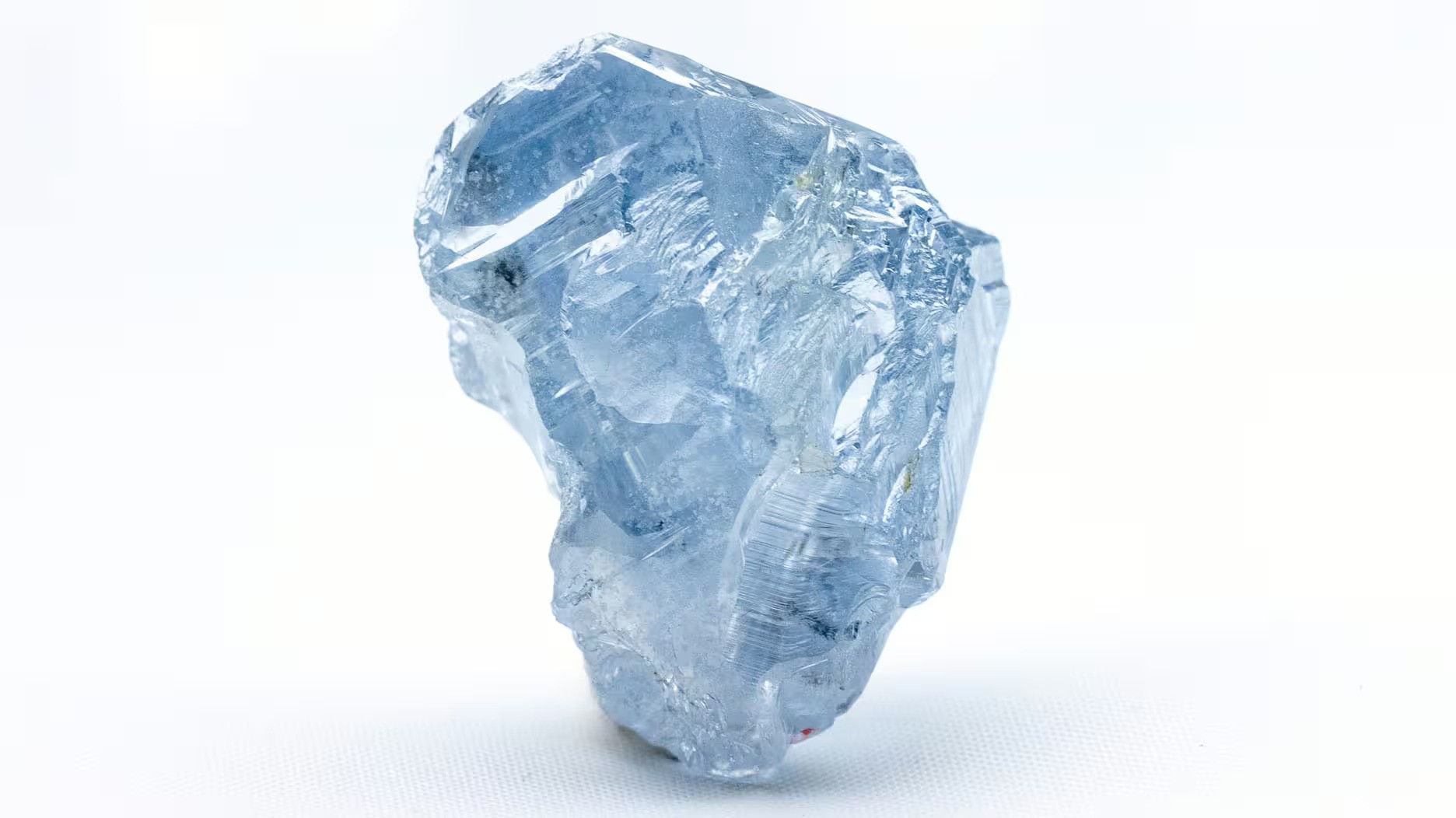

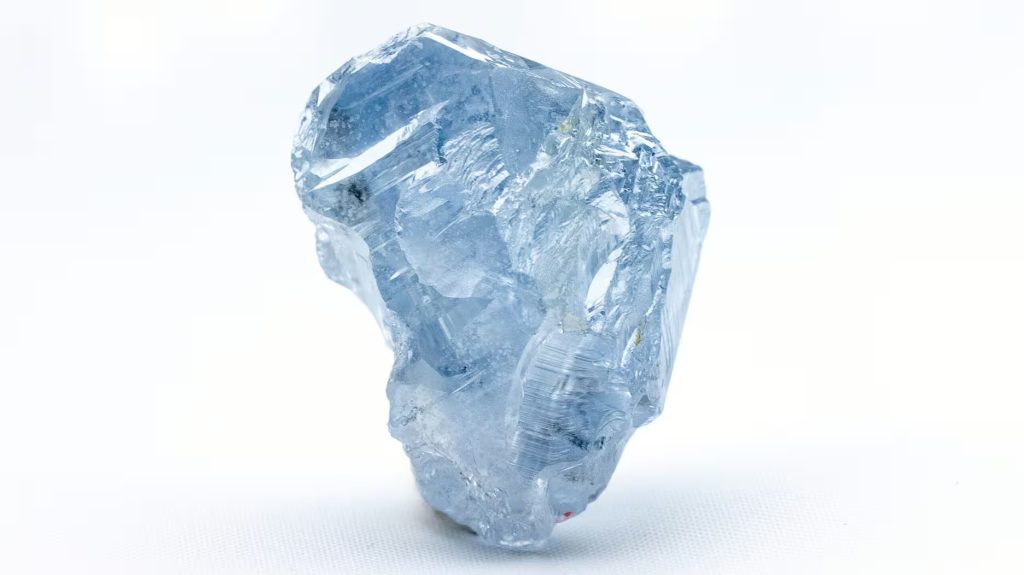
Petra Diamonds Limited announced Tuesday the recovery of an exceptional 41.82-carat Type IIb blue diamond from its flagship Cullinan Mine in South Africa, sending the company’s shares soaring 14% in London trading and reigniting interest in one of the world’s most legendary diamond deposits. The Petra blue diamond, described by the company as possessing “seemingly exceptional quality in terms of both its color and clarity,” represents the first blue stone of this color and magnitude recovered from the historic mine in the past five years. The discovery comes at a crucial time for Petra Diamonds, which has been navigating challenging market conditions characterized by weakening diamond demand and pricing pressures.
A Rare Gem from a Legendary Mine
Type IIb diamonds account for less than 0.1% of all diamonds and rank among the rarest gemstones on Earth. Their distinctive blue coloration results from trace amounts of boron within the crystal structure—a geological anomaly that occurs only under extremely specific conditions deep within the Earth’s mantle. Early analysis and imagery of the Petra blue diamond suggest it possesses exceptional color saturation and clarity, placing it among the most important blue diamond discoveries in recent history.

The Cullinan Mine, located approximately 40 kilometers northeast of Pretoria, has earned global renown as the world’s most important source of blue diamonds. The deposit famously yielded the largest gem diamond ever recovered—the 3,106-carat Cullinan Diamond, discovered in 1905 and subsequently cut into several stones that now form part of the British Crown Jewels. Beyond its historical significance, the mine continues to produce some of the world’s most valuable and sought-after colored diamonds. “The Company is in the process of analysing the stone and ascertaining the preferred method of the sale of this stone,” Petra Diamonds stated in its official announcement. “Further announcements with regards to the marketing of this stone will be made in due course.”
This analysis process typically takes several months as gemologists and diamond cutting specialists study the stone’s internal structure, examine any color zoning, determine crystal orientation, and map inclusions to develop an optimal cutting strategy. The goal is to maximize both the beauty and value of the finished gem or gems that will ultimately emerge from the rough crystal.
Historical Context and Valuation Expectations
The discovery of the 41.82-carat Petra blue diamond follows a significant precedent. In April 2021, Petra recovered a 39.34-carat blue diamond from the same mine—at the time, a landmark discovery that generated considerable excitement in the diamond industry. That stone subsequently sold for $40.2 million, establishing a benchmark that industry observers are now using to estimate the potential value of the newly discovered gem.
Given that the current Petra blue diamond exceeds its predecessor in weight and reportedly matches or surpasses it in quality terms, market analysts anticipate a final sale price that could equal or exceed the 2021 result. However, several factors will influence the ultimate valuation, including the stone’s final weight after cutting, the intensity and distribution of its blue color, clarity characteristics, and prevailing market conditions at the time of sale.
The announcement comes as Petra Diamonds faces notable financial pressures. In October, the company reported that average rough diamond prices fell 13% to $110 per carat in the first fiscal quarter ending September 30. Additionally, Petra had fully drawn its $102 million revolving credit facility as of September 30, while net debt increased to $287 million at quarter’s end. The recovery of an exceptional blue diamond provides a potentially significant revenue opportunity that could help address these financial challenges.
Market Reaction and Investment Implications
Investors responded enthusiastically to news of the Petra blue diamond discovery. Shares of Petra Diamonds Limited (LSE:PDL, OTC:PDLMF) climbed approximately 14% in London trading on Tuesday, reaching 19.38 pence per share before moderating slightly. This market reaction reflects both the potential value of the individual stone and broader confidence in the Cullinan Mine’s continued ability to produce exceptional gems.
The diamond industry has experienced considerable turbulence in recent years, with natural diamond producers facing pressure from multiple directions: synthetic diamond competition, changing consumer preferences among younger buyers, economic uncertainty in key markets like China and the United States, and oversupply in certain segments. Against this challenging backdrop, rare colored diamonds—particularly exceptional blues, pinks, and reds—have maintained and even increased their value, serving as tangible stores of wealth and objects of desire for collectors and investors.
What Happens Next
Petra Diamonds now faces the critical task of analyzing the rough stone and determining the optimal path to market. Several options exist for selling a diamond of this caliber and significance.
The company could offer the rough stone directly through tender, allowing diamond manufacturers and dealers to bid on the privilege of cutting and polishing it. This approach transfers the risk and reward of the cutting process to the buyer while providing Petra with immediate revenue. Alternatively, Petra could partner with a renowned diamond cutting house to transform the rough into polished gems, then market the finished stones through auction or private sale. This path offers potentially higher returns but requires additional time and investment.
A third possibility involves direct negotiation with a single buyer—perhaps a jewelry house, a private collector, or a dealer with specific clients in mind. This approach can expedite the sale while potentially achieving premium pricing from a buyer with particular motivation to acquire the stone.
Recent years have seen exceptional blue diamonds achieve remarkable prices at auction. The 14.62-carat Oppenheimer Blue sold for $57.5 million at Christie’s Geneva in 2016, setting a record for any jewel sold at auction at that time. The 12.03-carat Blue Moon of Josephine fetched $48.4 million at Sotheby’s Geneva in 2015. While direct comparisons are difficult given differences in size, cutting, and market conditions, these results demonstrate the extraordinary values that top-quality blue diamonds can command.
Industry experts will watch closely to see which path Petra chooses and how market conditions evolve over the coming months. The decision will be influenced not only by the stone’s characteristics but also by Petra’s financial needs, market timing considerations, and strategic objectives.
As Petra Diamonds continues analyzing the stone and developing its go-to-market strategy, the industry watches with anticipation. The Petra blue diamond represents not just a potentially transformative revenue opportunity for one company, but a demonstration that natural colored diamonds remain among the world’s most valuable and sought-after commodities.
Photos: Courtesy of Petra Diamonds Ltd.

Sewelo is a world where jewelry, watches, and objects come alive in a shimmering dance of fantasy. Through a literary lens, we celebrate the beauty and elegance that make these treasures more than just possessions.