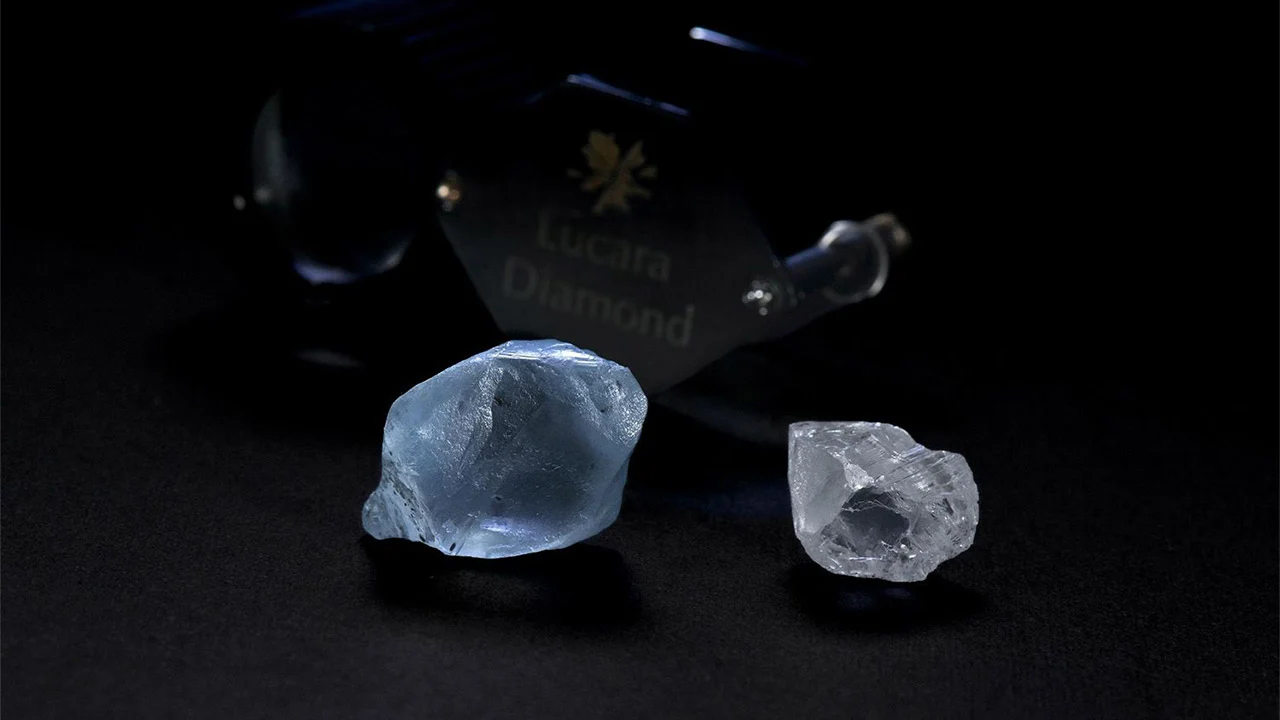

Lucara Diamond Corp. made headlines on March 16, with the announcement of a remarkable discovery: a 36.92-carat blue diamond recovered from its legendary Karowe Mine in Botswana. The Lucara Karowe blue diamond, classified as a high-quality Type IIb, represents one of the rarest categories in the diamond world and underscores why this particular mine continues to be regarded as one of the most exceptional diamond sources on the planet.
A Discovery with Million-Dollar Potential
The significance of the Lucara Karowe blue diamond extends far beyond its impressive carat weight. Type IIb diamonds, characterized by their distinctive blue color caused by trace amounts of boron within the crystal structure, represent less than 0.5% of all natural diamonds ever discovered. This extreme rarity translates directly into extraordinary value, particularly when the stones are of high quality and substantial size.
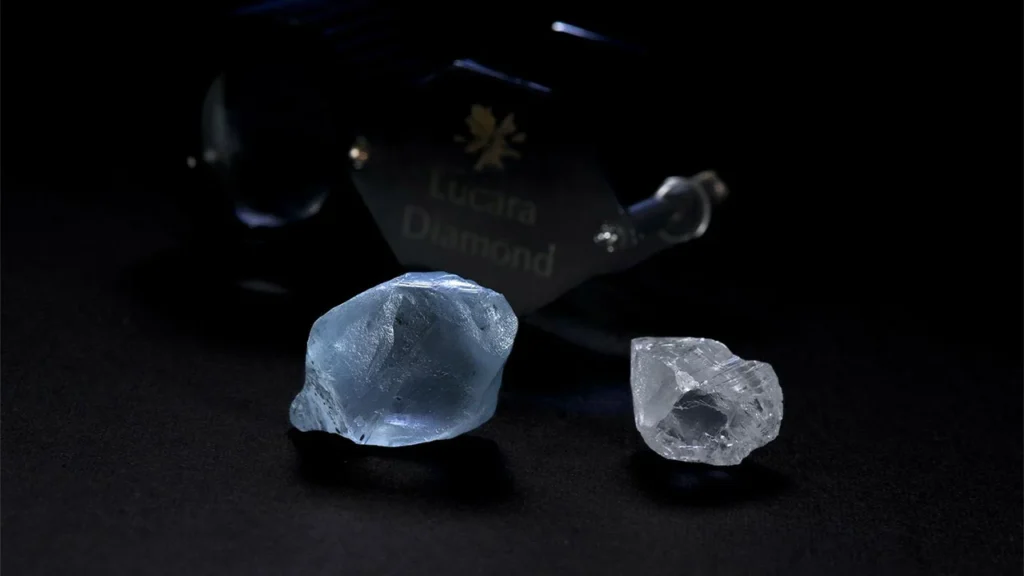
Industry experts suggest that when cut and polished, this rough diamond could yield a finished stone weighing between 11 and 15 carats, based on typical cutting yields of 30-40%. If the polished gem achieves comparable quality to other famous blue diamonds sold at auction, it could potentially command prices exceeding $50 million. This places the Lucara Karowe blue diamond in the company of legendary stones like the 14.62-carat Oppenheimer Blue, which sold for $57.5 million in 2016, and the 15.10-carat De Beers Cullinan Blue, which achieved similar stratospheric prices.
“Lucara is delighted to announce the recovery of this stunning blue, high-quality diamond from the Karowe Mine, which again reinforces the special nature of this asset,” said William Lamb, President and CEO of Lucara Diamond Corp. “Recoveries such as this demonstrate the value contained within the Company’s surface stockpiles, which remain an important source of mill feed and a contributor to ongoing diamond recoveries.”
Technology Makes the Difference
What makes this discovery particularly interesting is not just the stone itself but how it was found. The Lucara Karowe blue diamond was recovered from previously processed stockpile material using advanced X-ray Transmission (XRT) technology, a sophisticated sorting system that has revolutionized diamond recovery at the mine.
The XRT system works by scanning material with high-energy X-rays to detect differences in atomic density. Because diamonds are less dense than the surrounding rock, the technology can identify them even when completely hidden from view. Once detected, precise air jets separate the diamonds and divert them into secure collection chambers. This non-invasive recovery method is crucial for preserving large, high-value diamonds that might otherwise be damaged or destroyed during traditional crushing and processing.
In this case, XRT technology rescued a rare blue diamond that could have easily gone unnoticed in conventional processing. The fact that such an exceptional stone emerged from stockpile material, ore that had already been through initial processing, demonstrates both the effectiveness of the technology and the extraordinary richness of Karowe’s deposits.
Karowe’s Exceptional Legacy
The recovery of the Lucara Karowe blue diamond adds another chapter to a mine that has already produced some of the world’s most remarkable diamonds. Since operations began in 2012, Karowe, whose name means “precious stone” in the local Setswana language, has yielded eight of the ten largest rough diamonds ever discovered.
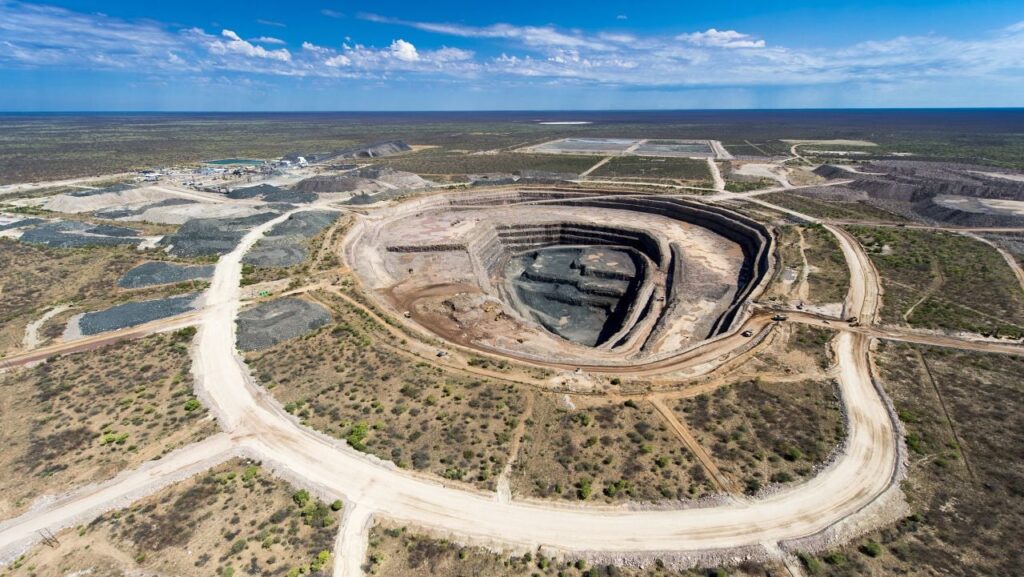
The mine’s trophy case includes the 1,758-carat Sewelô (meaning “rare find”), recovered in 2019; the 1,109-carat Lesedi La Rona (“our light”), discovered in 2015; and the 813-carat Constellation, also from 2015. Karowe has also produced Botswana’s largest fancy pink diamond, the Boitumelo. This consistent production of exceptional stones has established Karowe as one of the world’s highest-margin diamond operations, annually producing approximately 300,000 high-value carats.
The latest blue diamond discovery comes at a pivotal moment for Lucara and the Karowe operation. The mine is currently transitioning from open-pit to underground mining, with open-pit operations expected to conclude before June 2026. During this transition period, the company has been relying heavily on stockpiled material for mill feed, making recoveries like the Lucara Karowe blue diamond particularly valuable both financially and strategically.
Looking Ahead: Underground Expansion
The timing of the Lucara Karowe blue diamond discovery coincides with the company’s ambitious plans for the mine’s future. The Karowe Underground Project (UGP), currently under development, is designed to access the highest-value portion of the orebody. Underground development ore is scheduled to begin offsetting stockpiles in 2027, with full-scale commercial underground production planned for the first half of 2028.
A recent feasibility study outlined the potential recovery of 4.5 million carats over a projected 10-year underground mine life. This expansion represents a significant vote of confidence in Karowe’s long-term potential, particularly notable given the current challenges facing the global diamond market, including weaker revenues and increased competition from laboratory-grown stones.
The Broader Market Context
The discovery of the Lucara Karowe blue diamond comes at a time when the natural diamond industry faces headwinds from several directions. Weak demand in key markets, rising production of lab-grown alternatives, and economic uncertainty have pressured diamond prices across most categories. However, rare, high-quality natural diamonds, particularly colored diamonds like this exceptional blue, continue to command strong prices and collector interest.
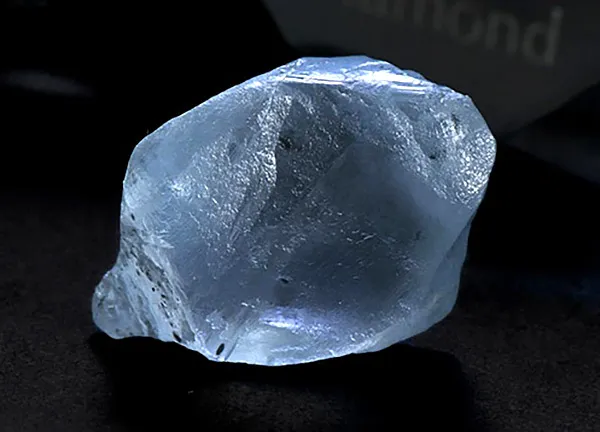
The extreme rarity of Type IIb blue diamonds, combined with their documented auction performance, suggests that stones of this caliber remain largely insulated from broader market pressures. Collectors and connoisseurs recognize that diamonds like the Lucara Karowe blue diamond represent irreplaceable natural treasures that cannot be replicated in laboratories.
As Lucara moves forward with plans to cut and polish this exceptional stone, the diamond world will be watching closely. The final polished gem could take its place among the most celebrated blue diamonds in history, a fitting addition to Karowe’s already legendary legacy.
Photo: Courtsey of Lucara Diamond Corp.

Sewelo is a world where jewelry, watches, and objects come alive in a shimmering dance of fantasy. Through a literary lens, we celebrate the beauty and elegance that make these treasures more than just possessions.