If you’ve been following conversations about lab-grown diamonds, you’ve probably encountered this comparison: “Lab-grown diamonds are like cultured pearls. We’ve accepted cultured pearls for over a century, so why not lab-grown diamonds?” It shows up in industry publications, comes from jewelry retailers, and gets repeated by well-meaning consumers trying to make sense of this relatively new category.
The intention behind this analogy is clear: to make lab-created diamonds seem more natural, more acceptable, more legitimate. And I understand why the comparison is tempting. Both involve human intervention in creating gemstones. Both are real—chemically identical to their natural counterparts. Both have found their place in the jewelry market.
But here’s the problem: the lab-grown diamonds vs cultured pearls comparison is fundamentally, scientifically inaccurate. And as someone who believes consumers deserve clear, honest information about what they’re buying, I think it’s time we stop repeating this analogy and acknowledge why it doesn’t hold up. This isn’t about whether lab-grown diamonds are “good” or “bad.” It’s about accuracy. And the difference between how cultured pearls form and how lab-created diamonds form isn’t a minor technicality. It’s the entire point!
How Cultured Pearls Actually Form
Let’s start with what actually happens when a cultured pearl is created, because understanding this process is essential to seeing why the comparison fails. The human role in cultured pearl production is quite specific: a technician carefully opens an oyster or mussel and introduces a small nucleus (usually a bead made from mollusk shell) along with a piece of mantle tissue. This is the irritant that will trigger pearl formation. Then the mollusk is returned to the water.
And here’s where it gets important: that’s where human involvement ends.
What happens next is entirely biological. The oyster, responding to the irritant, begins secreting nacre—layer upon layer of aragonite crystals and conchiolin proteins—around the nucleus. This is the same process that creates natural pearls when an irritant enters an oyster by chance. The oyster builds the pearl, cell by cell, layer by microscopic layer, in response to its biological imperative to protect itself.
This process takes time. Depending on the type of pearl, it can take anywhere from six months to seven years for the oyster to create a pearl of marketable size and quality. During this time, the pearl farmer must maintain ideal water conditions, protect the mollusks from predators and disease, and hope that the oysters cooperate. Many don’t survive. Many produce pearls that aren’t gem-quality.
The key point is this: humans start the process by introducing the nucleus, but nature completes it. The pearl is a biological creation, formed by a living organism doing what living organisms do. The oyster is the creator. Humans simply provided the initial prompt.
How Lab-Grown Diamonds Actually Form
Now let’s look at how lab-created diamonds are made, because the contrast is striking.
There are two primary methods for creating lab-grown diamonds: High Pressure High Temperature (HPHT) and Chemical Vapor Deposition (CVD). I’ll spare you the deep scientific details, but here’s what you need to know.
In the HPHT method, technicians place a small diamond seed in a press along with carbon material. They then subject it to extreme pressure (over 1.5 million pounds per square inch) and extreme heat (around 1,500 degrees Celsius). Under these conditions, the carbon melts and begins to crystallize around the seed, forming a diamond.
In the CVD method, a diamond seed is placed in a sealed chamber filled with carbon-rich gas. The chamber is heated, and the gas molecules break apart, allowing carbon atoms to attach to the seed and build up in layers, forming a diamond crystal.
Both processes take anywhere from two weeks to a few months, depending on the desired size of the diamond. Every variable is controlled by humans: the temperature, the pressure, the gas mixture, the duration, and even the environment.
And here’s the crucial difference: there is no natural process involved. From the moment the diamond seed is placed in the chamber or press until the moment a finished diamond is removed, every single step is human-engineered and human-controlled. Machines apply the pressure. Humans regulate the temperature. Technology manages the crystallization.
The diamond doesn’t grow because nature is doing what nature does. It grows because humans have created the exact conditions necessary and maintained them with precision. There’s no living organism involved. There’s no biological process. It’s entirely industrial, from start to finish.
Why I Think This Distinction Is Important
This is where the lab-grown diamonds vs cultured pearls comparison completely breaks down.
Cultured pearls require a living organism (an oyster or mussel) to create the final product. Yes, humans introduce the irritant, but the pearl itself is formed by biological processes we don’t fully control. We can’t force an oyster to produce a perfect pearl. We can’t determine exactly how the nacre will layer or what the final luster will be. We provide the starting point, and nature takes over.
Lab-grown diamonds, on the other hand, require only machines and human expertise. There’s no “miracle of the Earth” involved, no biological process we’re harnessing. We’re not prompting nature to do what it does naturally. We’re replicating a geological process in a factory using technology.
The analogy conflates “human involvement” with “human creation,” and these are not the same thing. Cultured pearls involve human involvement in a natural process. Lab-created diamonds involve human creation of the entire product.
If lab-grown diamonds were truly comparable to cultured pearls, here’s what the diamond formation process would look like: humans would seed the earth with diamond nuclei, then step back and let geological processes—heat, pressure, time—create the diamonds over millions of years. We’d simply be initiating what nature would do anyway.
But that’s not what happens. Not even close.
The accurate comparison for lab-grown diamonds isn’t cultured pearls. It’s synthetic emeralds, synthetic sapphires, or any other lab-created gemstone. These are all fully manufactured products created through human-controlled industrial processes. They’re gemstones, chemically identical to their natural counterparts, but they’re made entirely by humans from start to finish.
And here’s why this distinction matters for consumers: you deserve to know what you’re actually buying. When you purchase a cultured pearl, you’re buying something that was created by a living organism with human assistance. When you purchase a lab-grown diamond, you’re buying something that was manufactured in a factory using advanced technology. Neither is inherently better or worse. But they are fundamentally different, and the difference matters when you’re making an informed purchase decision.
Why This Comparison Became Popular
So if the cultured pearl comparison is scientifically inaccurate, why does it keep appearing?
The answer is consumer psychology. Cultured pearls have been accepted in the jewelry market for over a century. Today, they represent the vast majority of pearls sold worldwide, and most consumers don’t think twice about buying them. The word “cultured” itself sounds natural, organic, even artisanal, like we’re working with nature rather than replacing it.
The lab-grown diamond industry needed a path to consumer acceptance, and the cultured pearl precedent offered exactly that. The implicit argument is powerful: “You already accept cultured pearls, which involve human intervention in creating gemstones. Lab-grown diamonds are the same thing. If you’re comfortable with one, you should be comfortable with the other.”
It’s effective marketing. I’ll give them that. The cultured pearl comparison provides a familiar reference point, eases consumer concerns about “artificial” products, and leverages over a century of acceptance for cultured pearls to fast-track acceptance for lab-created diamonds. But effective marketing doesn’t make it accurate. And in an industry where trust is paramount, where consumers are often spending significant money on items with strong emotional significance, accuracy should matter more than marketing convenience.
Let’s Get Accurate With This
Lab-grown diamonds don’t need misleading analogies to be legitimate products. They have their own genuine merits. They’re significantly more affordable than natural diamonds, they avoid the ethical concerns associated with some diamond mining operations, they’re chemically and optically identical to natural diamonds, and they offer consumers more options in the marketplace. These are substantial advantages that stand on their own. The technology that creates lab-grown diamonds is genuinely impressive. We’ve figured out how to replicate in weeks what takes nature millions of years. That’s remarkable, and it deserves to be acknowledged for what it actually is.
Consumers are smart enough to understand that lab-created diamonds are manufactured products. They don’t need to be told these diamonds are “like” something they’re not in order to feel comfortable purchasing them. What they need is clear, accurate information about what they’re buying and how it was made. The jewelry industry should embrace what lab-grown diamonds actually are: human-engineered marvels of modern technology. They’re not cultured pearls. They’re not natural diamonds that happened to form in a lab instead of the earth. They’re a distinct category of product created through industrial processes, and there’s nothing wrong with that.
Accuracy in marketing builds trust. When consumers feel they’ve been given straight answers about what they’re buying, they’re more likely to feel confident in their purchases and to return as customers. False comparisons, even well-intentioned ones, erode that trust over time.
So the next time you hear someone compare lab-grown diamonds to cultured pearls, you’ll know why that comparison doesn’t quite work. And maybe—just maybe—we can start having more honest conversations about what lab-created diamonds really are, without needing to dress them up as something they’re not.
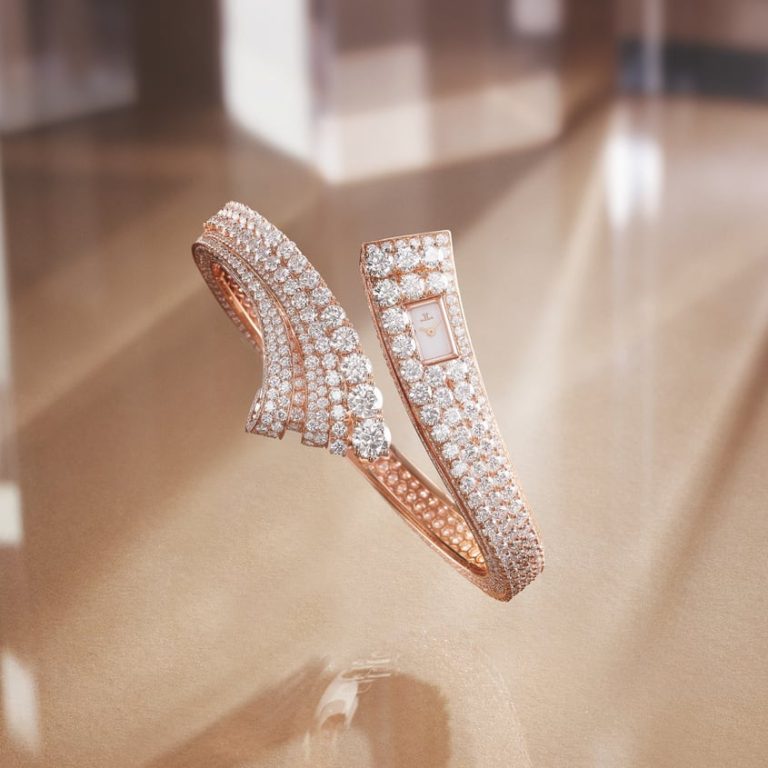
Featured image: Fratelli Piccini Jewellers

Amanda Akalonu is dedicated to weaving together the worlds of jewelry, watches, and objects through a lens of literary storytelling.