

Picture this: You’re browsing an antique jewelry shop, and you spot an exquisite ring featuring a classical profile carved into a layered stone. “Beautiful cameo,” you mention to the dealer. “Actually, that’s an intaglio,” they correct gently. You feel your cheeks flush. Wait, aren’t they the same thing?
If you’ve ever confused cameo and intaglio jewelry, you’re in excellent company. These two ancient carving techniques have been puzzling jewelry enthusiasts for centuries, and honestly, it’s entirely understandable. Both involve painstakingly carved gemstones featuring classical imagery. Both have roots stretching back millennia. And both often showcase the same subjects: mythological figures, noble profiles, and ornate decorative motifs. The difference between cameo and intaglio, however, is fundamental, and once you understand it, you’ll never mix them up again.
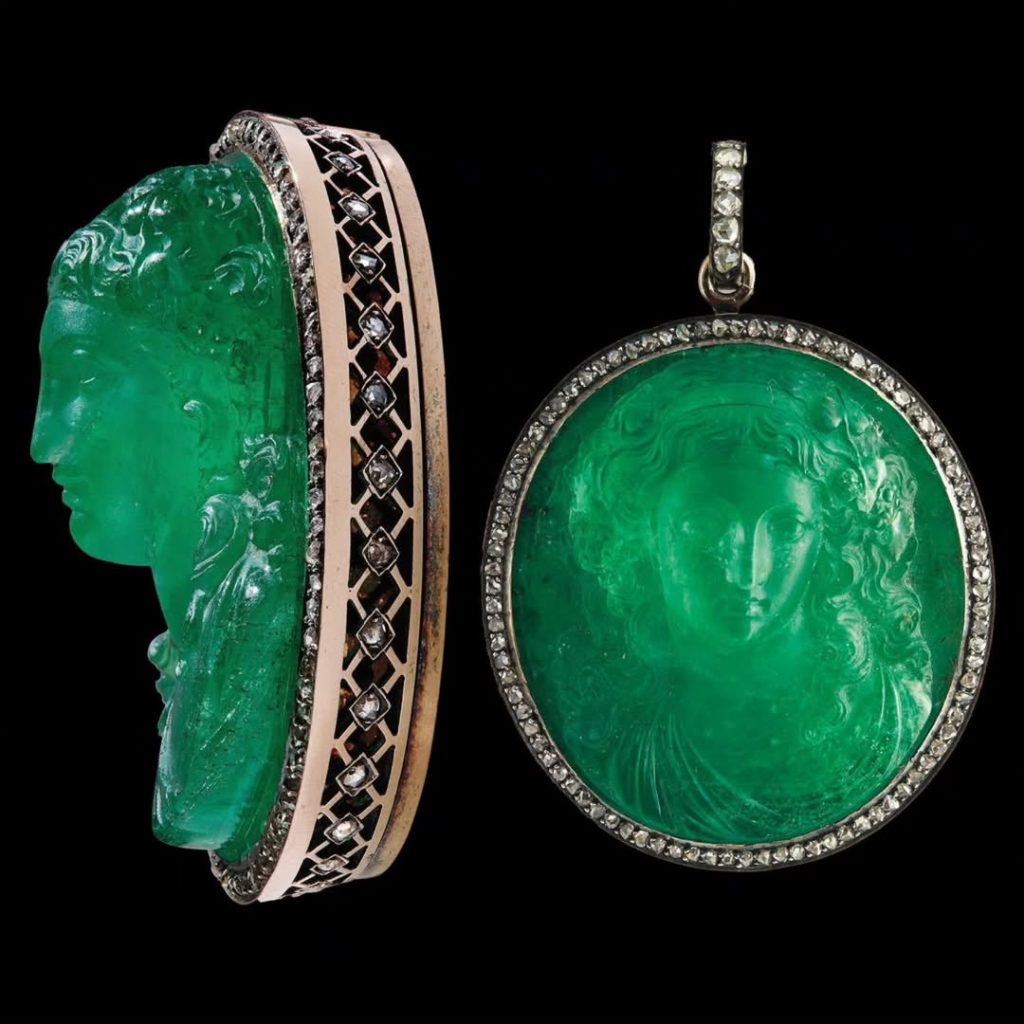
At its simplest, the cameo vs intaglio distinction comes down to this: cameos come out, intaglios go in. A cameo features a raised relief carving that protrudes from the stone’s surface, while an intaglio is carved into the stone, creating a recessed, hollow image. Think of them as opposites—visual inverses of the same artistic tradition. Understanding this difference matters whether you’re a beginning collector, a jewelry history enthusiast, or simply someone who wants to sound knowledgeable when admiring grandmother’s antique brooch.
This guide will take you through everything you need to know about cameo and intaglio jewelry: what they are, how they differ, why both forms matter historically, and how to identify and value them. By the end, you’ll be able to spot the difference at a glance, and you’ll understand why these carved gemstones remain some of the most fascinating and collectible jewelry forms in existence.
What Is a Cameo in Jewelry?

Let’s start with the cameo, the more familiar of the two forms for most people. When you think “cameo,” you probably picture a Victorian-era brooch featuring a pale classical profile against a darker background, carved from shell and mounted in gold. That’s accurate, but it’s only one small part of the cameo story.
A cameo is defined by its raised relief carving. The artist removes the background material, leaving the design standing proud from the surface. This technique creates a three-dimensional effect, with the carved subject appearing to emerge from the stone or shell. The best cameos utilize materials with natural layers or banding—different colored strata within the same piece—to create striking contrast between the carved figure and the background.
Materials Used in Cameo Jewelry
While shell cameos (particularly those carved from helmet shell and conch) became enormously popular during the Victorian era and remain the most recognizable form today, historical cameos were carved from a variety of materials:
- Hardstone agate: Particularly sardonyx and onyx, which feature natural bands of contrasting colors
- Coral: Especially popular in Italy, with its warm pink and red tones
- Lava: A specialty of Naples, carved from hardened volcanic stone
- Onyx: Creating dramatic black-and-white contrasts
- Shell: More affordable and easier to carve than stone, leading to mass production in the 19th century
The technical challenge in creating a fine hardstone cameo is remarkable. The carver must study the uncut stone’s internal layers before even beginning work, visualizing not just the finished piece but also how the natural color bands will fall. Cutting too deep, or encountering an unexpected irregularity in the stone’s layers, can ruin months of work. This is why antique hardstone cameos command such respect (and high prices) among collectors.
Typical Imagery and Themes

Cameo imagery tends toward the classical and romantic:
- Profile portraits: Especially of classical figures, royalty, or idealized beauties
- Mythological scenes: Gods, goddesses, and legendary narratives
- Flora and fauna: Particularly popular in Victorian pieces
- Religious imagery: Saints, Madonna and Child, biblical scenes
- Allegorical figures: Representing virtues, seasons, or muses
Historical Popularity
Cameos experienced their greatest popularity during several key periods:
- Ancient Rome: Where hardstone cameos were imperial treasures
- Renaissance: As part of the classical revival
- 18th century: During the Neoclassical movement
- Victorian era: When shell cameos became accessible to the middle class
- Art Nouveau and Art Deco periods: Featuring more stylized, contemporary designs
How Cameo Jewelry Is Worn Today
Contemporary wearers appreciate cameo jewelry for its vintage charm and artisanal quality. Modern styling often mixes antique cameos with contemporary pieces for an eclectic, personalized look. Cameo rings, pendants, and brooches remain popular, while more unusual forms like cameo earrings and bracelets appeal to collectors seeking distinctive pieces.
Shop cameo jewelry
What Is an Intaglio in Jewelry?

If cameos are the extroverts of carved gemstone jewelry (literally standing out from their surroundings), intaglios are the introverts, quietly carved beneath the surface. The word “intaglio” comes from the Italian “intagliare,” meaning “to carve” or “to engrave,” and that’s precisely what defines this technique.
An intaglio features a recessed or engraved design cut into the surface of a gemstone. Rather than removing the background to leave a raised image, the artisan carves the image itself below the stone’s surface, creating a negative impression. When pressed into soft wax or clay, an intaglio creates a raised positive impression, which is exactly how they were historically used.
Origin as Seals and Signet Rings
Unlike cameos, which were primarily decorative from their inception, intaglios served a crucial functional purpose. They were the ancient world’s signatures—carved seals that could be pressed into hot wax to authenticate documents, secure property, or mark ownership. Some of the earliest known intaglios are cylinder seals from Mesopotamia (dating to around 3000 BCE), which were rolled across wet clay to create continuous decorative borders.
In ancient Greece and Rome, intaglio signet rings became symbols of power and authority. Important men owned intaglio rings that served as both valuable tools and emblems of wealth, their personal seals were literally their signatures, impossible to forge given the unique carving. This practical function shaped intaglio design: images needed to be distinctive, recognizable even in reverse, and appropriate for official use.
Common Materials

Intaglio carvers favored harder, more durable stones than their cameo-creating counterparts, since intaglios needed to withstand repeated pressing into wax:
- Carnelian: The most popular choice, with its warm reddish-orange tones
- Sardonyx: Featuring banded layers, though the carving negates the layered effect visible in cameos
- Chalcedony: In various colors including blue, gray, and green
- Bloodstone (heliotrope): Dark green with red flecks
- Rock crystal: Clear quartz, sometimes with reverse painting
- Amethyst: Purple quartz, particularly popular in the 18th century
Functional vs Decorative Purpose
While all intaglios could theoretically be used as seals, by the Renaissance and particularly during the 18th-century Grand Tour era, many were created purely for aesthetic appreciation and collecting. Wealthy Europeans commissioned intaglios depicting classical subjects, ancient gems, or portrait miniatures. These were not to be used for sealing documents, but to be admired as miniature works of art.
Why Intaglios Are Prized by Collectors
Today’s collectors value intaglios for several reasons:
- Historical significance: Ancient intaglios connect directly to specific historical figures and periods
- Technical mastery: Intaglio artists worked without magnification, relying entirely on touch and muscle memory, making the precision achieved in fine examples even more impressive
- Rarity: Genuine ancient intaglios are far rarer than Victorian-era shell cameos
- Artistic merit: The best intaglios showcase remarkable artistry in miniature scale
- Connection to signet ring revival: Modern interest in personalized signet rings has renewed appreciation for intaglio carving
Shop intaglio jewelry
Cameo vs Intaglio: The Key Differences Explained Clearly
Ready for the definitive comparison? Here’s how to distinguish cameo from intaglio at a glance:
The Core Difference:
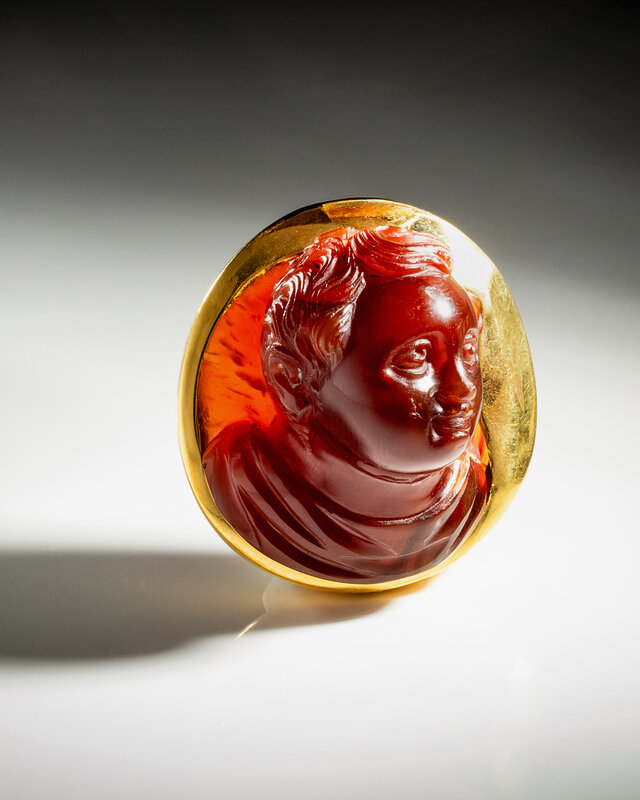
Cameos are carved in relief with the subject raised from a flat background, while intaglios are incised into the surface of a gemstone, creating a negative space or recessed design.
Let’s break this down further:
A. Relief vs Recessed Design
- Cameo: The carved image rises above the stone’s surface. The background is cut away, leaving the subject standing proud.
- Intaglio: The carved image is cut below the stone’s surface. The design is hollowed out, creating a concave impression.
B. Visual Effect

- Cameo: When you look at a cameo, you see a raised, three-dimensional figure. Light and shadow play across the carved relief, creating depth.
- Intaglio: When you view an intaglio face-up, you see an image carved into the stone. The design appears to sink into the material. When pressed into wax or clay, it creates a raised positive impression.
C. Historical Function
- Cameo: Primarily decorative and symbolic, though ancient cameos also served as talismans and status symbols.
- Intaglio: Originally functional as seals and signatures, later becoming primarily collectible objects.
D. Materials Used
- Cameo: Often utilizes layered materials (banded agate, onyx, shell) to create color contrast between figure and background.
- Intaglio: Typically carved from single-color hardstones chosen for durability rather than layering effects.
E. Market Value and Collectibility
- Cameo: Value depends heavily on material, age, and craftsmanship. Victorian shell cameos are relatively affordable; ancient hardstone cameos and signed 19th-century examples can command significant prices.
- Intaglio: Ancient intaglios and attributable Renaissance or Neoclassical examples tend to be more valuable than comparable cameos due to rarity and historical significance. By the mid-1800s, postage stamps made wax seals defunct, causing intaglios to become relics, further increasing their collectible appeal.
Memory Device: “Cameos come out, intaglios go in.”
A Brief History of Cameo and Intaglio Jewelry
The story of carved gemstones is the story of civilization itself—a timeline of artistic achievement, technological innovation, and cultural exchange spanning over 8,000 years.
Ancient Greece and Rome

The Greeks began developing intaglio carving in the sixth century BCE, initially as a method for creating seals. By the fourth century BCE, engravers perfected the cameo technique, creating raised designs on stones. Both forms flourished during this period, with Greek and Roman artisans working in precious stones like onyx, sardonyx, agate, carnelian, and even gems like emerald and sapphire.
Ancient cameos and intaglios featured gods, emperors, military victories, and mythological narratives. These weren’t just jewelry. They were propaganda, portraiture, and talismanic protection rolled into carved stone. Roman emperors commissioned magnificent cameos to commemorate military victories or divine lineage, while important officials used personalized intaglio seals to conduct official business.
Some ancient examples survive in museum collections and remain among the most prized artifacts of classical art. The Gemma Augustea (circa 10 CE), a magnificent two-layered onyx cameo celebrating Emperor Augustus, exemplifies the technical and artistic heights achieved in ancient Rome.
The Renaissance Revival
With the fall of the Roman Empire, production of carved gemstones declined, though ancient examples survived, often repurposed in new religious settings. An amethyst intaglio originally depicting Emperor Caracalla was later converted into a portrait of St. Peter, demonstrating how surviving ancient gems were adapted to fit medieval Christian contexts.
The Renaissance brought the first major revival of gem carving as part of a broader renewal of classical culture. Prominent collectors like Elizabeth I of England and Cosimo I de’ Medici formed magnificent collections of ancient carved gems while commissioning contemporary works. Renaissance rulers used cameos to present themselves as enlightened monarchs in the classical tradition, connecting their reigns to Roman grandeur.
18th–19th Century European Fascination
The 18th century witnessed an explosion of interest in carved gems, driven by several factors:
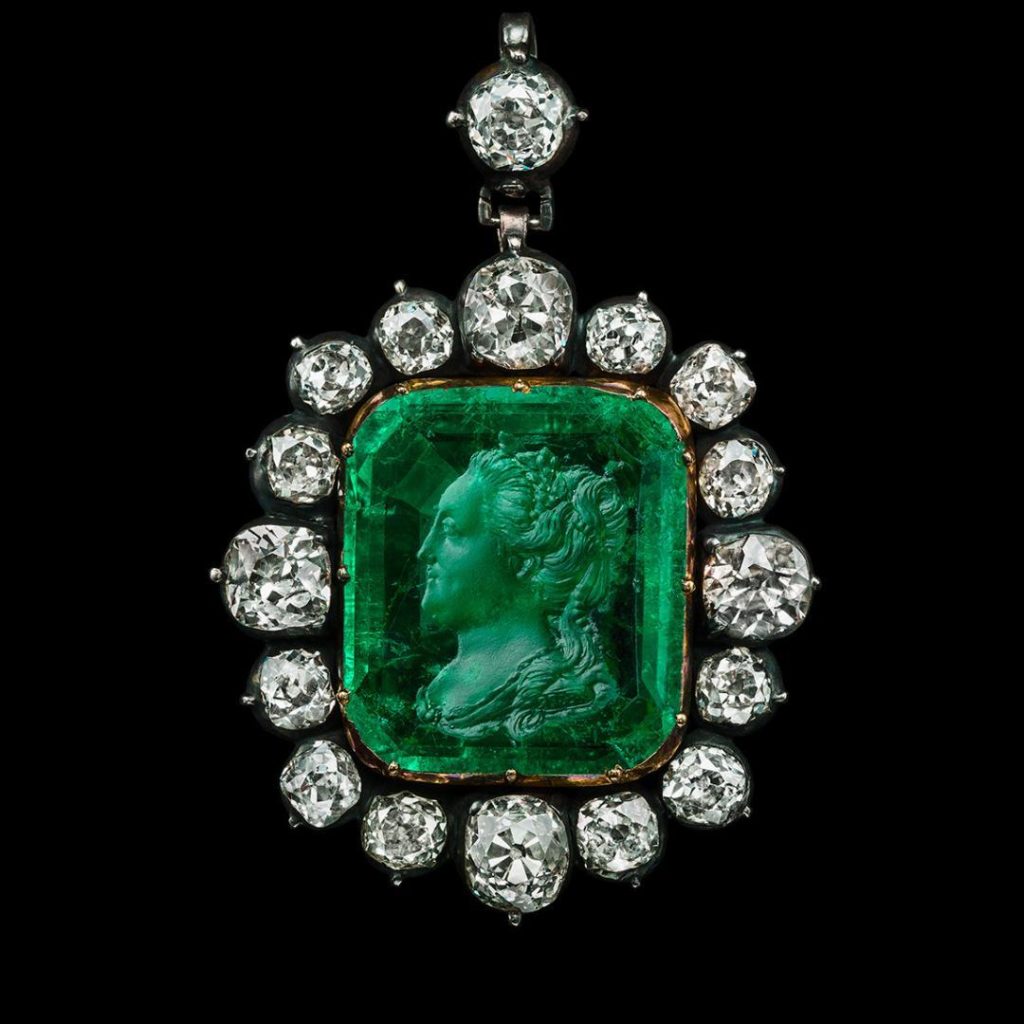
- The Grand Tour: Wealthy young Europeans traveling through Italy encountered ancient carved gems in collections and excavations. They commissioned both copies of ancient pieces and original works from Roman gem engravers, creating a robust market for carved gemstones.
- The Neoclassical Movement: The discoveries at Pompeii and Herculaneum sparked renewed passion for classical aesthetics. Napoleon particularly championed the glyptic arts, establishing a school in Paris for cameo making and even decorating his coronation crown with cameos.
- Collecting Mania: Aristocratic collectors assembled vast gem cabinets. Prince Stanislas Poniatowski commissioned around 2,500 carved gems in the late 18th century, many of which he misleadingly presented as ancient works rather than contemporary creations.
Victorian Era Popularity
The Victorian period represents the golden age of cameo jewelry, though it marked a decline for intaglios. Queen Victoria’s love of cameo jewelry sparked a fashion that made carved gems accessible to the middle class for the first time. The development of shell carving techniques allowed for mass production of affordable cameos, while advances in machinery enabled more consistent quality.
Victorian cameos featured romantic subjects: idealized female profiles, flowers, cherubs, and sentimental scenes. They were worn as brooches, pendants, earrings, and bracelets, becoming ubiquitous in ladies’ jewelry boxes. By the nineteenth century, intaglios were not considered optimal for jewelry; Victorians preferred cameos, relegating intaglios almost entirely to fobs and seals.
Materials Used in Cameo and Intaglio Jewelry
The material used in carved gemstone jewelry significantly affects both the piece’s appearance and its value. Understanding these materials helps collectors assess authenticity, age, and quality.
Shell vs Hardstone

Shell Cameos:
The majority of cameos encountered today are carved from shell, particularly helmet shell (Cassis madagascariensis) and conch shell (Strombus gigas). Shell’s layered structure naturally provides the color contrast essential to cameo work: typically a pale upper layer against a pink, orange, or brown background.
- Advantages: Easier to carve than stone, less expensive, lighter weight
- Disadvantages: More fragile, can dry out or crack with age, less valuable than hardstone
Hardstone Cameos and Intaglios:
Serious collectors focus on pieces carved from genuine gemstones, which require far greater skill and time to create.
Specific Materials
- Agate: Banded chalcedony in various colors, offering natural layering perfect for cameos. Sardonyx (white and orange-red bands) was particularly prized in ancient times.
- Onyx: True onyx features parallel black and white bands, creating dramatic cameo contrasts. Much “black onyx” today is actually dyed chalcedony.
- Carnelian: A reddish-orange variety of chalcedony, the most popular choice for ancient intaglios due to its durability and warm color.
- Chalcedony: A microcrystalline quartz occurring in many colors (gray, blue, green, brown), commonly used for intaglios.
- Coral: Prized for cameos, especially in Italian jewelry. Coral’s warm pink to deep red tones create romantic, feminine pieces.
- Lava: Technically not lava but a compressed volcanic ash, this material became popular for Neapolitan cameos in the 19th century. True lava cameos are lightweight and grayish-brown.
- Rock Crystal (Clear Quartz): Sometimes used for intaglios, particularly those with reverse paintings (Essex crystals).
- Bloodstone: Dark green chalcedony with red spots, popular for intaglio seals.
Why Material Affects Value
Generally, hardstone examples command higher prices than shell, with ancient hardstone pieces at the top of the value pyramid. However, exceptional shell cameos by renowned carvers can be quite valuable. The rarest materials, like ancient cameos carved from precious gems like emerald or lapis lazuli, are museum-quality treasures worth thousands or even hundreds of thousands of dollars. The material also affects longevity. Hardstone pieces can survive millennia virtually unchanged, while shell cameos are vulnerable to drying, cracking, and color fading if not properly cared for.
Which Is More Valuable: Cameo or Intaglio?
The question “which is worth more?” doesn’t have a simple answer. Value in carved gemstone jewelry depends far more on quality, age, provenance, and condition than whether the piece is a cameo or intaglio. That said, several factors influence value:
Age and Provenance
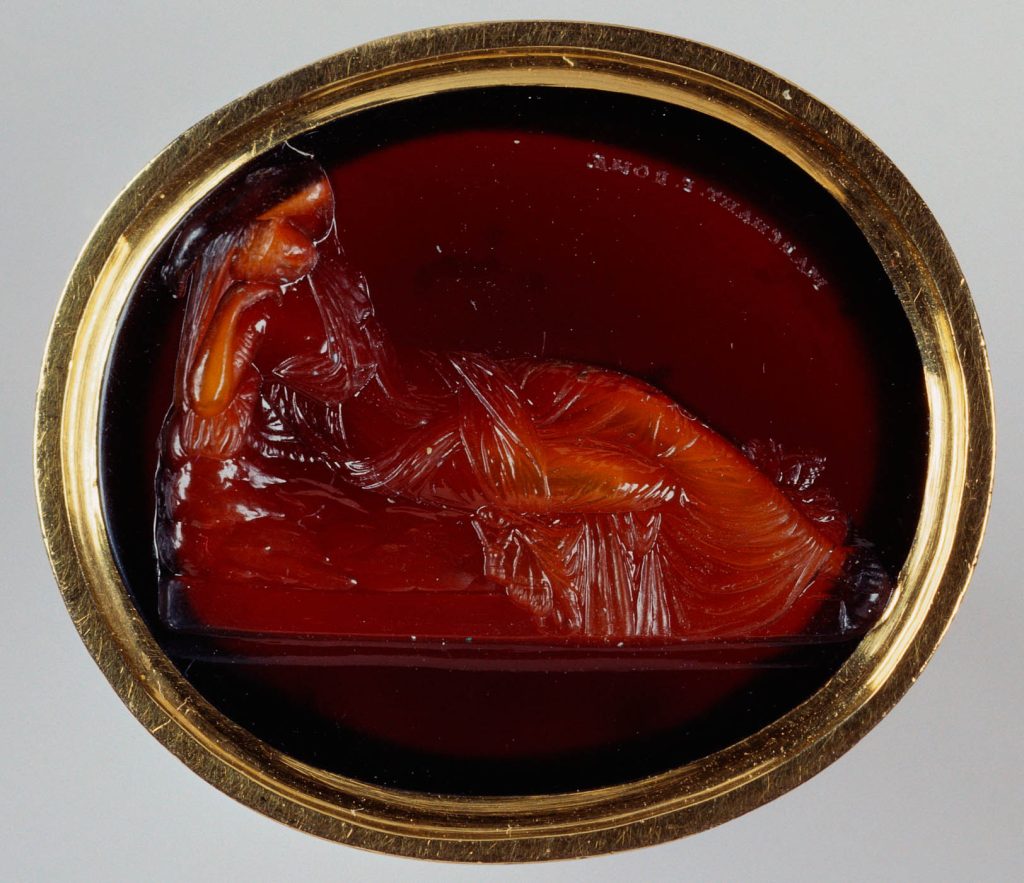
Ancient pieces (Greek, Roman, or earlier) command the highest prices, particularly when provenance can be documented. An ancient Roman carnelian intaglio with clear ownership history might sell for thousands, while an ancient cameo of museum quality could reach six figures at auction.
Renaissance and 18th-century pieces by known makers or from important collections carry significant value. An intaglio by renowned gem engraver Nathaniel Marchant (1739-1816), for instance, can command premium prices.
Victorian-era shell cameos, while charming and collectible, are generally the most affordable category due to their abundance.
Craftsmanship Quality
Superior artistry always commands higher prices. A masterfully carved Victorian shell cameo with extraordinary detail and artistic merit may be worth more than a mediocre ancient intaglio. Collectors look for:
- Precise, detailed carving
- Anatomically correct proportions
- Skillful use of the material’s natural characteristics
- Evidence of individual artistic style
- Complexity of the composition
Condition
Condition dramatically affects value for both cameos and intaglios:
- Chips and cracks: Significantly reduce value
- Wear: Expected in ancient pieces but should be appropriate to age
- Repairs: Should be disclosed; professional restoration is preferable to amateur fixes
- Shell condition: Drying, cracking, or color loss in shell cameos
- Mounting: Original period settings add value; modern replacement mountings may reduce it
Rarity

Unusual subjects, rare materials, or exceptional size increase value. A cameo featuring an uncommon mythological scene is more valuable than the thousandth Victorian lady in profile. Similarly, an intaglio carved from an unusual stone or depicting a rare subject commands premium prices.
Signed or Attributed Works
Signed pieces or those attributable to known carvers achieve the highest prices. Signatures might appear on the piece itself or, in the case of 18th-19th century works, may be documented in historical records or publications. Famous carvers whose work is particularly sought after include:
- Ancient masters like Dioscorides (whose work was prized even in antiquity)
- Renaissance engravers who revived the classical tradition
- 18th-century masters like Nathaniel Marchant or Giovanni Pichler
- Victorian cameo carvers like the Saulini family
The Bottom Line
Generally speaking, fine ancient intaglios tend to command higher prices than comparable ancient cameos due to their rarity and historical significance as seals. However, spectacular cameos, particularly ancient hardstone examples or Renaissance masterworks, can exceed intaglio prices. In the Victorian era category, both are relatively affordable, with quality and condition being the primary value drivers. The most important point: buy what appeals to you aesthetically and what fits your budget. The “value” of a piece is ultimately what you’re willing to pay for the privilege of owning it.
How to Identify a Cameo vs an Intaglio
Once you understand the fundamental difference, identifying whether a carved gemstone is a cameo or intaglio becomes straightforward. Here are foolproof methods:
The Touch Test
This is the most reliable method:
- Cameo: Run your finger gently across the carved surface. You’ll feel the raised relief—the carved figure will be higher than the surrounding background. The image protrudes outward.
- Intaglio: When you touch an intaglio, your finger dips into the carved area. The image is recessed below the stone’s surface. The design feels hollow or indented.
The Light Test
Hold the piece at an angle under good lighting:
- Cameo: The raised carving will cast shadows, creating dramatic three-dimensional depth. You can see the profile or figure jutting out from the background.
- Intaglio: The carved areas will be shadowed (appearing darker), while the uncarved surface catches light. The image appears to sink into the stone.
Side Profile Inspection
Look at the piece from the side:
- Cameo: The carved figure visibly protrudes above the background surface. You can see the relief clearly from this angle.
- Intaglio: The stone’s surface is smooth or only minimally raised, with the carving going inward rather than outward.
The Wax Impression Test
If you want to be absolutely certain (and have appropriate materials):
- Intaglio: Press gently into soft wax or clay. An intaglio will create a raised positive impression—this is how they functioned as seals.
- Cameo: Pressing a cameo into wax won’t create a meaningful impression, as the raised carving can’t transfer an image effectively.
Avoiding Modern Reproductions
Both cameos and intaglios are reproduced today, sometimes as deliberate fakes, sometimes as honest reproductions. Here’s how to avoid being fooled:
- Machine-made pieces: Modern mechanically produced cameos often show identical, repeated details across multiple pieces. Examine with magnification—hand-carved pieces show slight variations and tool marks.
- Molded resin or plastic: These materials can mimic shell or stone but lack the depth, translucency, and weight of genuine materials. The touch test helps—plastic feels different from shell or stone.
- Assembled doublets: Some “cameos” consist of a carved layer glued to a backing layer. Look for glue lines or unusual separations.
- Acid-etched rather than carved: Some modern pieces use acid etching to create raised or recessed designs. True carved pieces show tool marks under magnification.
- Age-appropriate wear: Genuine antique pieces should show wear patterns consistent with age. Brand-new-looking “ancient” pieces are suspect.
When in doubt, consult a reputable dealer, auction house specialist, or gemological appraiser who specializes in carved gems. Their trained eye can spot details invisible to beginners.
Cameo and Intaglio in Modern Jewelry
While cameos and intaglios are rooted in ancient tradition, both forms are experiencing a contemporary renaissance. Modern jewelry designers and collectors are rediscovering the appeal of carved gemstones, bringing these classical techniques into 21st-century style.
Revival Among Designers
Contemporary jewelers are incorporating both antique carved gems and newly commissioned carvings into modern designs:
- Remounting vintage pieces: Antique cameos and intaglios are being removed from outdated settings and placed in sleek, minimal contemporary mounts
- Mixed media: Designers combine carved gems with diamonds, enamel, and unexpected materials
- Architectural settings: Modern bezels and frameworks highlight rather than compete with the carved imagery
- Asymmetrical and unconventional orientations: Breaking from traditional presentations to create fresh perspectives
Signet Ring Resurgence
The revival of signet rings, one of the hottest trends in men’s and women’s jewelry, has renewed interest in intaglio carving. The spirit of intaglios, of identifying oneself with a unique carving, can still be found in signet rings, which are enjoying a modern-day surge in popularity.
Contemporary signet rings might feature:
- Personal monograms or family crests
- Symbolic imagery (animals, plants, geometric patterns)
- Minimalist engravings in precious metals
- Newly commissioned intaglio carvings in hardstone
This trend represents a return to the intaglio’s original purpose: a personalized signature piece that’s both functional and meaningful.
Antique Revival Pieces
The market for genuine antique cameos and intaglios has grown substantially as collectors recognize their artistic and historical value. Museums regularly feature carved gem exhibitions, and auction houses dedicate specialized sales to glyptics (the technical term for carved gemstones).
Why Collectors Are Rediscovering Carved Gems
Several factors drive renewed interest:
- Historical connection: In our digital age, owning something created centuries ago by hand provides tangible connection to the past
- Artisanal craftsmanship: The painstaking hand-carving process appeals to those who value artisanal work over mass production
- Unique pieces: Each carved gem is one-of-a-kind, offering individuality in a world of identical jewelry
- Investment value: Quality antique cameos and intaglios have proven themselves as stable alternative investments
- Wearable art: These pieces function as miniature sculptures you can wear daily
- Sustainability: Vintage and antique jewelry represents the ultimate in sustainable luxury
Contemporary gem carvers continue practicing these ancient techniques, creating modern pieces that may become tomorrow’s antiques. While mechanization has changed some aspects of production, the finest examples are still created entirely by hand, keeping alive a craft tradition spanning millennia.
Frequently Asked Questions
Is a cameo always raised?
Yes, by definition, a cameo features a raised relief design. If the carving is recessed into the stone rather than raised from it, the piece is an intaglio, not a cameo. The raised relief is the fundamental characteristic that defines cameo work.
Is intaglio older than cameo?
Historically, intaglio carving came first, beginning in ancient Greece in the sixth century BCE as a method for creating seals. Cameo carving was perfected later, in the fourth century BCE. So yes, intaglio is the older technique by about two centuries, though both forms reached sophisticated heights in ancient Greece and Rome.
Were intaglios used as seals?
Absolutely—this was their primary function for thousands of years. Intaglio rings served as personal signatures in the ancient world, pressed into hot wax to seal documents, mark property, and authenticate official communications. Historically, the reason that intaglios were carved was to be set in rings that were then used for seals. This practical purpose shaped intaglio design until the mid-19th century when postage stamps made wax seals obsolete.
Can cameos be made from stone?
Yes, and historically, the finest cameos were carved from hardstone rather than shell. Ancient and Renaissance cameos were typically created from agate, sardonyx, onyx, and other banded gemstones. Shell cameos became popular later (particularly during the Victorian era) because shell was easier and faster to carve, making cameos accessible to the middle class. Today, both shell and hardstone cameos are valued, though hardstone examples generally command higher prices.
Which is rarer, cameo or intaglio?
Among ancient pieces, both are rare, though intaglios were probably more common originally due to their functional use as seals. However, more ancient intaglios have survived than cameos because they were utilitarian objects kept by their owners, while decorative cameos were sometimes broken down or lost. In the Victorian era, shell cameos were produced in enormous quantities, making them relatively common today, while Victorian intaglios are scarcer since the form had fallen out of fashion. So the answer depends on the period, but generally, fine ancient intaglios are rarer than Victorian shell cameos.
Conclusion: Understanding Carved Gemstones as Wearable History
The ancient art of gem carving, whether cameo or intaglio, represents one of humanity’s most enduring artistic traditions. From Mesopotamian cylinder seals to Victorian shell brooches, from Roman imperial portraits to contemporary signet rings, carved gemstones have served as signatures, talismans, status symbols, and wearable art for over 8,000 years.
Understanding the difference between cameo and intaglio isn’t just about avoiding confusion in antique shops (though that’s certainly useful). It’s about appreciating two distinct artistic approaches, each with its own technical challenges, aesthetic qualities, and historical significance. Cameos, with their sculptural relief, celebrate the three-dimensional form emerging from stone. Intaglios, with their recessed carvings, honor the tradition of the seal and the signature, the personal mark pressed into wax.
Both forms remain culturally important because they represent something increasingly rare in our mass-produced world: objects that require exceptional skill, patience, and artistry to create. A fine cameo or intaglio connects you directly to the hand that carved it, whether that hand worked in ancient Rome, Renaissance Italy, or Victorian England. These pieces have outlasted empires, survived wars, and passed through countless hands, yet they endure.
For collectors, the cameo vs intaglio question is less important than understanding quality, recognizing authenticity, and appreciating artistry. Whether you’re drawn to the romantic profiles of Victorian shell cameos, the bold contrast of hardstone cameos, the intimate scale of ancient intaglios, or the personalized statement of a contemporary signet ring, carved gemstones offer something unique: jewelry that functions as miniature sculpture, historical artifact, and personal talisman simultaneously.
As you build your knowledge and perhaps your collection, remember that the greatest pleasure in owning carved gems comes not from their monetary value but from daily interaction with objects that embody thousands of years of artistic tradition. Every time you wear or handle a cameo or intaglio, you’re participating in that tradition, connecting past and present through carved stone.
Study carefully, buy thoughtfully, and never stop learning. The world of carved gemstones rewards patience and knowledge with pieces that become treasured companions, wearable history you can pass down through generations.
Featured image: Cameo Italiano

Lydia Oladejo is a creative writer with over seven years of experience writing intriguing stories and engaging content. As a Staff Writer at Sewelo, she explores the artistry and history of high jewelry, blending her expertise in storytelling with a passion for luxury design.