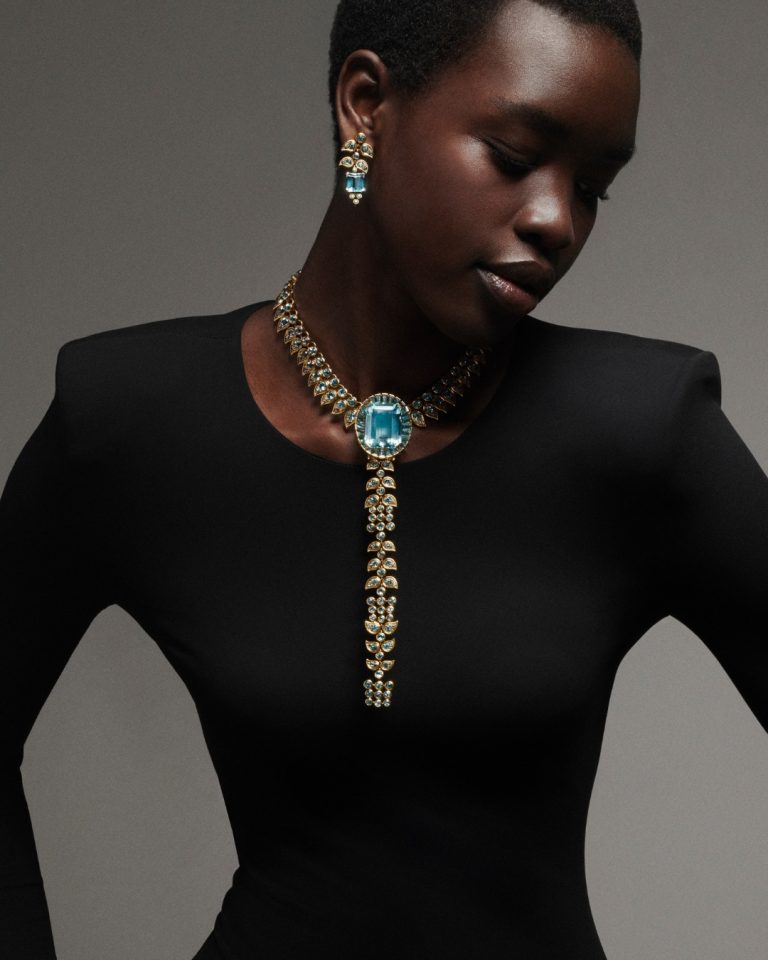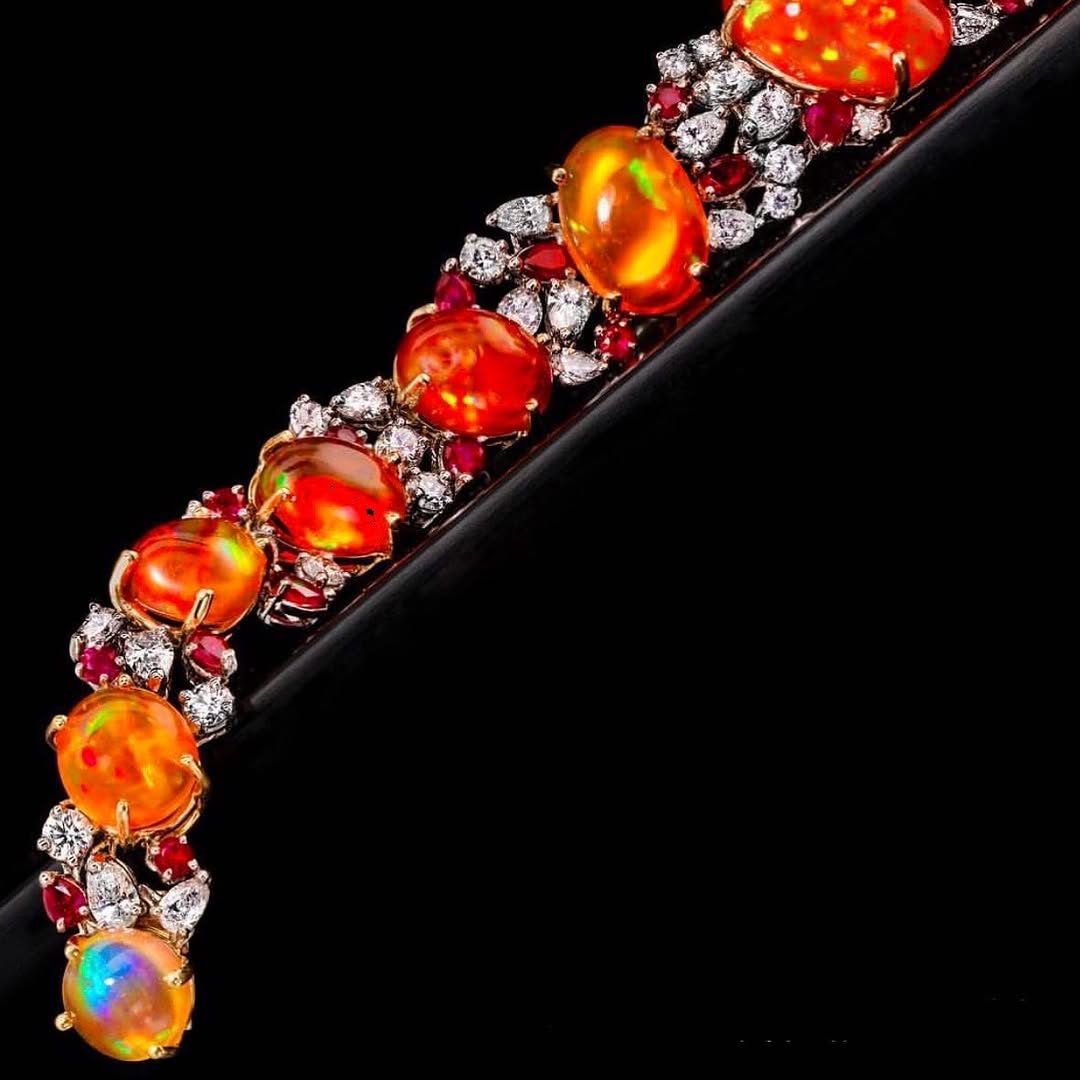

Two of the most mesmerizing opals—fiery reds glowing like captured sunsets and deep blacks flashing with electric color—each tells a different story. Fire opal jewelry radiates warmth and passion with its translucent orange and red body, while black opal jewelry commands attention with dramatic color play against a mysterious dark canvas. Both varieties captivate collectors and jewelry enthusiasts, yet they differ significantly in appearance, origin, value, and ideal use.
Choosing between fire opal and black opal jewelry involves more than just aesthetic preference. Understanding their unique characteristics, durability considerations, price ranges, and best applications helps you select the perfect opal for your style, budget, and lifestyle. Whether you’re considering a fire opal ring for its bold personality or a black opal necklace for sophisticated elegance, this comprehensive comparison guides you through everything you need to know to make an informed decision.
Understanding Fire Opals
Fire opals break the traditional opal mold with their distinctive approach to beauty. Rather than relying primarily on play-of-color (the rainbow flashes characteristic of most precious opals), they dazzle with their vibrant, warm body color ranging from sunny yellow through brilliant orange to deep, passionate red. This transparent to translucent gemstone seems to glow from within, capturing the essence of flames frozen in time.
The Aztecs called fire opals “quetzalitzlipyollitli” or “stone of the bird of paradise,” referencing the quetzal, a mythical and venerated bird in their culture. These ancient civilizations believed fire opals were created in heavenly waters and represented life itself. The Spanish conquistadores were so captivated by these gems during their exploration of Mexico that they shipped them back to Europe, where they became fashionable among European nobility.
Color, Transparency, and Play-of-Color
Fire opal’s defining characteristic is its warm body color, caused by iron oxide inclusions within the silica structure. The most prized specimens display intense red-orange hues with minimal brown undertones. Yellow fire opals offer sunny, cheerful alternatives, while rare specimens exhibit multiple colors blending from yellow through orange to red.
Unlike most opals, fire opals range from transparent to translucent, allowing light to pass through the stone. This transparency creates a luminous effect unmatched by opaque opals. When backlit or held up to sunlight, quality fire opals seem to contain liquid light. The best specimens are nearly flawless, with exceptional clarity that showcases their brilliant color without cloudiness or dark inclusions.
Some fire opals display play-of-color in addition to their vibrant body color, and these specimens—called precious fire opals—command premium prices. However, many fire opals are valued purely for their spectacular body color without any play-of-color. These are sometimes called jelly opals or common fire opals, though “common” hardly describes their stunning appearance.
Origins
Mexico produces the finest and most abundant fire opals in the world, earning them the alternate name “Mexican opals.” The state of Querétaro, particularly the mines near Magdalena, yields the highest quality specimens. Fire opals form in volcanic regions when hot, mineral-rich water flows into cracks in rhyolite and other volcanic rocks, slowly depositing silica that eventually solidifies into opal.
Beyond Mexico, these gems are found in Brazil (including the famous Dourada fire opals with their golden hues), Guatemala, Honduras, the United States (particularly Nevada’s Virgin Valley), Ethiopia, and Australia. However, Mexican fire opals remain the standard by which others are judged, prized for their exceptional color saturation and clarity.
The mining process for fire opals requires delicate handwork. Miners carefully chip away the surrounding rock called cantera—a pink volcanic stone that sometimes remains attached to the opal as matrix, creating distinctive cantera fire opals valued by collectors. This painstaking extraction ensures the delicate gems aren’t damaged during mining.
Best Jewelry Settings
Fire opal’s transparency and warm colors make it ideal for designs that maximize light exposure. Faceted fire opals (unusual for opals, which are typically cut as cabochons) sparkle like traditional gemstones while displaying their unique fiery glow. The faceted approach works because fire opal’s transparency allows light to pass through and reflect off multiple surfaces.
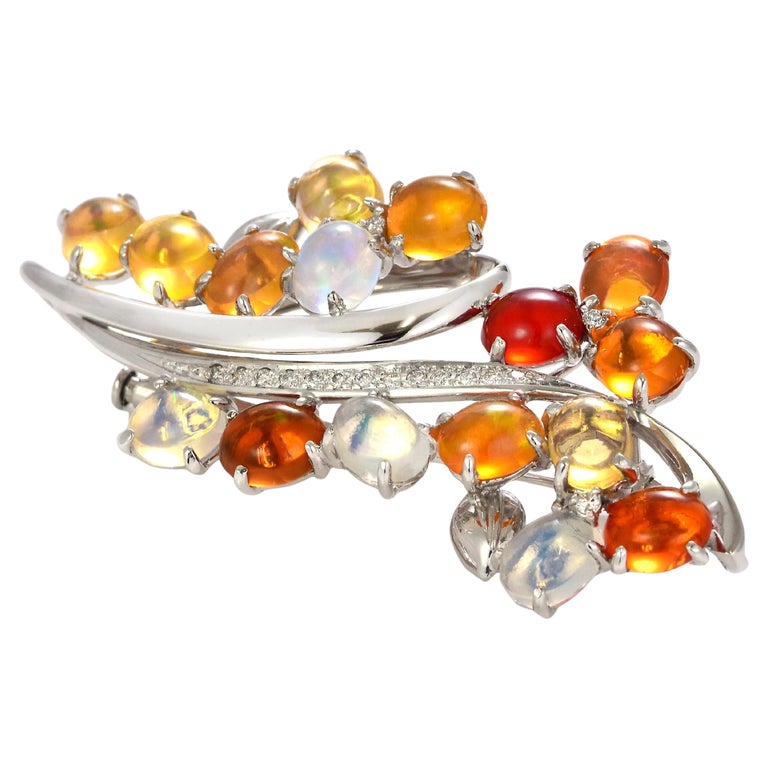
Fire opal rings make bold fashion statements, particularly in cocktail ring designs where larger stones command attention. However, because fire opals rank 5.5-6.5 on the Mohs hardness scale and can be somewhat brittle, protective settings work best for rings intended for regular wear. Bezel settings surrounding the stone with metal offer excellent protection while showcasing the opal’s color.
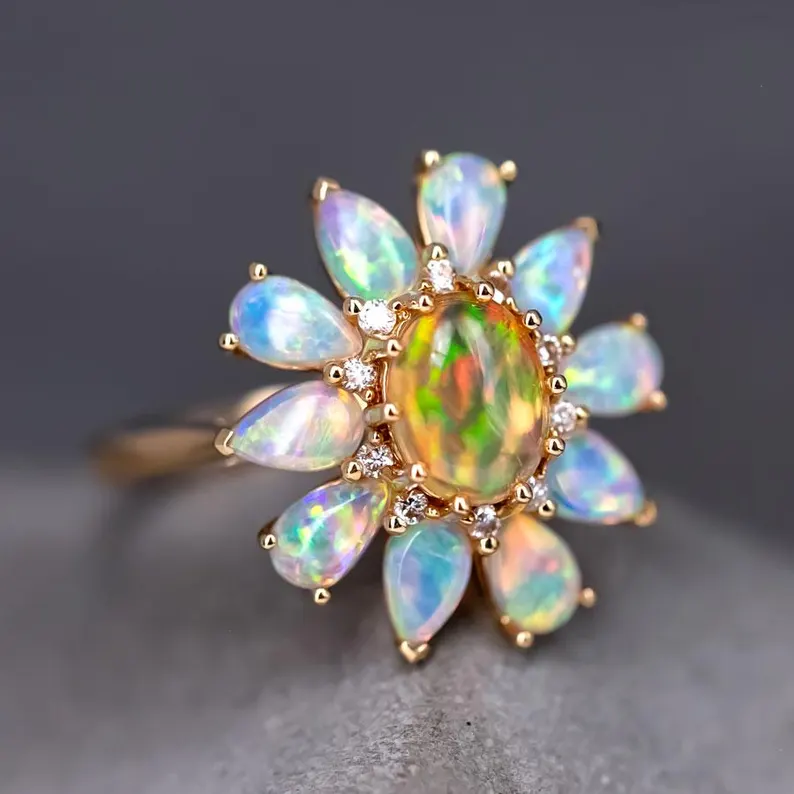
Fire opal necklaces and pendants excel at displaying these gems’ beauty. Drop pendant designs allow light to pass through the stone from multiple angles, creating maximum glow. Fire opal earrings offer high visual impact with relatively small stones. Even modest-sized fire opals deliver impressive color punch in earring designs, which face less risk of impact damage than rings.
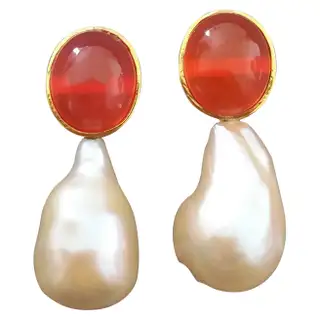
Rose gold settings beautifully complement fire opal’s warm tones, creating harmonious, sunset-inspired jewelry. Yellow gold enhances their richness, while white metals like platinum or white gold create a striking contrast that makes the warm opal colors pop. Mixed metal designs, incorporating multiple gold colors, add contemporary flair to fire opal jewelry.
Understanding Black Opals
Black opal jewelry represents the pinnacle of the opal world. It is the rarest, most valuable, and arguably most spectacular opal variety. These extraordinary gems feature dark body tones ranging from deep gray to true black, creating a dramatic canvas against which vibrant play-of-color appears to float. The contrast between the dark background and brilliant color flashes creates a visual impact unmatched by any other gemstone.
The indigenous Australians called black opals “the fire of the desert,” recognizing their unique magic long before European settlers discovered them. When black opals were first found near Lightning Ridge, New South Wales, in the late 1800s, their value wasn’t immediately recognized. Charlie Nettleton sank the first shaft in 1903 and sold the first parcel of black opal later that year, initiating what would become one of the world’s most legendary gemstone mining regions.
Dark Body Tone with Vibrant Color Flashes
Black opal’s dark body tone results from carbon and iron oxide trace elements within the silica structure, creating the dark background that makes these opals so distinctive. The body color can range from dark gray (sometimes called semi-black opal) through various shades of darkness to true opaque black. Generally, the darker the body tone, the more valuable the opal, as darker backgrounds make the play-of-color appear more vivid and dramatic.
The play-of-color in black opals can display virtually any color of the rainbow, but specimens showing predominantly red are the most valuable and sought-after. These are called “red on black” opals in the trade. The spectral flashes seem to dance and shift as the stone moves, creating a three-dimensional effect. Some black opals display broad flashes of color sweeping across their surface, while others show intricate patterns like harlequin (rectangular patches), pinfire (tiny sparkling dots), or rolling flash (color that moves across the stone like waves).
High-quality black opals exhibit brightness—the intensity of the color play—that makes them visible from across a room. This brilliance, combined with the dark body tone and desirable colors (especially red, orange, and purple), determines a black opal’s value. The most exceptional specimens command prices rivaling or exceeding fine diamonds.
Rarity and Origin
Lightning Ridge in New South Wales, Australia, remains the world’s primary source of black opal and produces virtually all the finest specimens. This remote outback town, about eight hours northwest of Sydney, has been the black opal capital of the world for over a century. The unique geological conditions that created black opals at Lightning Ridge occurred millions of years ago and exist in only a few locations globally.
Black opals form in horizontal sedimentary layers called “opal dirt” or in nodules known as “nobbies.” Miners work in challenging conditions, digging shafts up to 1.5 kilometers deep in intense heat. The rarity of black opal cannot be overstated. Miners estimate that precious opal (opal with play-of-color) represents only about 1% of all opal found, and black opal comprises just a fraction of that already rare material.
Australia produces approximately 95% of the world’s opal, with Lightning Ridge accounting for virtually all black opal production. While tiny amounts of black opal have been discovered in other locations, including Nevada’s Virgin Valley and Ethiopia, Australian black opals from Lightning Ridge remain the gold standard. This extreme rarity, combined with limited supply as older mines are exhausted, ensures black opals maintain their position as one of the world’s most valuable gemstones.
Best Jewelry Settings
Black opal’s rarity and value demand settings that provide excellent protection while showcasing the stone’s spectacular play-of-color. Black opals are typically cut as cabochons (smooth, domed surfaces) as this cut best displays their unique optical properties.
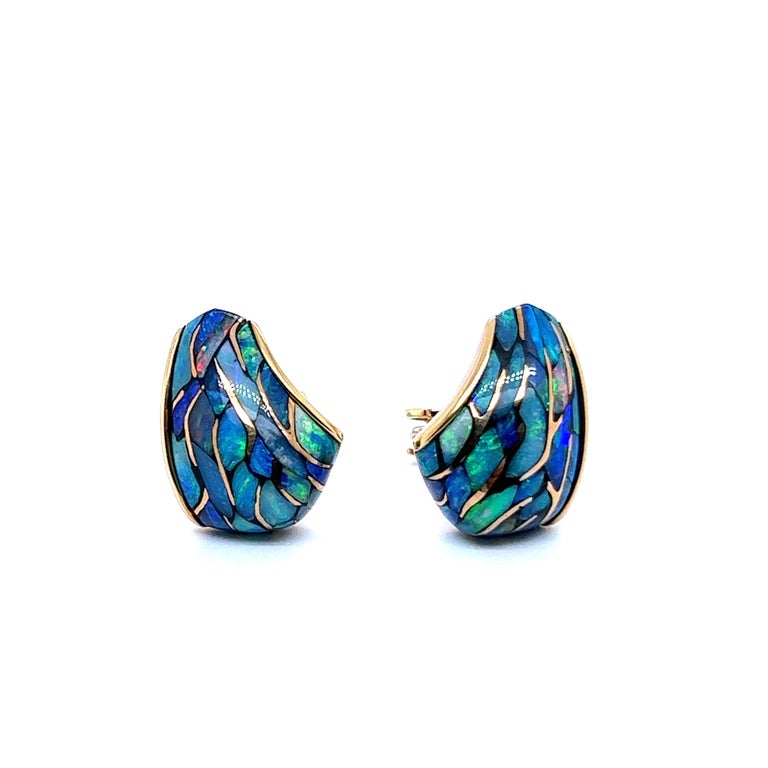
Black opal rings, particularly engagement rings, make extraordinary statements. The dark, mysterious appearance, combined with brilliant color flashes, creates sophisticated elegance unlike traditional engagement ring stones. For daily wear rings, substantial bezel settings offer maximum protection for these precious gems. Prong settings can work for black opals but should be designed with sufficient support—at least four sturdy prongs, preferably six.
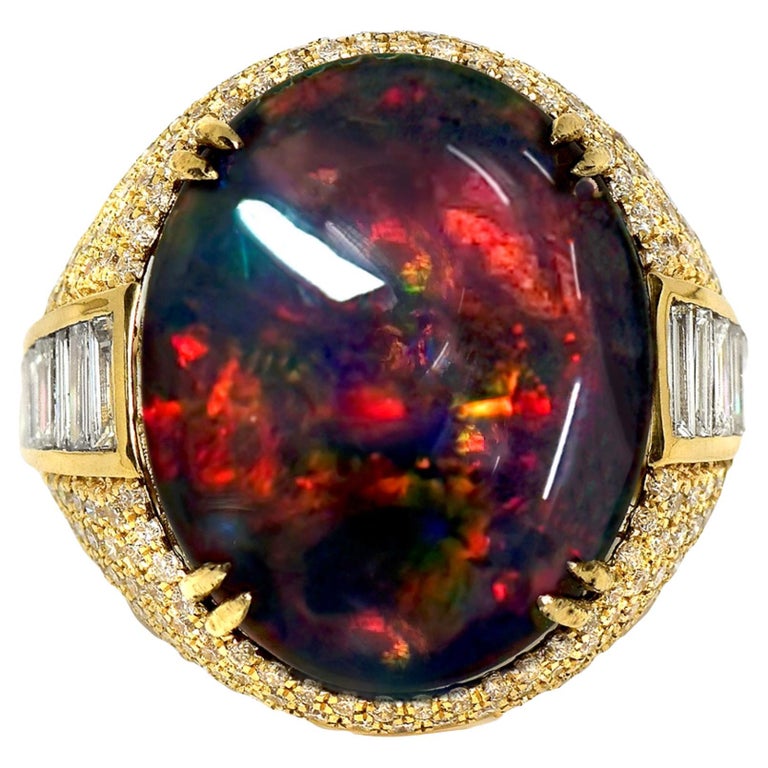
Black opal necklaces and pendants become instant heirlooms and conversation pieces. The neck area provides good protection from impacts while keeping the opal visible and admired. Simple pendant designs that don’t compete with the opal’s natural drama work best. After all, the stone itself provides all the visual interest needed.
Black opal earrings offer slightly more protection from impact than rings while providing excellent visibility. Stud designs work beautifully for showcasing matched pairs of black opals, while drop earrings allow larger individual stones to display their full glory. Because black opals are so valuable, earring designs often incorporate diamonds or other gemstones to create substantial pieces worthy of the extraordinary opal centerpieces.
White gold and platinum settings create an elegant contrast with black opals’ dark body tone, making the color play appear even more vivid. Yellow gold adds warmth and traditional elegance, while rose gold creates romantic, vintage-inspired looks. Many high-end black opal jewelry pieces incorporate diamond halos or accent stones, both for added security and to frame the opal appropriately for its value.
Fire Opal vs Black Opal: Key Differences
Understanding the fundamental differences between fire opal jewelry and black opal jewelry helps you determine which suits your preferences, lifestyle, and budget.
Color Intensity and Appearance
The most obvious difference lies in how these opals achieve their beauty. Fire opals captivate with their warm, glowing body color. The stone itself is orange, red, or yellow, creating an effect reminiscent of sunset or flames. This body color provides the primary visual impact, though some specimens also display play-of-color as a bonus feature.
Black opals take the opposite approach, featuring a dark, neutral body tone that serves as a stage for spectacular play-of-color. The stone itself appears gray to black, but moving it under light reveals brilliant flashes of rainbow colors dancing across its surface. The drama comes not from body color but from the contrast between the dark background and the vibrant color flashes.
Fire opals offer warmth, energy, and approachability. You can think of them as sunshine captured in gemstone form. Meanwhile, black opals provide mystery, sophistication, and depth. You can consider them midnight skies illuminated by auroras. Fire opals tend to have a cheerful, optimistic personality, while black opals exude elegance and refinement.
Durability and Hardness
Both fire opals and black opals rank 5.5-6.5 on the Mohs hardness scale, making them relatively similar in scratch resistance. However, their different structures and characteristics affect practical durability differently.
Fire opals’ transparency means any internal fractures or inclusions are readily visible, and their often-lighter weight per carat suggests they may be cut thinner than opaque stones. They can be somewhat brittle and prone to chipping if struck sharply. Their relatively high water content (3-20%) makes them sensitive to extreme temperature changes and prolonged exposure to heat or intense light, which can cause crazing (fine internal cracks).
Black opals’ opacity hides internal characteristics better, and they often come from Lightning Ridge deposits known for producing harder, more stable material. While they require the same care as all opals regarding temperature extremes and impacts, quality black opals tend to be slightly more durable in practical wear. Their darker color also makes minor scratches less visible than on transparent fire opals. For maximum durability in either fire or black opal jewelry, choose protective settings like bezels and save delicate pieces for special occasions rather than constant daily wear.
Price Ranges
Price differences between fire opal jewelry and black opal jewelry are substantial and reflect their relative rarity and market demand.
Fire opals offer accessibility across various budgets. Commercial-grade fire opals with yellowish body color and moderate clarity might start around $10-$30 per carat. Mid-range fire opals in attractive orange hues with good transparency typically range from $50-$200 per carat. High-quality red fire opals with excellent clarity and saturation can command $150-$500 per carat, while exceptional specimens with both stunning body color and play-of-color can reach $1,000-$10,000 per carat.
Black opals occupy a different price stratosphere entirely. Even lower-grade black opals with pale body tones and weak color play start around $100-$300 per carat. Mid-quality black opals displaying decent color play against moderately dark backgrounds typically range from $300-$1,500 per carat. High-quality black opals with dark body tones, bright color play including red, and attractive patterns command $2,000-$10,000 per carat. Exceptional specimens (dark bodies with brilliant red-dominant color play in desirable patterns) easily exceed $10,000-$50,000 per carat, with the finest examples reaching six figures.
The price gap reflects black opal’s extreme rarity. While fire opals are uncommon, black opals are genuinely rare on a global scale, found in meaningful quantities in essentially one location. Additionally, demand from collectors and connoisseurs who recognize black opal as the finest opal variety keeps prices elevated.
Occasions and Styling
Fire opal jewelry suits energetic, creative, and social occasions. The warm, vibrant colors work beautifully for artistic events, casual gatherings, and situations where personality shines through. Fire opal rings add unexpected flair to business casual attire without appearing unprofessional. Meanwhile, earrings or necklaces energize resort wear, bohemian styles, and contemporary fashion.
Fire opals pair beautifully with warm color palettes. They complement navy, teal, purple, brown, and neutral tones while creating a striking contrast against cool colors. The sunny, approachable character of these gems makes them ideal for daytime wear and casual-to-dressy occasions. They suit individuals with warm, extroverted personalities and those drawn to bold, statement jewelry.
Black opal jewelry elevates formal occasions and sophisticated settings. The mysterious elegance and spectacular color play make black opals perfect for evening wear, galas, cocktail parties, and special events where you want to make a memorable impression. Black opal rings (particularly engagement rings) suit those seeking unique alternatives to traditional stones while maintaining luxury and refinement.
Black opals work with virtually any color palette, creating drama against both light and dark clothing. They suit minimalist aesthetics (letting the stone be the star) or can anchor elaborate jewelry designs with diamonds and other gems. The sophisticated character of black opals appeals to individuals with refined tastes, collectors who appreciate rare gems, and anyone drawn to mysterious, unique beauty.
So…Which Should You Choose?
Selecting between fire opal and black opal jewelry depends on multiple personal factors beyond just appearance preferences.
Personality and Style Match
Consider your personal style and how jewelry fits into your life. Fire opals suit bold, creative personalities comfortable making colorful statements. If you’re drawn to warm colors, artistic expression, and jewelry that reflects energy and passion, fire opals align with your aesthetic. They work for those who want distinctive pieces without venturing into ultra-luxury price points.
Black opals, on the other hand, appeal to those who appreciate subtlety, sophistication, and understated luxury. If you prefer jewelry that whispers rather than shouts but still want something truly special, black opals deliver. They suit collectors, connoisseurs, and individuals who value rarity and investment-quality pieces. Black opals work for those comfortable with high-end jewelry who want something genuinely unique.
Your existing jewelry collection provides clues. If you favor warm metals like yellow and rose gold, colorful gemstones, and bohemian or contemporary styles, fire opals integrate seamlessly. If you prefer white metals, diamonds, classic designs, and investment pieces, black opals fit naturally.
Everyday Wear vs Special Occasions
Intended use significantly influences the right choice. For jewelry you’ll wear frequently—daily rings, everyday earrings, versatile necklaces—consider these factors:
- Fire opals in protective settings can handle regular wear if you’re mindful. Avoid wearing fire opal rings during activities involving impacts, chemicals, or temperature extremes. Fire opal earrings and pendants face fewer risks and suit frequent wear. The moderate price point of most fire opals means replacement, while disappointing, doesn’t represent catastrophic loss.
- Black opals’ high value makes some owners reserve them for special occasions, though quality black opals in protective settings can certainly be worn regularly. If you’re investing significantly in black opal jewelry, an honest assessment of your lifestyle matters. Active lifestyles with frequent hand use might make black opal rings impractical for daily wear, while office workers or those with gentler daily routines can comfortably wear them.
- For special occasion jewelry—statement pieces for events, heirloom engagement rings, investment jewelry—black opals provide maximum impact and long-term value appreciation. For versatile jewelry that adds personality without requiring excessive caution, fire opals offer practical beauty.
How to Evaluate Quality
Regardless of which opal type you choose, understanding quality evaluation ensures you select the best stone for your investment.
For Fire Opals:
- Color: Seek intense, saturated colors with minimal brown or gray undertones. Red and red-orange specimens are most valuable, followed by pure orange and bright yellow. Color should be evenly distributed throughout the stone.
- Clarity: Fire opals should be as transparent as possible with minimal cloudiness. Check for inclusions. Small internal features are acceptable if they don’t interfere with the stone’s beauty, but excessive inclusions significantly reduce value.
- Transparency: Transparent specimens command higher prices than translucent ones. Hold the stone up to light—you should be able to see through quality fire opals, though some haziness is acceptable in lower grades.
- Cut: Well-proportioned cuts that maximize color and minimize inclusions show expert craftsmanship. Faceted fire opals should have symmetrical facets with sharp meets. Cabochon-cut fire opals should have even domes without flat spots or excessive thickness.
- Play-of-Color: If present, play-of-color significantly increases value. Look for bright, visible color flashes that appear from multiple viewing angles. Fire opals with strong play-of-color are called precious fire opals and command premium prices.
For Black Opals:
- Body Tone: Darker is generally better. The darkest opals (N1 on the body tone scale) provide maximum contrast for color play. However, extremely dark stones without bright color play aren’t valuable simply for darkness. The balance between dark body and bright color determines quality.
- Play-of-Color: Brightness (color intensity) matters most. Colors should be vivid and visible from multiple angles. Red play-of-color is most valuable, followed by orange, yellow, green, and blue. Opals displaying multiple bright colors are more valuable than those showing single colors.
- Pattern: Harlequin (rectangular patches), rolling flash (moving waves of color), and pinfire (tiny sparkling dots) are among the most desirable patterns. Pattern clarity and uniqueness affect value as well-defined, unusual patterns command premiums.
- Clarity: While black opals are opaque, examine for cracks, dead spots (areas without color play), or potch (common opal without color play) intruding into precious areas. Quality black opals display color play across their entire face.
- Cut: Cabochon cuts should have even, pleasing domes that maximize the visible play-of-color. Avoid stones cut too thin (prone to breakage) or excessively thick (wasted material that adds unnecessary weight and cost).
Size and Setting Considerations
Consider how stone size affects both appearance and price. Fire opals offer good visual impact even in smaller sizes because their transparent, bright colors command attention. A 1-2 carat fire opal in a well-designed setting creates substantial presence without high cost. Larger fire opals (3+ carats) become impressive statement pieces but remain more affordable than comparable black opals.
Black opals’ value increases dramatically with size, as larger stones with quality characteristics are exceptionally rare. However, even modest-sized black opals (0.5-2 carats) create impact through their unique appearance. If your budget is limited but you desire black opal, smaller high-quality stones often provide more satisfaction than larger lower-quality specimens.
Setting quality matters enormously for both opal types. Don’t compromise setting quality to afford a larger stone. Proper settings protect your investment! For rings, bezels or substantial prong settings appropriate to the stone’s value work best. For pendants and earrings, ensure the mounting securely holds the stone while allowing maximum visibility.
Frequently Asked Questions
Are fire opals more fragile than black opals?
Fire opals and black opals have similar hardness ratings (5.5-6.5 on the Mohs scale), making them comparable in scratch resistance. However, practical durability differs slightly. Fire opals’ transparency means any internal fractures show readily, and they’re often cut thinner than opaque stones. Black opals’ opacity hides internal characteristics better, and quality specimens from Lightning Ridge tend to be stable and durable.
Both varieties require similar care—protection from sharp impacts, extreme temperature changes, harsh chemicals, and prolonged heat exposure. Fire opals may be slightly more prone to visible damage due to their transparency, but properly cared-for specimens of either type provide lasting beauty. The main fragility difference is perceptual rather than actual, as damage shows more obviously in transparent fire opals than opaque black opals.
Setting choice affects practical durability more than inherent stone properties. Both fire and black opals benefit from protective settings like bezels for rings or secure prongs for earrings and pendants.
Can black opals be worn daily?
Yes, black opals can be worn daily with appropriate precautions and settings. Many black opal engagement rings and everyday jewelry pieces survive decades of regular wear. Success depends on several factors:
Quality black opals from Lightning Ridge are generally stable and durable when properly cut. Choose stones without visible cracks or structural weaknesses. Protective settings (bezels for rings, secure multi-prong settings for pendants) provide essential protection. Also, consider your lifestyle honestly. Office work and relatively gentle daily activities pose little risk, while manual labor, frequent hand washing with harsh soaps, or very active lifestyles increase vulnerability.
Remove black opal rings before activities involving impacts, chemicals, or temperature extremes. Take them off before exercising, gardening, cleaning, or swimming. Store black opal jewelry carefully, away from harder gemstones that could scratch it. Clean gently with mild soap and water rather than ultrasonic cleaners.
Many people successfully wear black opal jewelry daily by simply being mindful. If you’re investing significantly in black opal, consider whether you’re comfortable wearing valuable jewelry regularly or prefer reserving it for special occasions. There’s no wrong answer. Both approaches have merit depending on your personality and preferences.
Which opal is better for engagement rings?
Both fire opal and black opal make stunning, unique engagement rings, though they suit different preferences and symbolize different things.
Black opal engagement rings represent the pinnacle of opal jewelry. They are rare, valuable, and spectacular. The dark, mysterious appearance with brilliant color play symbolizes depth, mystery, and enduring beauty. Black opals are durable enough for engagement ring use when properly set and cared for. They appeal to those seeking maximum luxury and investment value in their engagement ring while choosing something genuinely unique. Black opal rings make powerful statements about the wearer’s distinctive taste and appreciation for rare beauty.
Fire opal engagement rings offer bold, passionate alternatives to traditional stones. The warm, glowing colors symbolize passion, energy, and warmth—perfect for couples who approach life with enthusiasm and creativity. Fire opals are more affordable than black opals, allowing larger stones or more elaborate settings within budget. They suit those who want colorful, distinctive engagement rings without venturing into ultra-luxury price ranges.
Practical considerations matter. Both require more care than diamonds or sapphires. If daily wear is intended, choose protective settings like bezels. Consider lifestyle, too. Very active individuals might prefer boulder opals (opals with ironstone backing for durability) as a middle ground. Black opals hold value better as investments, while fire opals offer accessibility and bold beauty.
Ultimately, the “better” choice depends entirely on personal preference. If the dark, mysterious beauty of black opal resonates with you and your budget allows, it’s an extraordinary choice. If warm, passionate fire opals speak to your heart, they create equally meaningful engagement rings. Both represent unique, thoughtful alternatives to conventional engagement ring stones.
Conclusion
Fire opal jewelry and black opal jewelry represent two spectacular but fundamentally different approaches to opal’s unique beauty. Fire opals captivate with their warm, glowing body colors. Indeed, they are transparent gems that seem to contain liquid sunshine, perfect for those drawn to bold, passionate statements. Black opals, meanwhile, mesmerize with their dark mystery illuminated by brilliant color play. These are sophisticated rarities that suit connoisseurs seeking the finest and most valuable opal variety.
Your choice between them depends on personal style, intended use, and budget. Fire opals offer accessibility, vibrant warmth, and energetic personality at moderate price points. Black opals provide investment-quality rarity, sophisticated elegance, and spectacular visual drama at premium prices. Neither choice is objectively “better.” They simply serve different aesthetic preferences and purposes.
Consider fire opals if you want colorful, distinctive jewelry with warm, approachable character; versatile pieces suitable for frequent wear; or maximum visual impact within moderate budgets. Consider black opals if you appreciate rare, investment-quality gems; prefer sophisticated, mysterious elegance; seek heirloom pieces that appreciate over time; or want the absolute pinnacle of opal jewelry.
Regardless of your choice, purchasing from reputable dealers who provide accurate grading information ensures you receive quality stones. Invest in appropriate settings that protect your opals while showcasing their beauty. With proper care and thoughtful selection, both fire opal jewelry and black opal jewelry provide lasting beauty and enjoyment, each telling its own compelling story through color and light.
Featured image: Oscar Heyman

Sewelo is a world where jewelry, watches, and objects come alive in a shimmering dance of fantasy. Through a literary lens, we celebrate the beauty and elegance that make these treasures more than just possessions.