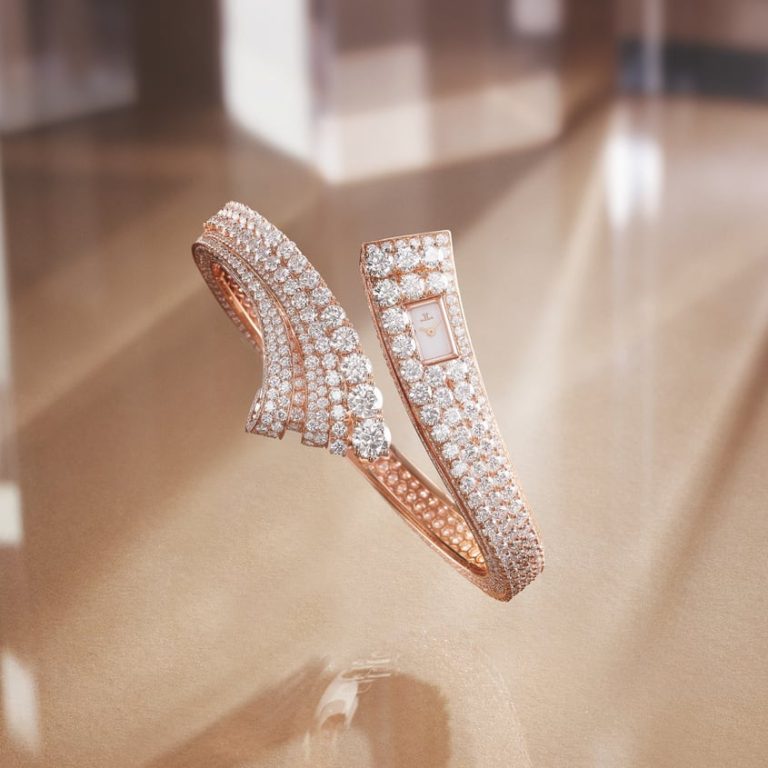
In the realm of contemporary high jewelry, few names evoke the fusion of art and wearability quite like Cindy Chao. Cindy Chao jewelry represents something unprecedented in the jewelry world—pieces that transcend ornamentation to become three-dimensional sculptures, meticulously crafted miniature artworks that happen to be wearable. Since founding Cindy Chao The Art Jewel in 2004, this Taiwanese jewelry artist has carved out a unique position where jewelry, sculpture, and architecture converge. The results are pieces so extraordinary that museums, including the Smithsonian National Museum of Natural History, the Musée des Arts Décoratifs in Paris, and London’s Victoria and Albert Museum, have inducted them into permanent collections.
What distinguishes Cindy Chao jewelry from traditional high jewelry houses? It’s the convergence of architectural precision inherited from her grandfather’s temple designs, sculptural mastery learned from her father’s work, use of unconventional materials like titanium alongside precious gems, one-of-one creations ensuring absolute uniqueness, and recognition as art objects rather than mere luxury goods. Each piece requires hundreds to thousands of hours of hand fabrication, with Chao personally overseeing every detail from initial wax sculpture through final gemstone placement. The result is jewelry that impresses not through brand recognition but through undeniable artistic merit.

Understanding Cindy Chao’s significance requires exploring her unique background, the architectural and sculptural influences shaping her vision, and why collectors and curators increasingly view her work as defining contemporary jewelry’s artistic future.
Who Is Cindy Chao?
Born in 1974 in Taiwan, Cindy Chao emerged from a family steeped in artistic and architectural tradition. Her grandfather, Hsieh Tzu-Nan, was a renowned architect who designed and restored over a hundred temples across East Asia. According to Chao, it was her grandfather who inspired her interest in architecture, providing the foundational understanding of space, structure, and proportion that would later define her jewelry. Her father was a sculptor, from whom she learned various techniques and skills that eventually shaped her own design style.

This dual heritage—architecture’s precision and sculpture’s three-dimensional artistry—created a unique artistic DNA. Chao initially wanted to pursue architecture like her grandfather, but after encouragement from her mother, chose precious gems and metals over steel and timber. However, architectural thinking never left her work; it simply found new expression in jewelry scaled to fit the human body rather than shelter it.
After deciding to start her own business, Chao studied gemology at the Gemological Institute of America, mastered drawing skills, and learned wax model making for jewelry. This is the ancient lost-wax technique (la cire perdue) that would become central to her creative process. When she learned about traditional wax sculpting, she realized how she could extend her passion for architecture to jewelry design, allowing her to make miniature sculptures the same way architects design buildings.
In 2004, Chao established Cindy Chao The Art Jewel, opening her first showroom in Taipei. From the beginning, she operated outside traditional jewelry house structures. There was no corporate backing, no established brand heritage to leverage, and no conventional marketing or retail strategy. Instead, Chao built her reputation purely on artistic merit, creating pieces so extraordinary that they demanded recognition.

Cindy Chao achieved international breakthrough in 2007 when she became the first Taiwanese jewelry artist to participate in a Christie’s New York fine jewelry auction. Her Winter Branch Necklace and Bangle, the first pieces in what would become her signature Four Seasons Collection, sold for nearly three times their estimate, immediately establishing her as a significant force in contemporary high jewelry.
Cindy Chao’s Artistic Philosophy
At the core of Cindy Chao jewelry lies a radical philosophy: jewelry as three-dimensional sculpture rather than decorative ornament. Chao describes herself not as a designer but as a jewelry artist and creator, distinguishing between those who design jewelry suitable for the market and artists who possess innovative vision, thinking years ahead.

Nature provides her primary inspiration source. Flora and fauna appear throughout her work—butterflies, dragonflies, leaves, flowers, feathers—but these aren’t generic representations. They’re deeply observed, scientifically accurate studies transformed into precious materials. Chao spends extensive time studying her subjects, understanding their structures, movements, and essential characters before translating them into jewelry.
Asymmetry, movement, and volume define her aesthetic. Unlike traditional jewelry emphasizing symmetry and flatness, Chao’s pieces occupy space dramatically. They cast shadows, reveal different faces from various angles, and create visual interest through dimensional complexity. Her pieces have layers, volume, and movement.
Perhaps most importantly, no two Cindy Chao pieces are ever identical. Even within series like the Annual Butterflies, each creation is unique. While she might revisit themes—butterflies, seasons, ribbons—the execution varies every time based on available gemstones, evolved techniques, and her artistic growth. This one-of-one approach ensures that acquiring Cindy Chao jewelry means owning something genuinely irreplaceable.
Architectural Influence
The architectural thinking inherited from her grandfather profoundly shapes Cindy Chao’s jewelry. Architecture and jewelry share fundamental concerns: structure, balance, proportion, and how forms exist in space. Chao applies architectural precision to jewelry design, considering not just how pieces look but how they’re engineered.

Structural complexity distinguishes her work. Beneath the visible gemstones lies sophisticated engineering—hidden frameworks that must be simultaneously strong enough to support substantial gemstone weight and delicate enough to remain invisible. This requires understanding stress points, weight distribution, and material properties at a miniature scale. The pieces must function mechanically while appearing effortlessly organic.
Her use of titanium (unusual in high jewelry) exemplifies this architectural approach. Titanium offers exceptional strength-to-weight ratios, allowing Chao to create large, dramatic pieces that remain comfortable to wear. Its malleability permits complex curves impossible in traditional jewelry metals. Through special treatments, titanium can be colored, creating vivid backdrops that enhance gemstone hues.

The architectural mindset also informs her approach to articulation and movement. Many pieces feature multiple moving parts—hinges, joints, flexible connections—allowing jewelry to drape naturally on the body. Creating these mechanical elements at jewelry scale while maintaining visual seamlessness requires engineering precision typically associated with watchmaking.
Chao describes wax sculpting as allowing her to structure pieces in detail from every angle, giving them rich depth that simple design sketches could never contain. This 360-degree approach, considering all viewing angles simultaneously, directly reflects architectural training where buildings must succeed from every perspective.
The Four Seasons Collection
The Cindy Chao Four Seasons Collection represents one of her most important recurring themes, exploring nature’s perpetual cycle through jewelry. The collection traces its origins to 2007 with the Winter Branch Necklace and Bangle that launched her international career at Christie’s.

Nature has always been a profound source of inspiration for Cindy Chao, and it serves as the cornerstone of her renowned Four Seasons Collection. Each season offers distinct aesthetic possibilities: Spring brings delicate blooms and new growth, Summer delivers abundance and vibrant color, Autumn offers rich, warm tones and mature foliage, and Winter presents spare elegance and crystalline forms.
Notable pieces include the 2016 Black Label Masterpiece IX Winter Leaves Necklace, set in titanium and featuring over 240 carats of fancy-cut diamonds. This piece won the Masterpiece Highlight Award at Masterpiece London in 2019, selected as the best jewelry piece of the fair. The necklace showcases Chao’s mastery of creating lifelike organic forms in precious materials, undulating curves that capture winter leaves’ delicate structures while being constructed from the hardest materials.
The collection has evolved significantly over two decades. Early pieces showed Chao’s emerging style, while later works demonstrate increasingly sophisticated techniques and confidence. The 20th Anniversary Collection features leaf brooches that represent the Four Seasons, with each leaf weighing just 22 grams despite being set with around 1,500 gemstones on 1.77mm titanium bases. This combination of substantial visual impact with surprising lightness exemplifies her architectural engineering approach.
The Four Seasons theme appears in both Black Label Masterpieces (museum-caliber, one-of-a-kind pieces) and White Label Collection (more accessible yet still entirely unique creations). The White Label Four Seasons pieces maintain the artistic vision while being designed for greater versatility between everyday elegance and special occasion wear.
Materials and Craftsmanship
Cindy Chao jewelry distinguishes itself through unconventional material choices and obsessive attention to craftsmanship. Her pioneering use of titanium in high jewelry challenged conventions. Before Chao, titanium rarely appeared in fine jewelry due to working difficulties. (Although revered names like Joel Arthur Rosenthal (JAR), Michelle Ong, and Wallace Chan are famous for using the metal). Its extreme hardness makes it challenging to shape, solder, and set with stones. However, these very properties—strength, lightness, and ability to be colored through anodization—made it perfect for Chao’s architectural jewelry vision.
Gemstone selection reflects her artistic priorities rather than traditional hierarchies. While she uses diamonds, rubies, sapphires, and emeralds, she treats all gemstones as colors in her painter’s palette. Rare Kashmir sapphires, Colombian emeralds, Burmese rubies, colored diamonds, conch pearls, and semi-precious stones all appear based on what best serves the artistic vision. The 2013 Black Label Masterpiece XIX, featuring an 8.03-carat Pigeon’s Blood Burmese Ruby Ribbon Ring, sold for $3.84 million, setting a record for an Asian contemporary art jewel.

Every piece is entirely hand-fabricated using the lost-wax casting technique. Chao begins with wax sculpting, allowing complete three-dimensional control before any metal work begins. On the wax, she can structure pieces in detail from every angle, giving them rich depth. This allows her to “see the angel in the marble,” as Michelangelo said, freeing the soul of the piece by reducing the unnecessary.
The time investment is staggering. Standard pieces require hundreds of hours, while complex Black Label Masterpieces can demand thousands of hours spread over months or years. Each Annual Butterfly takes more than 18 months to complete, as thousands of gemstones are set on and around delicately molded wings. The 2018 Peony Brooch took eleven years from conception to completion.

This meticulous approach extends to invisible details. Gemwork appears on all sides of pieces, including backs where only owners can see—a mark of respect for discerning collectors. Using microscopes at such intensity, gemsetters are restricted to working just three to five hours per day to maintain precision and prevent eye strain.
Cindy Chao Jewelry as Collectible Art
The question “Is Cindy Chao jewelry art or jewelry?” has been definitively answered by museum curators worldwide: it’s both, with emphasis on art.

In 2010, Cindy Chao became one of the first contemporary jewelry artists to have work—the 2009 Annual Butterfly—inducted into the Smithsonian National Museum of Natural History’s permanent collection. This represented a watershed moment, with one of the world’s most prestigious museums recognizing contemporary jewelry as art worthy of preservation alongside historical masterworks.
The 2008 Black Label Masterpiece I Ruby Butterfly Brooch was donated to the Musée des Arts Décoratifs in Paris in 2020, displayed in its Galerie des Bijoux. In 2021, her 2018 Black Label Masterpiece XVIII Peony Brooch was inducted into the William and Judith Bollinger Gallery at the Victoria and Albert Museum.
These aren’t isolated cases of museums acquiring jewelry as decorative arts. They’re deliberate recognitions of Chao’s work as culturally significant art. Museum professionals cite her sculptural quality, emotional investment, intellectual curiosity, and extraordinary gemstone combinations as distinguishing her work from conventional jewelry.
The one-of-one nature of Black Label Masterpieces enhances their collectible status. Limited annual production means acquiring Cindy Chao jewelry requires patience, connections, and significant resources. Pieces become available through private appointment at showrooms in Hong Kong and Taipei, prestigious auction houses, or invitation-only exhibitions at major art fairs.
Auction Performance and Market Recognition
Cindy Chao’s jewelry auction results have consistently exceeded expectations, validating her position in the contemporary art jewelry market. The 2012 Black Label Masterpiece I Transcendence Butterfly, the first Annual Butterfly using titanium, garnered over four times its estimate at Christie’s Geneva.

At Christie’s Hong Kong, she was titled “Iconic Hong Kong Jewellery Designer,” presenting the Phoenix Feather Brooch and Colombian Emerald Snowpeas Earrings, which sold for approximately $2.06 million, almost twice the initial estimation. These results demonstrate that collectors view her work not as fashion jewelry depreciating over time but as art appreciating in value.

Her collaboration with Sarah Jessica Parker, the 2014 Black Label Masterpiece I Ballerina Butterfly Brooch, inspired by their shared passion for ballet, was auctioned at Sotheby’s Hong Kong for $1.2 million with proceeds donated to the New York City Ballet. This intersection of high jewelry, celebrity collaboration, and philanthropy brought additional visibility while supporting arts education.

The auction exposure has shaped market perception significantly. Each successful sale validates her work’s investment potential, encouraging new collectors while reassuring existing ones. The consistent pattern of pieces exceeding estimates signals strong demand and limited supply.
Who Collects Cindy Chao Jewelry
The collector base for Cindy Chao jewelry differs from that of traditional luxury jewelry clientele. Rather than status-conscious buyers seeking recognizable heritage brands, Chao attracts art collectors who appreciate her work’s sculptural merit and cultural significance.
Ultra-high-net-worth individuals from Asia, Europe, and North America form her core clientele. These collectors typically possess established art collections and understand evaluating artistic merit beyond brand prestige. They’re comfortable with bespoke commissions requiring patience; pieces might take years to complete as Chao refines designs and sources perfect gemstones.
Museums actively acquire and display her work, treating pieces as permanent collection additions rather than temporary exhibitions. This institutional validation attracts collectors who view jewelry purchases as cultural investments.
The international nature of her clientele reflects jewelry’s power to transcend linguistic and cultural boundaries. A piece’s artistic merit communicates universally, requiring no translation. Collectors from different continents can equally appreciate technical mastery, design innovation, and gemstone quality.
Contemporary Comparisons
How does Cindy Chao’s jewelry compare to other contemporary masters?

- Cindy Chao vs JAR: Both create one-of-one pieces emphasizing artistic vision over commercial considerations. However, JAR (Joel Arthur Rosenthal) maintains extreme exclusivity and privacy, while Chao participates in major art fairs and exhibitions. JAR’s aesthetic tends toward painterly pavé work, while Chao emphasizes three-dimensional sculpture and architectural forms.
- Cindy Chao vs Wallace Chan: Fellow Asian jewelry artists, both trained in sculpture and bringing fine art sensibilities to jewelry. Chan is known for his patented Wallace Cut and philosophical approach, while Chao focuses on architectural precision and naturalistic forms. Both use titanium innovatively and create museum-quality work.
- Cindy Chao vs traditional high jewelry houses: Established maisons like Cartier, Van Cleef & Arpels, and Bvlgari produce beautiful high jewelry but work within brand identities developed over decades or centuries. Chao operates without these constraints, answering only to artistic vision. Traditional houses produce collections; Chao creates individual artworks. They employ teams of designers; she maintains direct creative control over every piece.
Wearing Cindy Chao Jewelry Today
Despite their sculptural presence, Cindy Chao jewelry pieces are designed to be worn. The White Label Collection particularly emphasizes wearability, offering pieces that transition from daytime elegance to evening glamour.
Red carpet appearances have showcased Chao’s creations on celebrities and cultural figures, demonstrating how sculptural jewelry makes powerful fashion statements. The pieces’ substantial presence ensures visibility in photographs while their artistic merit transcends temporary fashion trends.
Styling such jewelry requires confidence. These aren’t understated accessories but statement pieces demanding attention. However, their organic forms and careful engineering ensure comfort despite visual drama.
Collectors face the choice between wearing and preserving. Some treat pieces as wearable art, enjoying them regularly while accepting that wear adds personal history. Others reserve pieces for significant occasions, balancing enjoyment with preservation. There’s no wrong approach. Chao designs jewelry to be worn, but understands collectors’ desires to maintain pristine condition for future generations or museum donation.
Frequently Asked Questions
Is Cindy Chao jewelry handmade?
Yes, every Cindy Chao jewelry piece is entirely hand-fabricated using centuries-old lost-wax casting techniques. Chao personally sculpts each design in wax before master craftsmen transform the wax models into metal frameworks. Gemstones are individually selected and hand-set, often requiring microscope-assisted work for pieces with thousands of tiny stones. The process can take hundreds to thousands of hours per piece, ensuring each creation is unique.
Why is Cindy Chao jewelry so expensive?
Prices reflect multiple factors: hundreds to thousands of hours of skilled handwork, exceptional gemstone quality (rare Kashmir sapphires, Colombian emeralds, large colored diamonds), use of proprietary techniques and materials like titanium, one-of-one status with no reproductions, museum-level artistic merit, and limited annual production. White Label Collection pieces generally start around $10,000, while Black Label Masterpieces command six to seven figures. The pricing positions her work as collectible art rather than fashion jewelry.
Where can you buy Cindy Chao jewelry?
Cindy Chao The Art Jewel operates through private appointment showrooms in Hong Kong, Taipei, and Shanghai. The brand also presents collections at prestigious art fairs, including TEFAF Maastricht, Masterpiece London, and the Biennale des Antiquaires. Pieces appear at major auction houses (Christie’s, Sotheby’s) where collectors can acquire work. There are no retail boutiques or e-commerce sites—access requires personal connections or auction participation.
Is Cindy Chao considered high jewelry?
Yes, Cindy Chao jewelry represents haute joaillerie (high jewelry) at its most artistic. Her Black Label Masterpieces have been inducted into permanent museum collections at the Smithsonian, Musée des Arts Décoratifs, and Victoria and Albert Museum—distinctions rarely granted to contemporary jewelers. In 2021, the French Ministry of Culture appointed her Chevalier dans l’Ordre des Arts et des Lettres, recognizing her as an “exceptional artist-jeweller who keeps pushing the limits of art.”
Conclusion: A Lasting Legacy
Cindy Chao jewelry stands at the forefront of contemporary high jewelry’s artistic evolution. By fusing architectural precision, sculptural mastery, and jewelry’s intimate wearability, Chao has created an entirely new category. These are pieces that function equally as personal adornment and cultural artifacts worthy of museum preservation.
As museums continue acquiring her work, as auction records continue being set, and as new collectors discover her vision, Chao’s position in jewelry history grows increasingly secure. She has proven that contemporary jewelry can achieve the artistic significance of historical masterworks, that innovation and tradition can coexist, and that pieces can transcend their commercial context to become lasting art.
For those fortunate enough to own Cindy Chao jewelry, each piece represents more than luxury. It’s a tangible connection to artistic genius, a three-dimensional sculpture created specifically for human bodies, and an investment in both financial and cultural capital. As Chao enters her third decade of creation, her influence on contemporary jewelry continues to expand, inspiring a new generation to view jewelry not as decoration but as wearable art.
Featured images: Cindy Chao The Art Jewel

Amanda Akalonu is dedicated to weaving together the worlds of jewelry, watches, and objects through a lens of literary storytelling.