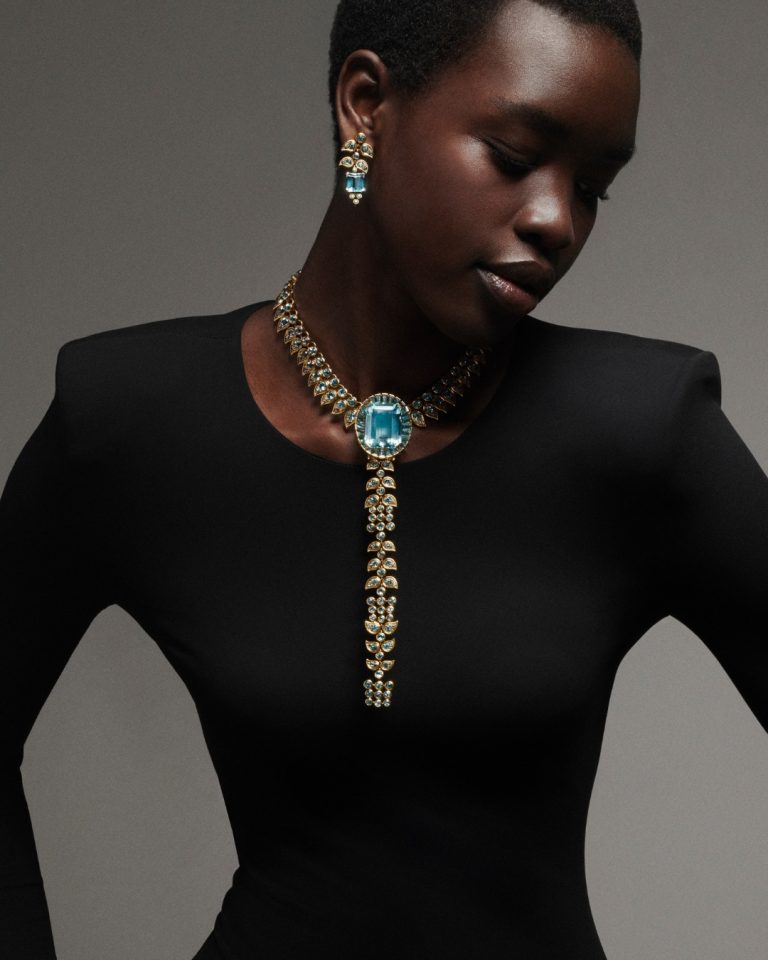
When I think of luxurious high jewelry brands that have written their names in the stars, one name dazzles brighter than most—Cartier. Far more than a brand, Cartier stands as an enduring emblem of timeless elegance and peerless craftsmanship. For over a century, it has transformed precious stones and metals into wearable masterpieces, leaving an indelible mark on history with every creation. Today, we embark on a journey through the luminous world of Cartier—a house defined by bold innovation, unparalleled artistry, and a legacy that continues to shine brilliantly through the ages.

Cartier: From A Humble Beginnings To A Legendary Vision
It all began in Paris in 1847 when a young Louis-François Cartier took over the workshop of his mentor, Adolphe Picard. From this modest atelier, no one could have foreseen the birth of a brand that would become synonymous with unparalleled luxury and timeless elegance. Even Louis-François himself likely had no inkling that his name would one day be etched into the annals of history. Armed with nothing more than his tools, an unmatched passion for crafting exquisite jewelry, and a dream, he set the stage for greatness. By 1874, the reins were passed to his son, Alfred, who later entrusted the legacy to his three sons—Louis, Pierre, and Jacques—each of whom played a pivotal role in shaping Cartier into the global icon it is today.

It was Louis Joseph Cartier, a visionary in every sense, who truly set the stage for the Cartier name to flourish. As the driving force behind the Paris branch, Louis redefined the world of jewelry with his groundbreaking designs and fearless innovation. Most notably, he pioneered the use of platinum in fine jewelry—a daring choice that revolutionized the industry. His mastery of this light, durable metal allowed him to create ethereal designs that seemed to defy gravity, captivating the world with their delicacy and brilliance.
From the whimsical Tutti Frutti collection, a vibrant symphony of carved gemstones, to the enchanting Mystery Clocks, which seemed to tick by sheer magic, Louis dared to dream differently. His creations were poetry in motion, seamlessly blending artistry and ingenuity. Through his visionary designs, Cartier transcended the boundaries of traditional jewelry, ascending to a realm of unparalleled prestige and imagination that few brands have ever achieved.

Timeless Friendship: The Story Behind Cartier’s Iconic Santos Watch
One story that always resonates with me is that of Louis Joseph Cartier and his friend, the daring aviator Alberto Santos-Dumont, who became the first person to be filmed in an airplane flight in 1906. Alberto, always soaring high in the sky, struggled to check his pocket watch mid-flight. Frustrated, he shared his dilemma with Louis, who immediately saw an opportunity to create something special.

What resulted was the Santos wristwatch, born in 1904. This wasn’t just a practical solution; it was a symbol of their friendship, a beautiful bond between two pioneers. The watch, both functional and enigmatic, forever changed the way we think about timekeeping. It seamlessly blended form and function, reshaping how we wear time itself. With its flat design and distinctive square bezel, the Santos became not just a favorite of Santos-Dumont, but of many others as well. And in a beautiful gesture of true friendship, Louis Cartier made the bold choice to name the watch after Alberto, making it the only time Cartier would name a watch after its original wearer. What a unique and lasting symbol of their friendship! I think everyone needs to have a friend like Louis Cartier. Interestingly, the Santos also became Cartier’s first men’s wristwatch, marking a significant milestone in horological history. The watch was put into serial production in 1911.

An Era of Expansion
By the early 20th century, Cartier had become a global phenomenon, with branches in London, New York, and even Saint Petersburg. Pierre Cartier, another brilliant mind in the family, spearheaded the brand’s expansion to New York. In a move that can only be described as genius, he acquired a Neo-Renaissance mansion on Fifth Avenue in exchange for a $100 bill and a double-stranded natural pearl necklace valued at $1 million.

Cartier and Royalty: The Jeweler of Kings
When Cartier wasn’t creating jewelry, it was creating heirlooms—treasures that would adorn the world’s most powerful figures. Cartier’s moniker as “the jeweler of kings and the king of jewelers” is not an empty marketing slogan; it’s a title earned through a legacy of crafting exquisite pieces for royalty and aristocracy across the globe. The Maison’s journey into the courts of Europe began with King Edward VII of the United Kingdom, a known connoisseur of luxury. In 1902, while preparing for his coronation, the king commissioned Cartier to create 27 tiaras. Upon seeing the magic Cartier created with diamonds in the name of tiaras, the King was so impressed that he awarded Cartier a Royal Warrant in 1904, officially naming the jeweler a purveyor to the British court. “Cartier,” the king declared, “is the jeweler of kings and the king of jewelers.”
The Patiala Necklace
The Maison’s royal journey didn’t stop with Europe. In fact, Maharajas of India soon turned to Cartier to transform their dazzling treasures into modern masterpieces. One such creation, the Patiala Necklace, stands as a testament to the grandeur of early 20th-century Indian royalty and Cartier’s unparalleled craftsmanship. Designed and crafted in 1928 for the Maharaja of Patiala, Bhupinder Singh, this extraordinary piece was part of the largest single order ever placed with Cartier, valued at an astonishing ₹1,000 million in 1925 (equivalent to ₹210 billion or US$2.6 billion in 2023).
This opulent necklace featured five rows of platinum chains adorned with over 2,900 diamonds, including one of the world’s largest yellow diamonds—the De Beers Diamond, weighing an impressive 234.65 carats. Surrounded by several other large diamonds and Burmese rubies, the Patiala Necklace symbolized power, wealth, and prestige, solidifying Cartier’s status as the jeweler of choice for royalty worldwide.

And yet, like many legends, the Patiala Necklace came with its own mysteries. The necklace mysteriously disappeared in the 1940s, only to resurface decades later—stripped of its former glory. The iconic De Beers Diamond and several of the original gemstones had been carted away, leaving the necklace a shadow of its original opulence. However, Cartier, ever committed to preserving its heritage, stepped in to rescue this fallen hero. The Maison painstakingly restored the necklace, replacing the lost gemstones with synthetic diamonds and cubic zirconia, bringing it back to life and ensuring its place in history.
Tiaras Fit for Queens
If tiaras could speak, those crafted by Cartier would tell tales of coronations, love stories, and stolen moments. One such masterpiece is the Halo Tiara, a sparkling crown of diamonds that is regal yet delicate, capturing the light of a thousand stars. Originally created by Cartier, the tiara was purchased by the future King George VI (then the Duke of York) as a gift for his wife, the Queen Mother Elizabeth. It was later passed on to Queen Elizabeth II, who, in a beautiful gesture, loaned it to her sister, Princess Margaret, to wear on her coronation day. The tiara made a grand appearance once again when it graced the head of Kate Middleton, the Princess of Wales, on her wedding day. Passed down through generations, the Halo Tiara remains one of the finest examples of Cartier’s work for the British royal family, continuing to symbolize both tradition and elegance.

Another masterpiece is the Portland Tiara, a diamond-encrusted gold and silver creation designed in 1902 for Winifred, Duchess of Portland, to wear at the coronation of Edward VII and Queen Alexandra. Originally, the tiara was a striking combination of brilliant cushion- and briolette-cut diamonds, including the Portland Diamond, a remarkable 19th-century gem. The story of this tiara is as beautiful as it is tragic. Stolen in a daring heist in 2018, this masterpiece of diamonds and gold vanished into the shadows of history. Its fate remains uncertain, serving as a poignant reminder of the vulnerability of even the most exquisite creations.

Cartier Masterpieces That Transcend Time
Cartier’s name is forever intertwined with some of the most legendary pieces in the world of high jewelry and watches. The genius of Cartier lies not only in its grandeur but also in its ability to create pieces that not only catch the eye but also capture the heart.
The Tank Watch
One of Cartier’s masterpieces that transcends time is the Tank Watch. Introduced in 1918, this iconic timepiece embodies minimalist design, drawing inspiration from the rectangular shape of military tanks.

Worn by icons such as Jackie Kennedy and Princess Diana, the Tank Watch showcases Cartier’s ability to blend form and function seamlessly. Its timeless appeal continues to captivate wearers, remaining just as relevant and desirable over a century later.

Cartier Trinity Rings
The Trinity de Cartier rings, first introduced in 1924, embody a stunning balance of simplicity and symbolism. Featuring three intertwined bands in yellow, white, and rose gold, the design represents friendship, love, and fidelity. Created by Louis Cartier himself, the Trinity rings have become one of the maison’s most cherished and enduring creations.

The Love Bracelet
The Love Bracelet, designed in 1969 by Aldo Cipullo, is arguably Cartier’s most iconic modern creation. Its unique screw mechanism, which requires a special screwdriver to fasten and unfasten, symbolizes everlasting love. Crafted in yellow, white, or rose gold and often adorned with diamonds, the Love Bracelet has become a universal symbol of commitment and a coveted piece for jewelry enthusiasts around the world.

The Tutti Frutti Collection
A vibrant explosion of color, the Tutti Frutti Collection is a Cartier classic that celebrates the beauty of Indian-inspired design. Featuring carved emeralds, sapphires, rubies, and diamonds, the piece is arranged in a harmonious yet striking combination. Its playful elegance, along with its historical significance, makes it one of the most coveted creations in the world of haute joaillerie.

Panthère Brooch
The Queen of Opera, Maria Callas, owned a breathtaking Panthère brooch that further cemented Cartier’s mastery of its iconic panther motif. Adorned with diamonds and onyx, this dazzling piece features a lifelike panther in a poised and regal stance. Known for her dramatic flair and love of high jewelry, Callas made this brooch an essential part of her personal collection.

Watch: The High Jewelry Collection of Maria Callas
The brooch is said to have found its way back to Cartier’s warm embrace, and it recently made an appearance at the 2024 Venice Film Festival, nestled on Hollywood icon Angelina Jolie’s dress. The brooch complemented her appearance so perfectly; it was as if it were made for her. Maria Callas must be proud!
Cartier’s Modern Collections: A Celebration of Timeless Innovation
Cartier continues to push the boundaries of craftsmanship and design, ensuring its collections are as innovative as they are timeless. Over the years, the Maison has introduced new collections that pay homage to its storied history while embracing contemporary aesthetics. Whether through high jewelry or its more accessible lines, Cartier remains a master of storytelling through design.
Nature Sauvage: Cartier Brings The Wild To Life
In 2024, Cartier unveiled its High Jewelry Collection, Nature Sauvage, an extraordinary ode to the untamed beauty of the natural world. Some pieces don’t just shimmer; they roar. The Nature Sauvage collection is one such marvel, capturing the untamed beauty of nature with breathtaking, audacious precision. Inspired by the unpredictability and grandeur of the wild, the collection captures the essence of ferocious predators, untamed forests, and dramatic landscapes.
Panthère Jaillissante
One of the key highlights is the Panthère Jaillissante, a daring masterpiece that reimagines Cartier’s iconic panther motif. The ring-bracelet exudes quiet strength, with a sleek, diamond-encrusted panther resting gracefully, its emerald eyes glowing with predatory intensity. The panther, poised yet ever-ready to pounce, cradles an 8.63-carat Zambian emerald ring—a guardian of extraordinary beauty. The piece is a testament to Cartier’s enduring fascination with the panther, a symbol of power and elegance that dates back to Jeanne Toussaint’s visionary leadership. Something about this panther’s quiet majesty reminds me of Nala from The Lion King. While Nala is a lioness, not a panther, the spirit of wild grace and untamed femininity feels remarkably similar.

Celestun Necklace
Then there’s the Celestun Necklace, a tribute to the delicate elegance of pink flamingos. This necklace feels like a love letter to the natural world. A 38.50-carat aquamarine sits at the heart of the jewel, its serene blue hue like tranquil waters. Surrounding it, black lacquer, rose gold, and a symphony of emeralds and aquamarines mimic the lush wetlands these flamboyant birds call home. This piece took my breath away when I first saw it, and I couldn’t help but rave about it in my article on the timeless debate of vintage versus modern jewelry.

The Cartier Women’s Initiative
Beyond its exquisite creations, Cartier’s legacy shines brightest in its commitment to making the world a better place. The Cartier Women’s Initiative, launched in 2006, is a glowing example of this ethos. Dedicated to supporting female entrepreneurs, the initiative has empowered 330 women from 66 countries, providing over $11.5 million in financial aid. The stories of transformation remind us that luxury isn’t just about indulgence—it can be a force for good. Cartier’s support for women shows that the maison doesn’t just adorn lives but enriches them, proving that elegance and impact can walk hand in hand.

Why Cartier Shines Bright Like a Diamond
So, what keeps Cartier at the forefront of luxury, even after 175 years? To me, it’s their fusion of history, craftsmanship, and innovation—an extraordinary combination that elevates jewelry beyond mere adornment. Every gem is selected with care, and every design is executed with precision, making each piece feel ethereal and iconic. Cartier’s creations are not just accessories; they’re heirlooms in the making, carrying stories of love and celebration to future generations.
Featured image: Cartier

Lydia Oladejo is a creative writer with over seven years of experience writing intriguing stories and engaging content. As a Staff Writer at Sewelo, she explores the artistry and history of high jewelry, blending her expertise in storytelling with a passion for luxury design.