
For over seven centuries, the island of Murano in the Venetian lagoon has produced some of the world’s most extraordinary glass art. Murano glass represents the pinnacle of glassmaking craftsmanship—a tradition where ancient techniques meet artistic innovation to create pieces that are simultaneously functional objects and sculptural masterworks. From brilliant Murano glass chandeliers illuminating grand ballrooms to delicate Murano glass jewelry adorning collectors worldwide, these creations embody luxury, artistry, and heritage.
What makes Murano glass one of the most collectible art forms today? It’s the perfect convergence of centuries-old techniques passed through generations, exceptional artistry that transforms molten glass into breathtaking forms, genuine rarity with each piece individually handcrafted, and enduring value that often appreciates over time. Whether you’re discovering Murano for the first time or expanding an established collection, understanding this art form’s history, techniques, and market dynamics ensures you acquire authentic pieces that bring lasting beauty and value.

This comprehensive guide covers everything serious collectors need to know—from identifying authentic pieces and understanding traditional techniques to recognizing master craftsmen and navigating the contemporary market.
What Is Murano Glass?
Murano glass refers specifically to glass objects handcrafted on the island of Murano, located approximately 1.5 kilometers north of Venice in the Venetian lagoon. The term encompasses a wide range of glass art created using traditional Venetian techniques developed and refined over centuries.
Authentic Murano glass distinguishes itself through several characteristics: it’s entirely handmade using techniques requiring years of training to master, created in furnaces on Murano island itself, made using traditional recipes and methods unique to Venetian glassmaking, and notable for exceptional craftsmanship, vibrant colors, and distinctive aesthetics.
Traditional Techniques
Murano glassmakers employ numerous specialized techniques, each creating distinctive visual effects:
- Blown glass: The foundation of most Murano work, where artisans blow air through pipes into molten glass to create hollow forms. This ancient technique requires perfect timing and breath control.
- Sommerso (submerged): Layers of contrasting colored glass are dipped and blown to create depth, with the outermost layer typically clear to reveal inner colors.
- Murrine/Millefiori (thousand flowers): Cross-sections of multicolored glass canes create intricate mosaic patterns. Creating murrine requires layering colors, heating, stretching into long canes, cooling, and then slicing to reveal patterns.
- Filigrana and reticello: Delicate white or colored glass threads embedded in clear glass create lace-like patterns. Reticello involves crossing two filigrana patterns to create intricate networks.
- Avventurina: Copper or gold particles suspended in glass create sparkly, aventurine effects discovered accidentally in Murano (hence “avventurina”).
- Incalmo: Joining separately blown glass sections of different colors creates clean horizontal bands requiring exceptional precision.
- Lampworking/Flameworking: Smaller pieces, such as Murano glass jewelry and figurines, are created using torches rather than furnaces, allowing fine detail work.
How Murano Differs from Other Art Glass

What distinguishes Murano from other glass traditions? The combination of centuries of technical development, specific Venetian recipes using particular minerals and oxides for colors, hand-fabrication by master artisans trained through rigorous apprenticeships, and aesthetic codes developed uniquely in Venice create pieces unmistakable to trained eyes. While other glassmaking centers produce beautiful work, Murano maintains techniques and traditions unbroken since medieval times, creating direct links to historical practices largely lost elsewhere.
A Brief History of Murano Glass
Origins and the 1291 Decree
Venice’s glassmaking industry dates back to at least the 8th century, with archaeological evidence showing glass furnaces operating in the Venetian lagoon by the 7th-8th centuries. However, the pivotal moment came on November 8, 1291, when the Venetian Republic ordered all glass furnaces relocated to Murano Island.
The official reason was fire prevention. Venice’s mostly wooden buildings faced constant danger from furnace fires. However, historians recognize that the decree also served to concentrate glassmakers where trade secrets could be controlled more easily.
Glassmakers weren’t allowed to leave the island without government permission, with unauthorized departure or revealing trade secrets punishable by death. Despite these restrictions, glassmakers enjoyed an elevated social status. They could wear swords, were protected from prosecution, and their daughters could marry into Venice’s wealthiest families without forfeiting social class.
Renaissance Innovations

The 15th and 16th centuries represented Murano’s golden age of innovation. Angelo Barovier created cristallo—nearly transparent glass considered the finest in the world. Murano masters also developed lattimo, a milk-white opaque glass resembling porcelain, and advanced mirror-making techniques that gave Venice a European monopoly.
These innovations made Murano glass essential luxuries for European royalty and nobility. Courts across Europe commissioned Venetian pieces, understanding that Murano represented the absolute pinnacle of glassmaking achievement.
Decline and Revival
From the 17th century onward, Murano faced new challenges as secret techniques spread to Bohemia, France, and the Netherlands, where alternative productions emerged. Napoleon’s conquest of Venice in 1797 and his abolishment of guilds caused a deep crisis, with many furnaces closing.
The 19th century brought revival through enlightened families and entrepreneurs. Families like Fratelli Toso, Salviati, and Venini rediscovered ancient techniques and relaunched them with a modern spirit, bringing Murano glass back onto the international stage at World’s Fairs.
Post-War Contemporary Evolution
In 1950, Egidio Costantini founded the “Forge of the Angels,” spurring quality leaps by inviting artists like Picasso, Braque, Chagall, and Le Corbusier to collaborate with master glassmakers, giving new expressiveness to Murano production. This post-war period established Murano as both a traditional craft and a contemporary art form—a dual identity maintained today.
The Techniques Every Collector Should Know
Understanding production techniques helps collectors evaluate quality, authenticity, and value.
Sommerso Glass
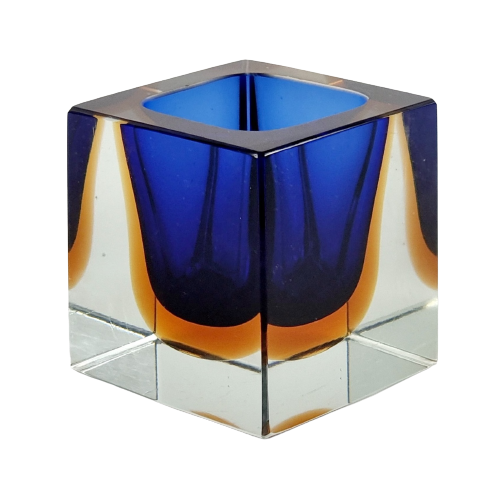
Sommerso creates stunning depth through layered colors. Artisans gather molten glass of one color, then dip it into contrasting colors, blowing and shaping between layers. The result shows color gradations and transitions creating three-dimensional effects as light passes through layers.
Quality sommerso displays clean color separation without mixing, smooth transitions between layers, and substantial weight reflecting multiple glass layers. This technique became particularly popular in the 1950s-60s modernist designs.
Murrine (Millefiori)

Creating murrine begins with layering colored glass heated to approximately 1,040°C, stretched into long canes called “canes,” cooled, then sliced crosswise to reveal patterns. Individual murrine slices are then fused into Murano glass vases, bowls, or other forms.
The technique’s complexity, requiring precise color application, consistent stretching, and skilled arrangement, makes high-quality millefiori difficult to counterfeit. Ercole Barovier won numerous awards in the 1940s-50s for innovations using this technique.
Lampworking and Murano Glass Jewelry
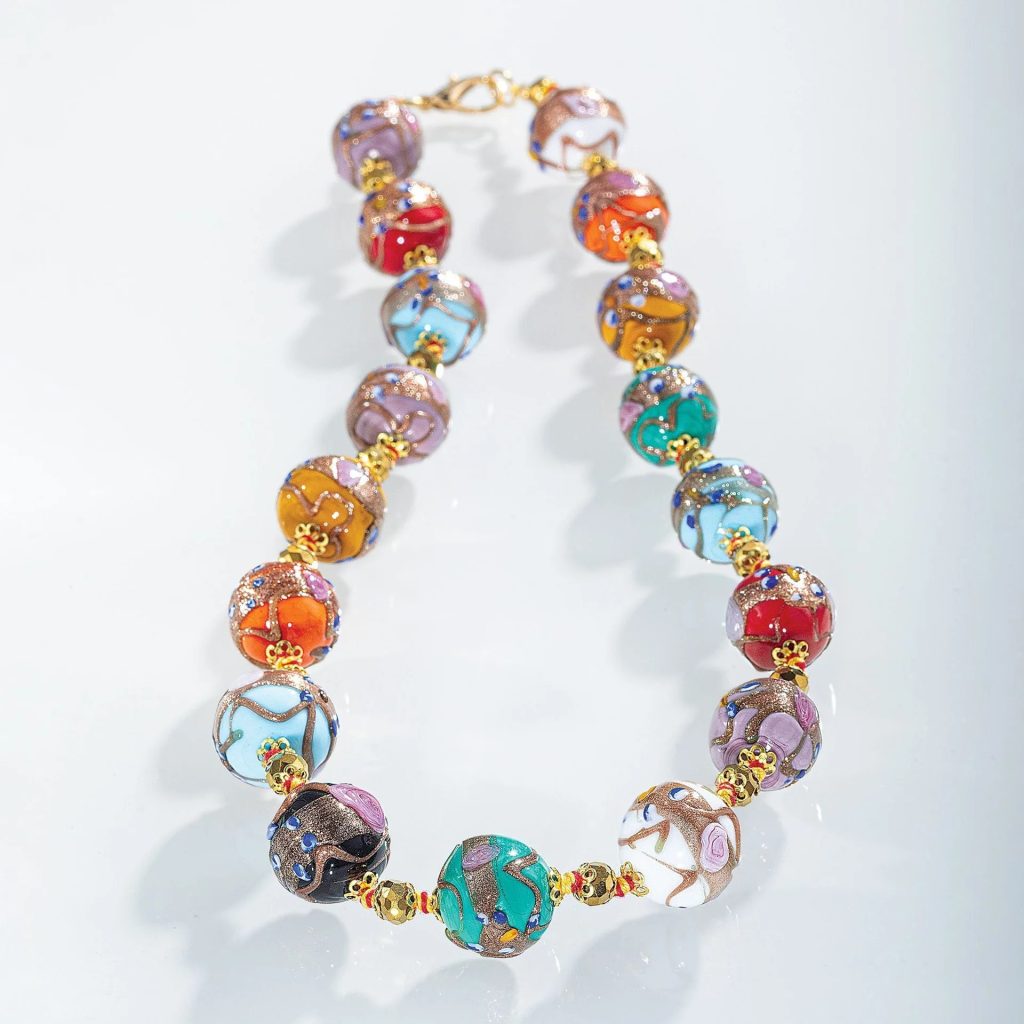
Murano glass jewelry employs flameworking—using torches to melt and shape glass rods into beads, pendants, and components. This allows for detailed work impossible with furnace techniques.
Authentic Murano glass jewelry features hand-shaped beads with slight variations proving individual craftsmanship, rich colors achieved through traditional recipes, and often includes gold or silver leaf (24K gold is commonly used). The weight and quality clearly distinguish Murano pieces from mass-produced imitations.
Filigrana and Reticello

Filigrana involves embedding thin threads of white lattimo glass in clear glass, creating delicate lace-like effects. Reticello advances this by crossing two filigrana patterns at angles, creating diamond or net patterns of exceptional intricacy.
These techniques require extraordinary precision. Threads must be perfectly aligned, heating controlled carefully to prevent breaking delicate patterns, and forms shaped without disturbing thread arrangements.
Incalmo Technique
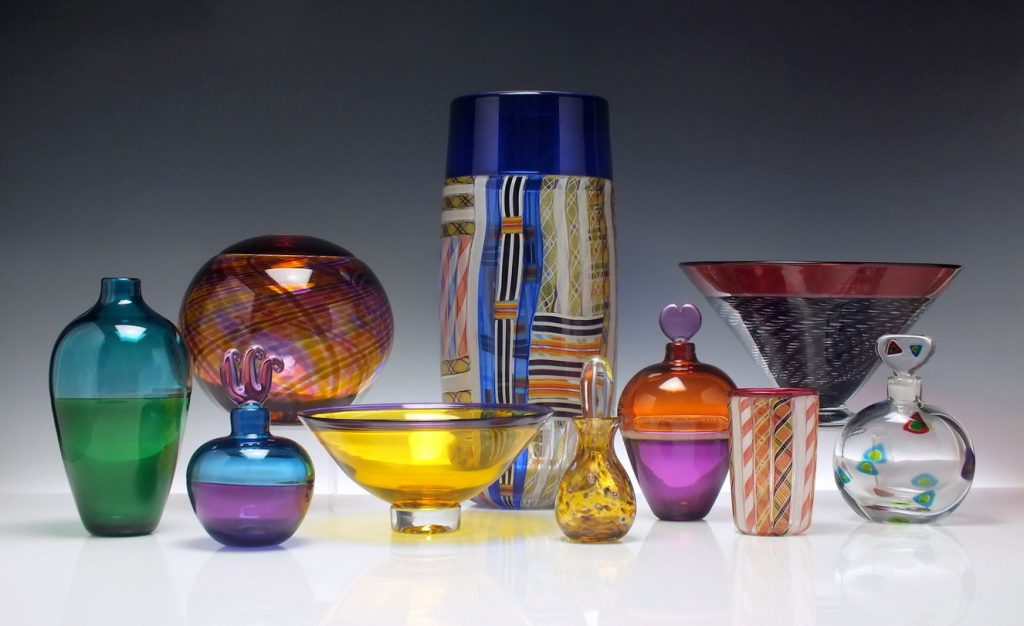
Incalmo joins separately blown glass pieces of different colors, creating clean horizontal bands. The technique demands that both pieces be exactly the same diameter and temperature when joined, as any mismatch causes visible seams or structural weakness.
Successfully executed incalmo appears seamless, with crisp color transitions and no distortion where sections meet. This difficulty makes incalmo pieces particularly valued by collectors.
Avventurina Glass

Avventurina glass contains suspended particles of copper or gold, creating sparkly, glittery effects. The technique was discovered accidentally in Murano (legend says copper filings fell into molten glass), and Murano held the secret for production for centuries.
Creating true avventurina requires precise temperature control and specific additives. Too hot and particles dissolve, too cool, and they don’t suspend properly.
Decorative Techniques

Additional techniques collectors encounter include scavo (acid-treated surfaces creating ancient, weathered appearances), pulegoso (controlled bubbles creating foamy effects), pezzato (patchwork of different colored glass pieces), and fazzoletto (handkerchief shapes with asymmetrical pleats).
How to Identify Authentic Murano Glass
As Murano glass values rise, authentication becomes essential. Fortunately, the craftsmanship required makes perfect counterfeiting difficult.
The Vetro Artistico® Murano Trademark
The official authentication system is the Vetro Artistico® Murano trademark, a mark of origin certifying glass products made on Murano Island, established by Italian law in 1994 and managed by Consorzio Promovetro.
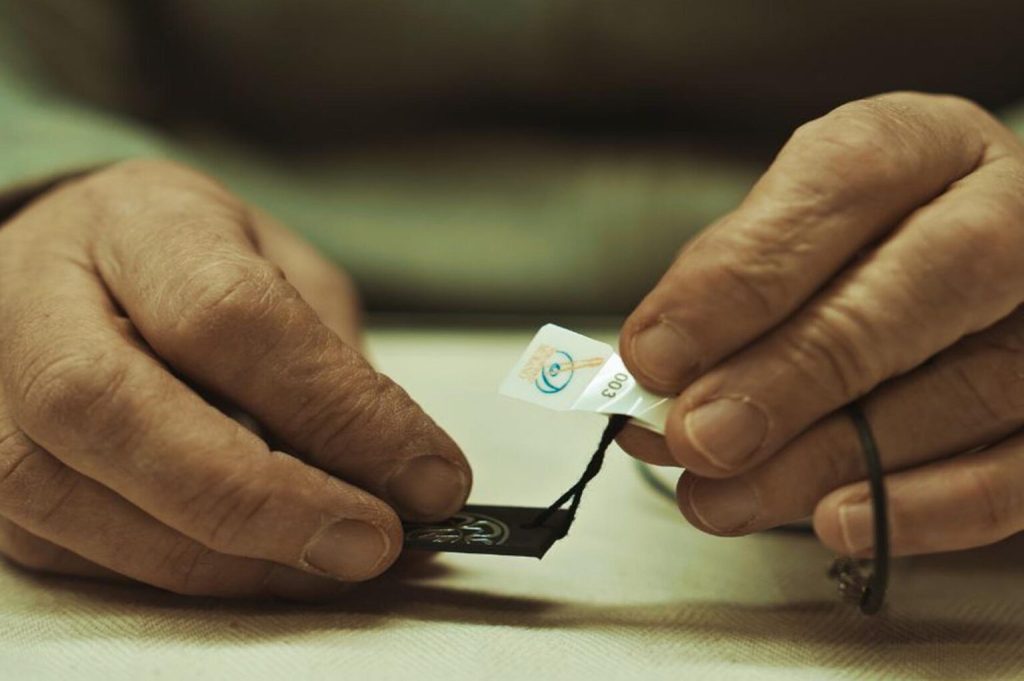
Authentic labels display the “borsella” (glassmaking tool) logo in gold with either red or blue backgrounds, are tamper-proof (tearing when removed), include the producer’s identification code, and, since 2016, feature QR codes linking to verification databases.
Important caveat: Membership in the consortium is voluntary and fee-based. Many legitimate, even prominent, Murano glassmakers choose not to join due to costs or because they’re already well-established. Therefore, the absence of the label doesn’t automatically indicate fake glass, but the presence of an authentic label confirms genuineness.
Hallmarks of Genuine Craftsmanship
Beyond official labels, authentic Murano glass shows distinctive characteristics:
- Weight and density: Genuine Murano glass feels substantial. The high-quality materials and solid construction create noticeable weight compared to thin, hollow imitations.
- Natural imperfections: Handmade pieces show slight asymmetries, tiny bubbles (intentional in some techniques), minor color variations, and other small irregularities, proving hand fabrication. Machine-made fakes appear too perfect and uniform.
- Rich, vibrant colors: Murano colors have depth and saturation achieved through natural mineral oxides and traditional recipes. Colors appear to glow from within rather than being painted on surfaces.
- Pontil marks: Hand-blown pieces often show pontil marks on bases—slightly rough areas where the punty rod was detached. These marks are signs of authentic hand-blowing.
- Quality finishing: Authentic pieces show careful finishing—smooth edges, even surfaces (except where texture is intentional), and attention to details invisible when displayed.
Workshop Labels and Signatures
Many Murano furnaces apply their own labels or signatures. Prestigious names like Venini, Barovier & Toso, Seguso, and others mark pieces with company labels, signatures etched into glass, or paper certificates of authenticity describing production techniques.
Research specific workshops to recognize their marking systems. Some masters sign pieces individually, though this isn’t a universal practice.
Common Counterfeit Red Flags
- Suspiciously low prices: Quality Murano glass chandeliers, substantial Murano glass vases, and fine Murano glass jewelry reflect the labor and materials invested. Prices dramatically below market suggest counterfeits.
- “Murano-style” descriptions: Labels stating “Murano-style,” “Venetian-style,” or “made according to Murano techniques” indicate pieces NOT made in Murano.
- Perfect uniformity: Multiple identical pieces without individual variation suggest mass production rather than hand craftsmanship.
- Painted colors: Surface-painted colors (versus glass colored throughout) indicate imitations.
- Country of origin: Glass made in China, India, or elsewhere cannot be authentic Murano, regardless of claims about “Murano techniques.”
When to Seek Expert Authentication
For significant purchases, professional authentication provides peace of mind. Certified appraisers specializing in glass art can verify authenticity, major auction houses authenticate pieces as part of their consignment process, and Murano workshops themselves sometimes verify pieces, especially those originally from their furnaces.
The Most Important Murano Furnaces and Masters
Understanding key furnaces and masters helps collectors identify valuable pieces and make informed acquisitions.
Barovier & Toso

One of Murano’s oldest glassmaking families, with roots tracing to 1295. Angelo Barovier invented cristallo in the 15th century. The modern company, formed by merging the Barovier and Toso families in 1936, continues producing both traditional and contemporary designs. Ercole Barovier (1889-1974) revolutionized murrine techniques in the mid-20th century. Barovier & Toso pieces command respect for historical importance, technical excellence, and continuous innovation across centuries.
Venini & Co.

Founded in 1921 by Paolo Venini, this company brought modernist aesthetics to Murano glass. Venini collaborated with renowned designers including Carlo Scarpa, Gio Ponti, and Tapio Wirkkala, creating pieces that blurred boundaries between craft and fine art. Venini pieces from the 1930s-1960s are particularly collectible, representing pinnacles of mid-century modern glass design. The company continues producing both archive designs and contemporary works.
Seguso Vetri d’Arte

The Seguso family has worked with glass since the 1300s. Archimede Seguso (1909-1999) was among the 20th century’s greatest glassmakers, innovating techniques and creating sculptural pieces of extraordinary beauty. Seguso pieces, especially those by Archimede Seguso and designer Flavio Poli, are highly sought by collectors. The company’s sommerso pieces from the 1950s-60s exemplify mid-century Murano excellence.
Other Notable Furnaces

- Salviati: Founded in the 19th century, instrumental in Murano’s revival. Known for elaborate chandeliers and reviving historical techniques.
- Cenedese: Founded in 1946, known for sommerso pieces designed by Antonio Da Ros.
- AVEM (Arte Vetraria Muranese): Active 1932-1972, created innovative designs in collaboration with notable artists.
Master Glassmakers
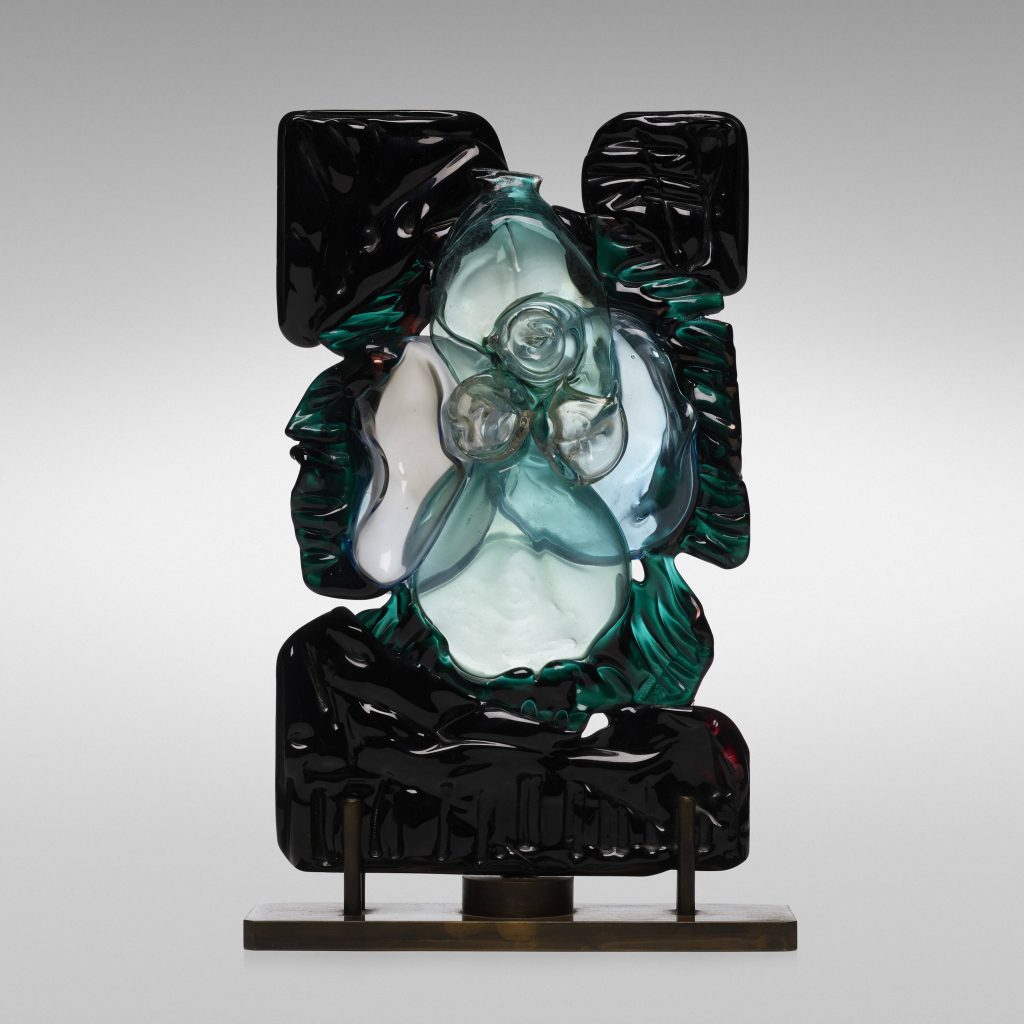
- Carlo Scarpa (1906-1978): Architect and designer who revolutionized Murano aesthetics at Venini, creating modernist pieces of extraordinary sophistication.
- Fulvio Bianconi (1915-1996): Graphic designer who brought illustration sensibility to glass, creating whimsical, colorful designs for Venini.
- Lino Tagliapietra (b. 1934): Considered among the greatest living glassmakers, bridging traditional Murano techniques and contemporary studio glass movement.
How to Start a Murano Glass Collection
Setting Your Focus
Successful collections benefit from focused approaches rather than random acquisitions:
- By technique: Collect specific techniques like sommerso, millefiori, or filigrana, allowing a deep understanding of particular methods.
- By period: Focus on specific eras like mid-century modern (1950s-60s), Art Deco (1920s-30s), or contemporary works.
- By maker: Concentrate on specific furnaces or designers, building comprehensive representations of their work.
- By theme: Collect specific forms like Murano glass vases, Murano glass chandeliers, or Murano glass jewelry.
What Beginners Should Buy First
Start with quality pieces in accessible price ranges to develop your eye:
- Contemporary pieces from established furnaces: These offer authenticity guarantees, pristine condition, and allow seeing craftsmanship firsthand.
- Mid-range vintage pieces: Well-documented pieces from recognized makers in good condition provide collecting experience without extreme investment.
- Simpler techniques first: Understanding blown glass, basic sommerso, or straightforward murrine builds knowledge before pursuing rare or complex pieces.
Storage, Display, and Insurance
- Display considerations: Murano glass looks stunning displayed where light can illuminate it. Glass cabinets with LED lighting showcase pieces beautifully while protecting them from dust and accidents. Rotating displayed pieces prevents prolonged exposure to direct sunlight, which can potentially affect some colors over decades.
- Storage: Pieces not displayed should be stored individually wrapped in soft materials, kept stable (vibrations can cause damage), maintained in climate-controlled environments, avoiding extreme temperature changes, and stored away from risk of falling or being knocked over.
- Insurance: Document collections photographically, obtain professional appraisals every 3-5 years, maintain purchase receipts and certificates, and insure valuable pieces through specialized art insurance or valuable items policies.
Where to Buy Authentic Murano Glass
Direct from Murano Workshops
Visiting Murano offers the most authentic buying experience. You can watch artisans work, speak directly with makers, verify production methods firsthand, and acquire pieces with complete provenance. Many furnaces welcome visitors and offer factory tours followed by showroom shopping.
Venetian Galleries and Authorized Dealers
Reputable galleries in Venice and internationally carry authenticated Murano glass with documentation. These dealers typically guarantee authenticity and offer expertise in guiding collectors.
Auction Houses
Major auction houses, including Christie’s, Sotheby’s, Bonhams, Wright, and Italian specialist houses like Cambi, regularly feature Murano glass. Auctions provide:
- Authentication services: Houses verify pieces before sale.
- Provenance documentation: Auction catalogs detail history and significance.
- Condition reports: Detailed descriptions of any damage or restoration.
- Price transparency: Public results establish market values.
Online Marketplaces
Online buying requires extra caution but offers access to a global inventory:
- Reputable platforms: 1stDibs, Chairish, and specialized glass dealers with established reputations provide safer online buying.
- Verification essentials: Demand multiple high-resolution photographs showing all angles, detailed descriptions including dimensions and techniques, certificates of authenticity when available, and clear return policies.
- Red flags: Prices too good to be true, sellers unwilling to provide additional information, vague descriptions, and poor-quality photographs all warrant caution.
What to Avoid
- Tourist trap shops: Venice and Murano have many shops selling non-Murano glass to tourists. These pieces are typically low-quality imports sold at inflated prices.
- Unverified online sellers: Individual sellers on general marketplaces without expertise or authentication often unknowingly (or deliberately) sell fakes.
- Pressure sales tactics: Legitimate dealers allow time for considered decisions. High-pressure sales suggest problematic vendors.
Understanding Murano Glass Values
What Appraisers Consider
- Maker and period: Pieces by renowned masters or from significant periods command premiums. A Venini piece designed by Carlo Scarpa from the 1930s values far higher than contemporary production.
- Technique complexity: More difficult techniques like reticello, complex murrine, or perfect incalmo increase value.
- Condition: Pristine pieces command significantly more than damaged examples. Chips, cracks, or repairs dramatically reduce value.
- Rarity: Limited production runs, unique pieces, or discontinued designs from collectible periods increase desirability.
- Size and presence: Substantial pieces like large Murano glass chandeliers or significant Murano glass vases typically value higher than smaller objects, assuming comparable quality.
- Provenance: Documented history, especially pieces from important collections or exhibitions, adds value.
- Completeness: Original labels, certificates, and documentation enhance value.
Price Ranges and Market Trends
Contemporary Murano glass jewelry from established makers starts from several hundred dollars for simple pieces to thousands for elaborate designs. Quality Murano glass vases from current production range from hundreds to several thousand dollars, depending on size, technique, and maker.
Vintage pieces show wider value ranges: mid-century sommerso vases might range from $500-$5,000+, rare designs by famous masters can reach $10,000-$50,000+, and museum-quality pieces or those with exceptional provenance occasionally exceed $100,000 at auction.
Murano glass chandeliers represent significant investments, with contemporary pieces from prestigious makers starting at $5,000-$10,000 and extending to $50,000+ for elaborate designs. Historic chandeliers, especially from the 18th-19th centuries, can command six figures.
Future of the Market
The Murano glass market faces both challenges and opportunities. Rising energy costs threaten traditional furnace operations, authentic production decreases as tourism-focused pieces proliferate, and the younger generation’s interest in traditional collecting patterns shifts. However, growing appreciation for handcrafted luxury, recognition of Murano as art rather than just decorative objects, and limited supply of historical pieces support long-term value stability for quality examples.
Caring for Murano Glass
Cleaning and Maintenance
- Regular dusting: Use soft, clean cloths or feather dusters for displayed pieces. Microfiber works excellently.
- Deeper cleaning: Lukewarm water with mild dish soap cleans most Murano glass safely. Use soft cloths or very soft brushes, rinse thoroughly, and dry immediately with lint-free cloths.
- What to avoid: Never use abrasive cleaners, harsh chemicals, extremely hot water (thermal shock risk), ultrasonic cleaners (vibrations can cause damage), or dishwashers.
- Special considerations: For Murano glass chandeliers, professional cleaning services specializing in glass fixtures ensure safety and proper care. Attempting to clean elaborate chandeliers yourself risks damage.
Preventing Damage
- Temperature: Avoid extreme temperature changes. Don’t expose glass to intense heat sources or freezing conditions.
- Sunlight: While short-term display in sunlight is fine, prolonged direct sun exposure over the years might fade some colors. Rotate displayed pieces or use UV-filtering glass in display cases.
- Handling: Always handle with clean hands, support from the bottom rather than grasping delicate elements, and move only one piece at a time with full attention.
Restoration Options
Minor damage doesn’t necessarily render pieces worthless. Professional glass restoration can address chips (grinding and repolishing damaged areas), cracks (though complete restoration is difficult), and missing elements (recreating lost parts, though this affects value and must be disclosed). For valuable pieces, consult specialists experienced with Murano glass specifically, as techniques differ from other glass types.
The Future of Murano Glass
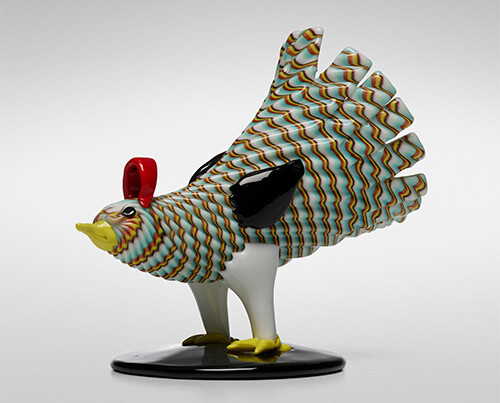
Contemporary Challenges
Murano faces significant challenges, including tourism’s focus on inexpensive souvenirs rather than authentic art, mass production of counterfeits undermining the market, energy costs making traditional furnace operation increasingly expensive, and younger generations pursuing other careers as glassmaking demands rigorous, physically demanding apprenticeships.
Despite challenges, Murano glass’s future holds promise. Contemporary artists bring new creative directions while respecting tradition, growing appreciation for handcrafted luxury supports authentic production, museums and institutions increasingly recognize Murano glass as fine art, and international collectors ensure continued demand for quality pieces.
The best contemporary Murano glass stands alongside historical masterworks in quality and innovation, ensuring the tradition’s continuation while evolving to remain relevant.
Frequently Asked Questions
Why is Murano glass so expensive?
Murano glass commands premium prices due to centuries of specialized technique development, entirely hand-fabricated production requiring years of apprenticeship, high-quality materials and traditional recipes, limited production with each piece unique, and the cachet of authentic Venetian tradition. The labor hours invested in quality pieces, sometimes days or weeks for elaborate Murano glass chandeliers, justify pricing that reflects true craftsmanship.
How can I tell if my Murano glass is valuable?
Value depends on maker (signed pieces by renowned furnaces command premiums), period (mid-century pieces are particularly collectible), technique complexity, condition (pristine pieces value significantly higher), size (substantial pieces generally more valuable), and rarity. A professional appraisal provides a definitive value assessment for significant pieces.
Can Murano glass be repaired?

Yes, though not all damage is economically worth repairing. Minor chips can be ground and polished by specialists. Cracks are more problematic but sometimes stabilizable. Missing elements can occasionally be recreated. Restoration affects value and must be disclosed to future buyers. For valuable pieces, professional restoration by specialists experienced with Murano glass is essential.
Is all Venetian glass Murano glass?
No. “Venetian glass” broadly refers to glass made in Venice or Venetian style, but authentic Murano glass specifically indicates glass handcrafted on Murano Island itself. Many pieces marketed as “Venetian glass” or “Venetian-style” are neither made in Venice nor Murano.
Should I collect vintage or contemporary Murano glass?
Both offer merits. Vintage pieces provide historical significance and potential appreciation but require authentication expertise and acceptance of some wear. Contemporary pieces offer pristine condition, authenticity guarantees, and often lower entry costs while lacking historical patina. Many collectors pursue both, appreciating the different aspects each offers.
Shop editor’s selection
Conclusion: The Enduring Magic of Murano
Murano glass represents more than decorative objects. It embodies centuries of artistic evolution, technical mastery, and cultural heritage. From spectacular Murano glass chandeliers that transform spaces with crystalline light to intimate Murano glass jewelry carrying Venetian tradition in wearable form, these creations connect us to unbroken craft lineages stretching back to medieval times.
For collectors, Murano glass offers multiple satisfactions: aesthetic pleasure from extraordinary beauty, intellectual engagement with complex techniques and histories, investment potential in pieces that often appreciate, and participation in preserving an endangered tradition threatened by modernity’s pressures.
As you build your collection, remember that knowledge enhances both enjoyment and investment wisdom. Study techniques to understand what you’re seeing, research makers to recognize quality and value, examine pieces in person whenever possible to train your eye, buy from reputable sources ensuring authenticity, and care for pieces properly to preserve them for future generations.

Whether you’re drawn to the modernist elegance of mid-century sommerso Murano glass vases, the elaborate artistry of traditional Murano glass chandeliers, or the portable beauty of Murano glass jewelry, each authentic piece carries within it the skill of master craftspeople and the legacy of Venetian innovation.
The glowing furnaces of Murano continue creating magic from sand, fire, and human artistry. By collecting thoughtfully and appreciating deeply, you help ensure this extraordinary tradition endures for centuries to come.
Featured image: Franco Schiavon Studio

Amanda Akalonu is dedicated to weaving together the worlds of jewelry, watches, and objects through a lens of literary storytelling.