
On January 26, Jonathan Anderson presented his first haute couture collection for Christian Dior at the Musée Rodin in Paris, and the bags were nothing short of extraordinary. Beneath a mirrored ceiling layered with moss and flowering cyclamen, Anderson unveiled a collection that positioned bags not merely as styling accents but as sculptural objects and wearable art. From whimsical animal-shaped minaudières to fringed creations that swept the runway, each bag at the Dior couture Spring 2026 show represented the intersection of Dior’s heritage codes and Anderson’s fearless creativity.
The Dior couture bags from this collection demonstrated Anderson’s understanding that in haute couture, accessories deserve the same level of artistry and innovation as the garments themselves. These weren’t background pieces meant to simply complete looks. They were conversation starters, works of craftsmanship, and in some cases, objects that challenged conventional definitions of what constitutes a handbag. As the collection unfolded, it became clear that Anderson had approached bag design with the same laboratory mindset he brought to dressmaking: asking questions, experimenting with materials, and refusing to let tradition dictate boundaries. The result was a bag offering that felt simultaneously rooted in Dior’s history and completely unprecedented.
My Overall Thoughts on the Collection
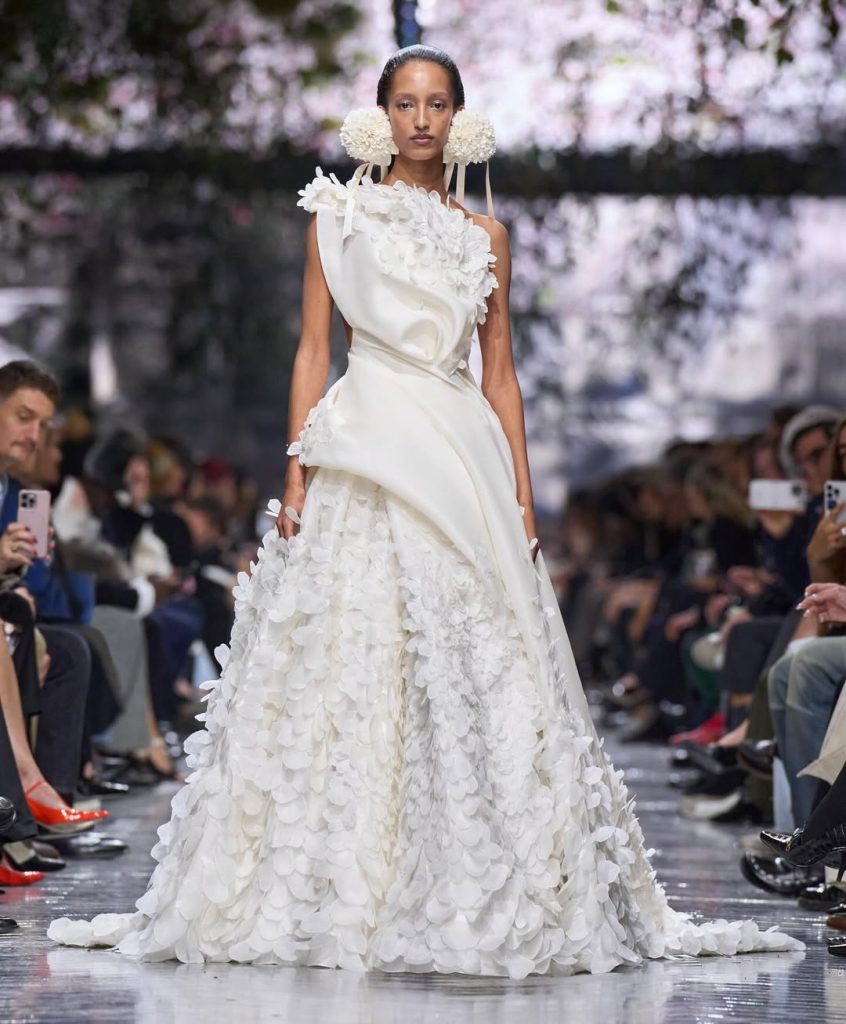
Before diving into the specific Jonathan Anderson Dior bags that captured my heart, I need to address the collection as a whole. I thought this collection was very creative. Anderson breathed new life into what a Spring collection should be. The runway was alive with flowers, dramatic volume, bow details (a recurring theme since his debut collection last year), and the most witty manipulation of fabrics I’ve seen in recent couture. One word kept coming to my mind as I watched: whimsical. This wasn’t frivolous or insubstantial whimsy. It was a sophisticated playfulness that showed deep respect for craft while refusing to take itself too seriously.
The flowers that appeared throughout weren’t hiding in subtle embroidery or peeking from hemlines. They were front and center, unapologetic in their presence, and absolutely essential to the collection’s charm. I loved the colors Anderson chose, from burnt orange to pale blue silk, and the way textures played against each other throughout the lineup. Feathers that looked like flowers, silks that resembled petals, chiffons that appeared weightless…the technical achievement was staggering. Also, the styling particularly impressed me, with different elements coming together to create cohesive, beautiful moments that felt both otherworldly and somehow completely wearable.
Dior Couture Spring 2026 Bags: My Favorite Picks from the Show
The Jonathan Anderson Dior couture bags themselves were a wonder to behold. From minaudières that defied expectations to mesh-detailed creations, updated Lady Dior interpretations to long-fringed unexpected offerings, the bag lineup was a feast for the eyes. Each piece proved that Anderson understands Dior’s codes but refuses to be constrained by them.
The Metallic Ferret Purse
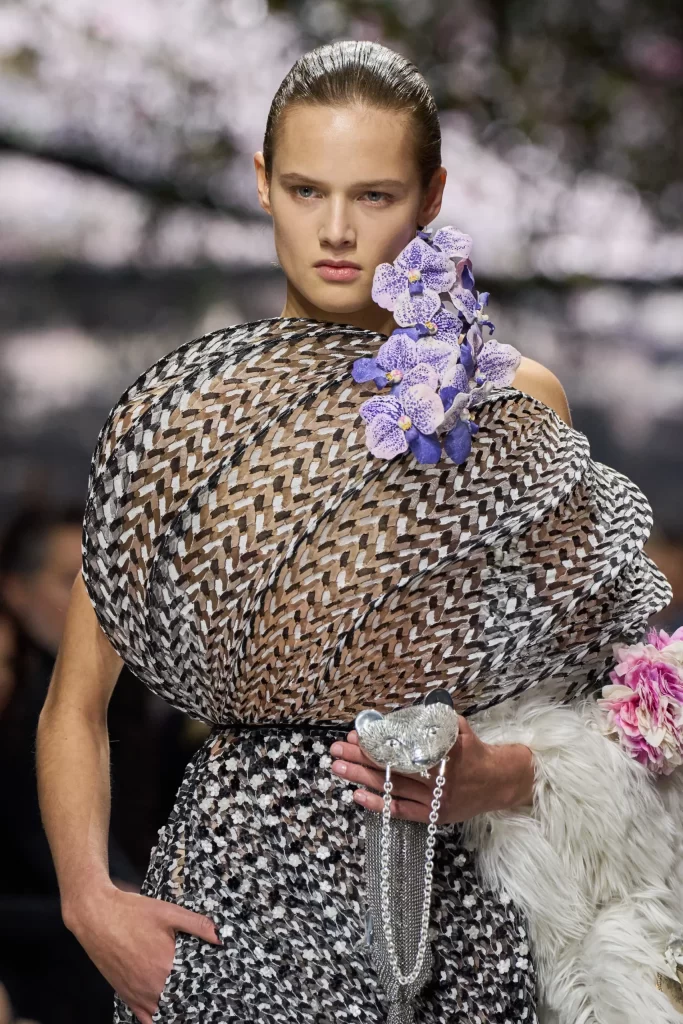
Absolutely unbelievable. This might just be the most memorable bag from the entire Dior couture Spring 2026 bags collection. The metallic ferret purse arrives in silver tone with extraordinary attention to zoological detail. The animal’s head is rendered in textured metal complete with whiskers, lifelike eyes, and protruding ears that give it a remarkable presence. The body consists of a mesh formed from intricately linked chains, creating a flexible, tactile surface that moves with the wearer. The ferret’s tiny hands and feet dangle from this mesh construction, adding both whimsy and anatomical accuracy. A chain strap allows for crossbody or shoulder wear. This is Anderson’s ability to merge humor with haute craft, creating a bag that’s simultaneously playful and technically impressive.
Fringe Grass Tote
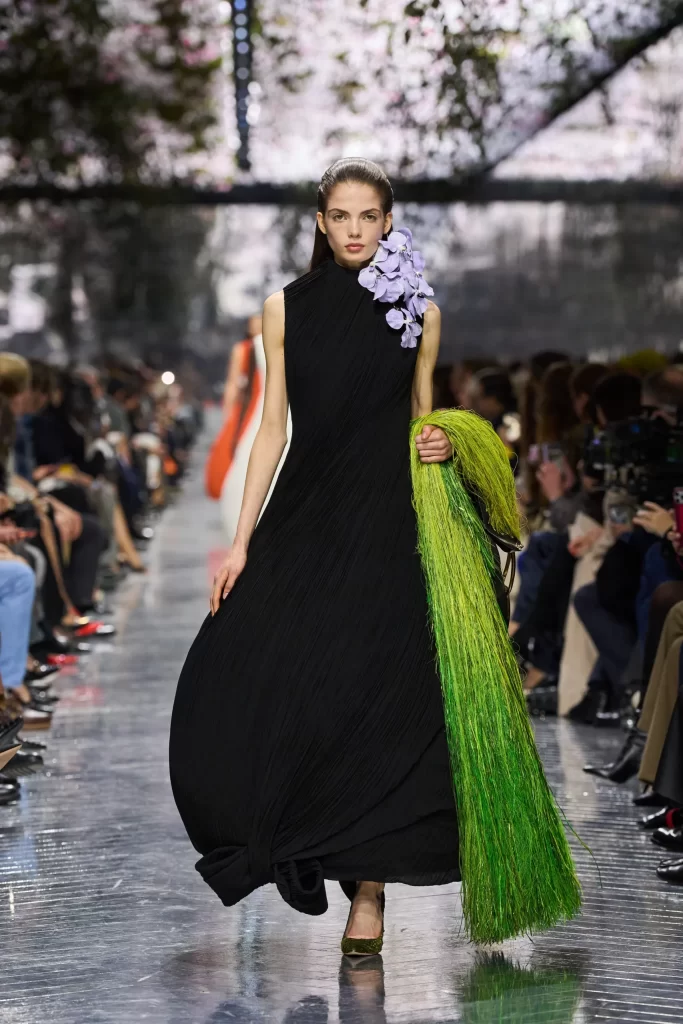
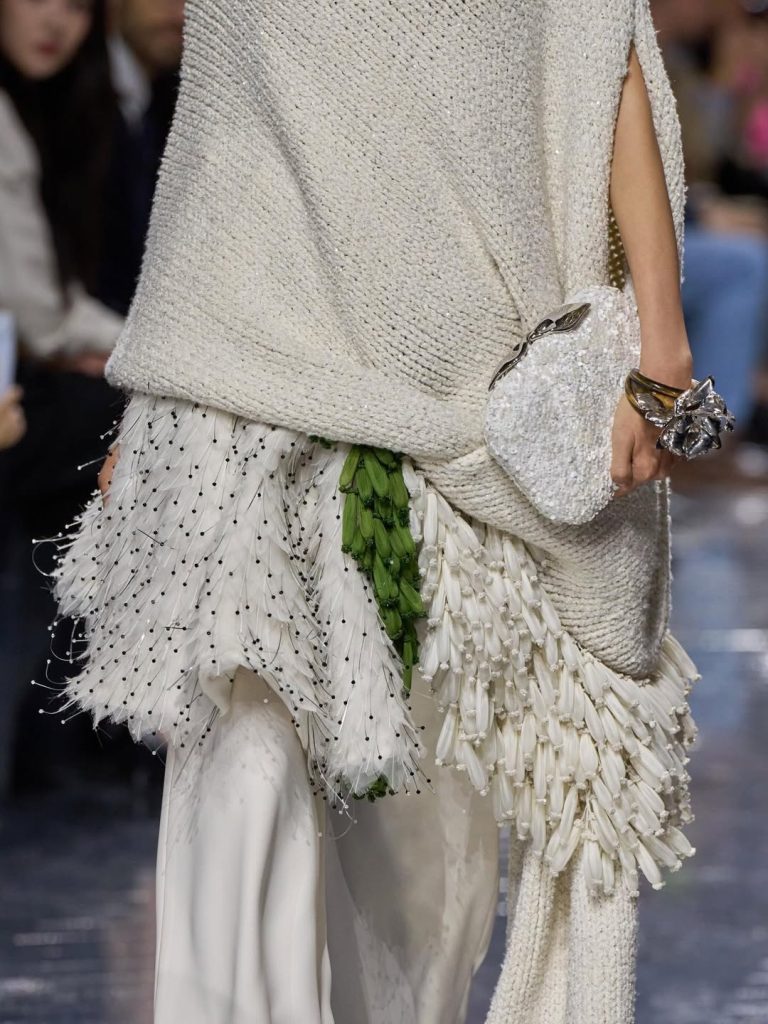
When this first appeared on the runway, I genuinely wasn’t sure what I was looking at. As the model moved closer, I realized it was a leather tote bag with gold hardware. But what absolutely blew me away was the fringe. Long strands cascaded from the bag, sweeping the runway with each step. The green fringe appeared to resemble blades of grass in various shades, creating a botanical effect that was both literal and impressionistic. The fringe covered so much of the tote’s surface that you might initially think it was part of the outfit rather than the accessory. This is the kind of boundary-blurring design that defines couture—where does the bag end and the garment begin?
Pillow Envelope Clutches
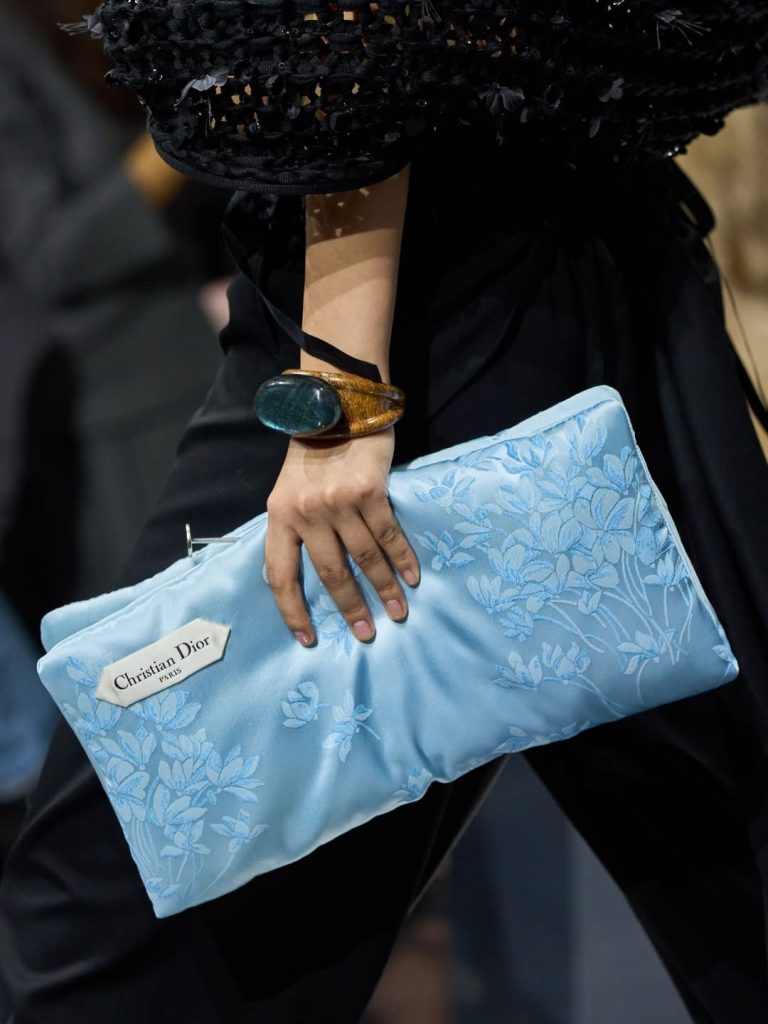
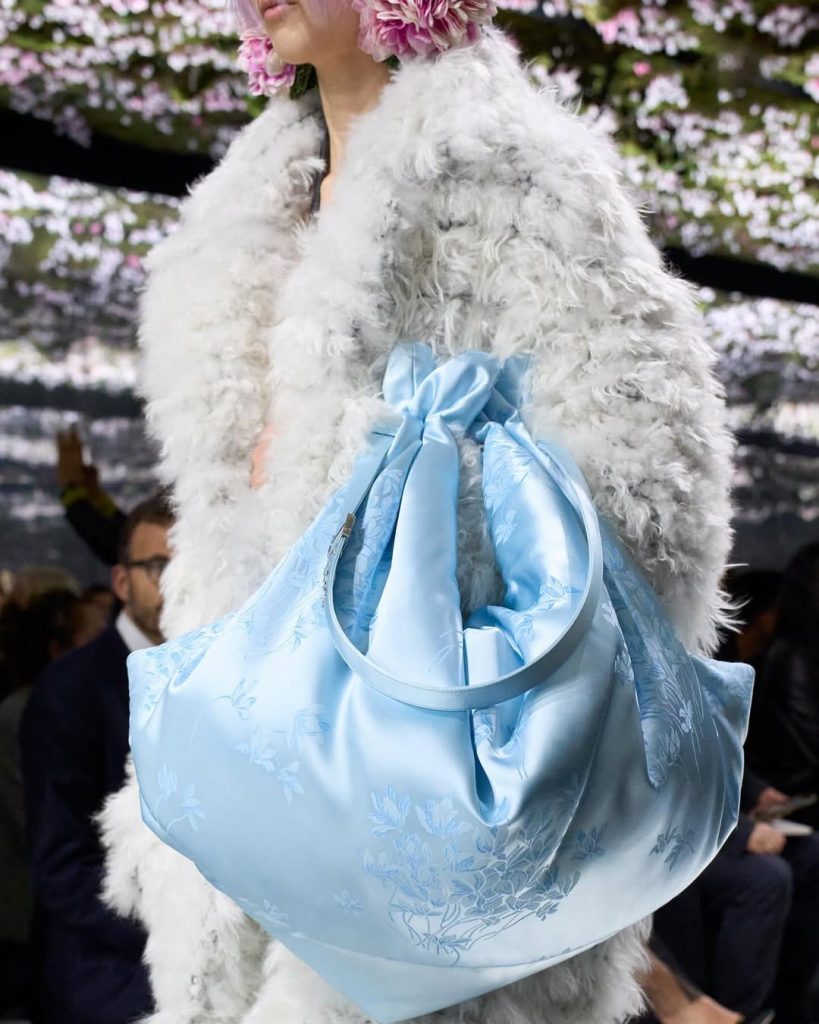
Several pillowy envelope clutches graced the runway, each designed with floral details that echoed the collection’s botanical theme. These pieces were unassuming in the best possible way—elegant without shouting for attention, refined without being precious. Each featured a statement pin detail positioned on top, adding a focal point that caught light beautifully, while the Christian Dior logo was stitched along the side.
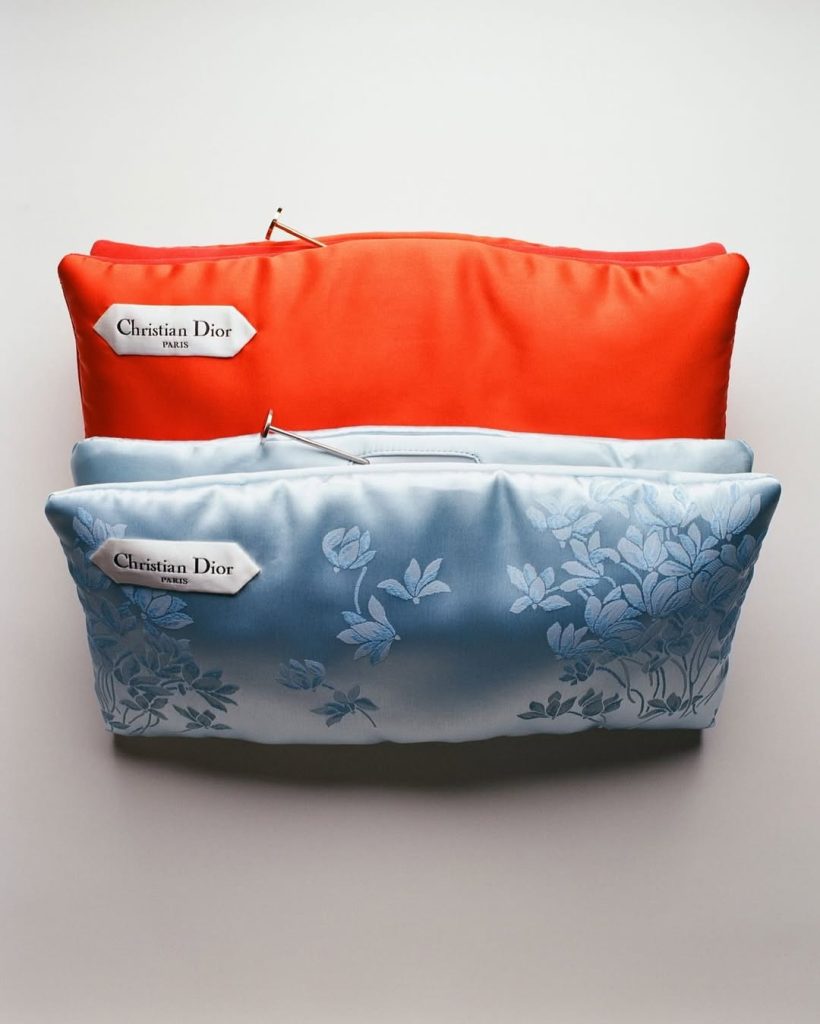
The pillow-soft construction suggested comfort and approachability, while the envelope silhouette maintained classic elegance. These represented the more wearable end of the Dior couture bags spectrum.
Pebble Clutches
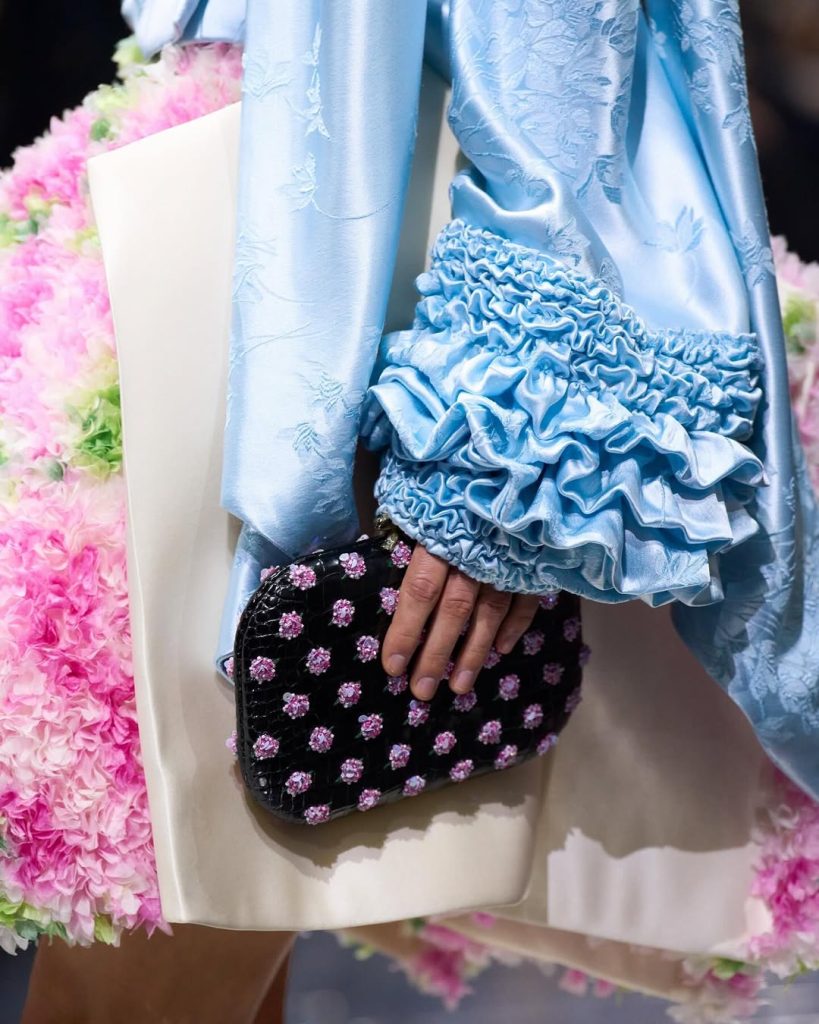
These bow-detailed clutches proved that even within a single silhouette, Anderson could create remarkable variety. There was a version in mother-of-pearl that shimmered with iridescent beauty. Another came in silk jacquard fabric with intricate floral details woven into the textile. My personal favorite featured what appeared to be an arrangement of silk formed to resemble pheasant feathers in vibrant orange and black.
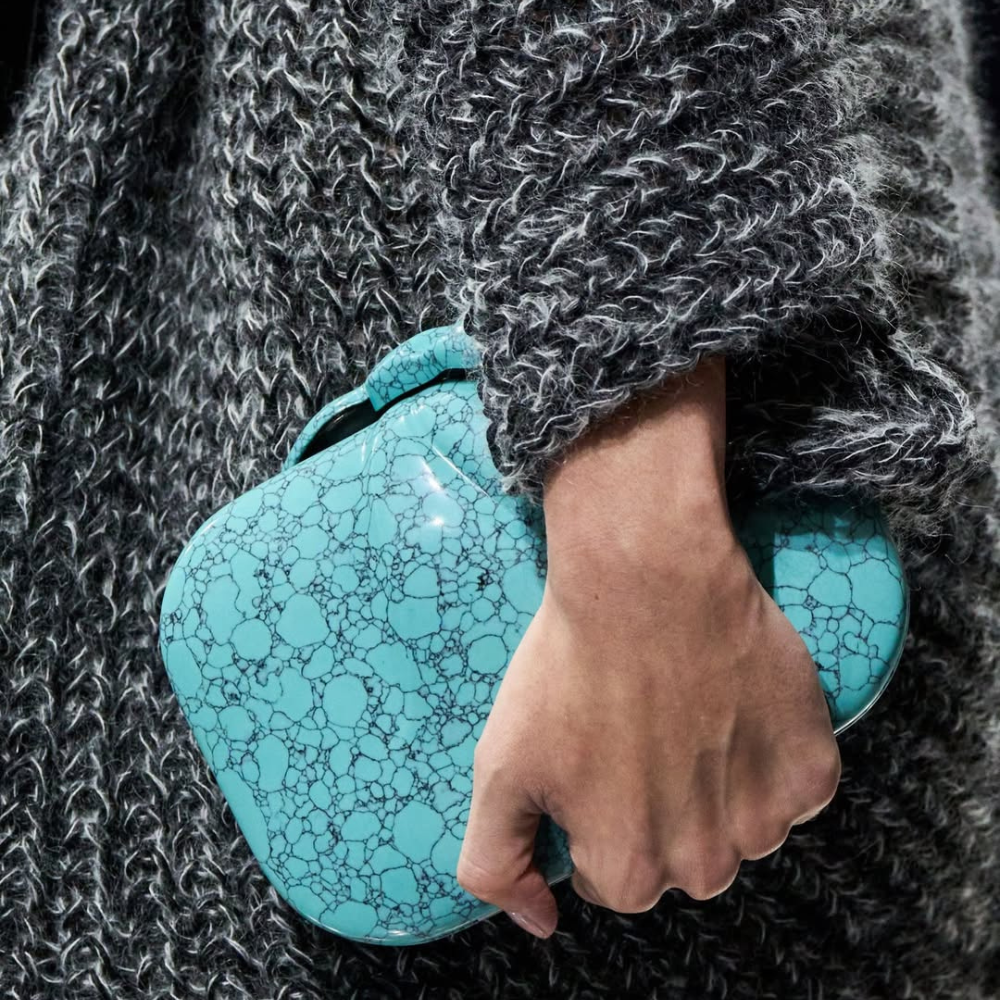
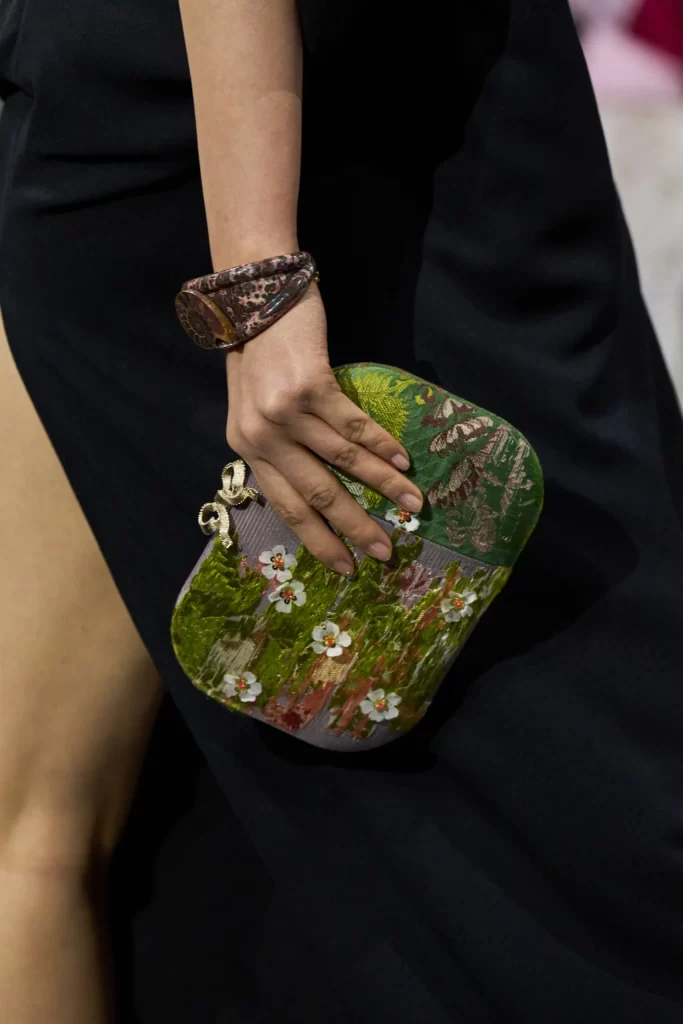
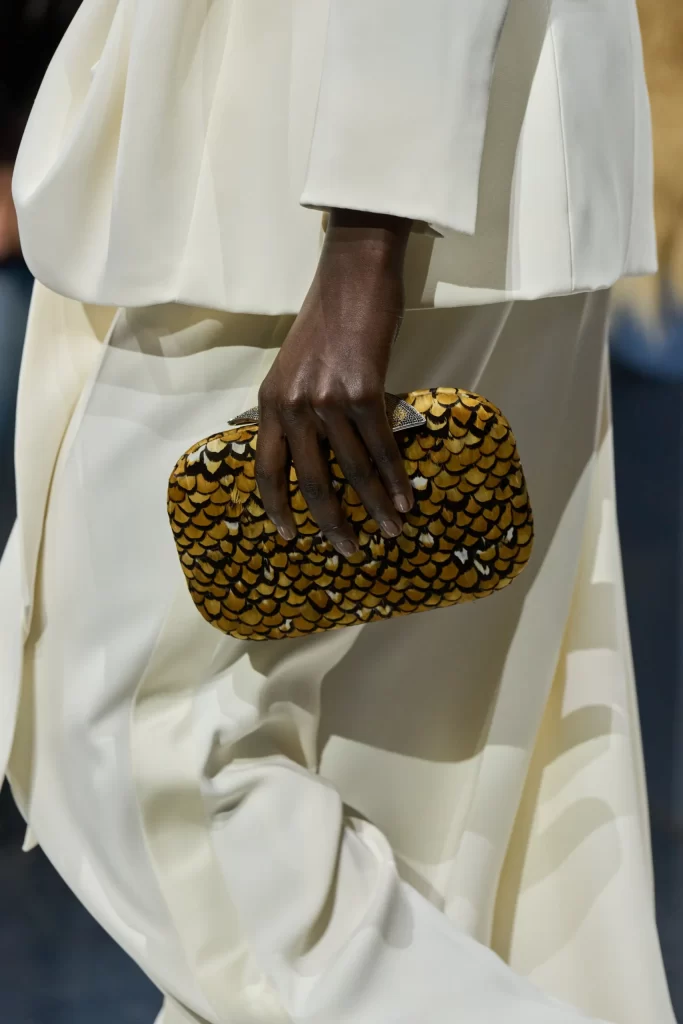
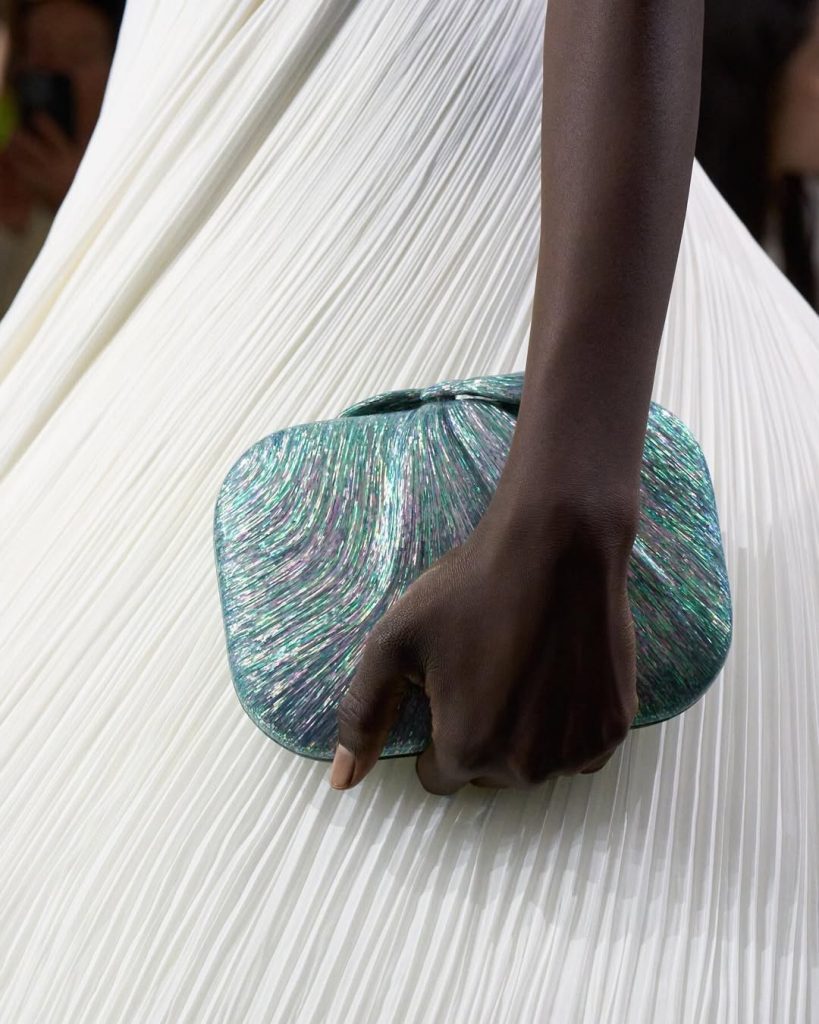
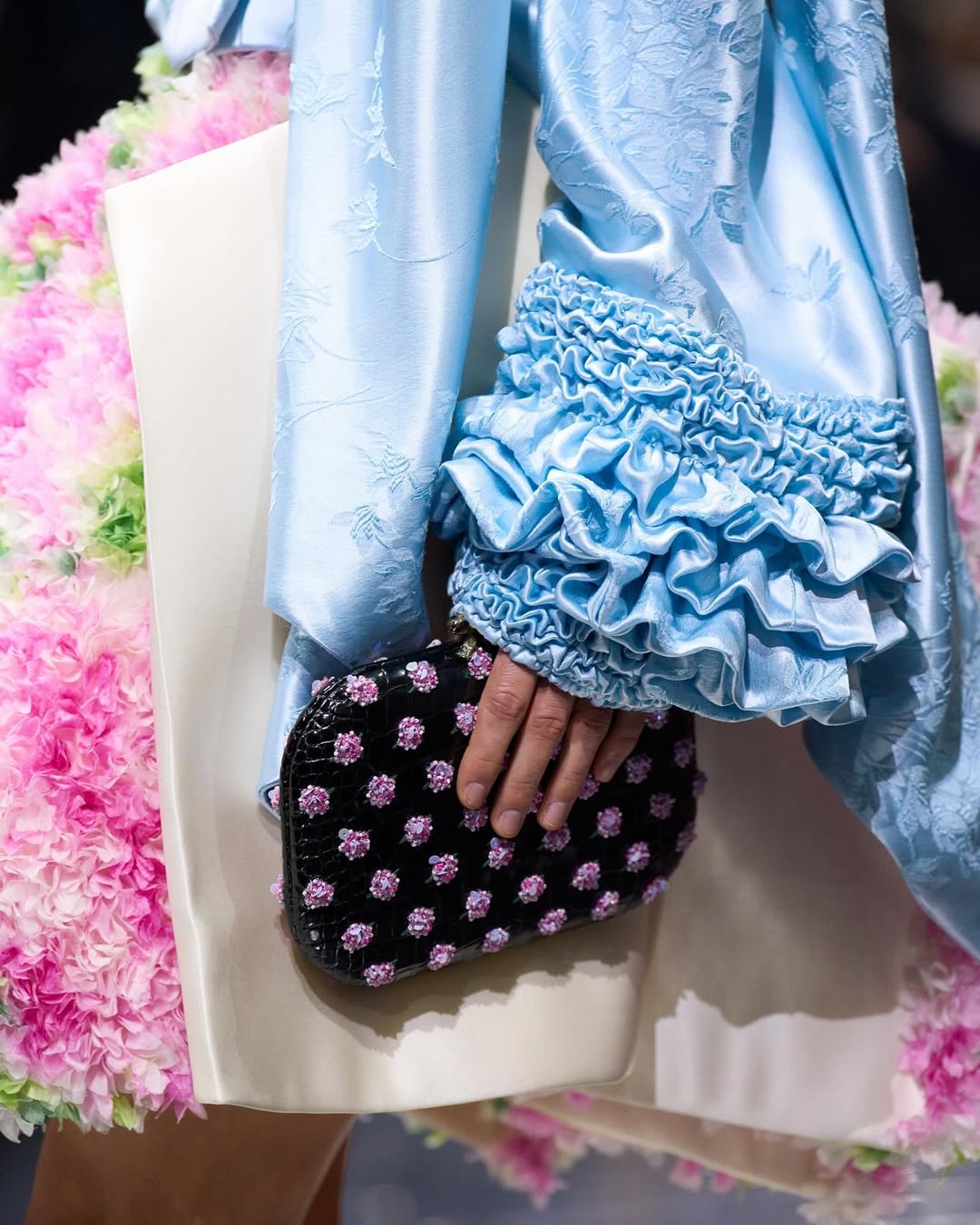
The turquoise version brought bold color that felt both luxurious and unexpected. There was also a black crocodile-effect option with pink embellishments that formed pockets of flowers, creating a garden-like surface. Each pebble clutch maintained the same rounded, organic shape, while the surface treatments made them feel like entirely different objects.
Pillow Peanut-esque Clutches
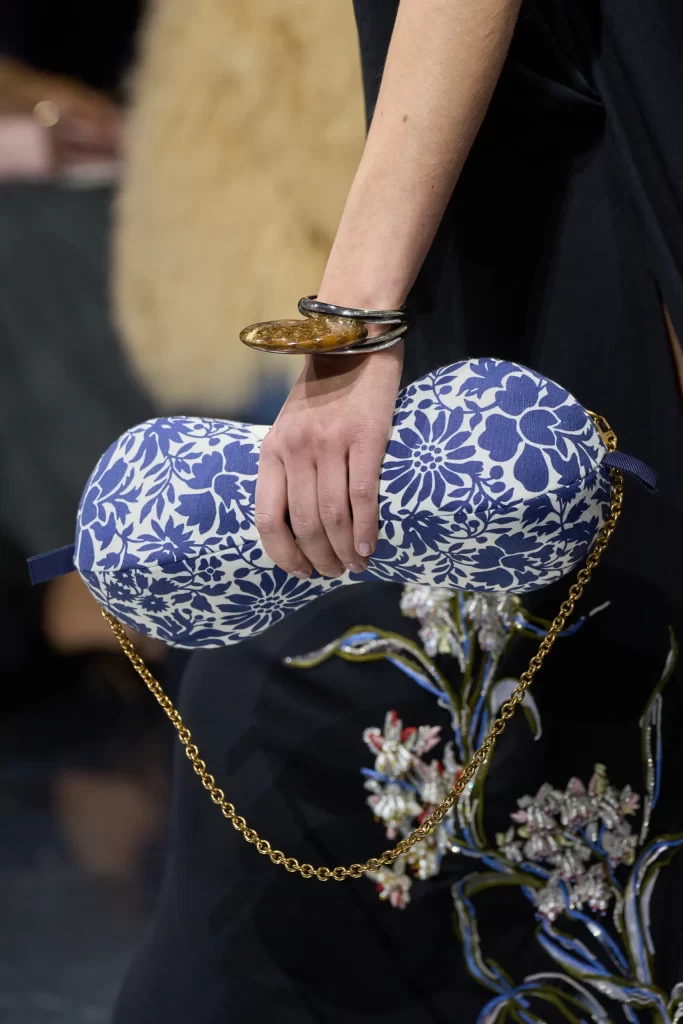
Several peanut-shaped, pillowy-soft clutches appeared throughout the show, and they were pure playful sophistication. Each featured a zip-top fastening and a gold chain handle that allowed for easy carrying. The shape itself felt both whimsical and ergonomic, fitting comfortably in the hand. A blue and black version provided graphic contrast, while a gold and black option delivered luxe glamour. My favorite was the blue floral version, where botanical prints covered the soft surface, creating a garden you could carry.
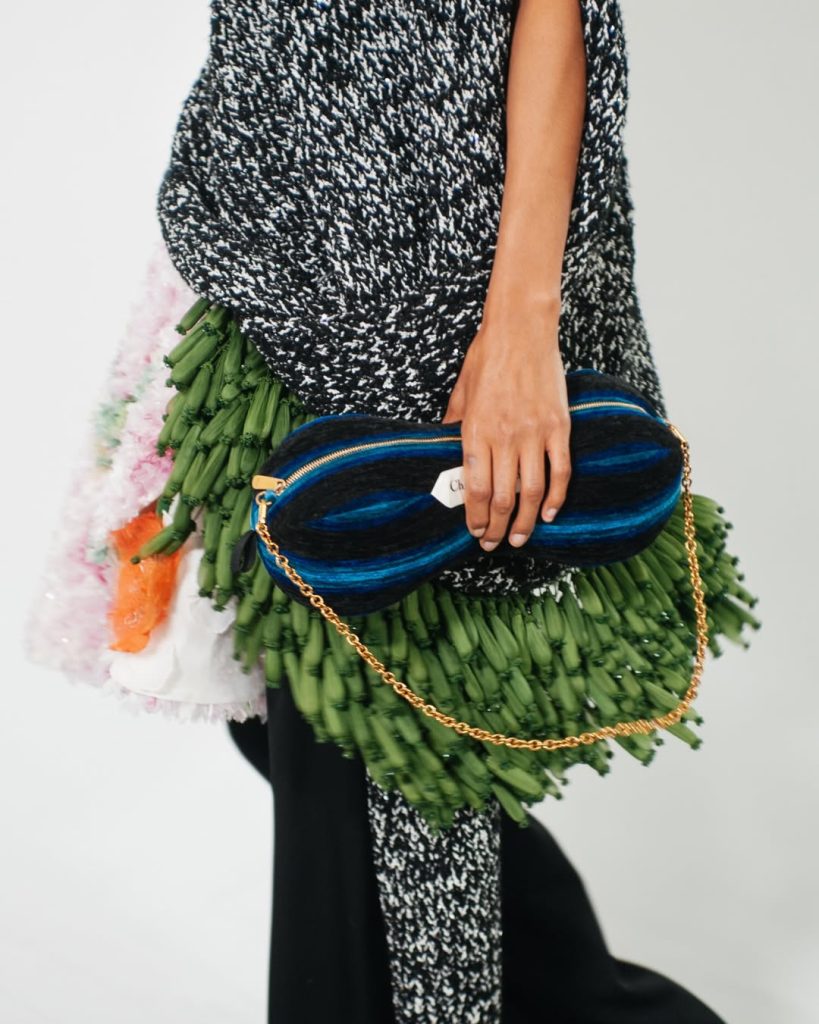
These Jonathan Anderson Dior couture bags exemplified how humor and luxury need not be mutually exclusive. The peanut shape could have read as gimmicky, but the quality of construction and the considered color combinations ensured they felt covetable.
Insect Minaudières
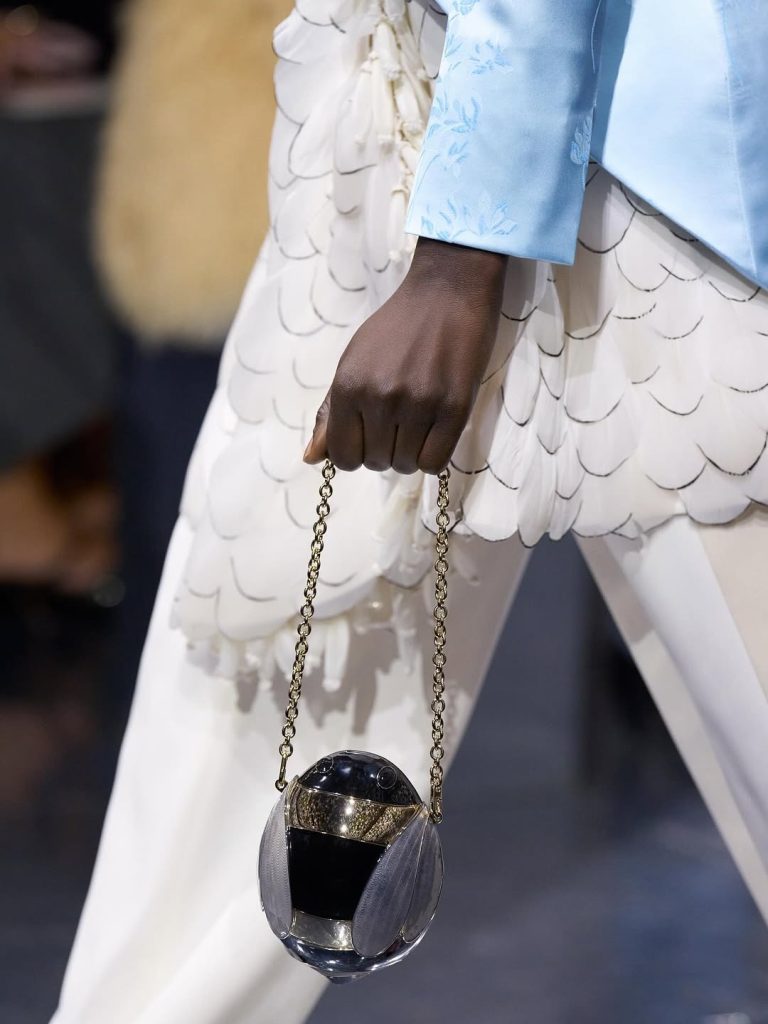
A few insect minaudières made appearances, and they were showstoppers. Crafted from precise metalwork and enamel with chain straps for carrying, these pieces brought nature into jewelry-like accessories. The bumblebee bag featured gold and black enamel stripes with detailed wings, capturing the insect’s distinctive appearance while transforming it into a functional object. The ladybug version displayed the creature’s iconic spotted shell in red and black enamel, with dimensional details that made it almost lifelike.
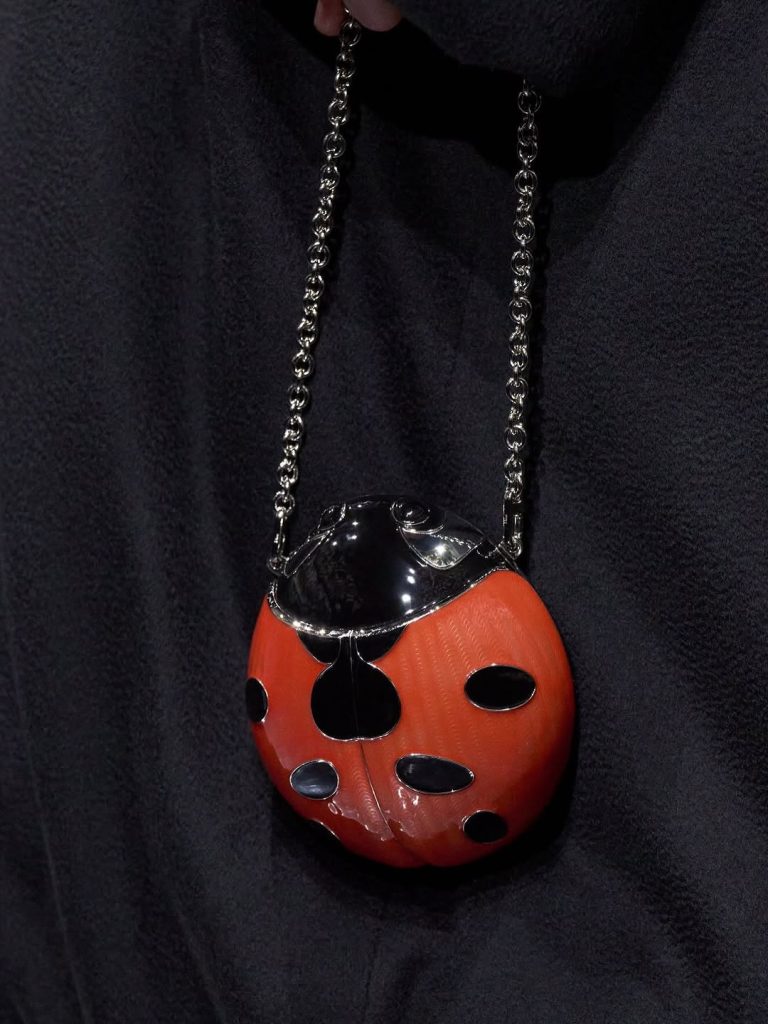
These Dior couture Spring 2026 bags demonstrated Anderson’s skill at taking recognizable natural forms and elevating them to haute craft. I suspect that these minaudières will likely become some of the most collectible pieces from the collection.
Shell Fringes Galore
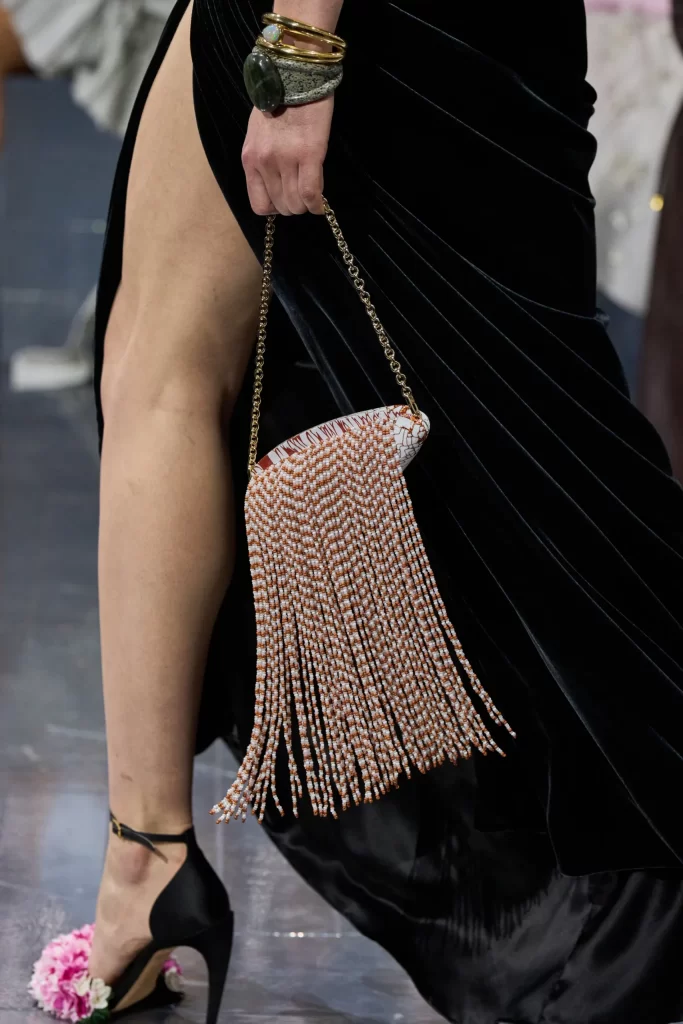
Fringes were a major theme throughout the show, and these shell-style purses represented perhaps the most striking interpretation. Coming in color combinations of white and black and white and brown, the bags featured conch-style patterned shells as their structural base.
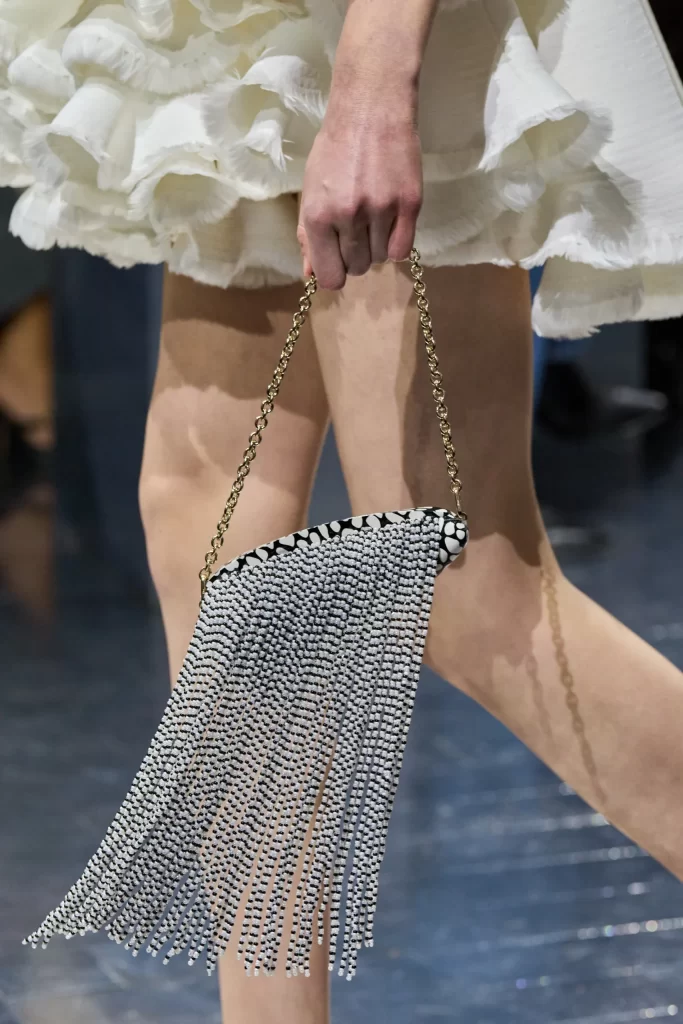
But the real magic happened with the fringes—cascades of beads protruded from the shell interiors, creating movement, texture, and visual drama. As models walked, the bead fringes swayed and caught light, transforming static accessories into kinetic sculptures.
The Blooming Clutch
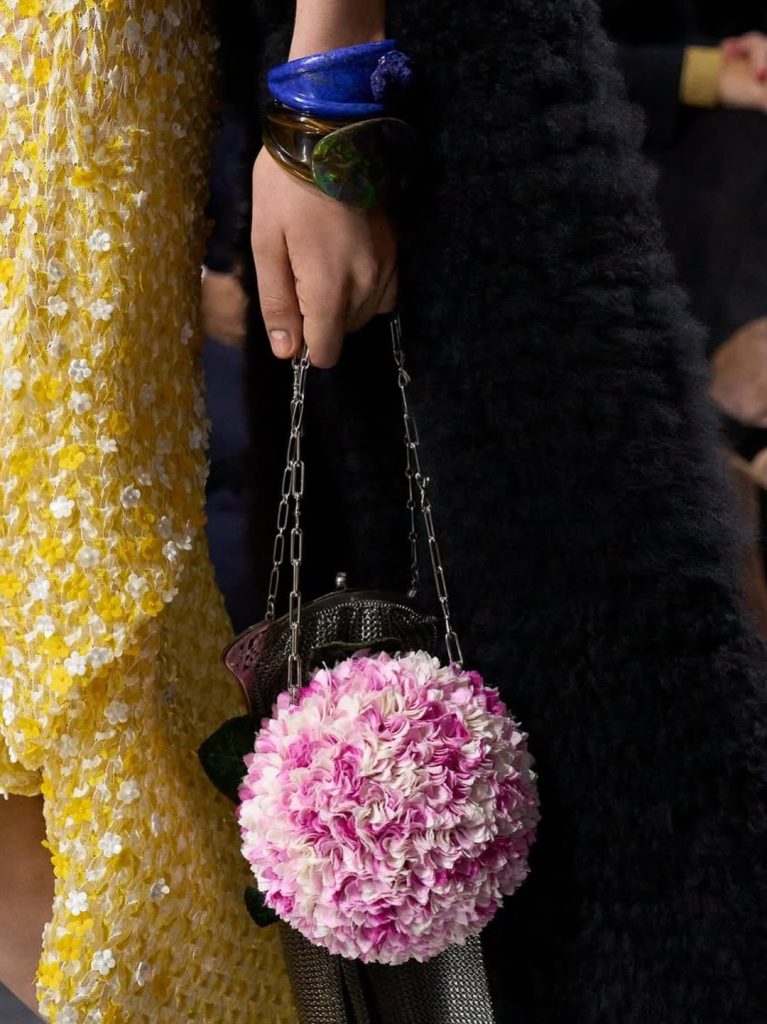
Throughout the show, models wore statement earrings that resembled blooming flowers. So imagine my absolute joy when a clutch version of this floral concept walked down the runway. Rendered in pink and white blooms, the bag looked like a bouquet of flowers in full bloom. The opening and closing mechanism wasn’t immediately visible, hidden within the floral construction, making you question whether this was actually a functional bag or simply a botanical sculpture. The silver-toned chain strap provided the biggest clue to its utilitarian purpose, but even then, the overall effect was more art object than accessory. Among all the Jonathan Anderson Dior bags, this might be the most Instagram-worthy, the most conversation-generating, and the most purely delightful.
The New Lady Dior
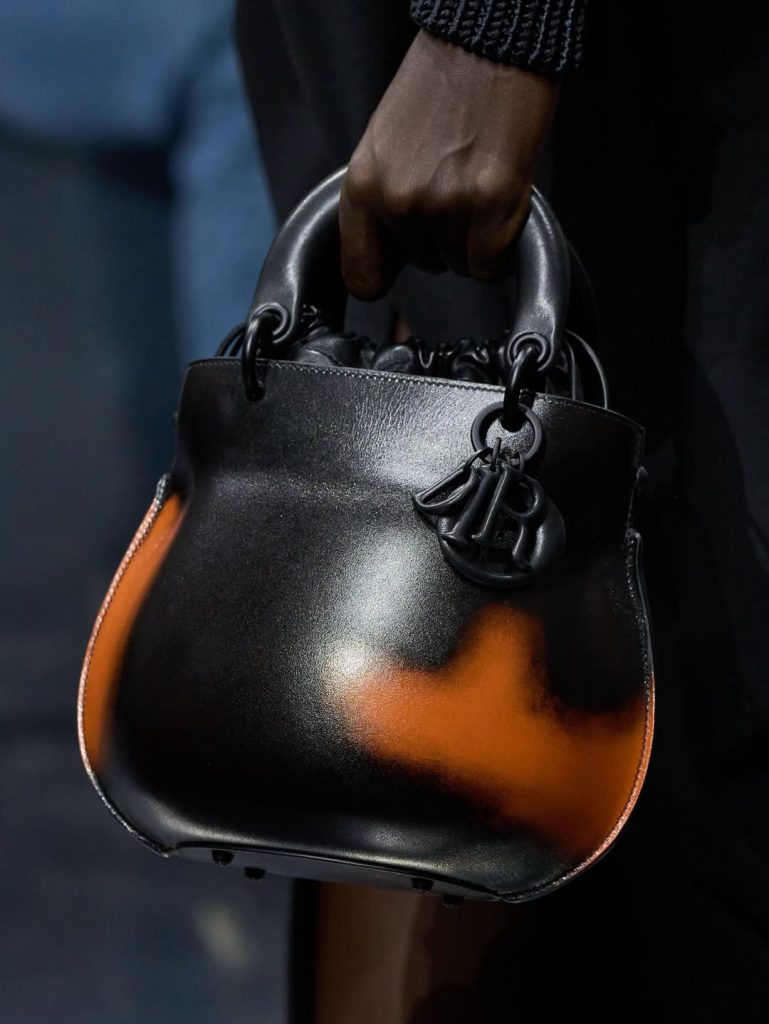
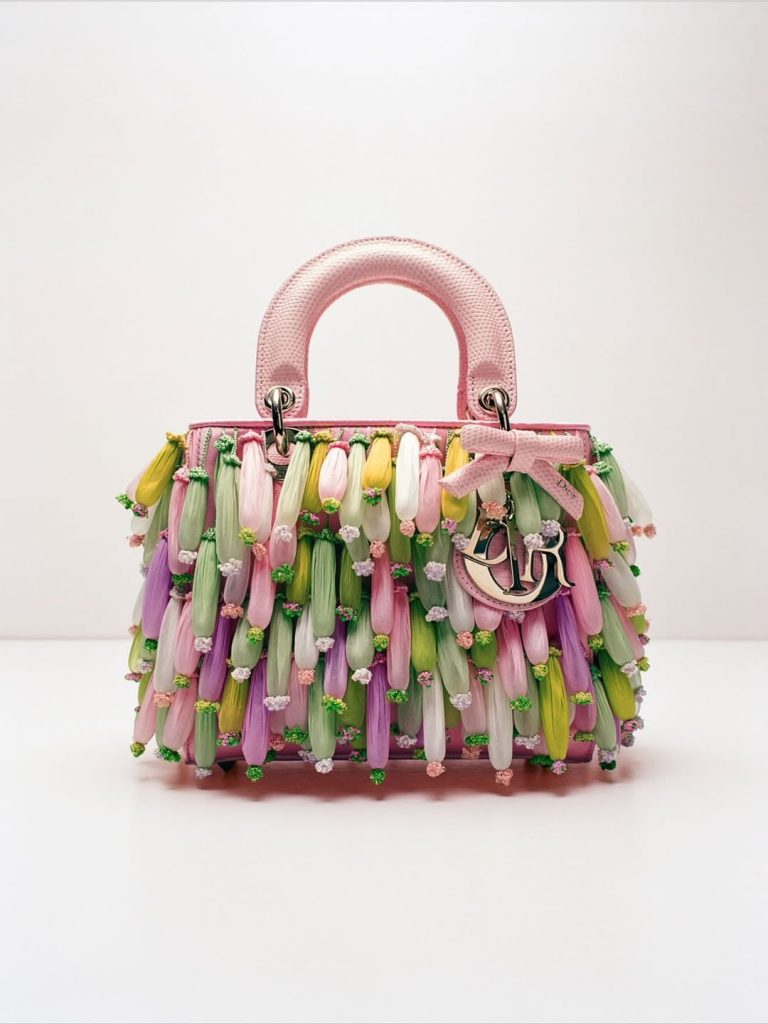
The classic Lady Dior receives a thoughtful update in the Dior couture Spring 2026 show, and it’s fascinating to see how Anderson approached this iconic silhouette. Instead of the traditional square shape, the bottom flares out slightly for a subtly rounded finish that feels more organic and contemporary. The signature quilted details are completely gone, replaced with smooth, clean lines that give the bag a more minimalist, architectural presence.
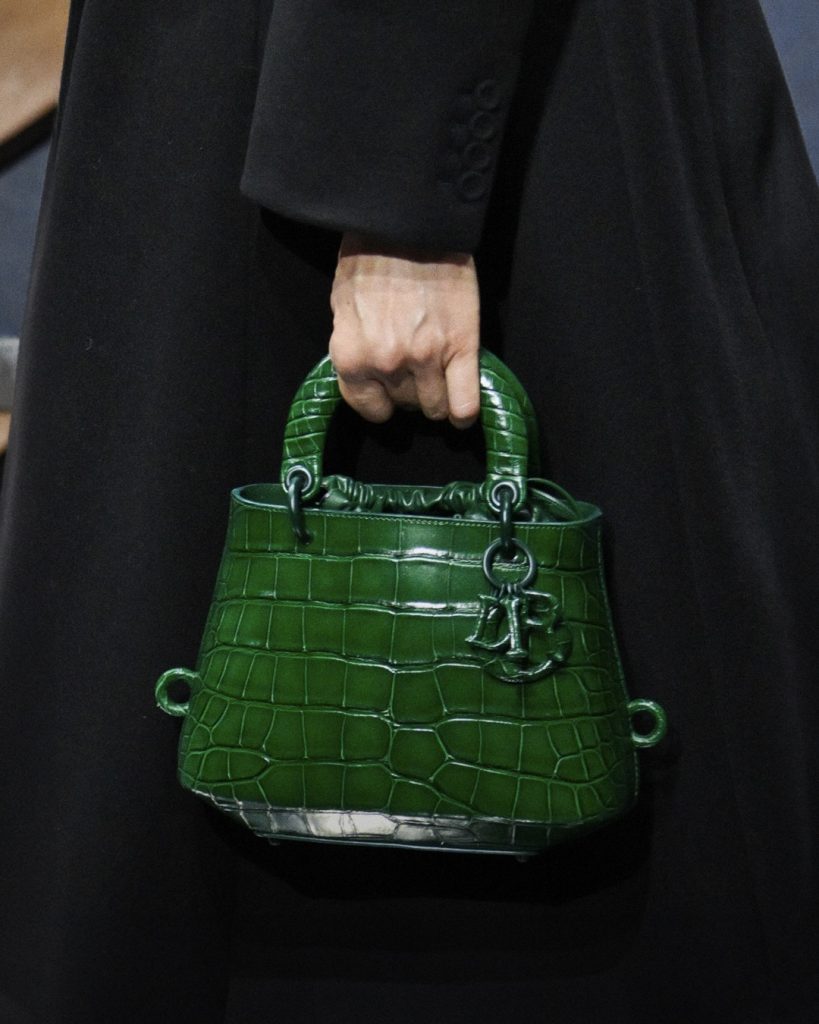
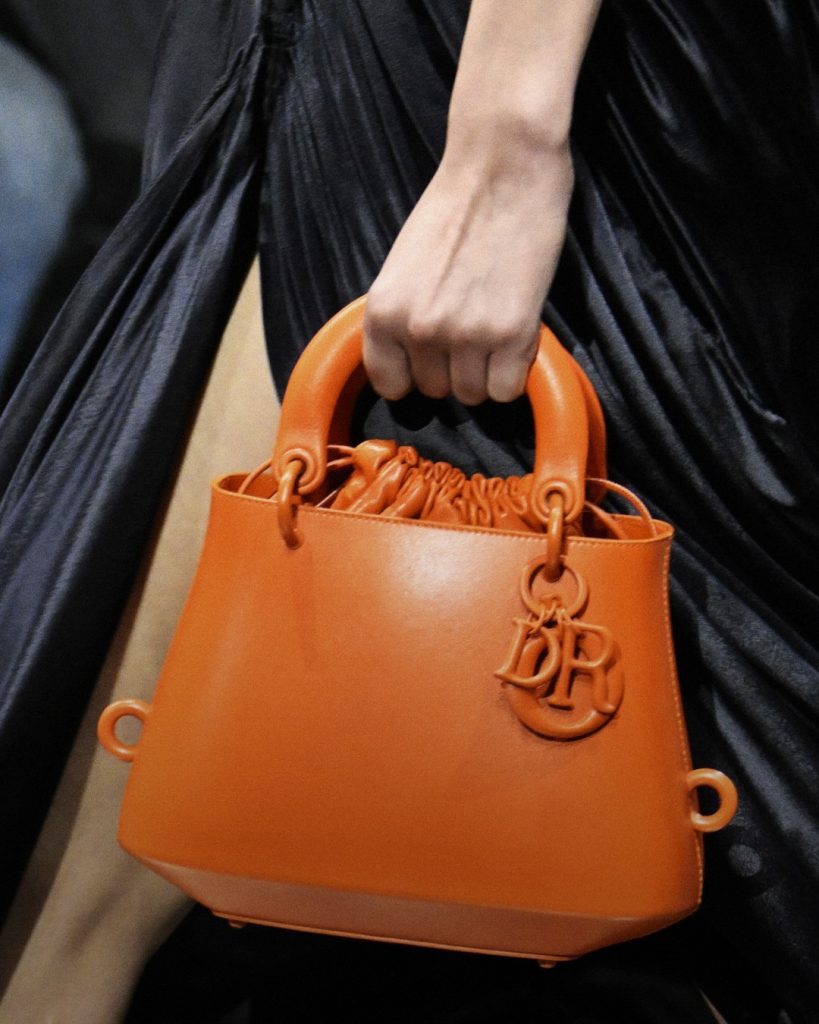
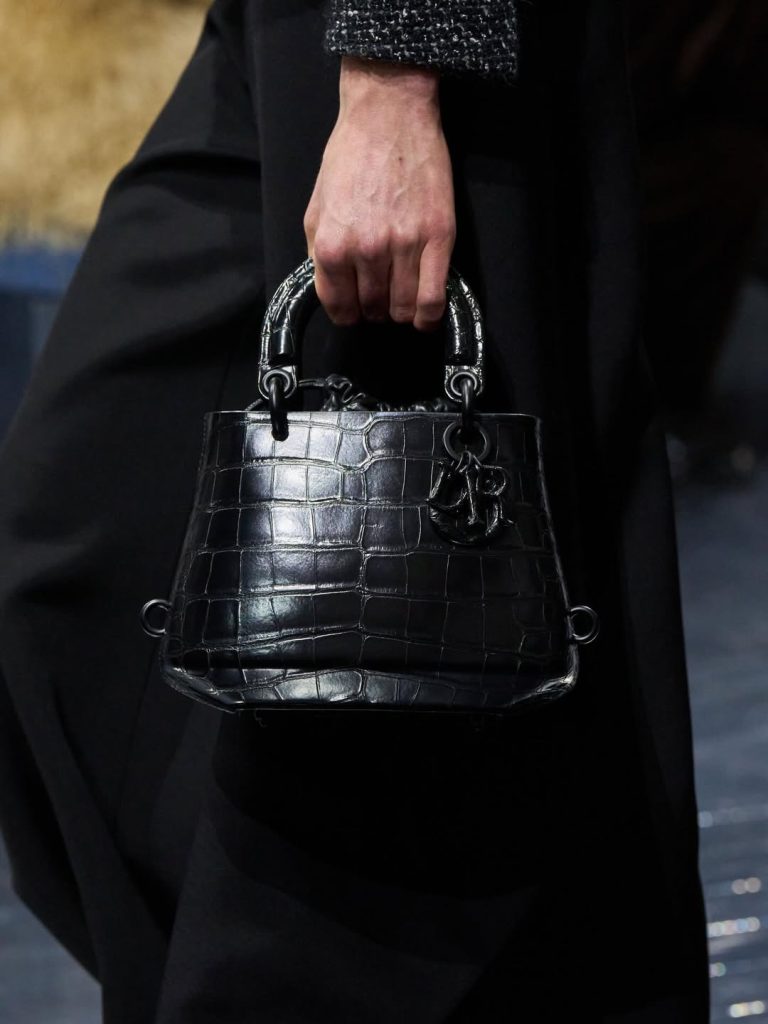
Perhaps most significantly, the interior closure system has been reimagined. Rather than the traditional zip, a drawstring pouch now holds everything in place, making the bag both more secure and easier to access. These changes might seem subtle when described on paper, but in person, they create a Lady Dior that’s distinctly of this moment while maintaining enough DNA to be recognizable.
In Full Bloom
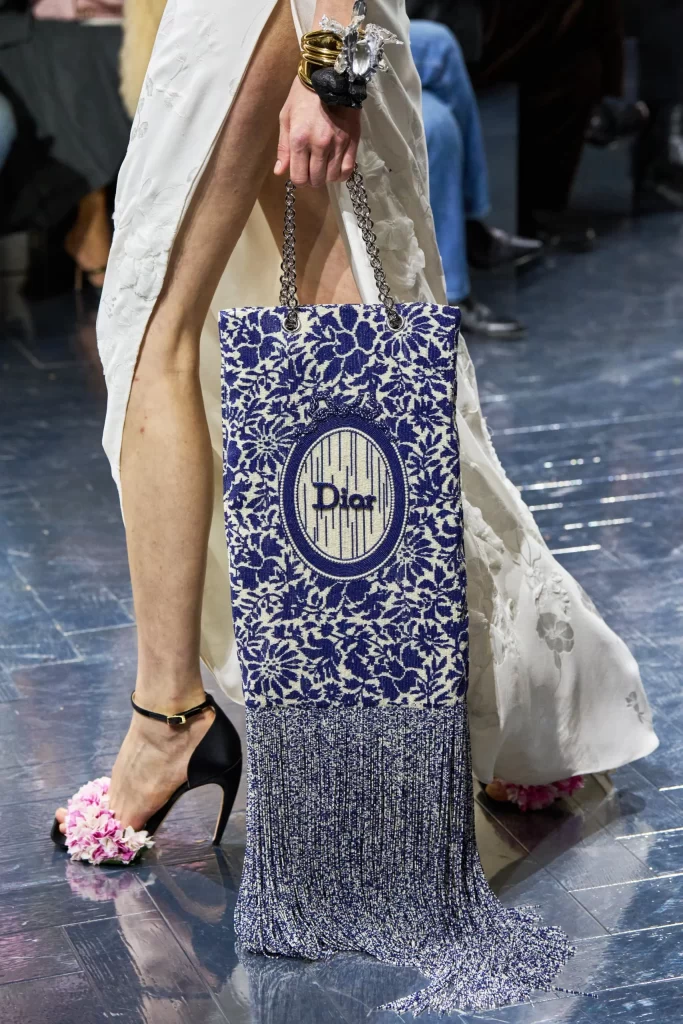
What makes the Dior couture Spring 2026 bags so compelling isn’t just their individual beauty or technical achievement. It’s how they collectively demonstrate a creative philosophy. Anderson treats bags as opportunities for experimentation, as three-dimensional canvases for exploring form, material, and meaning. Some bags, like the ferret purse and insect minaudières, embrace surrealism and wit. Others, like the envelope clutches and updated Lady Dior, prioritize refined elegance and wearability. The fringe-covered pieces push boundaries of what constitutes a handbag, while the pebble clutches explore surface treatment and textile manipulation.
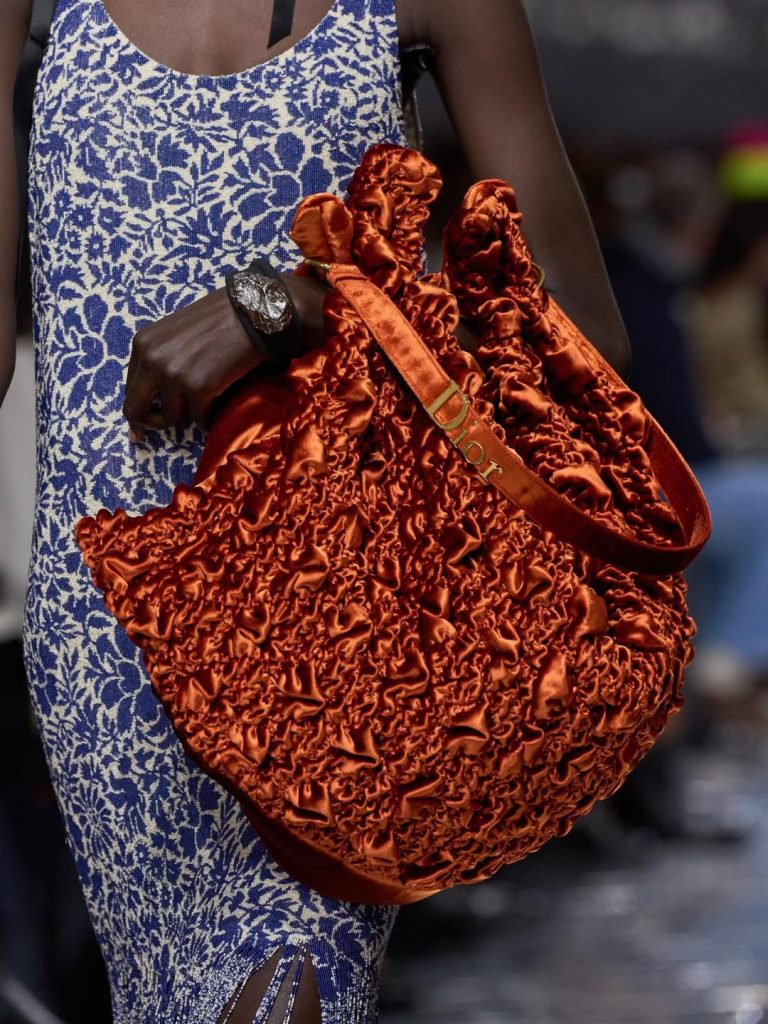
Indeed, these Jonathan Anderson Dior couture bags tell a story about a designer who understands that haute couture isn’t about creating clothes and accessories for everyday life. It’s about pushing ideas to their fullest expression, experimenting without commercial constraints, and creating objects that inspire, delight, and occasionally challenge our expectations. The fact that Anderson incorporated upcycled 18th-century French textiles into some bags demonstrates his respect for history and craft, while the animal-shaped minaudières show his willingness to embrace playfulness and personality.
As haute couture increasingly functions as a laboratory for ideas that eventually inform ready-to-wear and shape broader fashion conversations, these bags matter beyond their immediate visual impact. They signal where Dior is heading under Anderson’s creative direction: toward a future that’s more experimental, more playful, more willing to question established codes while still honoring the house’s legacy of exceptional craftsmanship and feminine beauty.
The Dior couture bags from this Spring 2026 collection will likely be remembered as some of the most creative, ambitious, and joyful accessories to come from any couture house in recent memory. They prove that even in an accessory category as established as handbags, there’s still room for innovation, surprise, and genuine wonder.
Featured images: Courtesy of Vogue Runway

Amanda Akalonu is dedicated to weaving together the worlds of jewelry, watches, and objects through a lens of literary storytelling.