
Time is invisible. We feel it, chase it, and run out of it, but we never actually see it. A watch is the small, stubborn attempt to give time a face. Every so often, someone hands that face to an artist. That is the quiet drama of TimeForArt 2026. Here, a dial becomes a canvas, a case becomes a sculpture, and the movement ticks beneath work made by hands as patient as any painter’s.
The third edition of the TimeForArt auction, organized by New York’s Swiss Institute with Phillips, takes place on December 5, 2026, as part of the Phillips watch auction 2026 season, specifically New York Watch Auction XV. This year’s edition brings together 26 brands. Every dollar of proceeds, including Phillips’ buyer’s premium, supports Swiss Institute’s contemporary art programs. The first two editions raised $2.4 million.
We aren’t ranking anything here. Instead, we’ve chosen ten pieces that made us stop, lean closer, and see a familiar object differently. Together they show how many ways there are to think about watches as art.
Here Are Ten TimeForArt 2026 Watches That Stopped Us
When the Dial Becomes the Artwork
Atelier Wen Ancestra 百石 (Bǎishí)
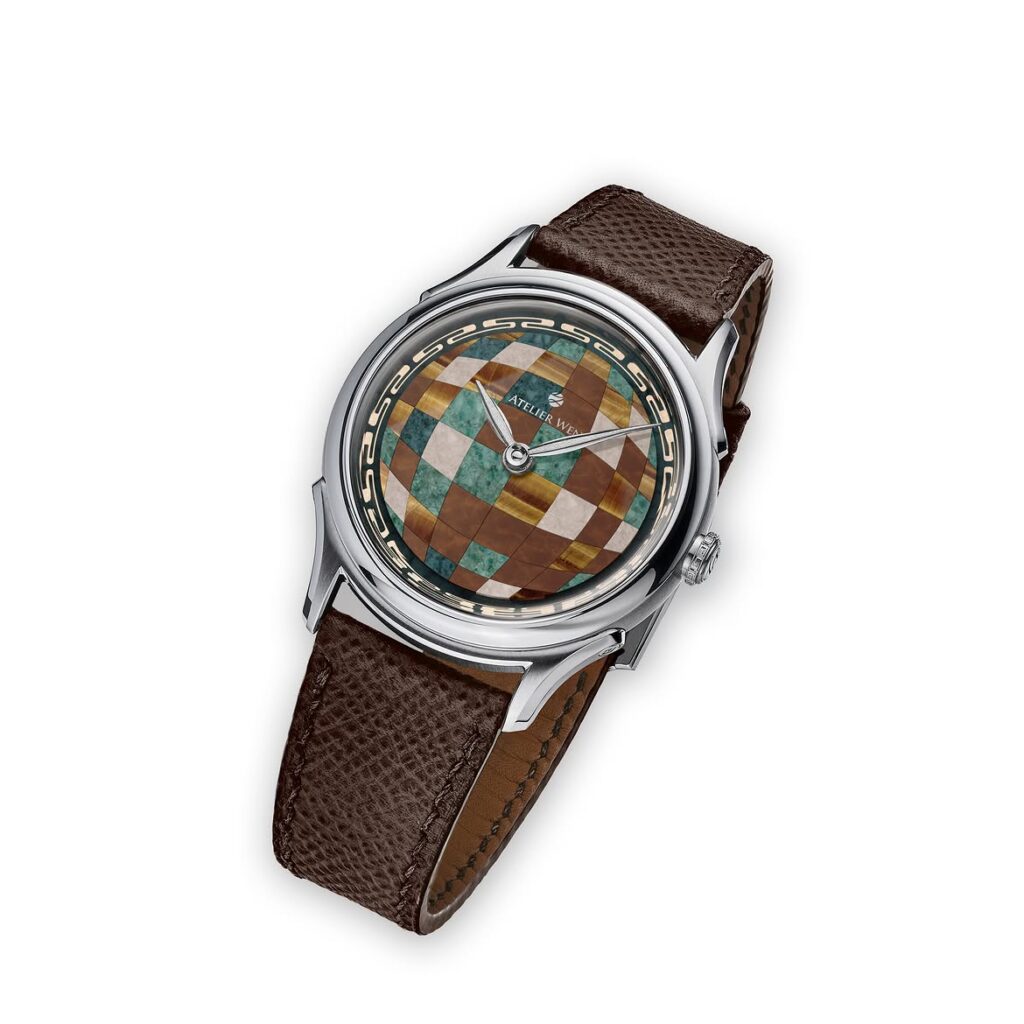
Start with the quiet. The palette here is all earth: tiger’s eye, brown and white jasper, cream moonstone, green jasper, and a bloodstone base. Arranged in a checked, geometric pattern, they build the shape of a disco ball on a perfectly flat dial. The surface doesn’t move, but the eye insists that it’s round. It’s a lovely joke told in the softest voice, turning an object of celebration into something calm and contemplative.
The technique is hardstone marquetry, in which slivers of natural stone are cut and fitted together like the tiniest puzzle, then polished into one smooth surface. Each stone has its own grain, its own response to light, and its own temperament. Getting them to agree is the art.
Chopard Alpine Eagle 41 XP TimeForArt 2026
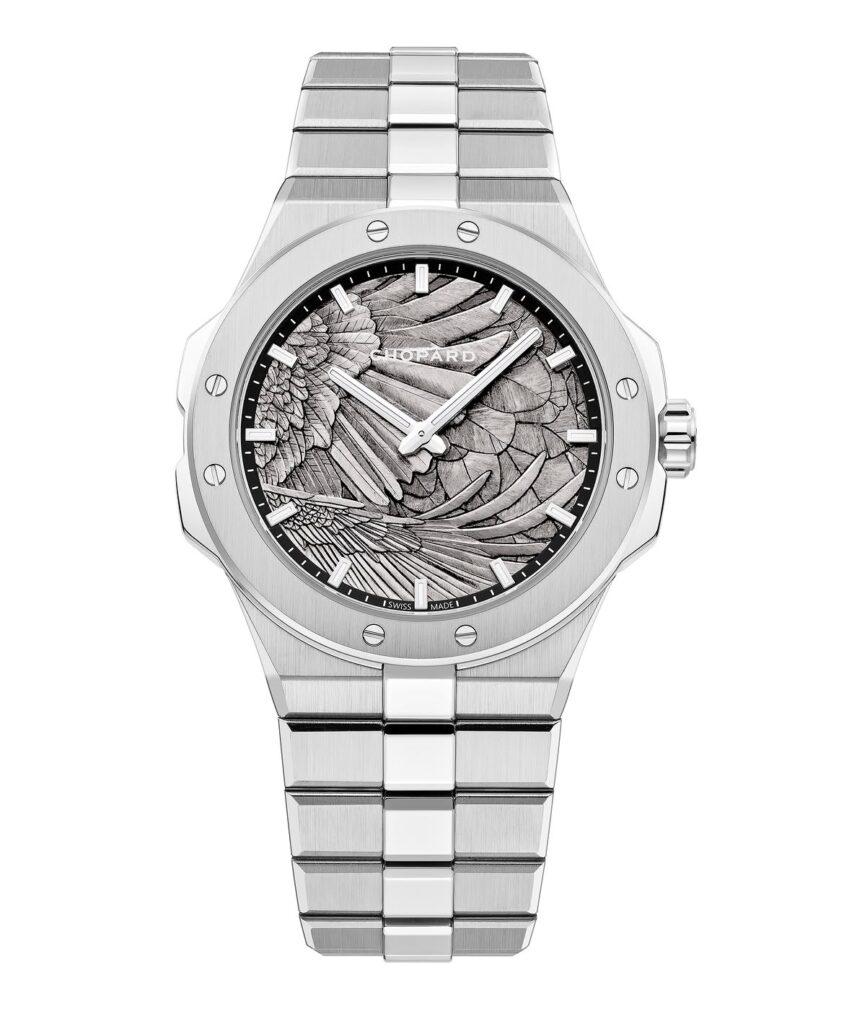
Look closely at the feathers. They’re sculpted by hand on an 18-karat ethical white gold dial that’s less than one millimeter thick. The technique is bas-relief engraving, which means carving a picture that rises gently out of a nearly flat surface, so shallow that every cut has to be certain. A black patina settles into the grooves, so as the light changes, individual feathers appear and disappear like an eagle shifting in flight. It’s a quiet kind of bravery. There’s almost no material to work with, and nowhere to hide a mistake.
Jaquet Droz Les Volumes du Temps
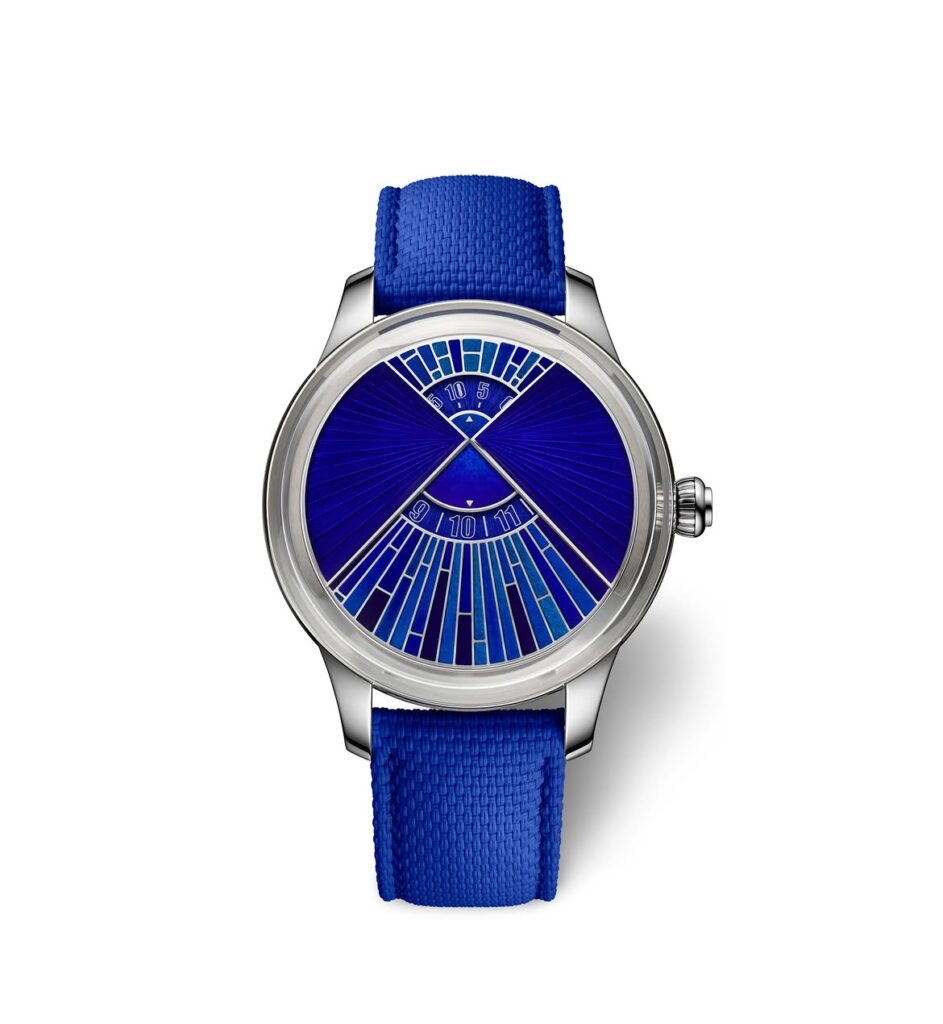
Blue is the whole story here, and it comes in many shades. Some are deep and some pale, and they have an almost velvety softness that doesn’t seem possible for enamel. Created with Académie de Meuron, the watch pairs hand-engraved gold forms with translucent Grand Feu enamel, and uses champlevé enamel on the dial.
Here’s what that means. Grand Feu enamel is powdered glass fired at very high heat until it melts into a glossy skin. When it’s translucent and laid over engraved gold, light travels through the color, bounces off the metal below, and returns glowing. Champlevé means the enamel is set into cavities carved in the metal itself. The result has an architectural quality, as if the dial were a tiny building seen at dusk.
When a Watch Becomes a Sculpture
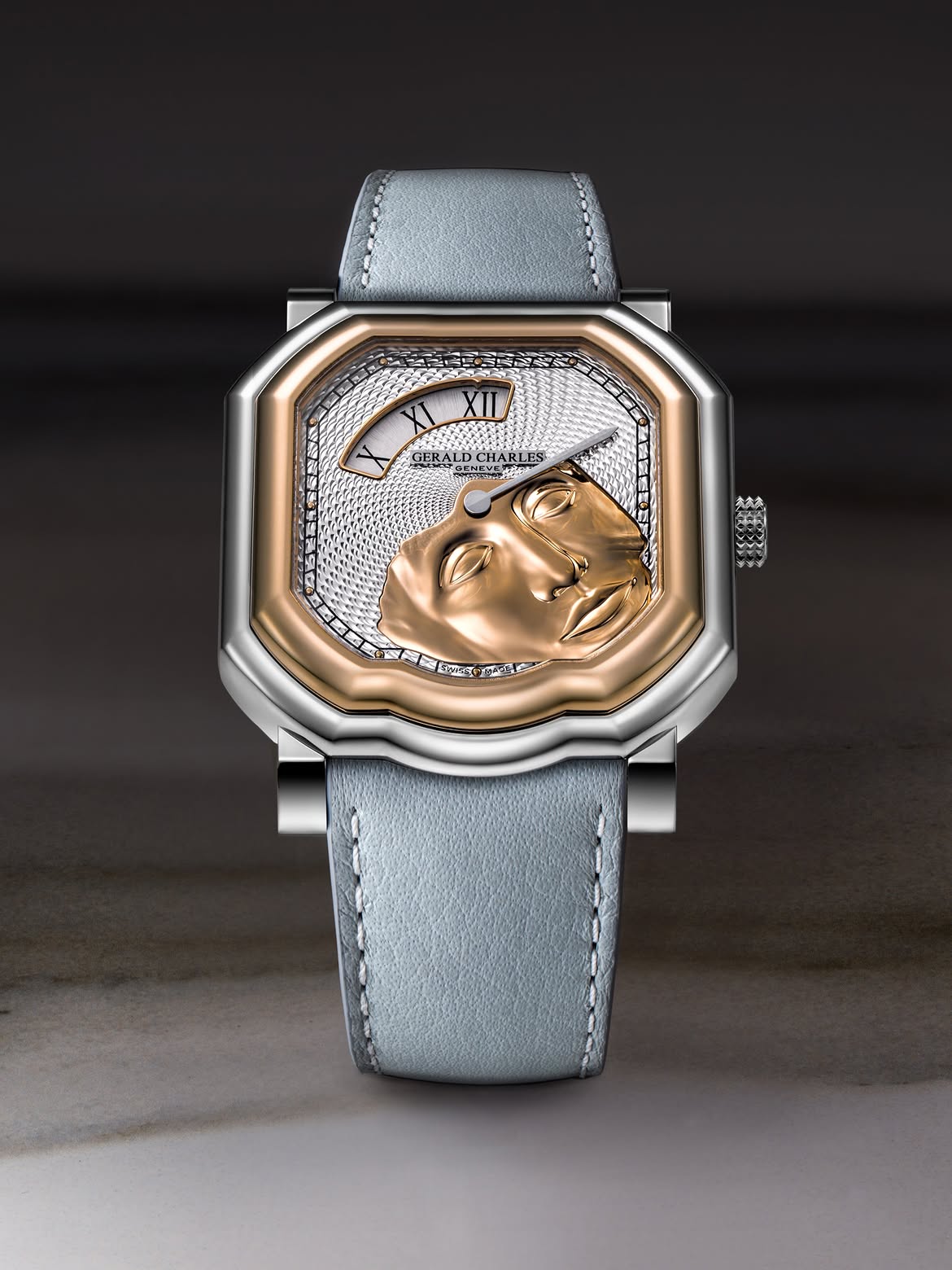
Gérald Charles Maestro GC39 Mitoraj
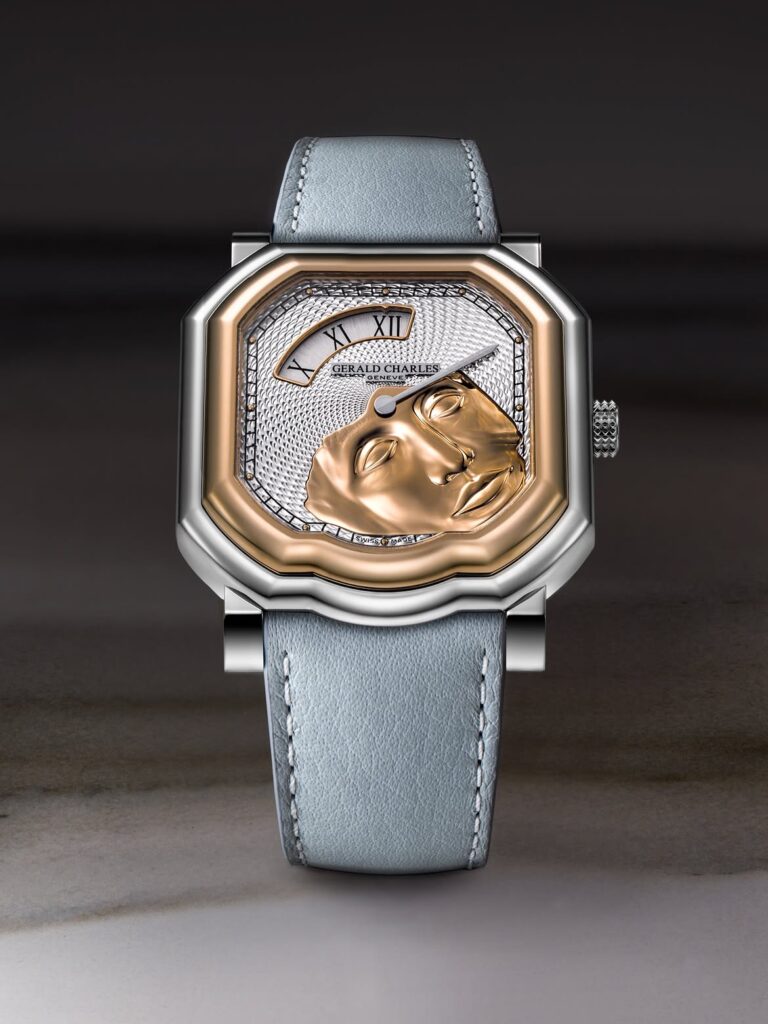
This is the one we couldn’t stop looking at.
The face is a miniature brass sculpture, finished in warm 4N PVD, a soft gold tone that glows against the cooler, silvery-grey world around it. It depicts Luci di Nara, drawing on the sculptural language of the artist Igor Mitoraj. Behind it sits a guilloché dial, machined with fine, repeating engraved patterns. The watch has a jumping-hour display, so the hours appear through an opening rather than being pointed to by a hand.
That detail matters more than it sounds. Conventional hands and markers would crowd the sculpture. By removing them, the watchmakers leave the dial open, giving the face room to breathe. The sculpture and the machine aren’t competing. They were designed together.
And then there’s the feeling. To our eyes, there’s something dreamlike about it: a face appearing where a dial should be, unexpected and a little uncanny.
Maurice Lacroix 1975 Master Skeleton – Pearl Buoy by Ficus Interfaith
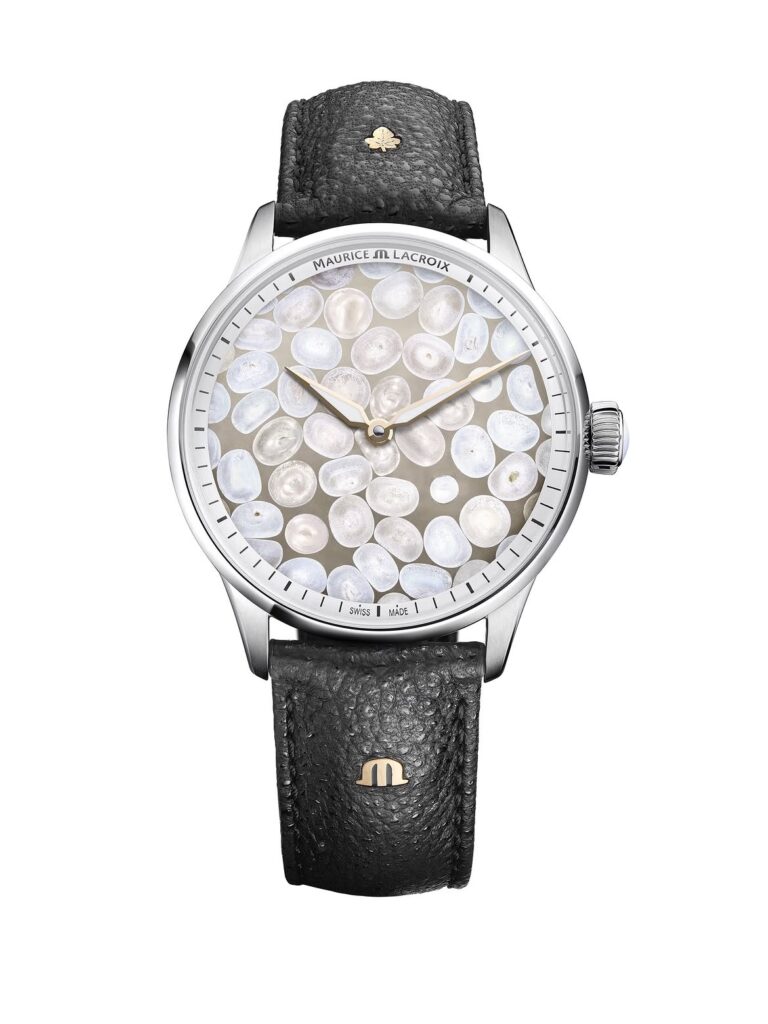
At first glance, the pale, irregular details look like something between chewy and dreamy, something soft that has somehow been set in a watch. Then you learn how it’s made.
The dial is built with a terrazzo technique, the same idea as the speckled floors found in old buildings, but with pearls embedded in epoxy resin. The material is sliced into plates about a millimeter thick, which reveal the iridescent mother-of-pearl inside each pearl. The slightly translucent dial lets the skeletonized movement show through underneath, so the artwork and the mechanism share the same space.
It’s made with Ficus Interfaith, a multidisciplinary art collective, and the result is a watch where something organic and almost soft sits quietly on top of precise machinery.
The Art of Concealment, Geometry, and Restraint
Oshinobi by Toledano & Chan
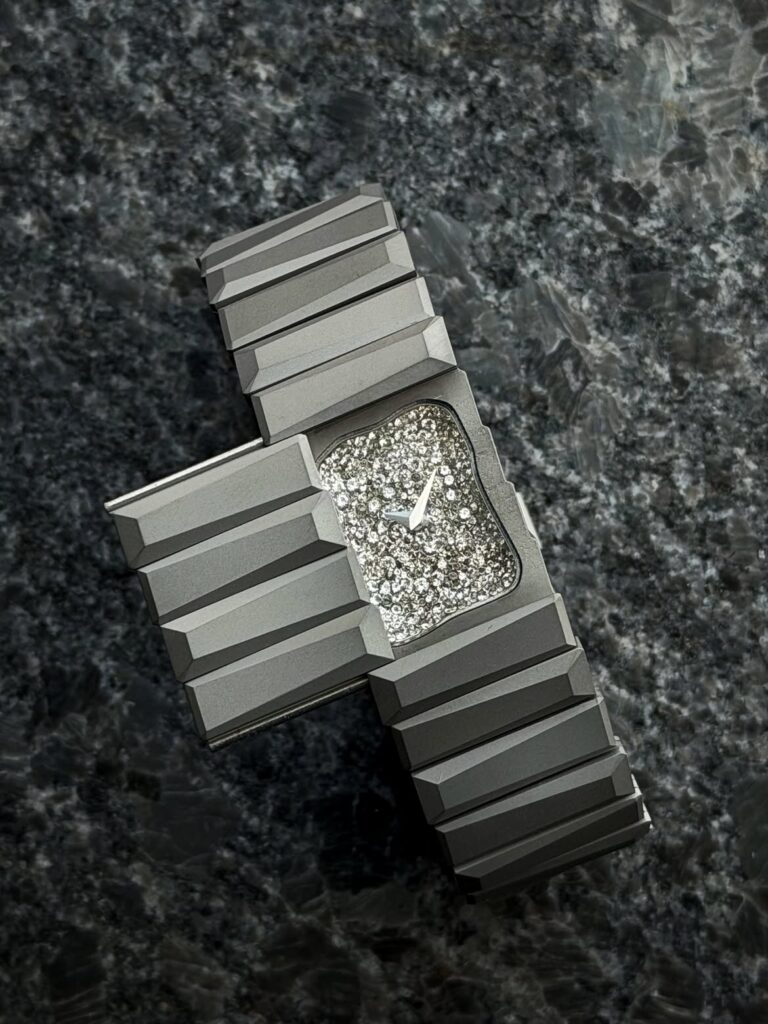
From the outside, it looks like a wall. The faceted Grade 5 titanium case and bracelet have the heavy, geometric feeling of Brutalist architecture, and the bracelet reads like an arrangement of bricks. It feels as though a stone has been carved open to hide something precious.
Slide a door built into the case, and the secret appears: a dial of 387 natural diamonds, snow-set to total approximately two carats. The contrast is the whole point. The exterior is severe, and the interior is intricate and glittering. The wearer decides when to reveal it. In a world where luxury often announces itself, there’s something refreshing about a watch that keeps its best feature private.
UNIMATIC Modello 5 Super Slim TFA26
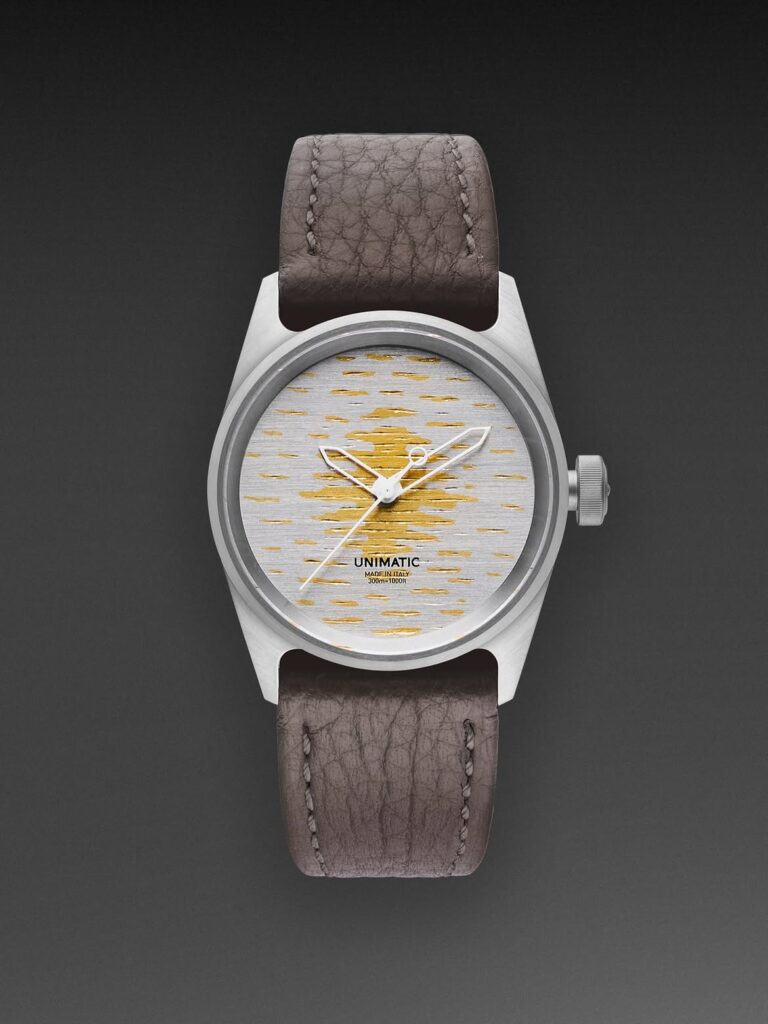
Sometimes the most interesting choice is knowing when to stop. The palette is neutral and calm, and the dial is a silver base with pure 24-karat gold inlays, created with the Italian artist and craftsman Luca Cavolini. The gold is a small, warm gesture that keeps the eye moving, an abstract interpretation of light playing on water. Because the surface is handworked, it shifts as you move, like a ripple that never quite settles. Restraint can look simple, but it takes confidence and a very steady hand.
Universal Genève Cabriolet De Lempicka
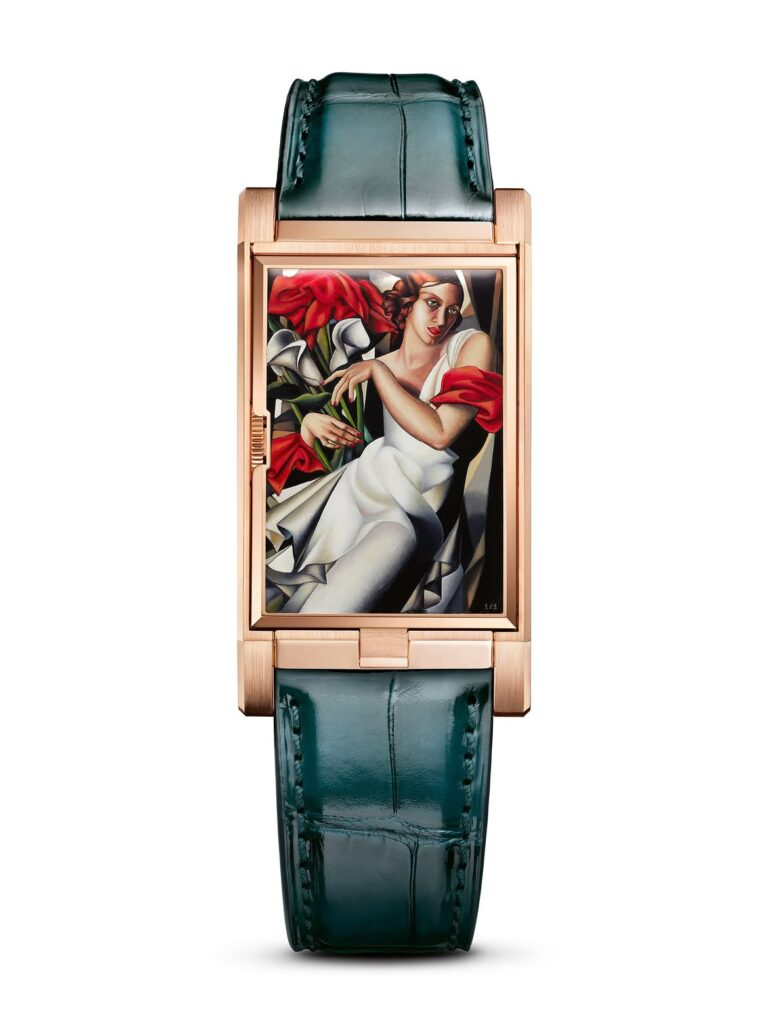
Here, a work of art hides inside a watch.
The Cabriolet has a reversible case, which lets the wearer flip the watch over to conceal the dial. On the caseback sits a hand-painted miniature of Tamara de Lempicka’s Portrait d’Ira P., painted by the miniaturist Isabelle Villa. The front carries lacquer-inlaid numerals inspired by 1930s graphics, set in an 18-karat rose-gold case with a teal alligator strap.
We love the rectangular silhouette, too. In a sea of round watches, its proportions feel like a small act of style. Flip it, and you carry a painting close to your skin. Flip it back, and you’re simply wearing a watch. It’s a rare design that is built to protect and reveal art at the same time.
When Timekeeping Itself Becomes a Design Statement
Bremont Terra Nova 35mm Jumping Hour Montres à Guichet Blue Night Frosted 904L Steel
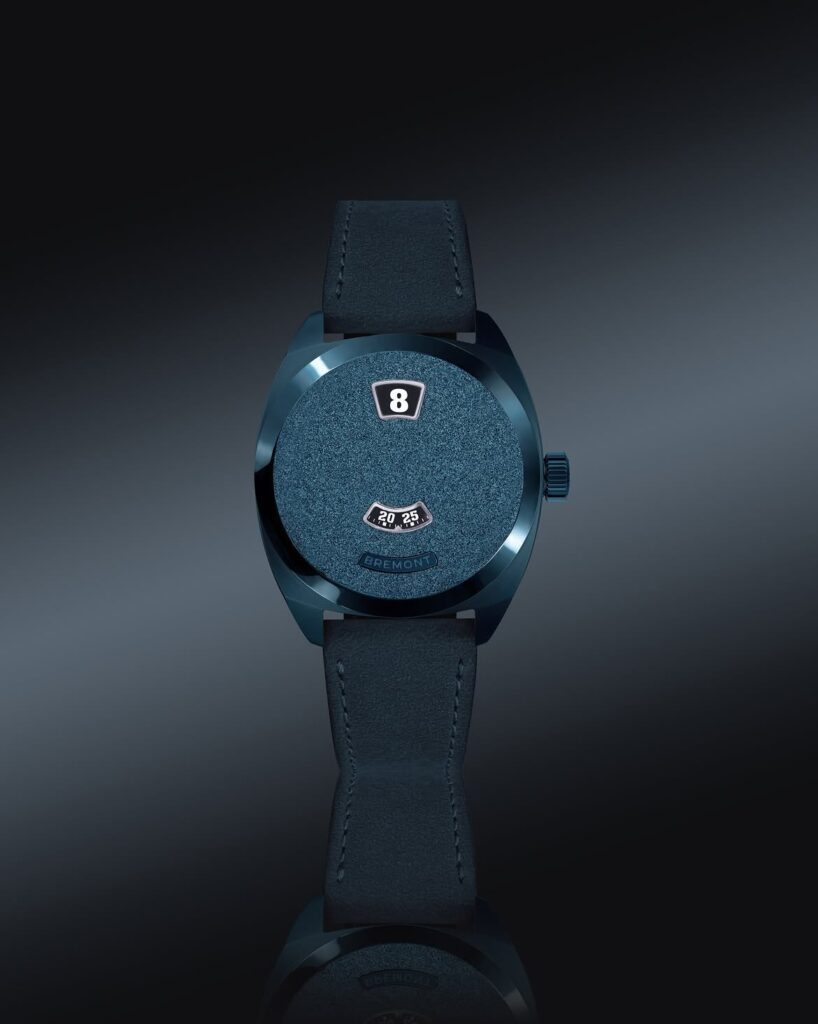
(We’ll call it the Terra Nova Jumping Hour from here on.)
This is the study in understatement. A blue-night PVD coating covers the 904L steel in a single, unbroken tone, and a frosted finish adds a soft texture that catches light without shouting. The 35mm cushion-shaped case is compact and confident.
Instead of hands, the time appears through separate apertures. The hour jumps instantly from one number to the next, with no sweep and no clutter. It’s the sort of detail that makes a monochrome watch feel distinct.
A Timepiece That Escapes the Wrist
L’Epée 1839 Regatta
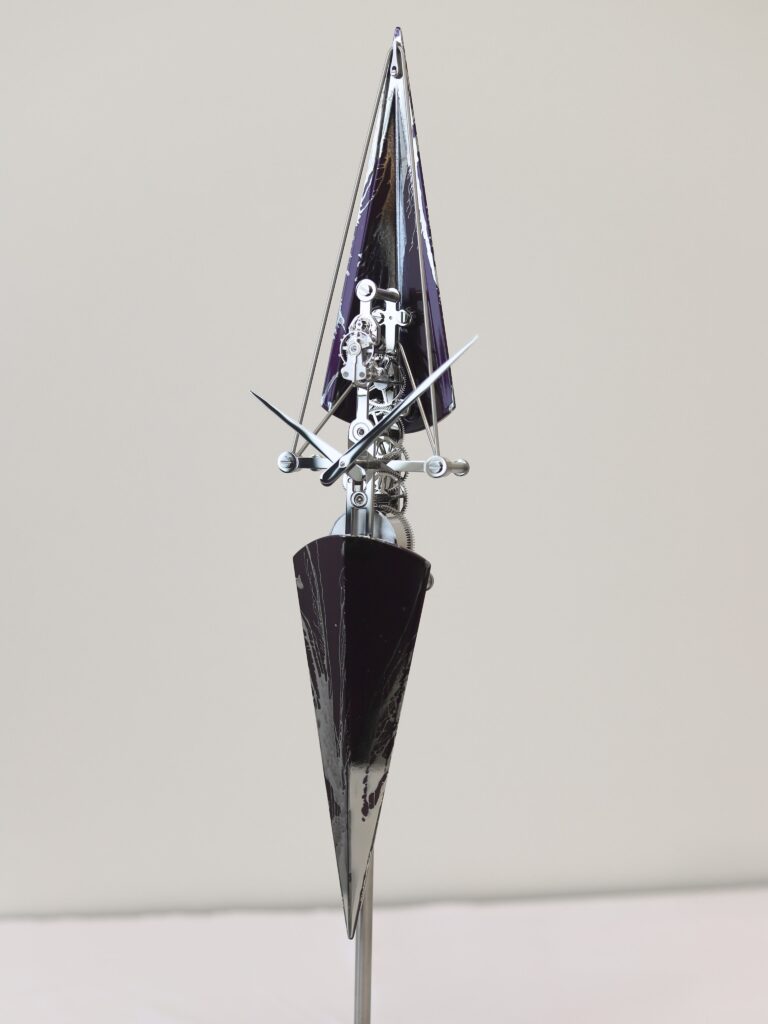
It looks like a piece of space that broke away, fell to Earth, and was handed to a watchmaker to be turned into something extraordinary. There’s a fierceness and a strength to it.
Strictly speaking, it isn’t a wristwatch. It’s a sculptural table clock, a tall, open construction that exposes its movement, with a chrome-like finish and vivid color created through a distinctive lacquering technique. It’s wound with a key and holds an eight-day power reserve. This unique interpretation of the Regatta is by the artist Floriano Castaldi, inspired by rowing, with mechanical elements that echo the alignment and choreography of a racing crew.
Free from the wrist, a timepiece can stand up, stretch out, and become pure sculpture. It’s the point where an artwork happens to tell the time.
When a Watch Becomes More Than a Watch
One watch borrows the language of a disco ball in stone. Another turns engraved gold into the feathers of an eagle. Sculpture takes over a dial, diamonds hide behind a sliding door, and a few strokes of gold are enough to hold the eye. None of them are saying the same thing.
That’s the point. We aren’t claiming every watch should be seen as fine art, or that an artist’s name makes a watch more collectible. What TimeForArt 2026 offers is a chance to see what happens when watchmakers, artists, and craftspeople approach the same small object from different directions. Those are the artistic watches that make us rethink what a watch can be.
And behind all of it is a purpose. Every bid supports Swiss Institute’s work with contemporary artists, so the creative risk taken on the dial ripples back into the art world it came from. Some of the most inventive unique watches of the year may leave the wrist entirely and return as something larger.
Look at a watch long enough, and it stops asking what time it is. It starts asking what you see.
All images courtesy of TimeForArt

Sewelo is a world where jewelry, watches, and objects come alive in a shimmering dance of fantasy. Through a literary lens, we celebrate the beauty and elegance that make these treasures more than just possessions.