
There is a moment, when you first encounter a genuine piece of Art Nouveau jewelry, when something slightly unexpected happens: you forget you are looking at an object. The dragonfly brooch on the glass case seems about to lift off. The enameled female figure at the center of the pendant looks as though she is mid-breath. The vine curling around the horn comb appears to have grown there overnight. Art Nouveau jewelry does this—it blurs the line between the natural world and the made one with a conviction that no other decorative movement in jewelry history has quite replicated. That is why, more than a century after the movement reached its peak, collectors are still competing fiercely for the finest examples, and contemporary designers are still borrowing its vocabulary.
Art Nouveau jewelry flourished between approximately 1890 and 1910, a twenty-year window of remarkable creative intensity in which European jewelers systematically rejected the rigid, symmetrical conventions of Victorian jewelry and replaced them with something altogether more alive. Nature was the primary inspiration—flowers, insects, vines, serpents, birds—but it was nature observed with a poet’s eye rather than a naturalist’s. And then rendered in plique-à-jour enamel, carved horn, opaline glass, and iridescent stones that seemed to glow from within. The resulting pieces were not merely decorative. They were, in the truest sense, wearable art.
This guide covers everything you need to know about Art Nouveau-style jewelry: its history, its key designers, its defining characteristics, how to identify and value original pieces, and why it remains one of the most collectible categories in the antique jewelry market today.
What Is Art Nouveau Jewelry?
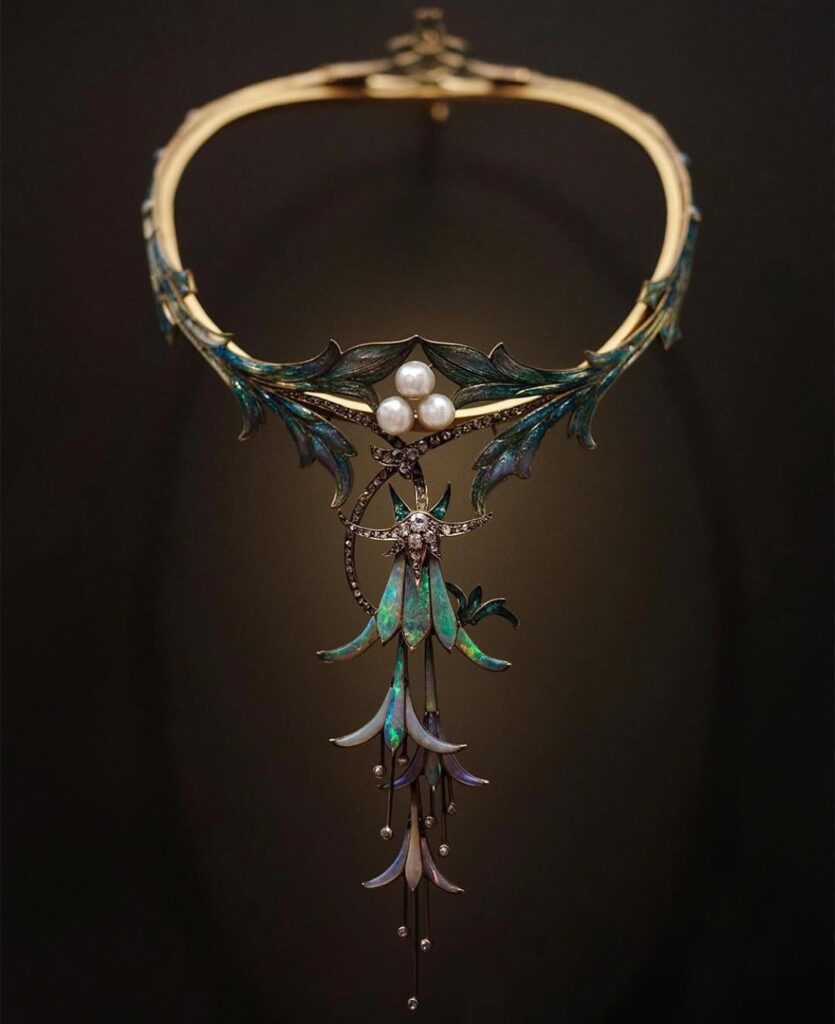
Art Nouveau jewelry is the jewelry produced under the Art Nouveau design movement, a broad cultural turn that swept Europe and North America between roughly 1890 and 1910. The name is French for “new art,” and that name was entirely intentional. This was a movement that defined itself in opposition to what came before it. Victorian jewelry had been formal, symmetrical, and heavily influenced by historical revivals, such as Gothic, Renaissance, and Classical. Art Nouveau jewelry wanted none of that.
Instead, the movement reached for organic forms, asymmetrical compositions, and a palette drawn from the natural world. Where Victorian jewelry prized diamonds and precious stones arranged in rigid geometric settings, Art Nouveau-style jewelry elevated enamel, horn, glass, and opals, materials valued not for their market price but for their visual richness. Craftsmanship was paramount, and handmade production was preferred over industrial methods. The result was a category of jewelry that felt simultaneously ancient and radical, as if it had been made by someone who had studied nature very carefully and then decided to wear it.
Historical Origins of Art Nouveau Jewelry
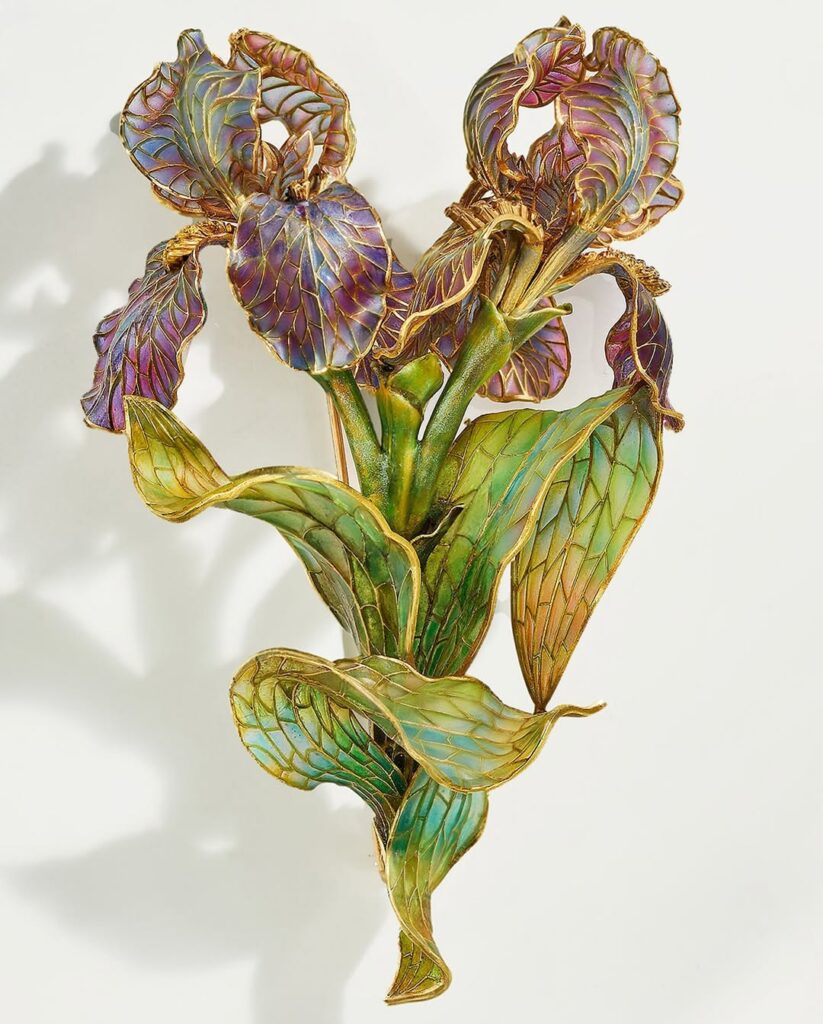
The roots of art nouveau jewelry lie in several converging currents of late nineteenth-century culture. The most important of these was Japonisme—the Western fascination with Japanese art and design that followed the opening of Japan to international trade in the 1850s. Japanese woodblock prints, lacquerwork, and decorative objects introduced European designers to a visual language organized around asymmetry, flowing line, and close observation of nature. For jewelers who were already restless with the Victorian inheritance, it was transformative.
Art Nouveau emerged first in France and Belgium, where the decorative arts establishment was most open to experimentation. Paris was the epicenter. The 1900 Exposition Universelle became the movement’s defining public moment, a showcase at which the greatest practitioners of Art Nouveau jewelry presented their work to an international audience. The movement spread quickly, to Germany, where it was called Jugendstil; to Austria, where the Vienna Secession developed a parallel aesthetic; to Britain, where Liberty & Co. in London became its primary commercial champion; and to the United States, where Louis Comfort Tiffany forged his own extraordinary version of the style.
The underlying emotional driver was a reaction against industrialization. As mass production filled the market with cheap, identically replicated goods, a significant strand of European creative culture pushed back, insisting on handcraft, on singularity, on objects made by human hands for human bodies. Art Nouveau jewelry was, among many things, a philosophical position made wearable.
Key Designers and Houses of Art Nouveau Jewelry
René Lalique
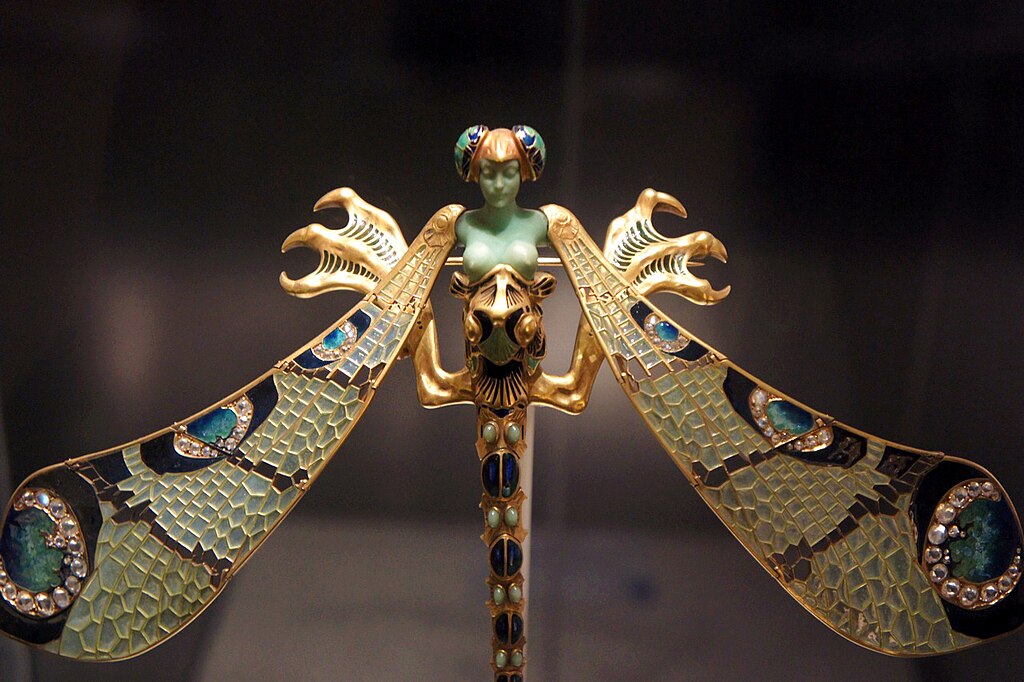
If Art Nouveau jewelry has a single defining figure, it is René Lalique. Working in Paris from the late 1880s onward, Lalique essentially invented the visual vocabulary that the rest of the movement spent twenty years exploring. He was the first jeweler of his generation to elevate enamel, horn, and glass to the same status as diamonds and gold. This was a heretical move at the time, and one that permanently expanded the range of materials considered appropriate for fine jewelry.
Lalique’s pieces are technically extraordinary. His plique-à-jour enamel work, a technique in which translucent enamel is suspended in a framework without a metal backing, allowing light to pass through it like stained glass, remains among the most technically demanding processes in the history of jewelry. His dragonflies, orchids, snakes, and femmes florales (female figures emerging from or merging with plant forms) set the standard for an entire movement. A signed Lalique piece is the most coveted object in the antique Art Nouveau jewelry market.
Georges Fouquet
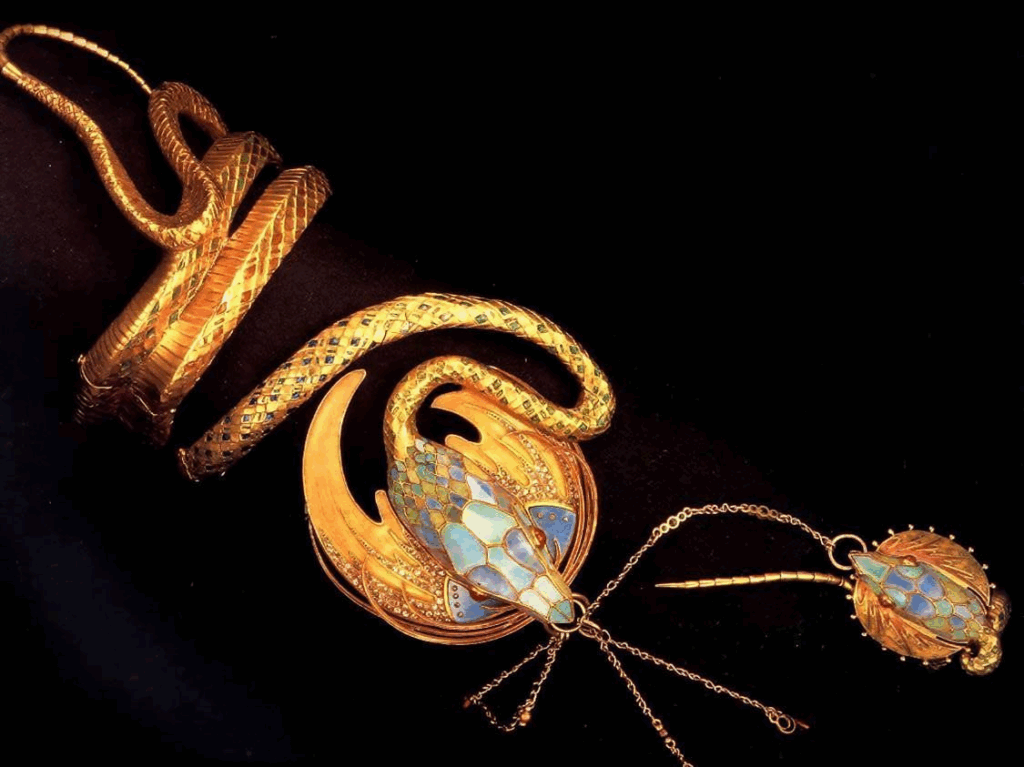
Where Lalique was a sculptor who happened to work in metal, Georges Fouquet was an architect who happened to make jewelry. His pieces have a structural boldness that sets them apart from the more flowing work of his contemporaries. His most celebrated commission was a serpent bracelet designed in collaboration with Czech artist Alphonse Mucha, a piece of such visual ambition that it required its wearer to have a chain connected from the bracelet all the way to a ring on her finger. Subtle it was not. Extraordinary it absolutely was.
Louis Comfort Tiffany
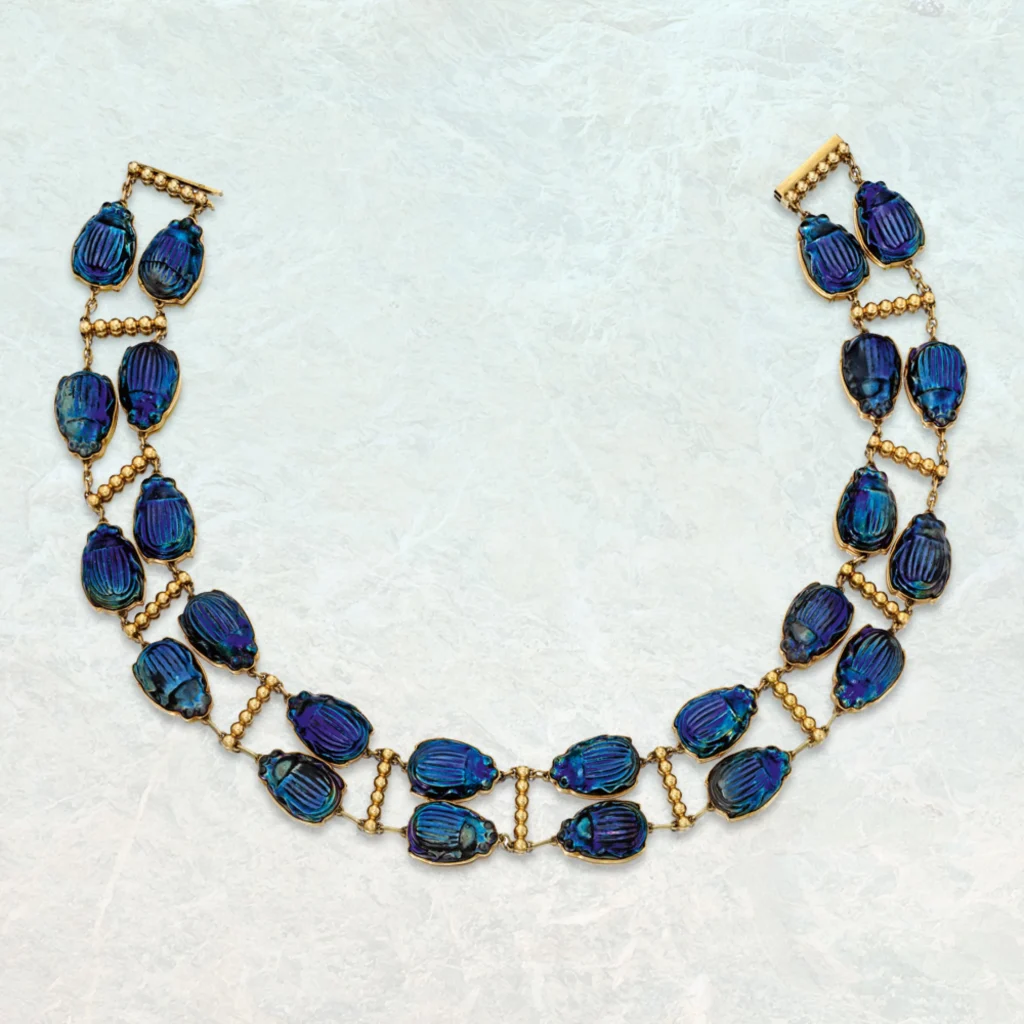
The son of Charles Lewis Tiffany, founder of Tiffany & Co., Louis Comfort Tiffany took his inheritance and turned it into something his father could barely have imagined. Tiffany’s Art Nouveau jewelry is defined by his invention of favrile glass—an iridescent, internally colored glass that he developed for his famous lamp shades and then adapted for jewelry settings. His nature-inspired pendants, necklaces, and brooches deploy favrile glass alongside enamel and unconventional stone choices to produce pieces that feel more like miniature paintings than conventional jewels. He remains the American Art Nouveau movement’s most significant voice.
Other Notable Makers
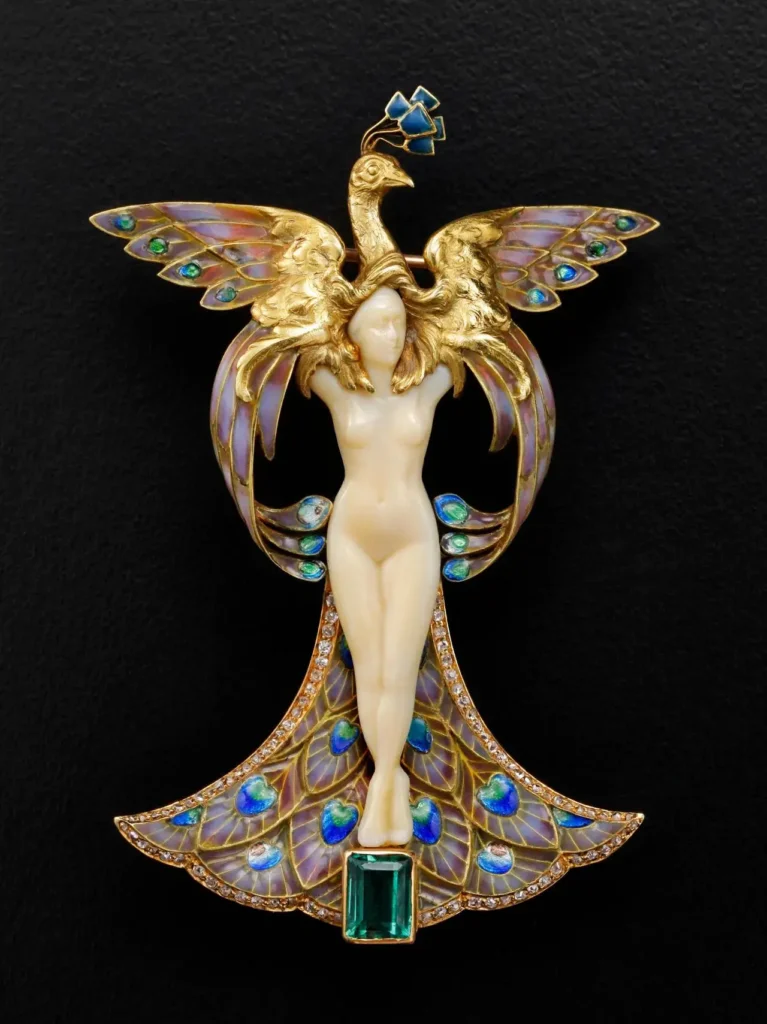
Henri Vever, whose two-volume history of French jewelry from the nineteenth century remains a foundational scholarly text, was also a gifted practitioner in his own right. His work is notable for its refined interpretation of femme florale motifs. Philippe Wolfers of Belgium brought a particularly dark and sensual quality to his Art Nouveau-style jewelry, with recurring motifs of writhing serpents and exotic fauna. Liberty & Co. in London democratized the movement through its mass-market Cymric range, silver jewelry produced in collaboration with the Birmingham workshop of W.H. Haseler that brought Art Nouveau design to a mainstream British audience.
Defining Characteristics of Art Nouveau Jewelry
Natural Motifs
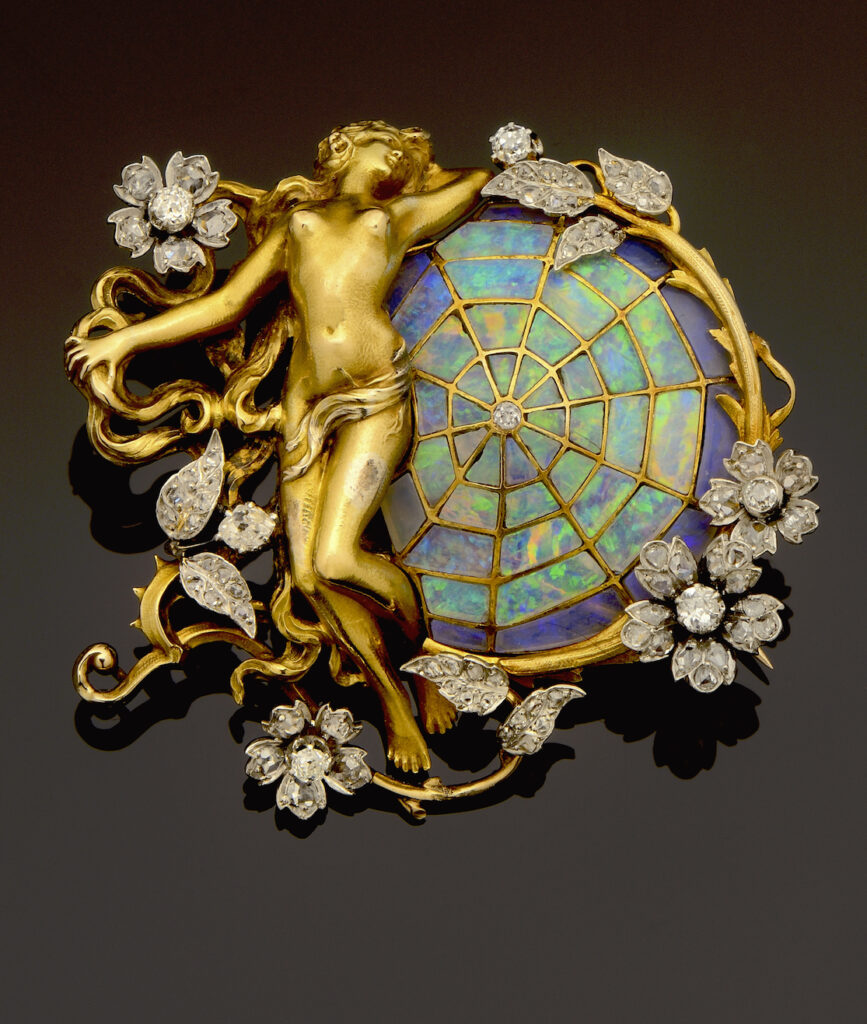
The natural world is not simply a visual source for Art Nouveau jewelry; it is the entire conceptual foundation. Female forms, dragonflies, butterflies, beetles, peacocks, swans, orchids, irises, wisteria, and ivy recur obsessively across the movement. They show up not as decorative ornament but as subject matter worthy of the same artistic attention given to landscape painting or sculpture. The dragonfly, in particular, became the movement’s unofficial emblem: its wings perfectly suited to plique-à-jour enamel work, its body offering sculptural possibilities that jewelers exploited with enormous ingenuity.
Flowing, Asymmetrical Forms
Perhaps the single most visually distinctive quality of Art Nouveau jewelry is its rejection of symmetry. Where classical jewelry organized itself around a central axis with identical elements on either side, Art Nouveau brooch and pendant designs move—they curve, arc, spiral, and sweep in ways that suggest growth or flight rather than static composition. This visual dynamism was deeply intentional, a formal statement that living things are not symmetrical and jewelry inspired by living things should not be either.
Materials Used
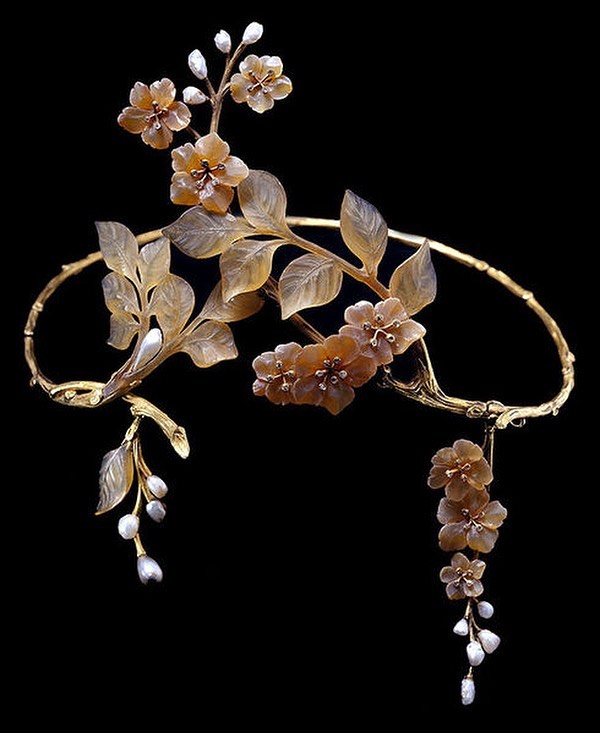
The materials of Art Nouveau jewelry are as distinctive as its forms. Plique-à-jour enamel is the most technically spectacular, but champlevé and cloisonné enamels were also widely used. Horn, which could be carved, steamed into curves, and tinted, offered possibilities that no precious material could match for translucency and organic texture. Ivory, tortoiseshell, amber, and carved gemstones were all employed. In terms of stones, opals were the movement’s preferred choice, their shifting, iridescent color perfectly aligned with the organic, dreamlike aesthetic. Moonstones, amethysts, and freshwater pearls also appear frequently.
Color Palette
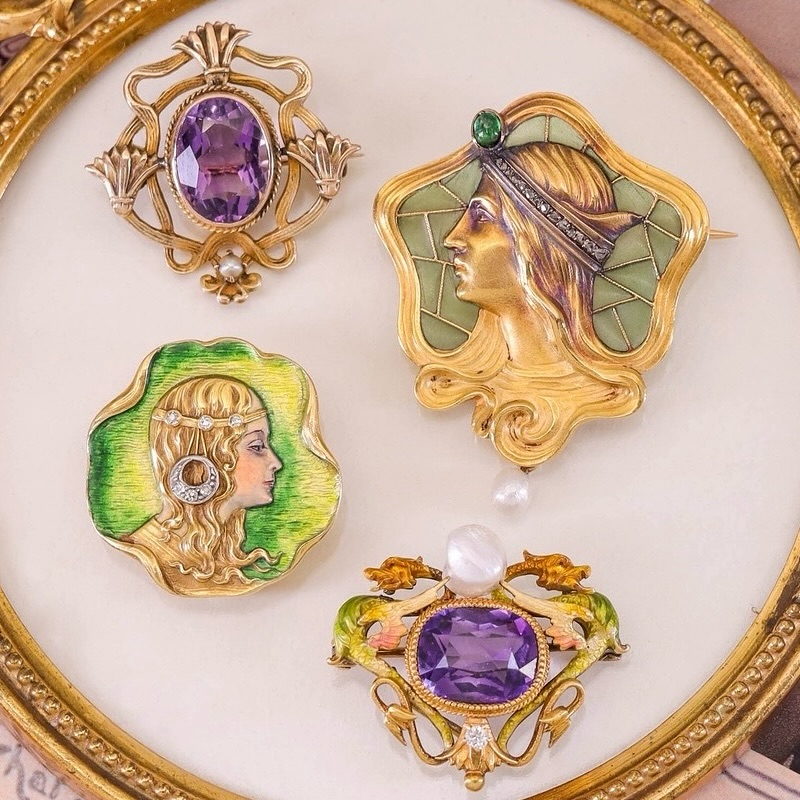
The palette of Art Nouveau-style jewelry reads like an inventory of natural phenomena: the amber of autumn leaves, the iridescent blue-green of a dragonfly wing, the pale lavender of wisteria, the soft white of moth wings, the deep red of a poppy. These are not the saturated primary colors of commercial jewelry. They are the complex, nuanced tones that nature actually produces, and the enameling and glass techniques of the movement were specifically developed to achieve them.
Art Nouveau Jewelry vs Art Deco Jewelry
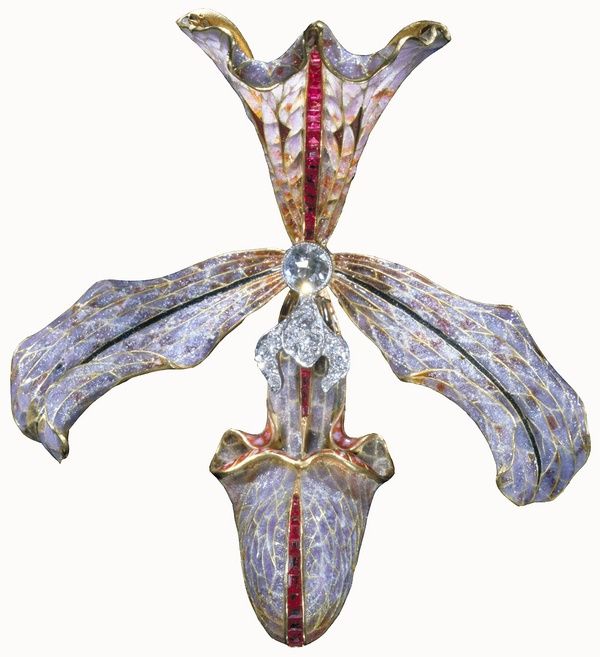
Few comparisons in decorative arts history are more instructive, or more frequently confused, than Art Nouveau vs. Art Deco jewelry. Both movements produced extraordinary objects. Both had their centers in Paris. Both were responses to the cultural and technological conditions of their era. And yet the visual and philosophical differences between them could hardly be more complete.
Art Nouveau jewelry (1890–1910) is organic, asymmetrical, emotionally expressive, and technically rooted in enamel and handicraft. Art Deco jewelry (1920–1935) is geometric, symmetrical, mechanically precise, and aesthetically aligned with the machine age. Where Art Nouveau reaches for the dreamlike and the natural, Art Deco reaches for the rational and the urban. Where Art Nouveau uses opals and horn, Art Deco uses diamonds, onyx, and platinum. Where Art Nouveau places a dragonfly at the center of a brooch, Art Deco places a sunburst. They are, in a sense, mirror images of each other, the same ambition to make beautiful jewelry applied to opposite ideas about what beauty means.
How to Identify Authentic Art Nouveau Jewelry
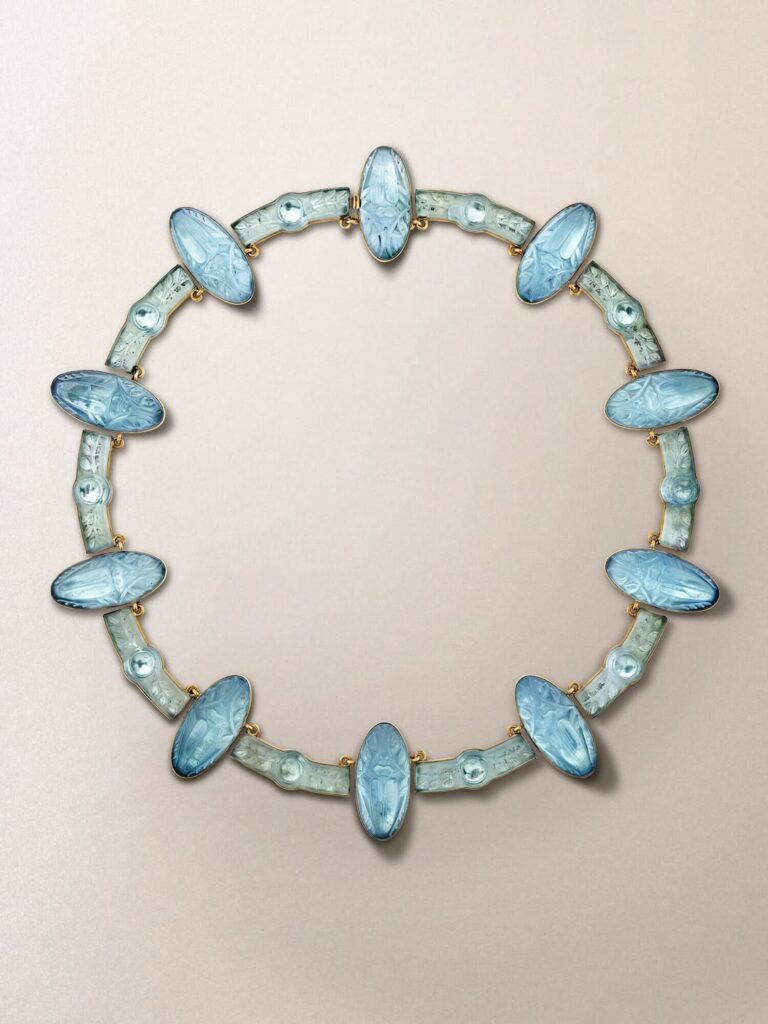
The market for Art Nouveau jewelry reproductions is substantial and ranges from honest period-style pieces clearly marketed as such to outright forgeries. Knowing what to look for matters.
Hallmarks and maker signatures are the first line of authentication. French pieces from this period carry assay marks, typically the eagle’s head for gold and the owl for imported goods, alongside maker’s marks that can be traced through dedicated reference works. Lalique pieces carry his signature, though it was applied inconsistently across different periods of production, and the form of the signature evolved over time.
Craftsmanship indicators are equally important. Genuine plique-à-jour enamel has a specific fragility and translucency that no modern reproduction matches convincingly. Hand-fabricated metalwork shows slight irregularities in profile and surface that cast or machine-made pieces do not. Horn is warm to the touch in a way that plastic imitations are not, and its grain structure is visible under magnification.
Material aging tells its own story. Genuine period enamel develops a characteristic crazing and depth of color over a century of wear. Metal develops a patina that forms unevenly, accumulating in recesses and wearing away at high points. Wearable surfaces show the micro-abrasions of actual use. None of these can be convincingly faked at a level that withstands close expert examination.
Value and Collectibility of Art Nouveau Jewelry
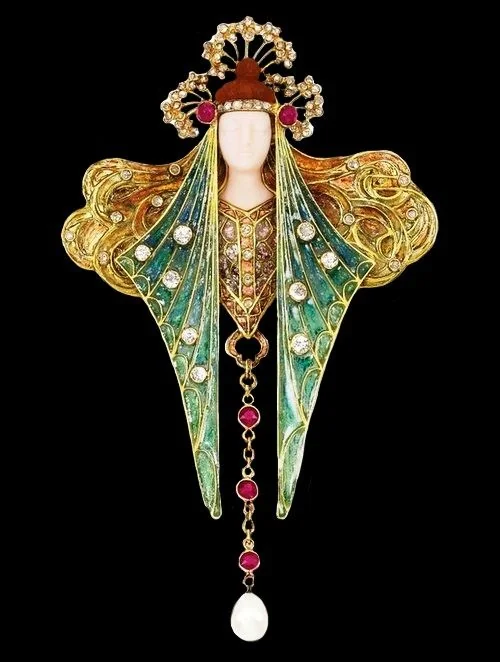
Art Nouveau jewelry value is driven by a hierarchy of factors.
- Designer attribution sits at the top. A signed Lalique piece commands premiums that an unsigned but equally beautiful work cannot match.
- Condition follows closely. Original enamel with no restoration, unbroken horn or glass, undamaged settings are highly covetable.
- Technical complexity matters. A piece in plique-à-jour enamel with figure work and multiple material types will always attract more collector interest than a simpler single-material design.
- And rarity is a choice, always. The femme florale pieces are rarer than the floral ones, the entomological subjects rarer still.
At auction, major houses including Christie’s and Sotheby’s regularly feature Art Nouveau jewelry in their dedicated jewelry and decorative arts sales. Record prices for signed Lalique pieces regularly reach six figures, with exceptional examples, particularly the large ornamental hair combs and corsage ornaments, achieving significantly more. The market has been consistently strong across the past two decades, driven by collecting activity from both established institutions and a new generation of buyers drawn to the movement’s emphasis on craft and natural forms.
How to Wear Art Nouveau Jewelry Today
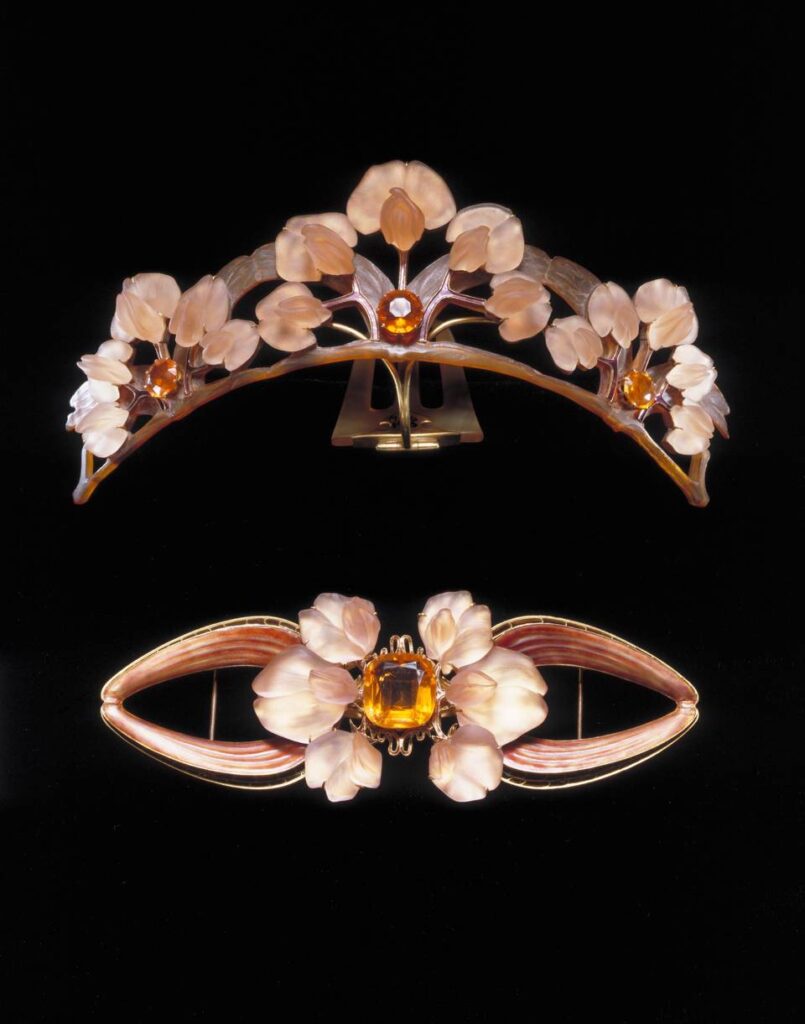
The great practical virtue of antique Art Nouveau jewelry is its wearability. Unlike some period jewelry that feels costumey in contemporary contexts, Art Nouveau pieces integrate naturally into modern dressing precisely because their forms are organic rather than historicist. Indeed, they look like they belong to the natural world, which means they belong in any era.
A dragonfly brooch works on a lapel, a silk scarf, a linen jacket, or even a denim shirt. A femme florale pendant reads as contemporary fine jewelry to anyone who does not immediately recognize its period. Horn combs are genuinely useful hair accessories that also happen to be extraordinary works of decorative art. The styling advice is straightforward: let the piece lead.
Art Nouveau-style jewelry has enough visual presence to anchor a simple, solid-color outfit; it has enough subtlety not to overwhelm a more layered one. The main thing to avoid is pairing it with anything too literal; a full period-costume approach diminishes both the clothes and the jewelry. Wear it as what it is: a beautiful object made by exceptional hands, that happens to be very old.
Where to Buy Art Nouveau Jewelry
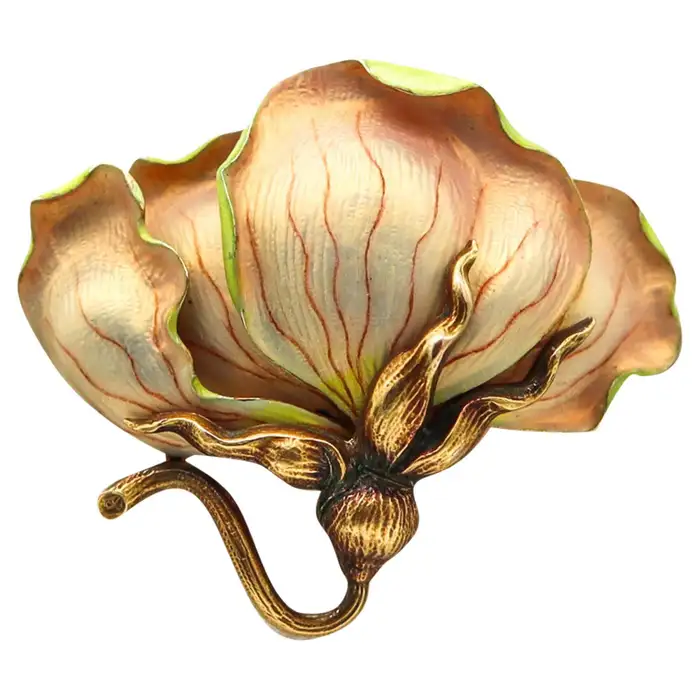
Authenticated antique Art Nouveau jewelry is available through several channels, each with its own advantages. Major auction houses offer the strongest provenance documentation and the broadest selection of significant pieces, though competition can be fierce and buyers’ premiums add substantially to the hammer price. Specialist antique jewelry dealers, particularly those focused on the late nineteenth and early twentieth centuries, offer expert curation and the ability to examine pieces in person before committing. In London, the Grays Antique Market and LAPADA-member dealers are reliable starting points. In Paris, the Place Vendôme antique dealers and the Marché aux Puces at Saint-Ouen both offer genuine period material. In the United States, dealers specializing in American Art Nouveau, particularly Tiffany Studios’ work, are concentrated in New York.
Online platforms, including 1stDibs and Invaluable, aggregate offerings from dealers worldwide, though due diligence on authentication is essential when buying remotely. Whatever the channel, always ask for provenance documentation, request close photographs of any hallmarks and the reverse of pieces, and, for significant purchases, obtain an independent gemological or historical appraisal before committing.
Shop editor’s finds
Frequently Asked Questions
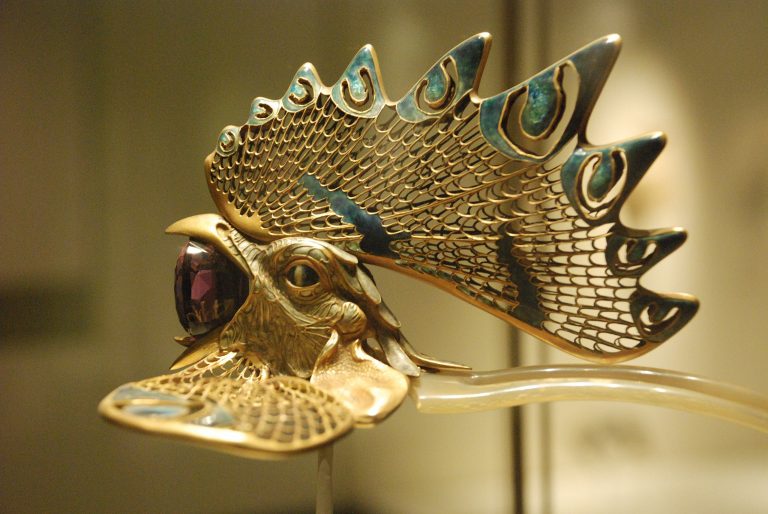
What defines Art Nouveau jewelry? Organic natural motifs, asymmetrical flowing forms, an emphasis on handcrafted enamel and unconventional materials, and a rejection of the rigid symmetry of Victorian design.
Is Art Nouveau jewelry valuable? Signed pieces by major makers like Lalique can reach six figures at auction. Unsigned but authentic period pieces are generally more accessible but still significant, and the market has appreciated consistently for two decades.
Who was the most famous Art Nouveau jeweler? René Lalique is the movement’s defining figure, though Georges Fouquet and Louis Comfort Tiffany are close seconds in terms of historical importance and collector appeal.
What materials were used in Art Nouveau jewelry? Plique-à-jour and cloisonné enamel, horn, ivory, carved glass, opals, moonstones, freshwater pearls, gold, and silver were all central to the movement. The willingness to elevate “humble” materials to fine jewelry status was one of the movement’s defining characteristics.
How can you tell if Art Nouveau jewelry is real? Look for period hallmarks, assess the quality and aging of enamel work, check for the subtle irregularities of hand fabrication, and have any significant piece examined by a specialist before purchasing.
Conclusion: Why Art Nouveau Jewelry Still Inspires Collectors
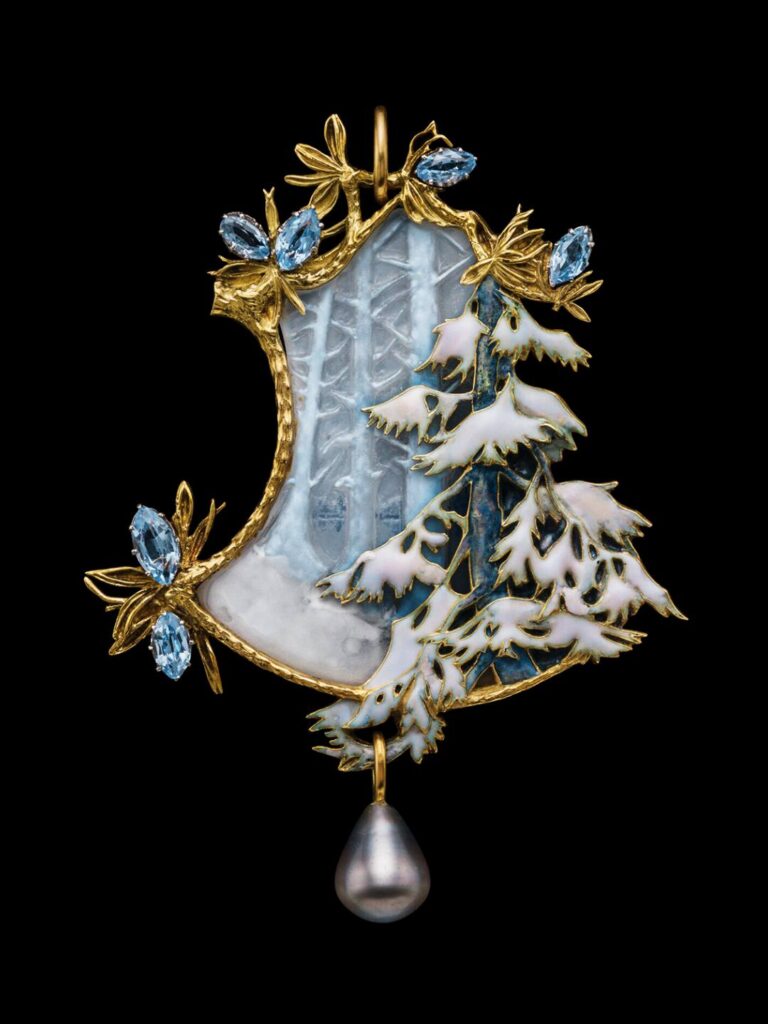
Art Nouveau jewelry endures because it solved a problem that most jewelry designs do not even attempt to address: how to make an object that looks truly alive. By taking the natural world not as a decorative source but as a formal model, by making the dragonfly’s wing the structural principle of the brooch rather than simply its subject, the movement’s finest practitioners created pieces that have never become merely historical. They remain genuinely contemporary in their ambition, their material intelligence, and their refusal to subordinate beauty to convention. For collectors, that is not a romantic assessment. It is the most practical possible reason to keep looking for them.
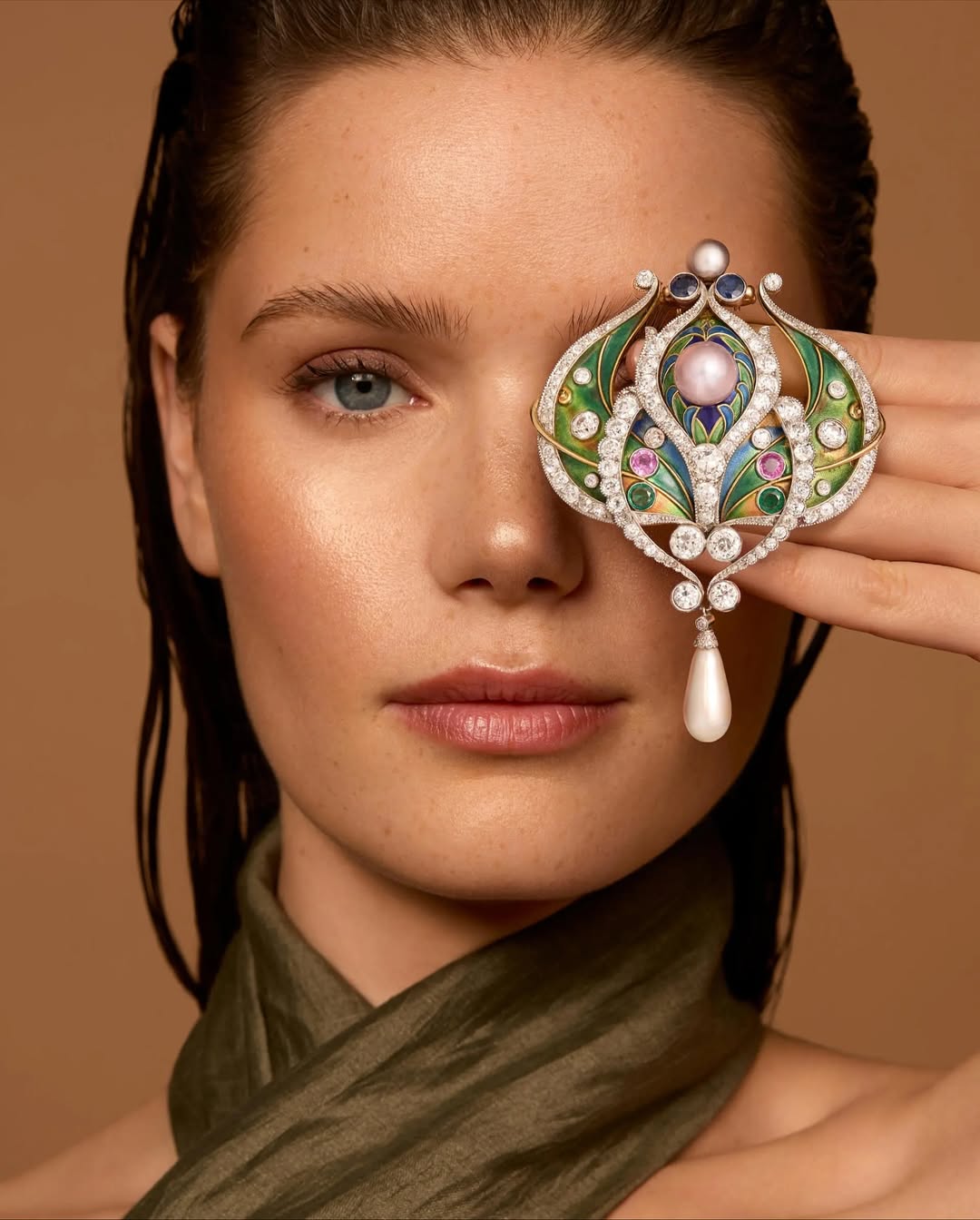
Featured image: Bonhams Auction

Amanda Akalonu is dedicated to weaving together the worlds of jewelry, watches, and objects through a lens of literary storytelling.