
There is something about a wedding tiara that does what no other bridal accessory can—it transforms. Not in the dramatic, fairy-godmother, you-shall-go-to-the-ball sense (though honestly, sometimes exactly in that sense), but in the quiet, deeply personal way of a woman who looks in the mirror on her wedding day and thinks: yes, this is it. The wedding tiara has been the finishing touch of bridal dressing for centuries, worn by queens and commoners, by women who wanted to whisper their elegance and by women who wanted to announce it. And right now, with wedding season firmly upon us and bridal style more expressive than ever, it is having a thoroughly deserved moment.
The good news for brides in 2026 is that the tiaras for brides have never been more varied or more available. You are no longer choosing between a few pearl-and-rhinestone options at a bridal boutique. The market spans antique Victorian masterworks dripping with old-mine-cut diamonds to playful vintage crystal headbands from the 1990s, from convertible necklace-tiaras to gold cameo crowns that belong in a museum. Below, we cover everything you need to know about choosing your perfect bridal tiara, and then introduce ten extraordinary options to shop right now.
Why a Tiara Is the Ultimate Bridal Finishing Touch
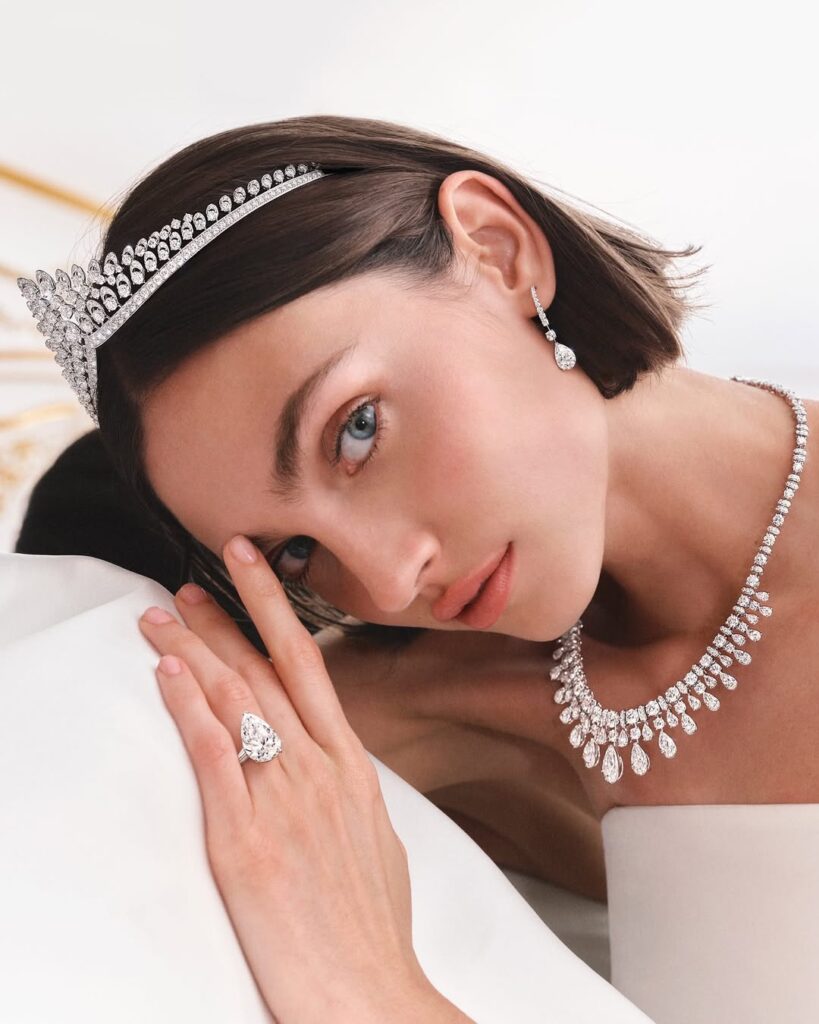
A bridal ensemble, however magnificent, is an incomplete story without the crown. The gown dresses the body. The shoes ground it. The jewelry punctuates it. But the tiara for wedding dressing performs a function none of these other elements can. It frames the face from above, draws the eye upward, and creates a silhouette that is unmistakably, undeniably bridal. There is a reason the tiara has appeared on the heads of royal brides from Queen Victoria to Princess Diana to Catherine, Princess of Wales, and it is not merely tradition. It is that the tiara does something architecturally brilliant. It completes the picture.
Beyond aesthetics, there is the emotional dimension of wearing a tiara on your wedding day that should not be underestimated. Something shifts when you put one on. Ask any bride. The dress might make you feel beautiful, but the tiara makes you feel like the occasion. That distinction matters more than it sounds.
How to Choose the Right Bridal Tiara for Your Big Day
Not every tiara suits every bride. Even the most beautiful piece in the world will not serve you if it fights against your face shape, hairstyle, or dress. Here is how to shop smarter.
- Consider your hairstyle first. An updo—whether a chignon, a twist, or a braided crown—provides the most stable base for a tiara and allows for more elaborate, taller styles. If you plan to wear your hair down or in loose waves, opt for a lower-profile design that sits closer to the head, such as a delicate headband-style piece or a slim floral tiara. Half-up styles are wonderfully versatile and can accommodate most tiara heights.
- Think about face shape. Taller, more structured crowns elongate and add drama. They are particularly flattering on round or heart-shaped faces. Lower, wider tiaras with horizontal emphasis complement longer or oval faces beautifully. When in doubt, try it on with your hair in the style you plan to wear on the day, in the light closest to your venue’s lighting.
- Match the tiara’s energy to the dress. A heavily embellished, cathedral-train gown calls for a tiara with presence—something sculptural, significant, and unapologetically grand. A slip dress or a simpler column gown, on the other hand, can be elevated by even the most delicate tiara without the whole look toppling into costume territory. The ratio of ornamentation between dress and tiara matters. One should lead; the other should support.
- Finally, consider whether you want a piece with longevity beyond your wedding day. Many of the finest wedding tiaras, particularly the convertible designs that function as necklaces, are not single-use purchases. They are heirlooms.
Here Are 10 Wedding Tiaras to Shop Now
Nana Jacquline Keira Tiara
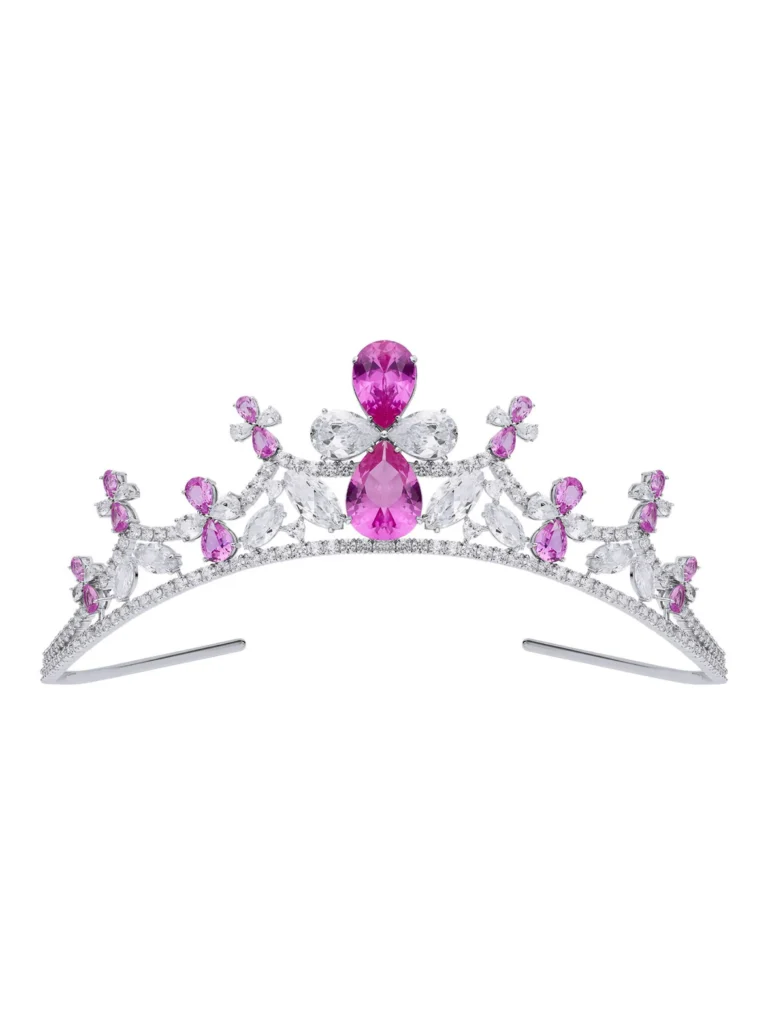
For a bride who wants something genuinely unlike anything else on the aisle, the Keira Tiara delivers. Inspired by flowers that bloom in autumn and winter, it features a staggered row design of colorless and pink-toned stones set in bronze-plated platinum. The result is a piece that feels simultaneously organic and regal.
Vintage Floral Crystal Tiara (1990s)
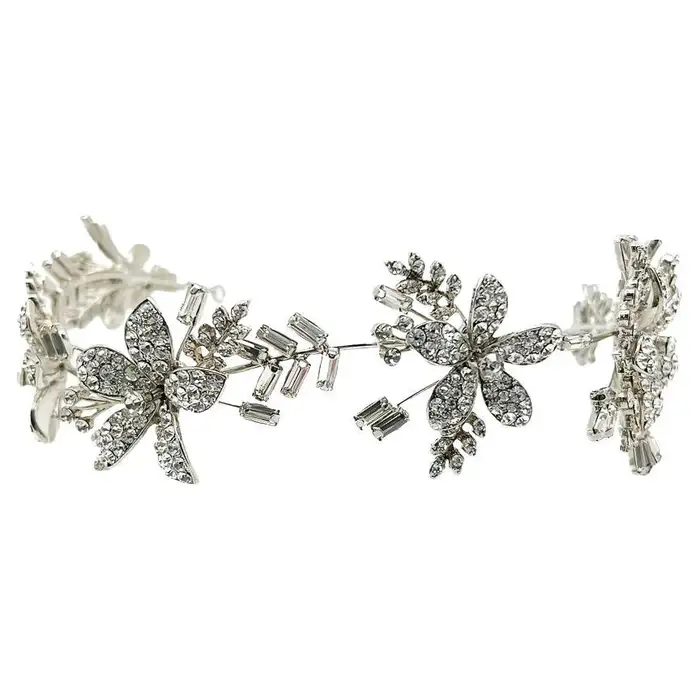
This is the tiara for the bride who loves quiet romance. A 1990s headband-style piece set with an array of fancy-cut glass crystals in a floral arrangement, it sits close to the head and suits flowing hair beautifully. Unsigned and undated beyond its decade, it has the kind of anonymous elegance that makes it feel like it could have come from anywhere—a French brocante, a grandmother’s vanity, a velvet-lined case at a Parisian estate sale. It’s in very good vintage condition with rhodium-plated metal.
Antique Victorian 21K Gold Cameo Tiara (c. 1860)
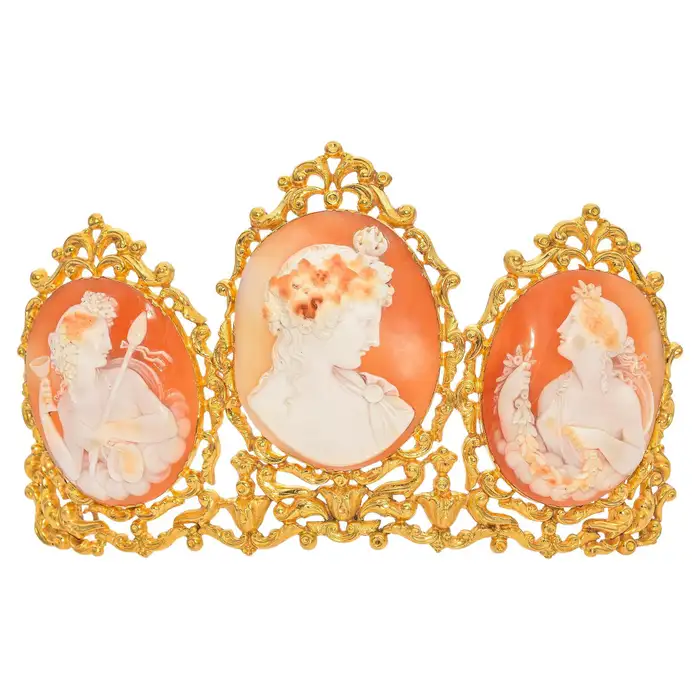
This is, without question, one of the most remarkable pieces in this guide. Dating to approximately 1860, this Victorian tiara is an exercise in classical scholarship as much as jewelry-making. Three intricately carved cameos, depicting Antinous, a Bacchante, and the Goddess Flora, are set within an elaborate 21k gold frame ornamented with delicate scrollwork and classical motifs. For the bride with a deep love of art history, classical mythology, or simply extraordinary craftsmanship, this is a once-in-a-lifetime piece.
Natural Diamonds and Pearls Tiara
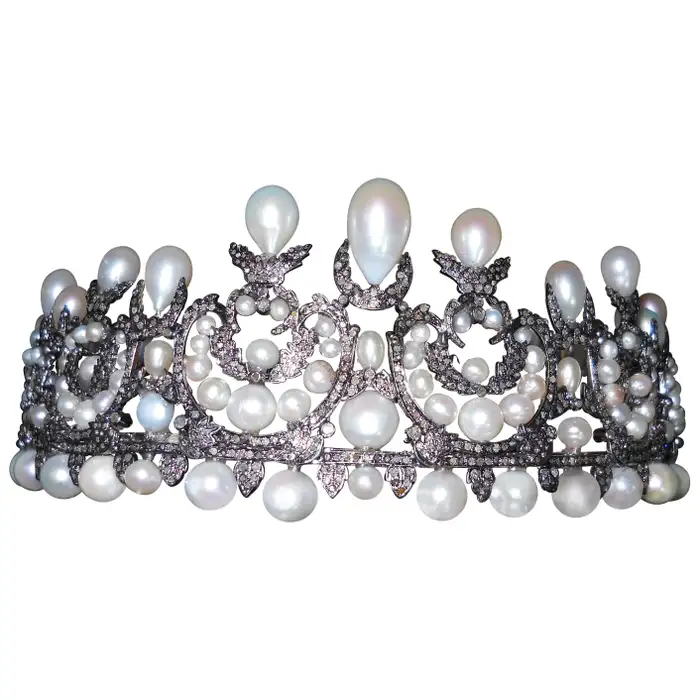
Handmade in sterling silver with natural rose-cut diamonds and pearls, this vintage bridal tiara carries a meaning beyond decoration. White diamonds with a soft grey tint sit alongside lustrous pearls in a combination that feels simultaneously ancient and modern. The rose-cut diamonds, a faceting style that dates to the 16th century, catch the light in a way that contemporary brilliant cuts simply cannot replicate. A deeply personal and genuinely beautiful choice.
Victorian Opal and Diamond Haircomb (c. 1880s)
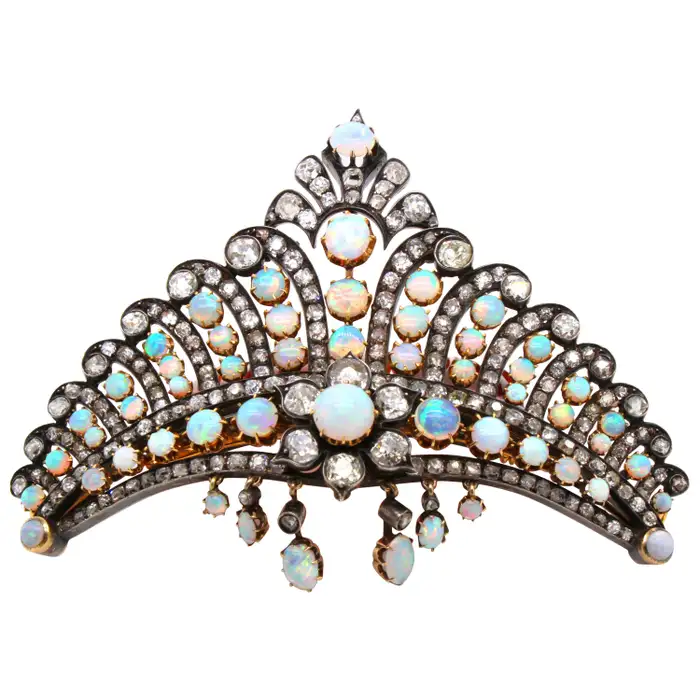
A note before we go further: this is technically not a tiara, but for brides who love to break the rules and wear the exception, it may be the most extraordinary piece on this list. Dating to the 1880s, this Victorian haircomb set with fiery opal cabochons and approximately 12 carats of old-mine cut diamonds is designed in an alternating shell-like pattern that creates an almost otherworldly play of color. It functions as a haircomb or—with a detachable mechanism—as a necklace. Worn in the hair on your wedding day, it will be the piece every guest asks about.
Double Band Crystal Flower Tiara
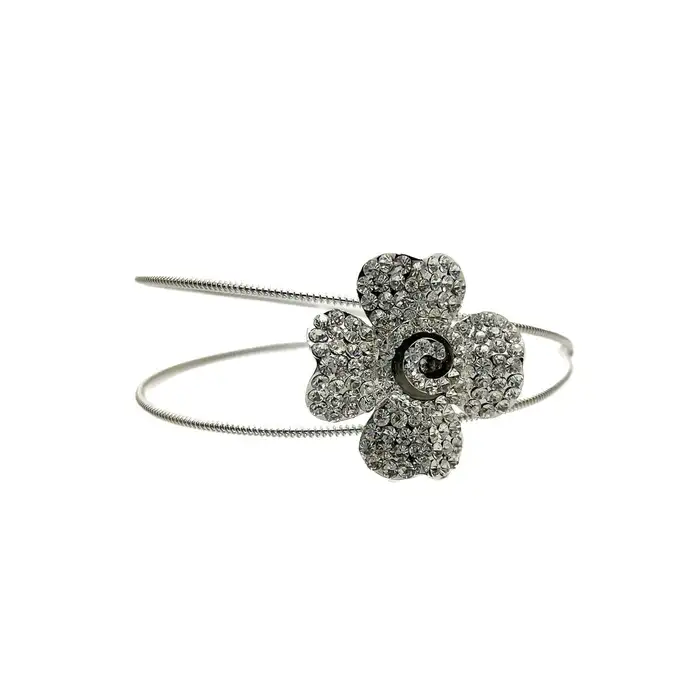
Sometimes the most effective wedding tiaras are the most restrained. This preloved double-band headpiece in silver-tone metal centers on a single large crystal-set flower with clean, architectural confidence. No fuss, no excess, just a very good piece doing exactly what a tiara should do. It is the kind of accessory that complements rather than competes, and for brides with heavily embellished gowns or already-bold jewelry choices, that quality is invaluable.
Turquoise and Diamond Crown
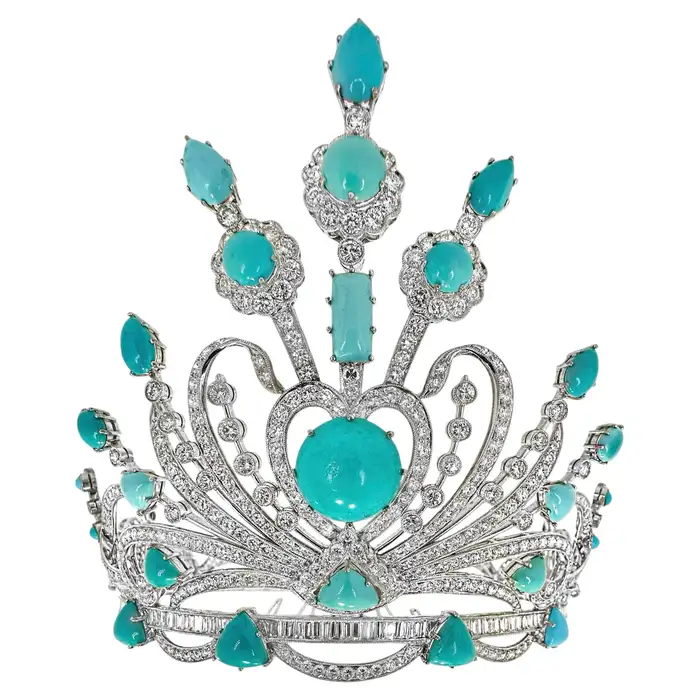
For the bride who intends to be remembered forever—and honestly, why not—this 18k white gold crown is in a category entirely its own. Sixty carats of round brilliant and baguette diamonds, thirty-four panels of vintage turquoise, and a full four-and-a-half inches of height in a radiating sunburst motif. This is less a tiara for wedding day dressing and more a declaration of intent. It rises above the head like an architectural statement, tapering to a jewel-set foliate surround. Absolutely, uncompromisingly extraordinary.
Antique French Silver Diamond Tiara (c. 1830)
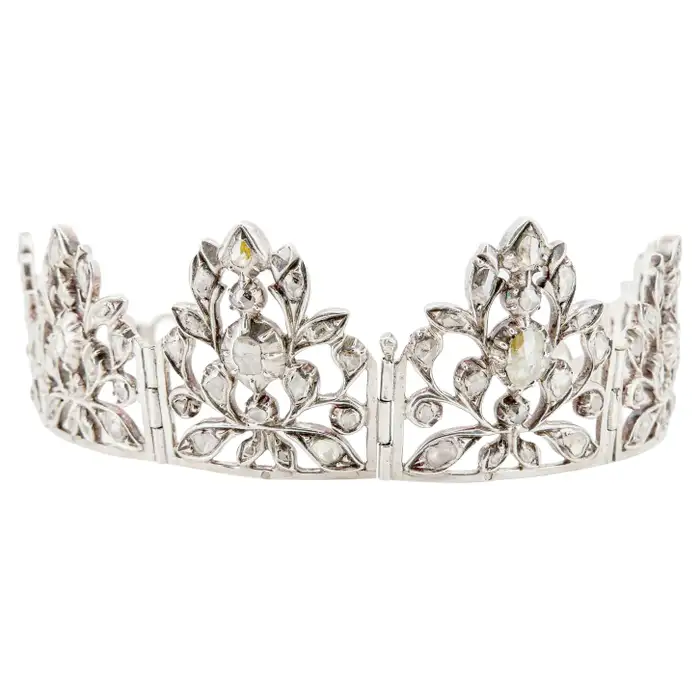
Dating to approximately 1830, this early 19th-century French tiara is set with 181 hand-cut antique rose-cut diamonds, all mounted in silver—as was the practice of the era, when silversmiths chose the metal specifically to enhance the glow of diamonds by candlelight. The hinged foliate panels crowned with arched floral motifs are a study in Georgian elegance. Most ingeniously, the central ornament is removable, allowing the tiara to be worn as two separate pieces or converted into dramatic ear pendants. This is a museum-worthy piece that a bride gets to actually wear.
55.44 Carat Diamond Tiara/Necklace
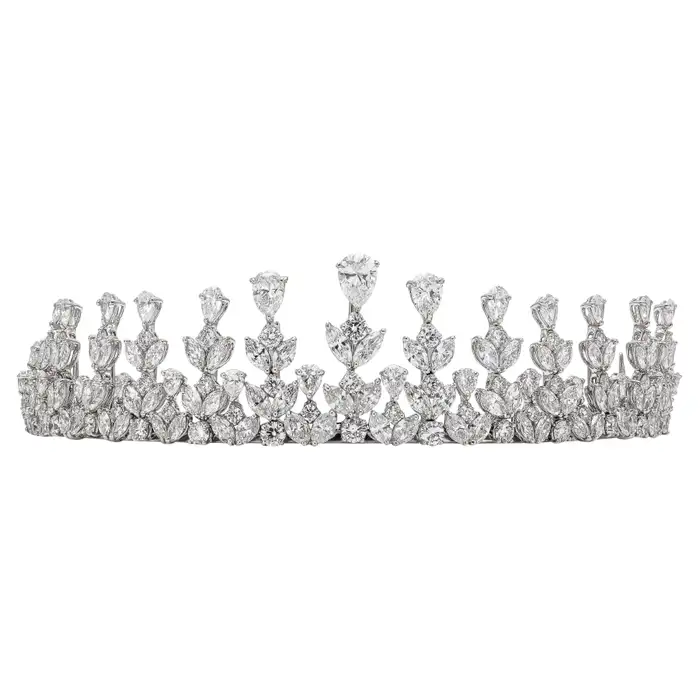
Fifty-five carats of diamonds (pear-shaped, marquise, and round brilliant cut, with three GIA-certified center stones) crafted in platinum and designed to convert from necklace to tiara. This is the piece for the bride who refuses to choose between a show-stopping necklace and a crown, and who should not have to. It arrives with its own tiara guard, and it arrives ready to make history.
Late Victorian Opal and Diamond Tiara (c. 1890)
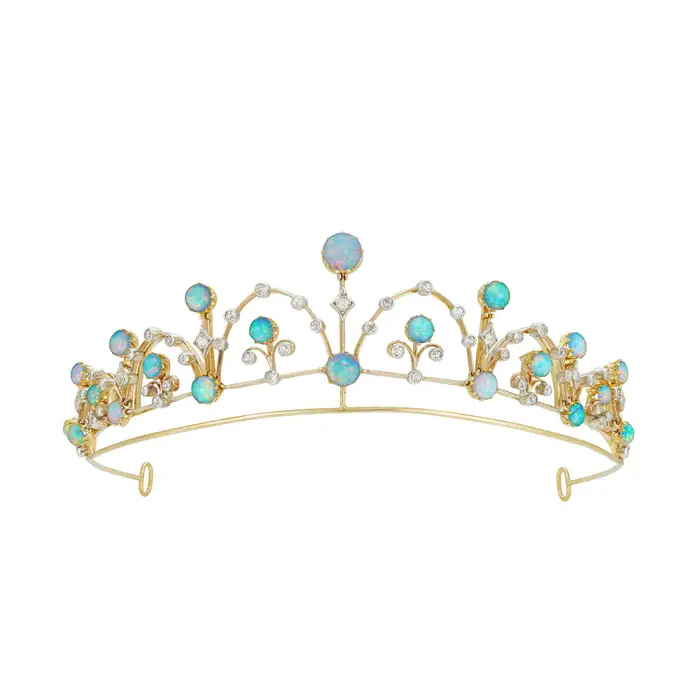
Our final entry is a late Victorian treasure of extraordinary delicacy. Seven knife-edge gold bars graduate from the center, each set with a pair of round opal cabochons and a sparkling old-cut diamond between them. Diamond-set arches connect each bar, and the whole construction, estimating approximately 2.9 carats of diamonds total, converts via a gold chain section into a necklace. At just 4 cm tall and 14.5 cm wide, it is one of the more wearable pieces in this guide for brides who want history on their head without the drama of height.
The Bottom Line
A wedding tiara is not just an accessory. For many brides, it is the piece that makes everything else click into place—the thing that transforms “dressed for my wedding” into “the bride.” Whether you choose a delicate vintage crystal headband or a crown set with more diamonds than most people will ever see in one place, the most important criterion is simple: when you put it on and look in the mirror, does it feel like you? On your wedding day, above all days, the answer should be an unambiguous, radiant yes.
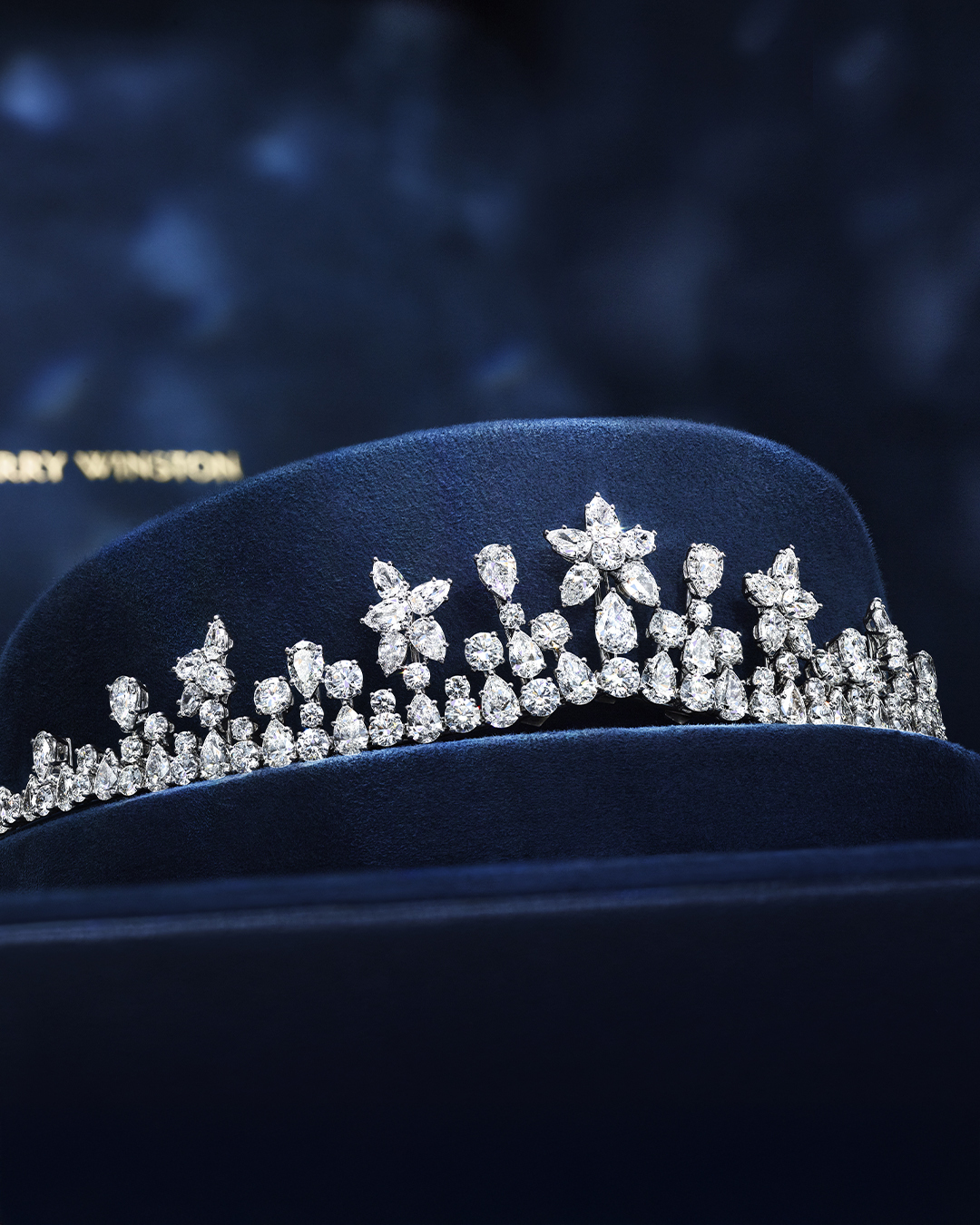
Featured image: Harry Wisnton

Amanda Akalonu is dedicated to weaving together the worlds of jewelry, watches, and objects through a lens of literary storytelling.